Quick fix
Extra twist usually comes from pulling yarn off a ball that stays still, or from your own yarn overs adding a little with each stitch. Let your work dangle and spin to release it, and let the ball roll as you pull so less twist goes in.
One full twist goes into the strand every time a wrap peels off the end of a ball that isn’t turning. Pull 60 wraps off one end and that’s 60 twists headed for your hook. It’s the most common reason yarn kinks up. It isn’t the only one, though.
Twisting and kinking are really one problem at two strengths. A little extra twist makes the strand roll between your fingers. A lot of it folds the yarn back on itself into tight pigtails that snag the hook. Some yarn goes the other way and loses twist. That shows up as the plies, the thinner strands twisted together to make the yarn, coming apart under the hook.
So what helps right now? Let the work hang. Hold the yarn about a foot above your project and let the piece dangle. It’ll spin for a few seconds and unwind the extra turns. Then come back and find your cause below, since the spin trick only buys you a few rows.
And a quick way to tell which problem you have: slide your fingers along a foot of strand toward the hook. Kinks that jump into little loops mean too much twist. Plies that open up and look loose mean too little.
Cause 1
Pulling the strand off the end of a ball that stays still
 Save
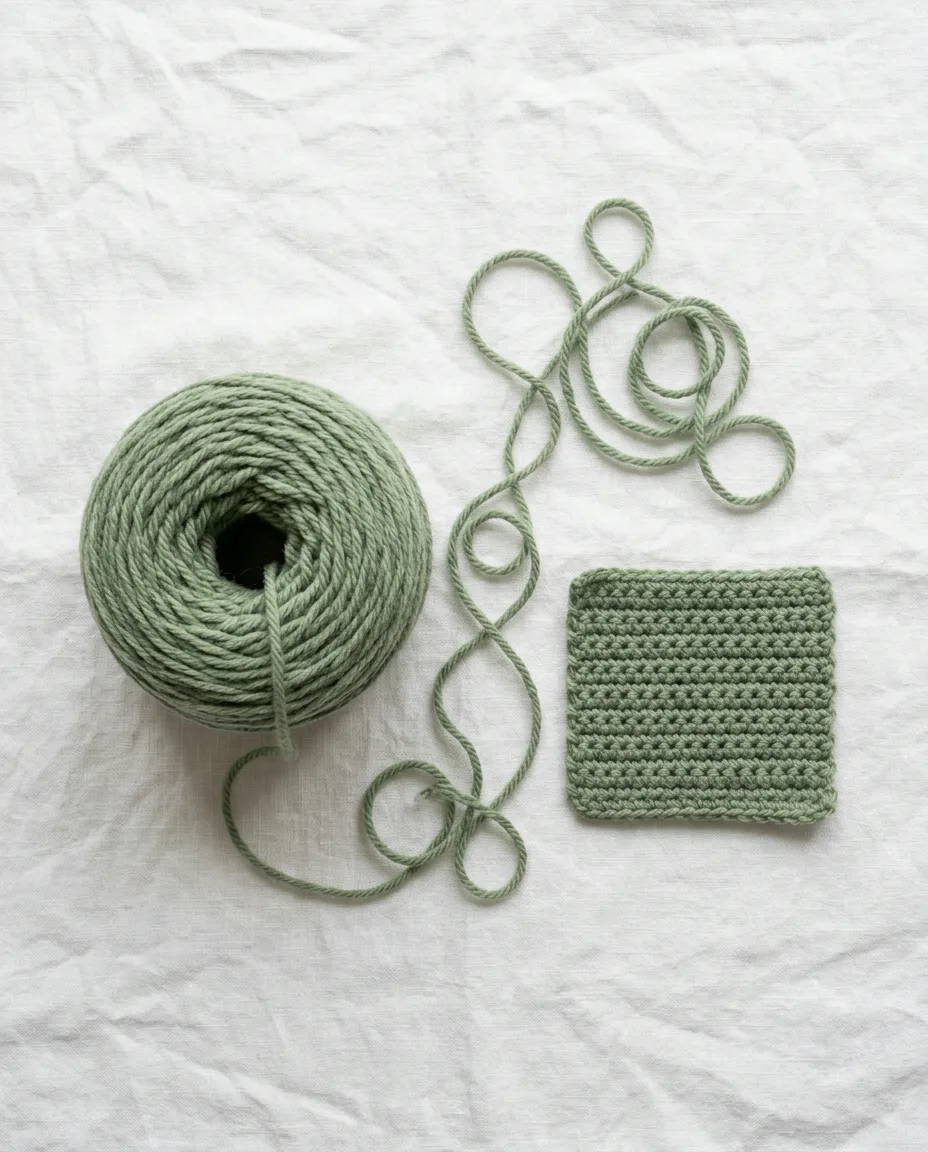
Center-pull cakes are the usual culprit here. The yarn comes out of the middle while the cake sits still on the table. Each wrap that comes free adds a turn to the strand. Pulling from the outside of a ball wedged tight in a bag does exactly the same thing.
Let the ball roll instead. A bowl on the floor beside your chair works well. When the ball turns as you pull, each wrap comes off flat with no twist added. That’s the whole reason some people prefer working from the outside of a cake. The downside? It rolls under the sofa. A deep bowl solves that.
Already twisted? Hold the cake up by its strand and let the last couple of yards dangle. They’ll spin loose on their own.
Cause 2
Your yarn overs add a little twist with every stitch
 Save
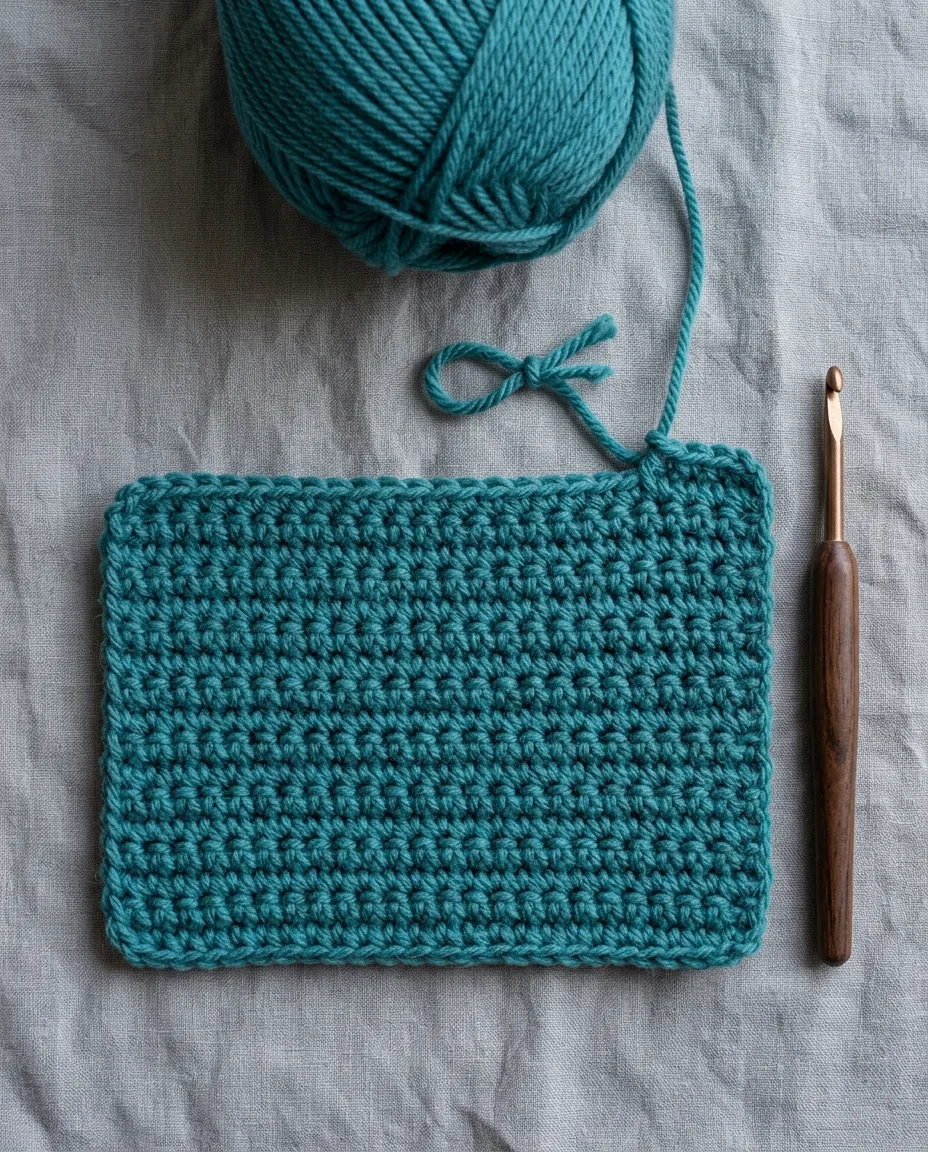
Every stitch needs at least one yarn over, where you wrap the yarn over the hook from back to front. Each wrap turns the strand a tiny amount. You’d never feel one. Three hundred stitches later, you’ll feel all of them.
Whether your yarn gains twist or loses it depends on how it was plied and which hand holds the hook. Kinks mean it’s gaining. Splitting plies mean it’s losing. Neither one means you’re doing anything wrong, and most guides skip this part entirely.
Don’t change your yarn overs to fight it. Wrapping front to back turns the stitches themselves, and the rows come out with crossed, slanted stitches that look wrong next to everything else. Dangle the work every few rows. If a yarn splits no matter what, switching to a yarn with a firmer twist is the quicker fix.
Cause 3
Turning the work the same way at the end of every row
 Save
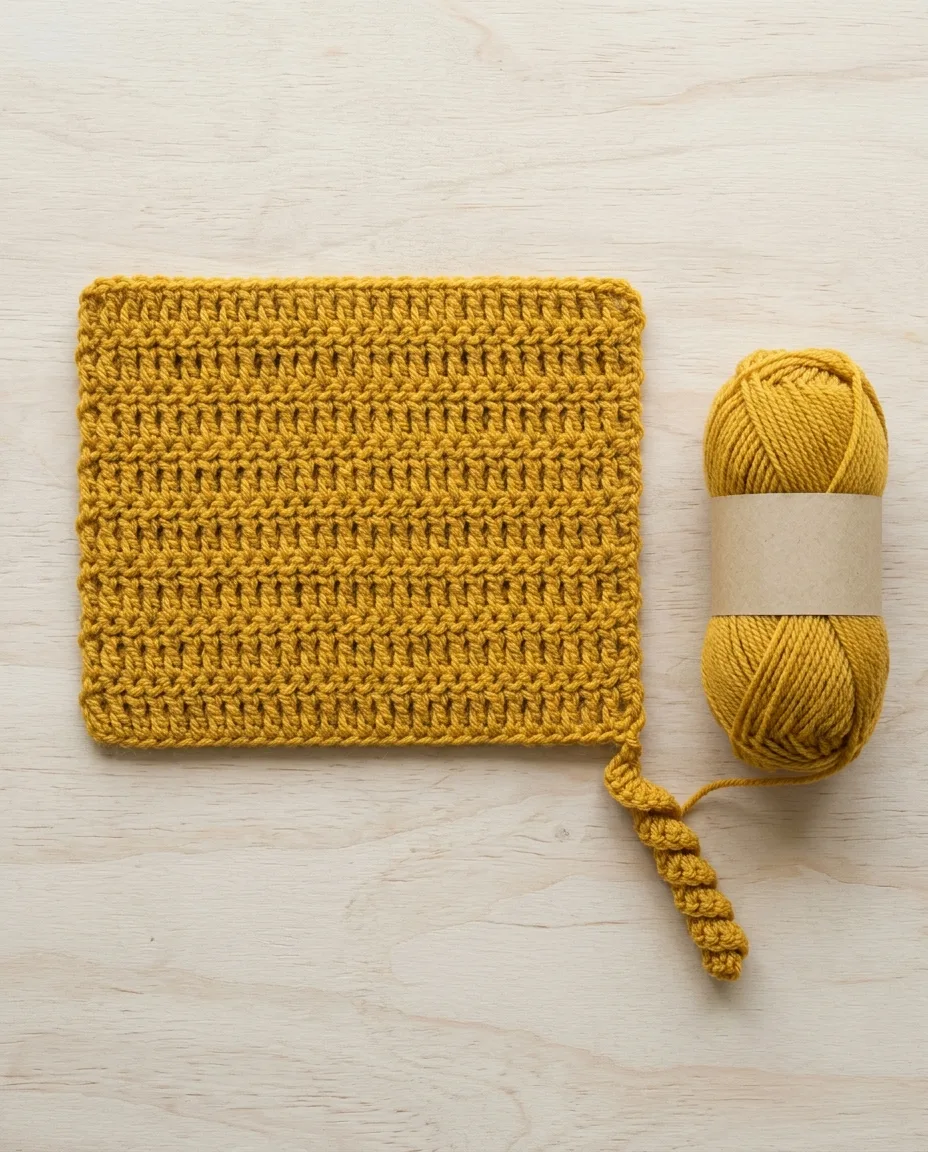
Flat pieces worked in rows have a sneaky one. Each time a row finishes you flip the piece over to work back the other way. Turn it clockwise every single time and the strand gets wound once around itself per row. Forty rows, forty turns.
Most people never notice the habit. Swap direction: clockwise after one row, counterclockwise after the next. The turns cancel out. Can’t remember which way you went last time? Look at the strand just below the hook. If it’s wrapping around itself, turn the other way.
Nothing turns when you work in the round. So a twisting hat or toy points back to the ball or your yarn overs.
Cause 4
Some yarns are spun with far more twist than others
 Save
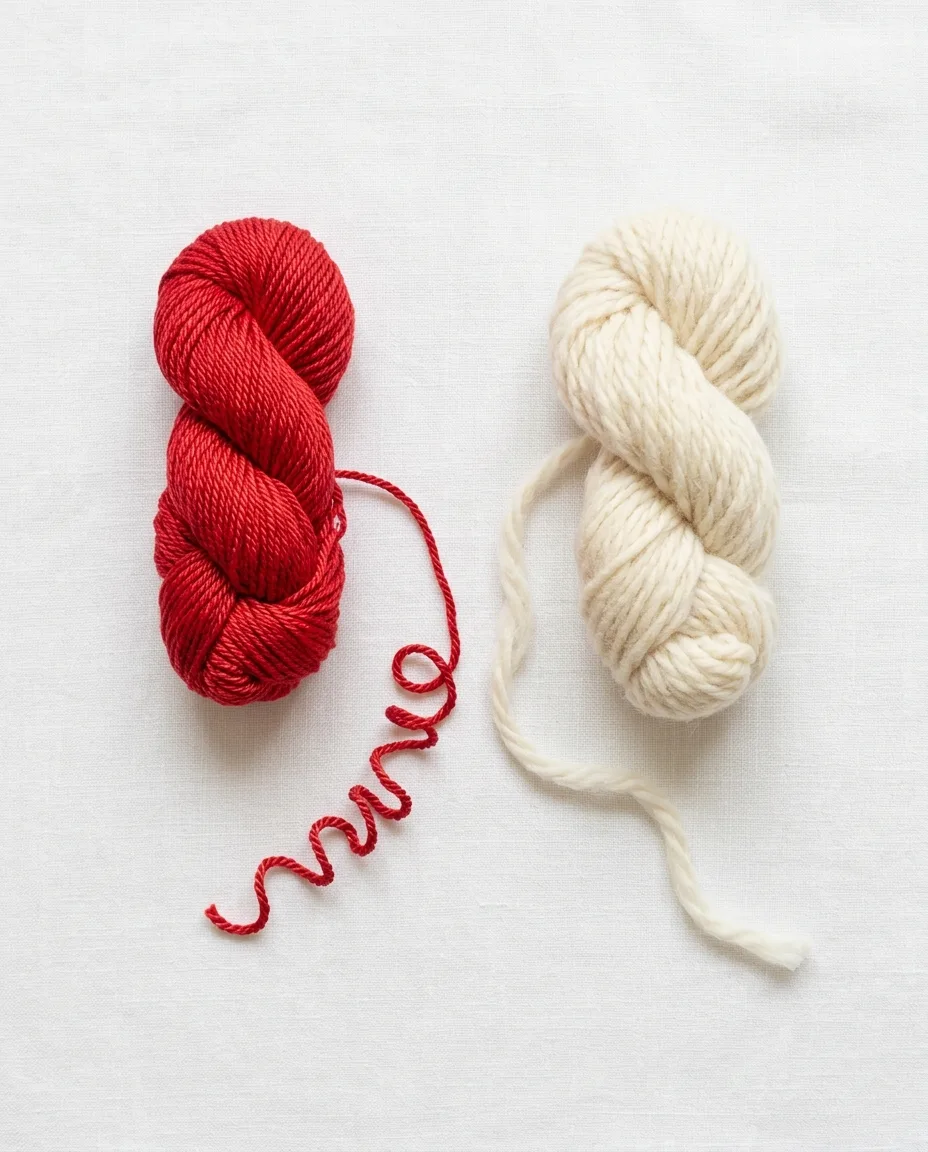
Shiny mercerized cotton is the classic kinker. It’s plied tight for that smooth finish, and the strand springs into curls the moment it goes slack. Firmly twisted acrylic can do it too. Soft, loosely plied wool barely reacts, because there’s less twist in it to begin with.
That’s not something you caused. Hold the strand loosely as it feeds through your fingers, and dangle the work more often than you would with wool. Stopping every round on a cotton toy is annoying. Still, tight cotton makes crisp, firm stitches that hold stuffing in, which is why toy makers put up with it.
Buying for a new project and dreading the kinks? Squeeze a loose end of the yarn in the shop. If it curls up the second you let go, expect to untwist often.
Cause 5
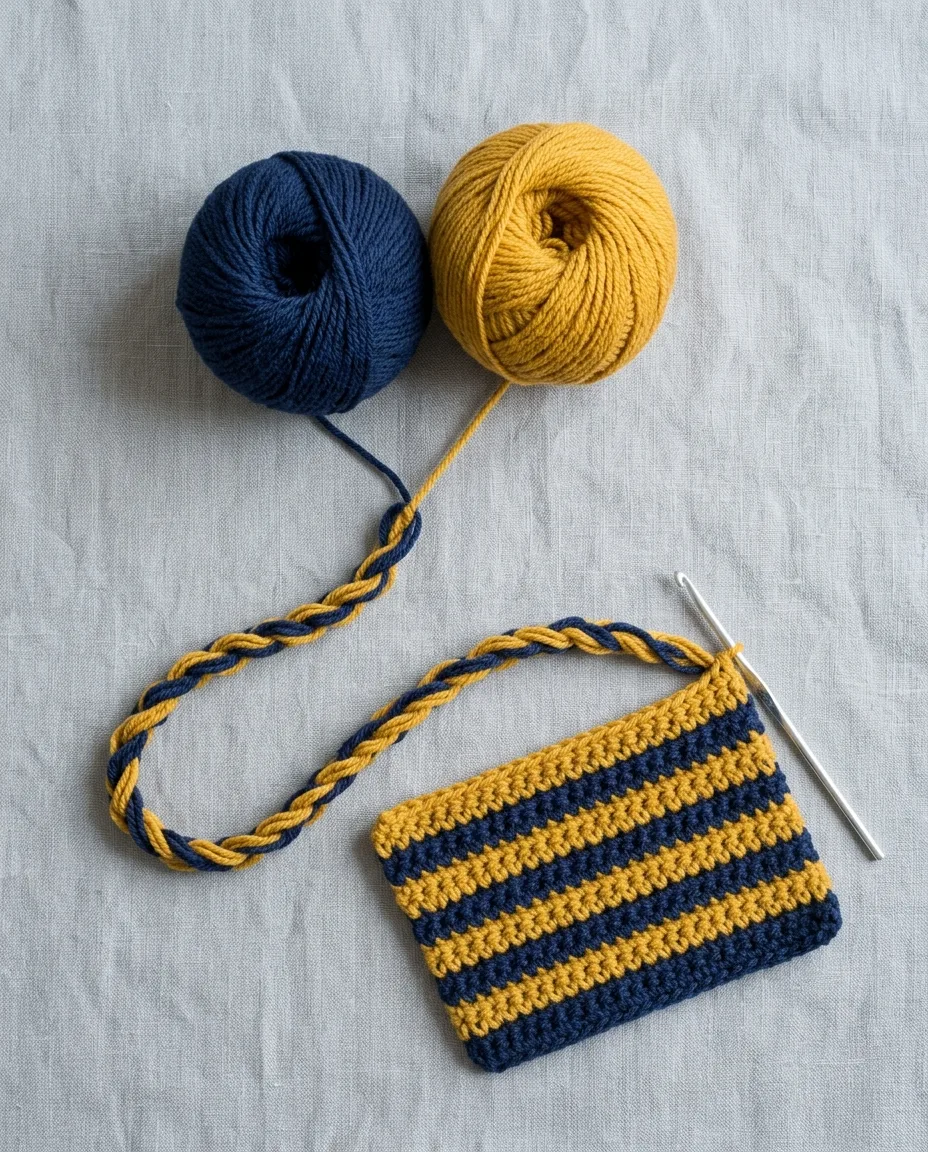
Two colors wrap around each other at every change
 Save
Stripes run two balls at once. Every time you drop one color and pick up the other, the strands cross. Do it the same way each time and they wind round each other like rope. Ten stripes in, you’re untangling before every change.
Keep one ball on your left and one on your right. At one change, bring the new color up from under the old one. At the next, bring it over. Prefer not to track it? Every few stripes, lift the work by both strands and let it spin until they hang apart. It takes seconds.
No rule says you have to carry both colors up the side. If the stripes are wide, cut the old color at each change. You’ll have more ends to weave in. Nothing tangles, though.
Cause 6
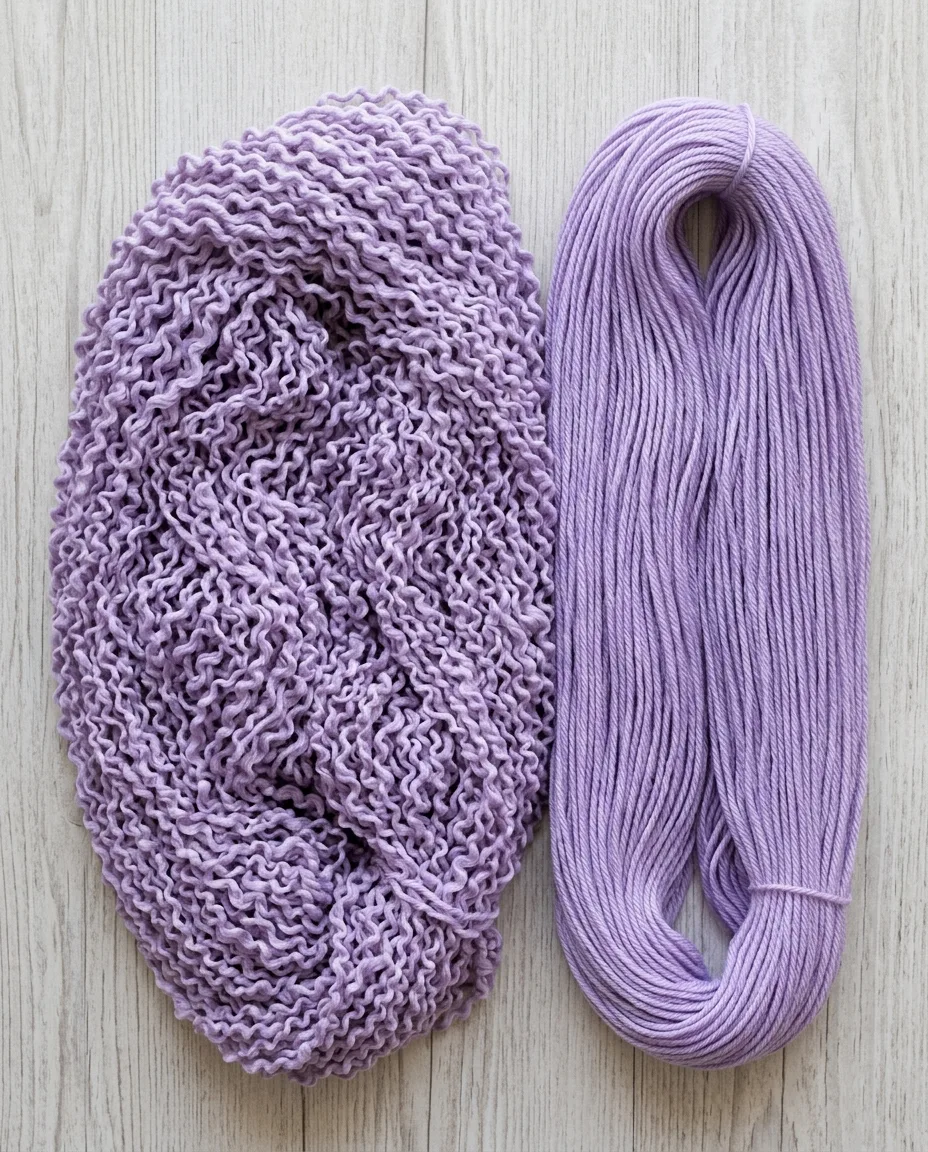
Ripped-out yarn keeps the shape of its old stitches
 Save
Pull out a few rows and the yarn comes back crinkled like instant noodles. It sat in stitch shape for days or weeks, and it remembers. Crochet with it straight away and the new stitches come out uneven. Some will sit loose next to tight ones.
A few yards can be fixed on the spot. Stretch the strand gently between your hands and hold it in the steam from a kettle, fingers well clear. The waves relax in seconds.
For a whole project’s worth, wind the yarn loosely around the back of a chair and tie it in four places so it can’t tangle. Soak it in lukewarm water for a few minutes. Squeeze it out in a towel, then hang it to dry with nothing heavy on it. Dry yarn comes off the chair straight and ready to rewind.
Acrylic needs a lighter touch with the steam. Too much heat leaves it limp and shiny for good, and that can’t be undone. A quick pass is enough.