Quick fix
Work two single crochets into one stitch in the row you're on, close to where the stitch went missing. The count is back and the rows below stay as they are.
Ripping out six rows to rescue one missing stitch is almost never worth it. Most dropped stitches can be fixed right where you are, in the row you’re working now. It takes a minute. And the fix is one move a beginner already knows, worked twice into the same spot.
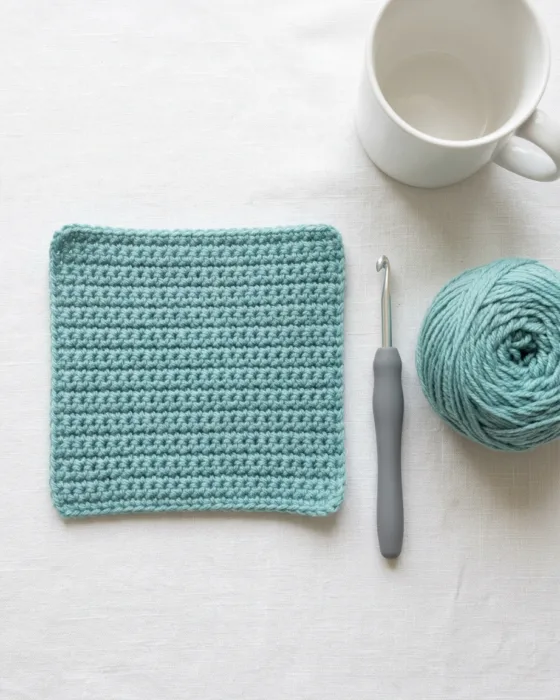
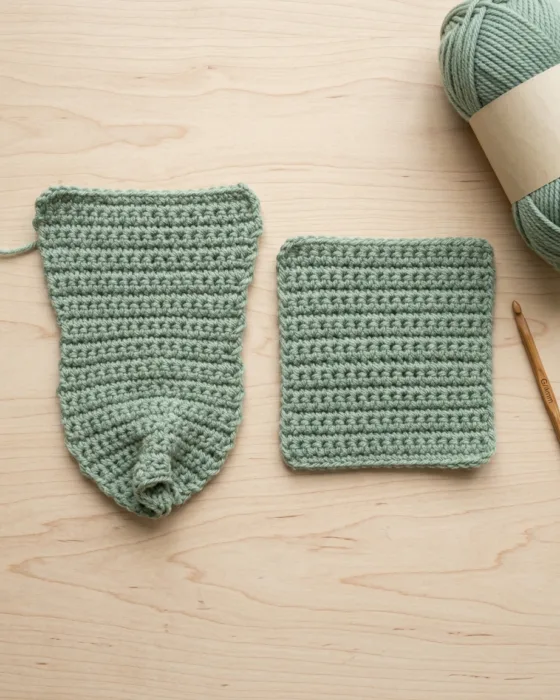
In crochet, a “dropped” stitch usually means a stitch that got skipped. Your row of 20 is suddenly a row of 19. Leave it, and the edge starts creeping inward. Lose one every row and a square turns into a lampshade (it happens to everyone at least once).
Knitters mean something scarier by the same words. Crochet is kinder here. Only one loop is ever live on the hook, so a mistake can’t run down the fabric on its own. That’s why almost every fix below works without undoing anything you’ve finished.
The one fix you’ll use most
Two single crochets in one stitch puts the missing stitch back. That move is called an increase. Here’s single crochet itself, in case it’s new. Push the hook under both top loops of the stitch. Wrap the yarn around the hook from back to front, which is a yarn over, and pull it through. Two loops on the hook now. Yarn over again and pull through both. That’s one single crochet. For the increase, make a second one into the very same stitch.
Count your row after every fix. If the number matches the pattern, you’re done. If it’s still one short, a second stitch went missing somewhere else.
Cause 1
The last stitch hid under the turning chain
 Save
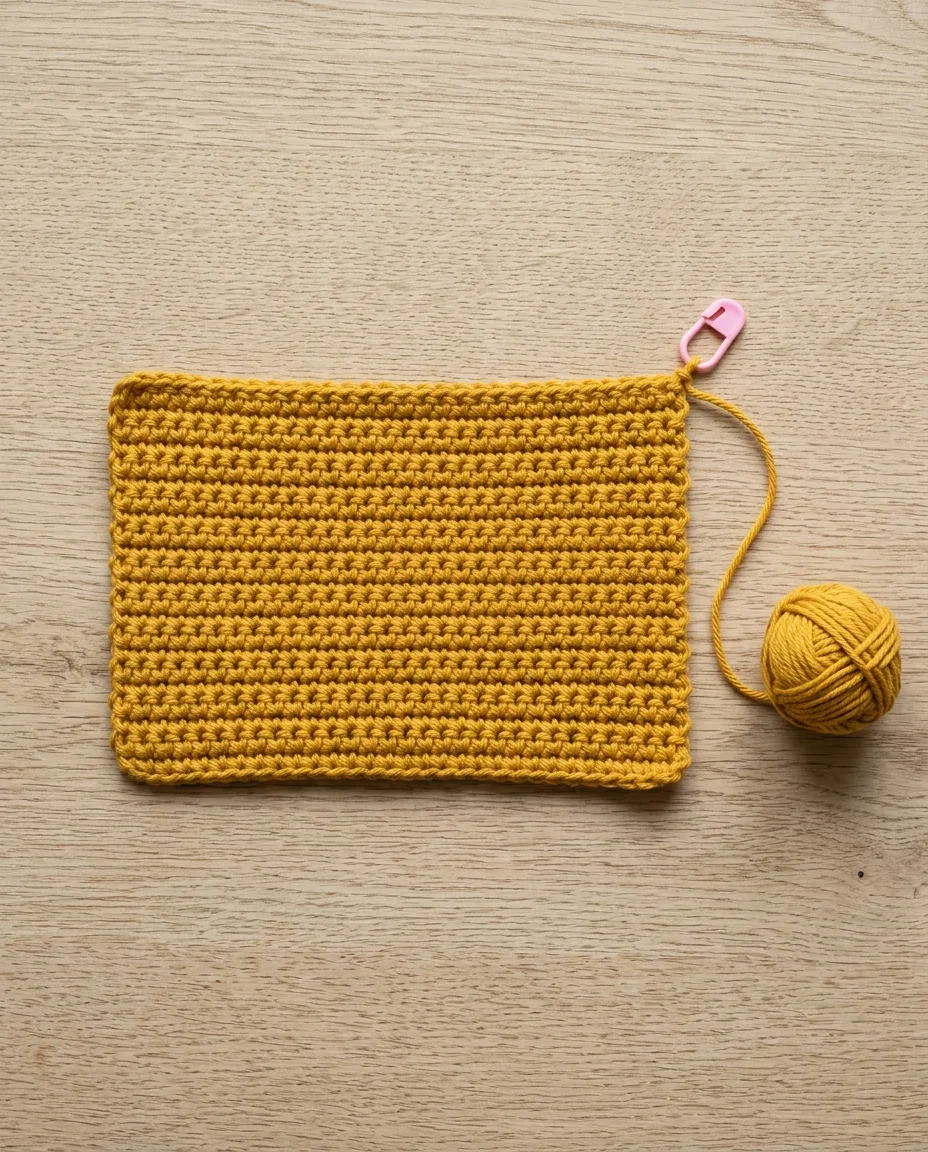
This is the most common one by a wide margin. At the end of a row, the last stitch is the top of the first stitch you made in the row before. It sits tight and leans sideways. The chain you made when you turned partly covers it. So the eye slides right past it.
Caught it on the next row? Work two single crochets into the stitch right after your turn. The count is back to 20. The edge shows a tiny bump at worst, and it vanishes once a border goes on.
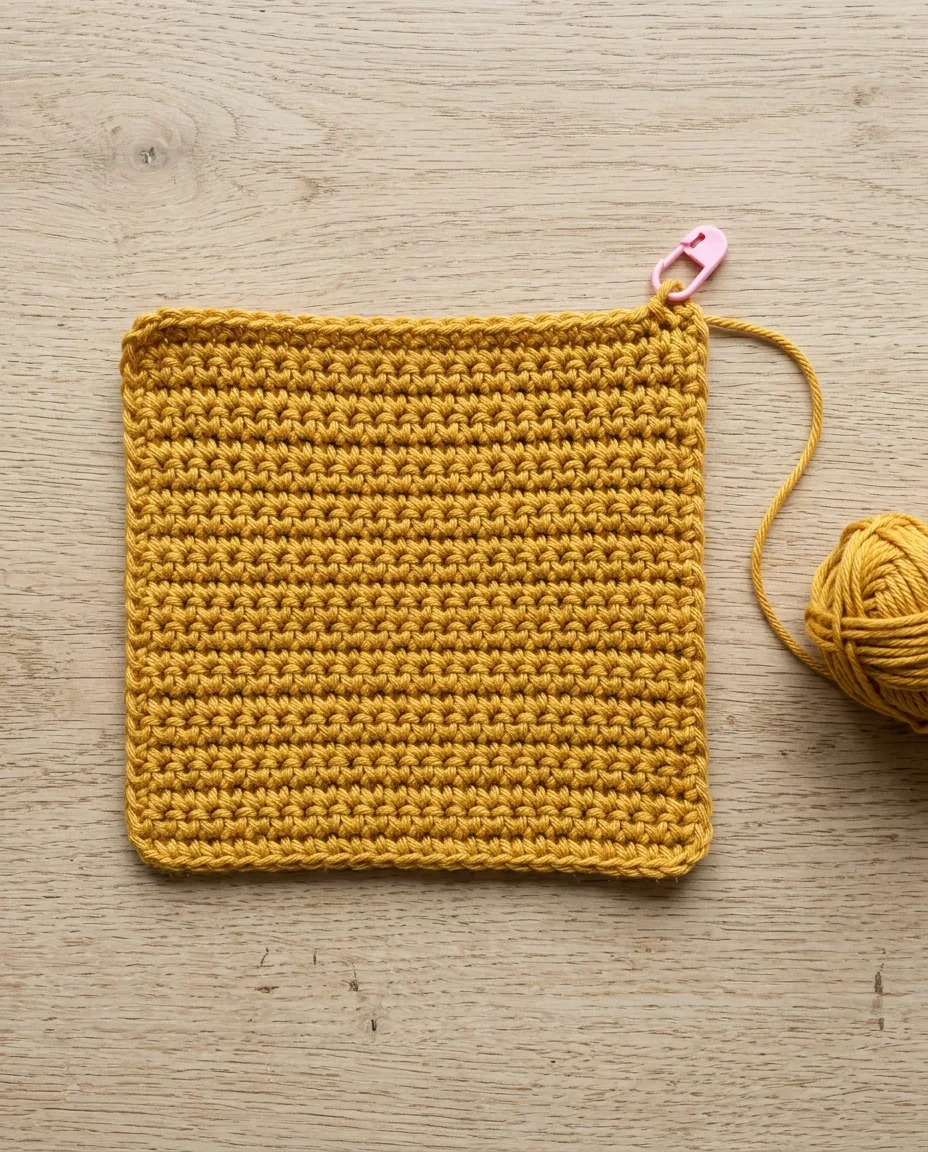
Better still, stop it happening. Clip a stitch marker, the little plastic clip that opens like a safety pin, into each row’s opening stitch as you make it. When you come back along the next row, the marker shows you where to put the last stitch. Pull it out, work into that stitch, clip it into the new first stitch. Fiddly for a row or two, then automatic.
Cause 2
Skipped first stitch at the start of a row
 Save
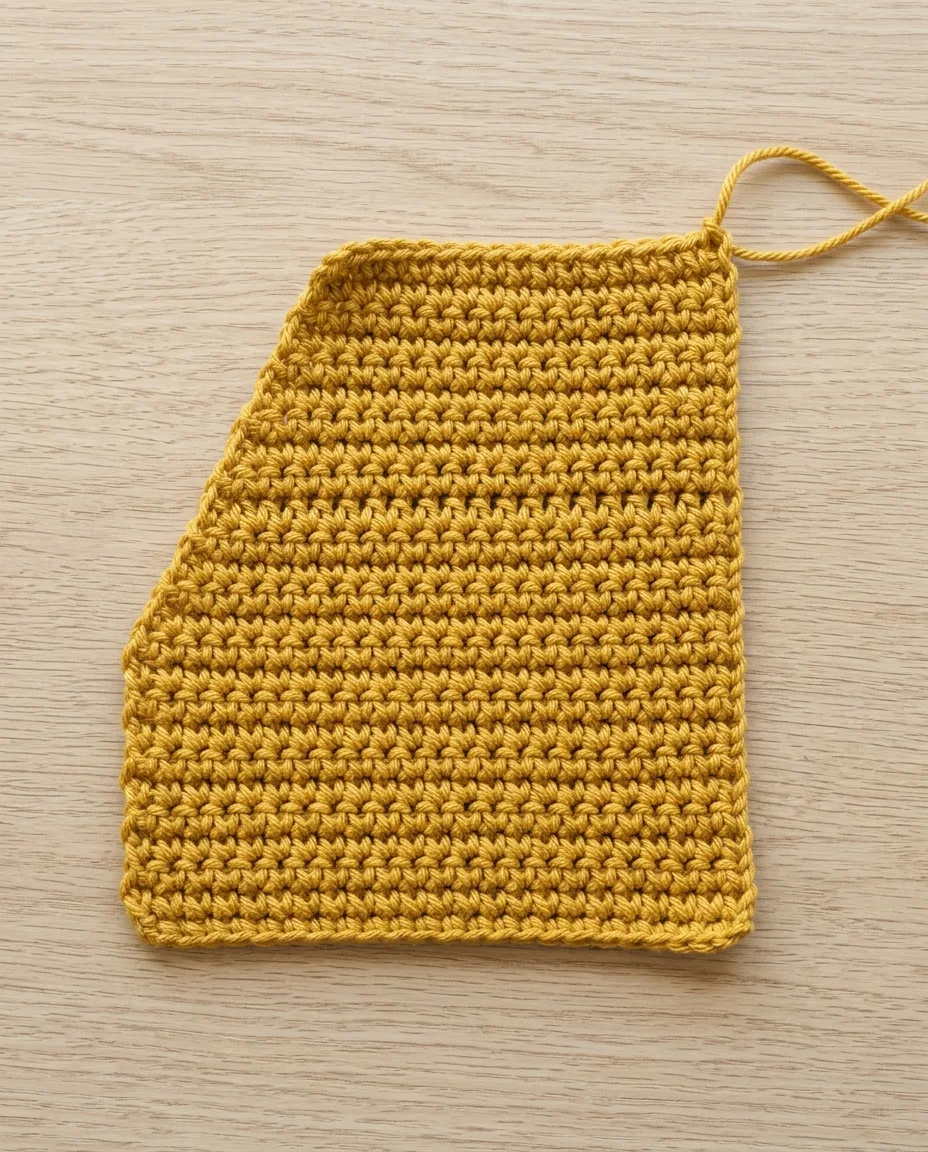
Turning chains confuse people, and with good reason. For single crochet, the one chain you make to turn doesn’t count as a stitch. Your first single crochet goes right at the base of that chain, into the stitch underneath it. Lots of beginners skip that stitch, thinking the chain already covers it. One stitch gone.
Taller stitches play by different rules, which makes it worse. With double crochet, the three-chain turn usually does count as the first stitch. So the first real double crochet goes into the second stitch. Mix the two habits up and you’ll lose or gain a stitch at the edge every single row.
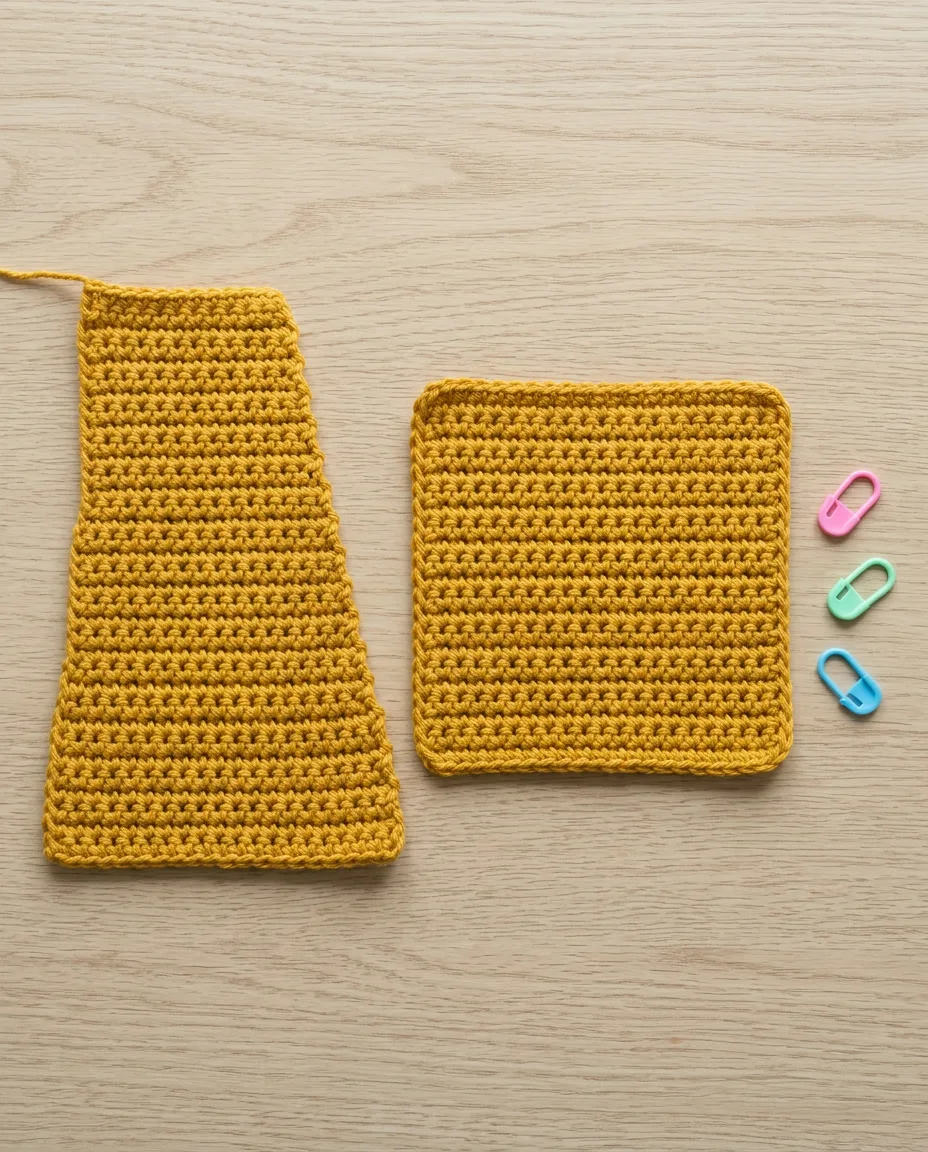
No need to undo anything. Put an increase at the start of the row you’re on. Then check what your pattern says about the turning chain, because patterns differ. Write the answer on a sticky note by your yarn. A swatch shaped like a trapezoid, narrow at the top, nearly always comes from this edge.
Cause 3
Lost count in the middle of a long row
 Save
Mid-row misses are harder to spot. Two stitches end up worked into one stitch, or one gets jumped over while you’re chatting. Dark yarn makes it worse. So does fuzzy yarn, where the top loops blur together.
Notice it while the row is still on the hook? Pull the loop out gently and undo stitches back to the miss. That’s a few stitches of one row. Rework them and carry on.
Found it rows later, there are two parts to the fix. First, add an increase in the row you’re working now, as close above the miss as you can. That restores the count. Second, a skipped stitch leaves a small hole below. Thread a yarn needle, the blunt kind with a big eye, with a length of the same yarn. On the back of the work, sew across the hole twice and weave the ends in. On a stuffed toy nobody will find it. On a flat blanket, if you look hard, you might. That’s the honest trade-off for keeping six rows.
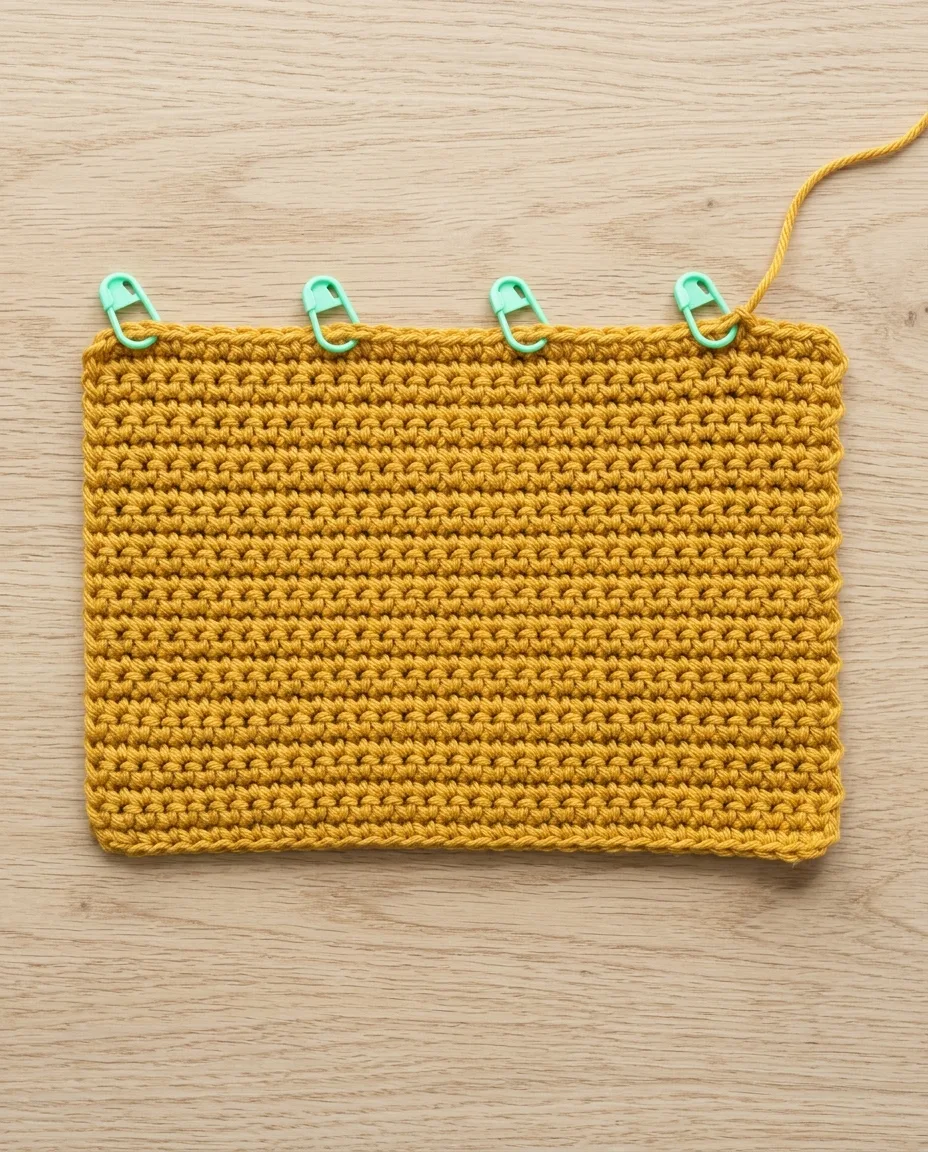
For long rows, place a marker every 10 stitches. Then you count to 10 a few times, which is far harder to get wrong than counting to 60.
Cause 4
When an amigurumi round comes up one short
 Save
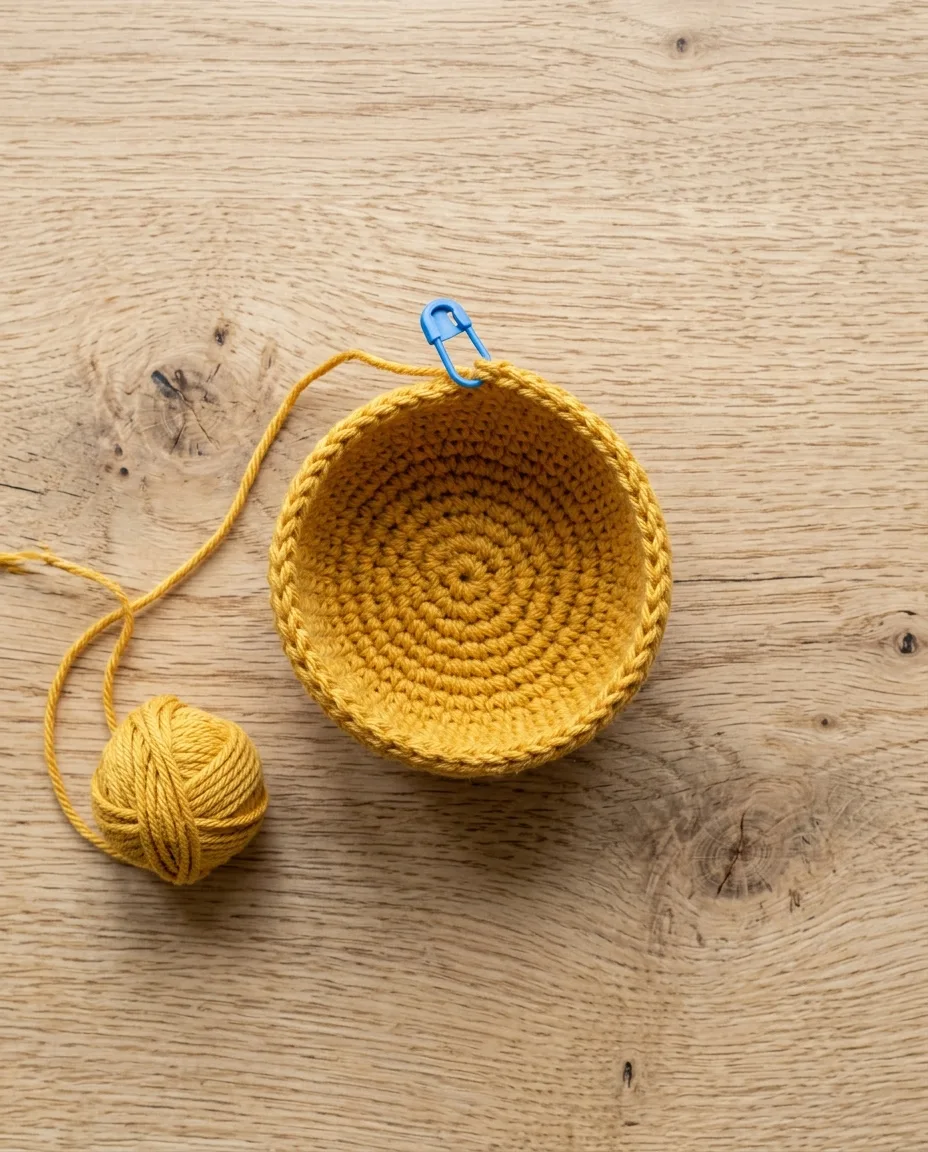
Toys are worked in a spiral, round after round with no join. There’s no edge to warn you. A round meant to have 30 stitches quietly has 29, and the shape keeps going.
But one stitch over a whole ball barely changes the shape. If the next round is a plain round with no increases, work one increase anywhere in it. Done.
Increase rounds take one more step. Say the next round is (4 sc, inc) x6, which should take 30 stitches up to 36. Work it as written. Your last repeat will run one stitch short, because you started with 29. Put an increase into the final stitch anyway. Count again and you should land on 36. If you don’t, count the round twice before changing anything.
Keep a marker in each round’s opening stitch and move it up every time you pass it. Without one, a spiral is almost impossible to count. Ask anyone who’s tried.
Cause 5
The loop slipped off the hook, and a few stitches came loose
 Save
Don’t panic. A loose loop on its own won’t run anywhere. The work only comes undone if the yarn gets tugged, by a cat or a bag strap or the hook catching on a sleeve.
Pick up the loop and slide it back onto the hook. Check that it isn’t twisted. The yarn from the ball should come off the back of the hook, the same way it did before. A twisted loop makes the next stitch look crossed and tight.
If a few stitches pulled out, that’s fine too. Put the loop back on and count what’s left of the row. Rework the missing stitches into the stitches below. You lost only what came undone, so nothing else needs touching.
When you put your work down, clip a locking stitch marker through the loop first. It takes two seconds. Even a cat can’t unravel it then.