Quick fix
Most crochet hand and wrist pain comes from squeezing a thin hook and working for hours without a break. Loosen your grip on a fat-handled hook and stop every half hour. Numbness or tingling is a question for a doctor.
Put the hook down and open your hand. Do your fingers ache as they straighten? Then the hook was being held too hard, and that’s the most common reason crochet hurts. The causes below are mostly habits and tools. Every one can be changed tonight, on the project you already have.
One thing first. Ordinary crochet aches fade after a day off. Numbness or tingling in your fingers is different. So is pain that wakes you at night or hangs around for days. Show those to a doctor, because no hook swap will sort them out.
And beginners get it worst. Each new stitch feels like it might slip off the hook, so the hand clamps down to hold on. That tension runs up into the wrist and forearm. It eases as the stitches get familiar. You can speed that along with the fixes here.
Cause 1
A death grip on the hook
 Save
Watch your knuckles while you work. Pale knuckles mean you’re squeezing. Most people hold a crochet hook far harder than it needs. The hook only has to be steered. It barely has to be held.
Try a test. Work a row, then relax your fingers until the hook almost slides. Keep going. It feels sloppy at first (most people expect to drop it, and almost nobody does). Give it a row or two and your hand settles. Stitches often get more even, too. Still clenching after a few rows? Put the hook down, shake your hand out and start again.
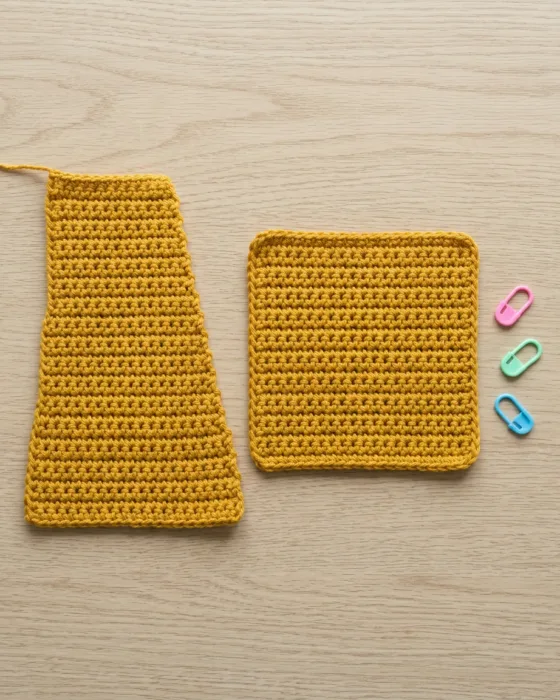
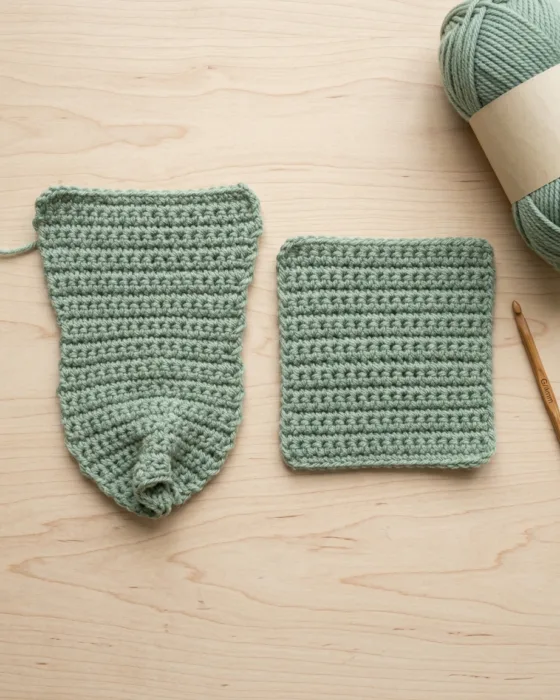
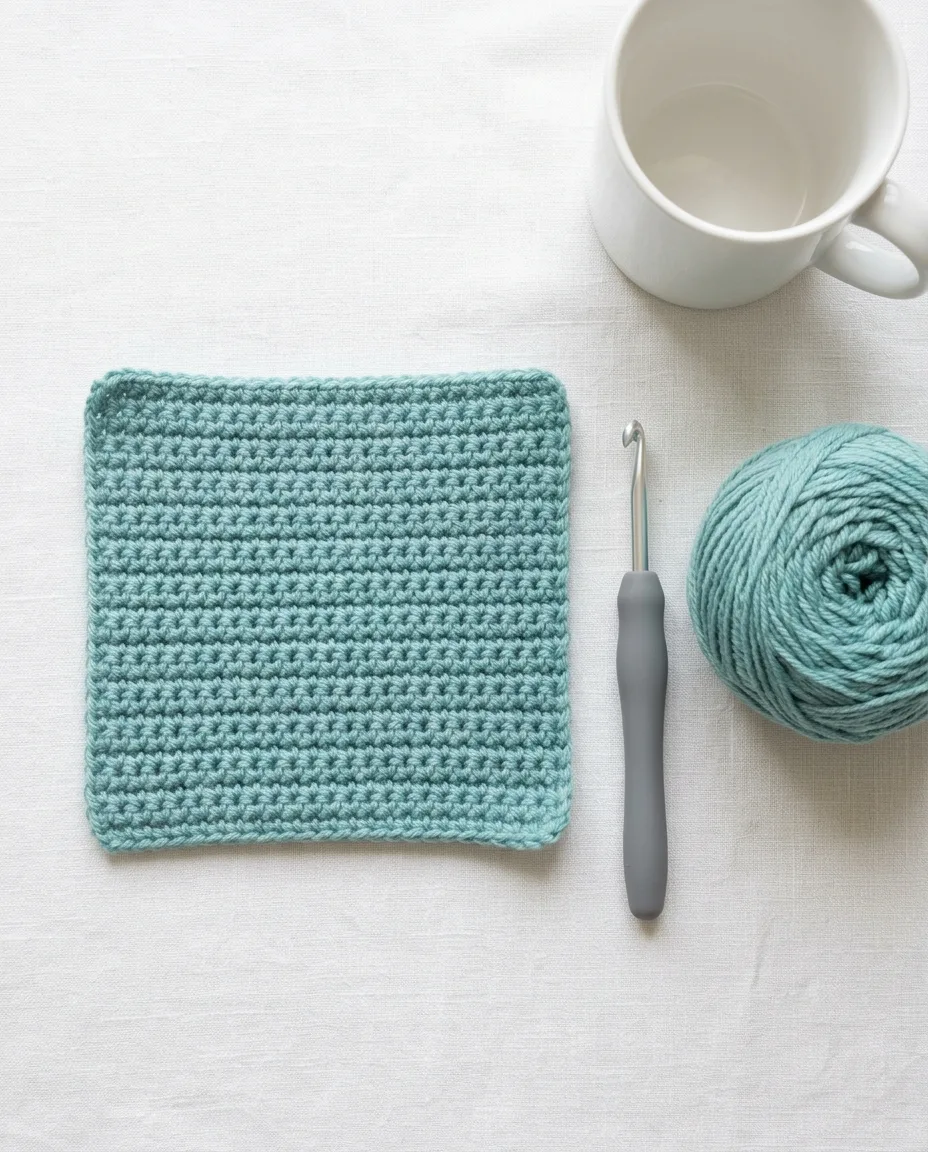
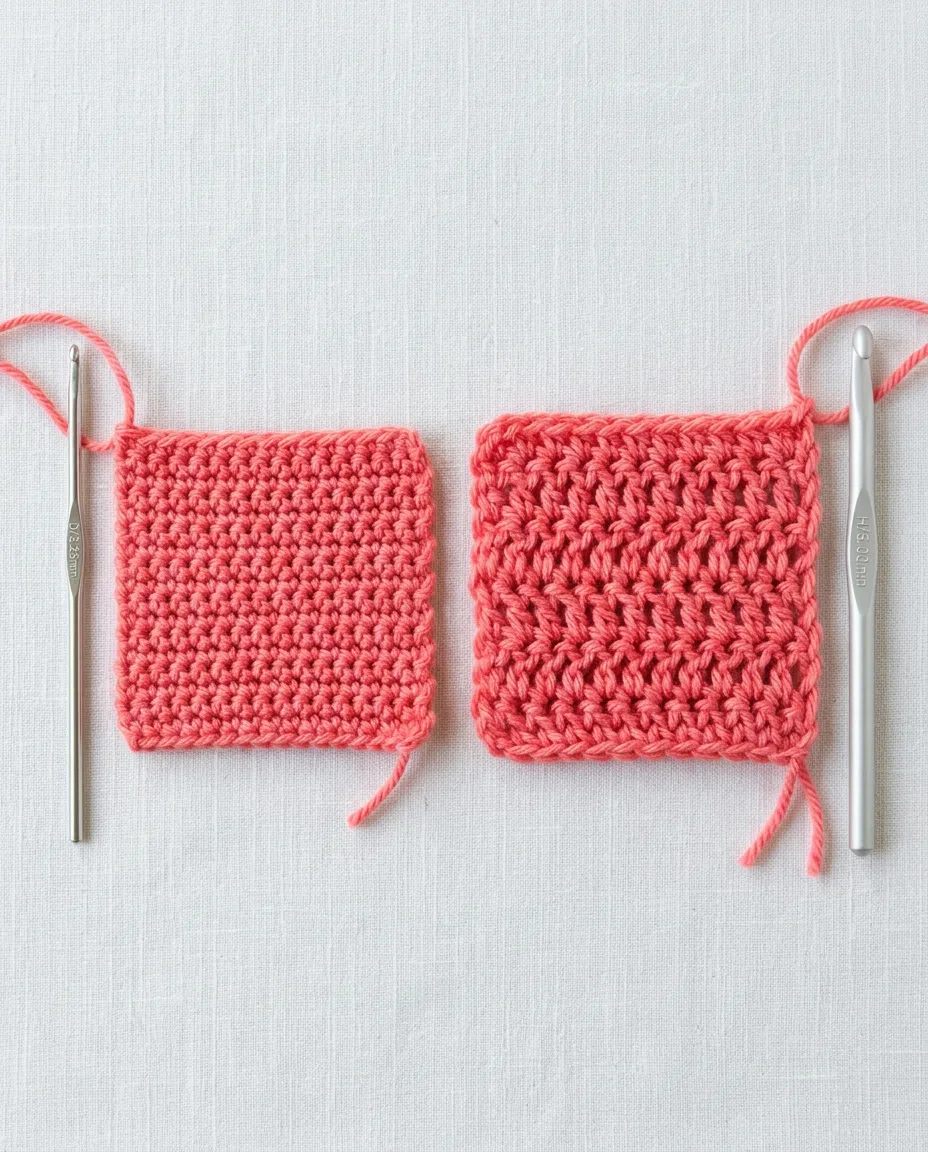
Squeezing shows in the fabric. A swatch, the small test square crocheters make, comes out small and stiff from a clenched hand. The edges curl. If your work looks like the left swatch above, change your grip before anything else.
Neither of the two usual holds is wrong. The pencil hold rests the hook between thumb and first finger, the way you’d write. With the knife hold your hand sits over the top, like cutting food. Watch your wrist in each one. If it bends sharply back or to the side, switch holds for a week and see how it feels.
Cause 2
Thin hooks make your fingers clench
 Save
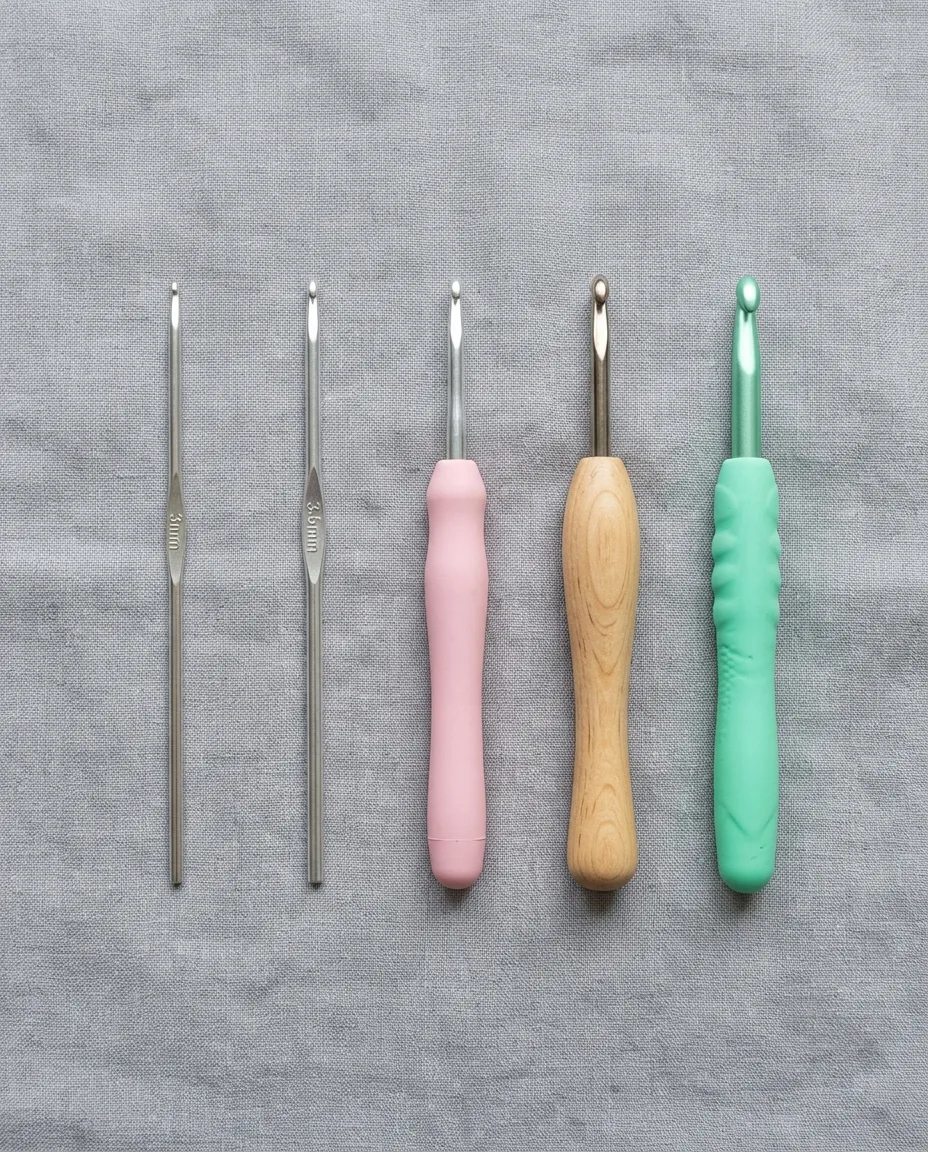
A 3.5 mm (E) hook, a common size for toys, is only 3.5 mm thick at the shaft. Plain aluminum hooks stay thin all the way up, apart from a small flat thumb rest. Holding something that slim takes a tight pinch. Hours of pinching add up.
Ergonomic hooks get around this with a fat handle made of rubber or wood. Fingers wrap around it loosely. They cost more than plain hooks, though. Buy one in the size you use most and try it for a few evenings before buying a set.
No budget for one? Thicken the hook you have. A foam pencil grip from a stationery shop slides right on. Polymer clay works as well, shaped around the handle and baked hard. What you’re after is a handle thick enough to hold without clenching.
Cause 3
Is the hook too small for the yarn?
 Save
Every yarn has a hook size it likes. It’s printed on the yarn band. Worsted weight, the medium thickness most toy patterns use, usually calls for a 5 mm (H) hook. Amigurumi breaks that on purpose. Toy patterns drop a size or two to close the gaps between stitches, so the stuffing stays hidden.
The price is effort. A small hook in thick yarn turns every loop into a squeeze, and your wrist twists to force the hook through.
Go up half a millimeter and work a small test piece. Then stretch it a little and hold it up to a window. Can you see light through the stitches? Stuffing will show there too, so go back down. If it still looks closed, keep the bigger hook.
But the hook is only half of it. The other hand feeds the yarn, and a lot of people wrap it twice around the little finger. That pulls the yarn tight before it ever reaches the hook. Try a single wrap. Or none.
Cause 4
Stiff cotton for tight toy rounds
 Save
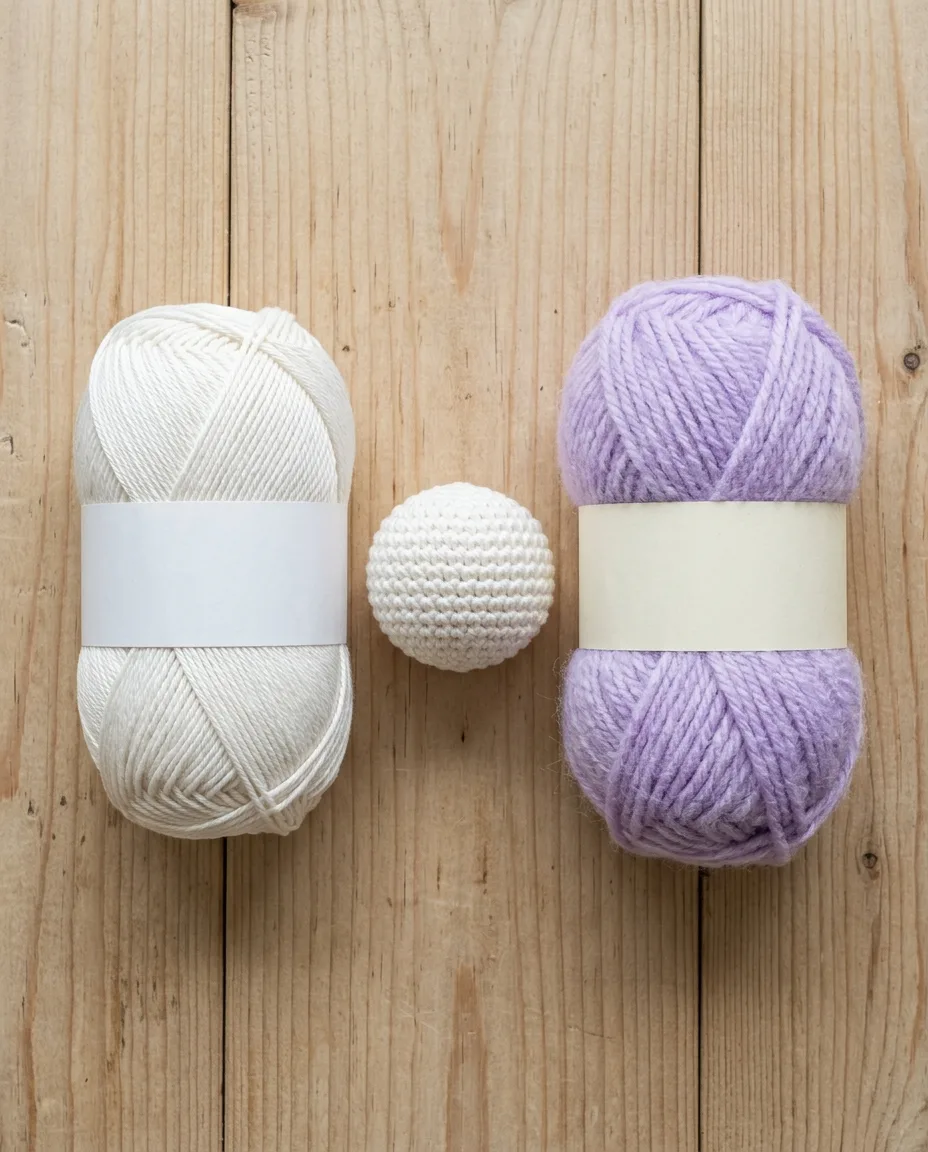
Cotton is a favorite for toys. It holds a shape well and shrugs off washing. It also doesn’t stretch at all. Acrylic and wool give a little as you pull a loop through them. Cotton just sits there, and your hand has to supply all the give.
Mercerized cotton is the hardest on hands. It’s treated to be smooth and shiny, which also makes it firm. Worked tight on a small hook, it’s hard going even for strong hands.
Switching is easy. A soft acrylic in the same weight works for nearly any toy pattern, and the stitch counts don’t change. Check the size of the first piece, since yarns labeled the same weight still vary a little. Keep the cotton for small parts like ears and beaks. Do the big body pieces in something softer.
Cause 5
Hours of crochet with no breaks
 Save
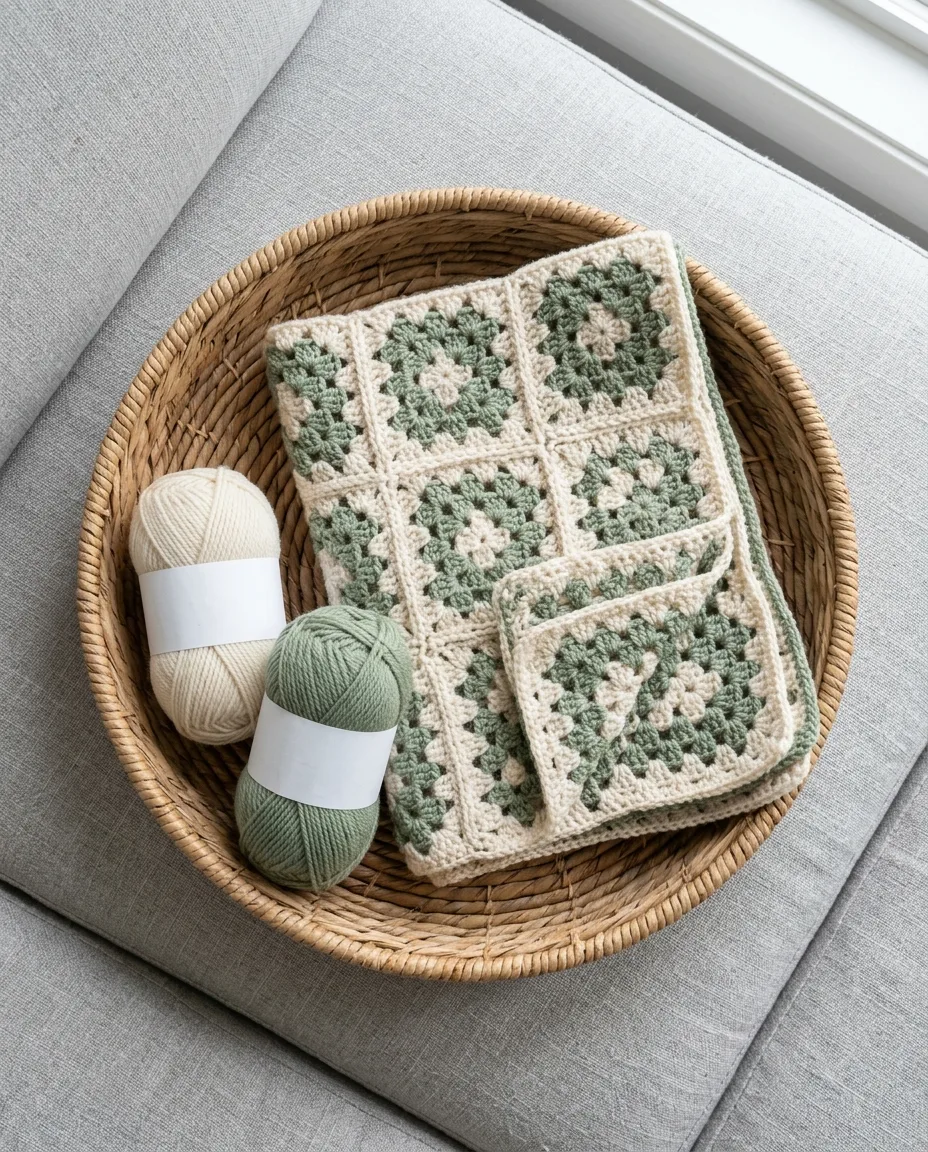
Two hours disappear fast in the middle of a blanket. All that time the hand repeats the same few movements with no pause.
Set a timer for every half hour or so. When it goes off, put the work down. Open and close your hands a few times. Shake them out. Then pick the work back up. Short pauses are easier to keep up than one long rest at the end of the night.
Swapping projects helps more than you’d think. Put the tight toy aside one evening and work something chunky on a big hook. Different yarn. Different hand position.
Don’t push through a sore hand to finish a round. Slip a stitch marker into the loop on your hook, a small clip that keeps the stitch from unraveling, and stop. The round will still be there tomorrow.
Cause 6
Hunched over, elbows hanging
 Save
Your wrists aren’t working alone. When your elbows float in the air and your shoulders round forward, that weight hangs off your forearms. To bring the hook back into view, your wrists bend.
Sit back in a chair with a firm back. Put a cushion on your lap or the armrest so the work sits higher, around chest height. Now the forearms can rest on it. Your wrists come back toward straight.
Light matters more than most guides admit. Dark yarn in a dim room makes you lean in to find each stitch. A bright lamp beside you, aimed at the work, lets you sit back. It’s cheap, and probably the most overlooked fix on this list.