Quick fix
Most crochet wind spinners stall because the string twists up with no swivel, or because the coil has gone soft and hangs straight. Add a ball-bearing swivel at the top and stiffen the coil, then hang it in open air with the bead centered underneath.
You hang it up on a breezy afternoon and wait. The coil twitches. It turns half a circle, stops, then swings back the other way like a pendulum. By evening it hangs dead still, a striped ribbon drooping off a hook. That’s the most common way a crochet wind spinner fails, and it almost never means the pattern was wrong.
Spinners turn because wind pushes on the curved face of the coil. The coil has to hold its twist, catch enough air, and hang free to rotate. Lose any one of those and it stalls. The good news? Every cause below can be fixed on the spinner you already made. Only one of them sometimes means starting over, and it’s the least common.
Work through them in order. Most stuck spinners clear up after the first two.
Cause 1
There’s no swivel, so the string winds up and locks
 Save
Tie a spinner straight to a string and it can only turn a few times before the string twists tight. Then it stops. Worse, the twisted string unwinds and drags the spinner backward, which looks like the back-and-forth swinging most people notice first.
A swivel fixes this. It’s a small metal link with two rings that turn freely against each other, so the spinner rotates while the cord above stays put. Fishing swivels from a tackle shop work. Ball-bearing swivels sold for garden spinners turn more easily in light wind, and they’re worth the extra cost.
Tie the cord to the top ring and the spinner to the bottom one. Give the spinner a flick with one finger. It should keep turning for a few seconds after you let go. If it stops dead, the swivel is cheap or rusty. Swap it.
Cause 2
The coil is soft and hangs straight
 Save
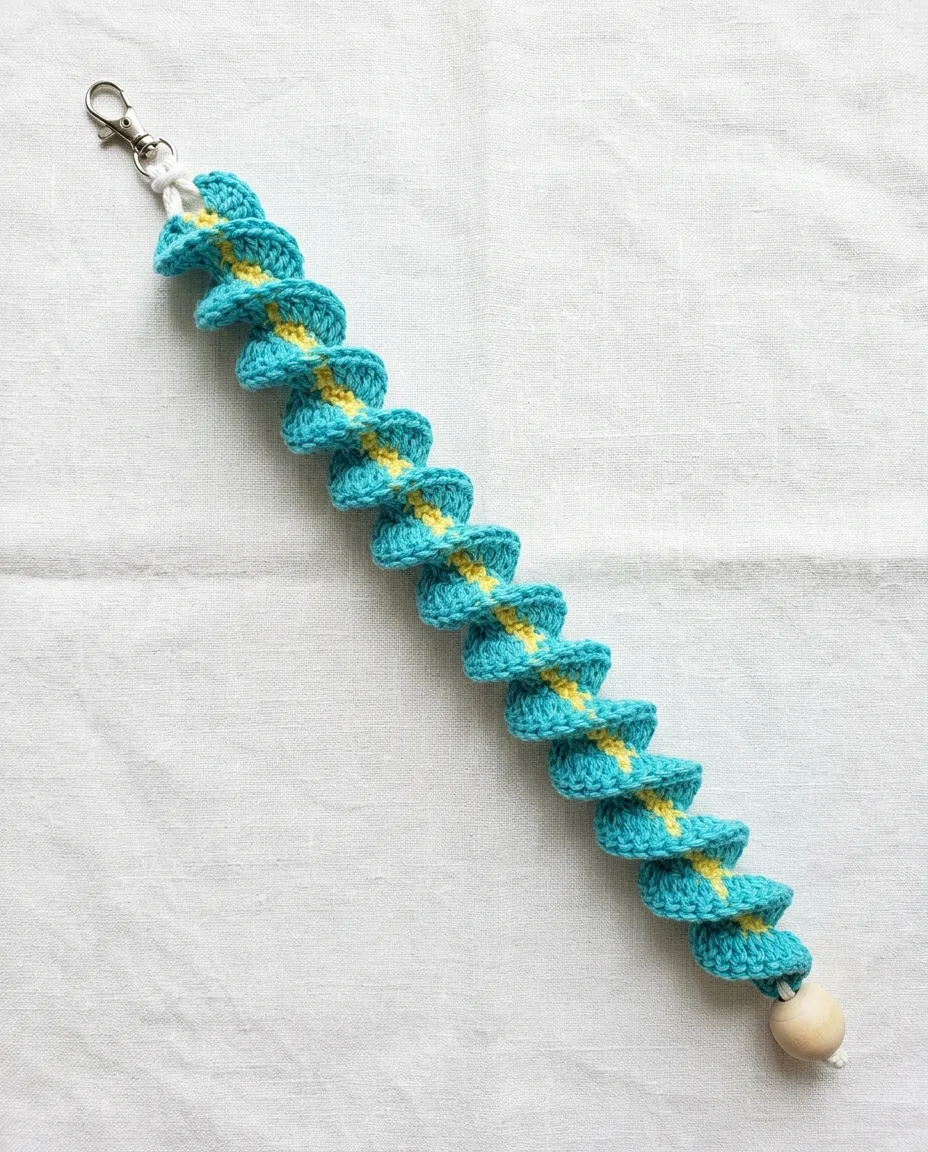
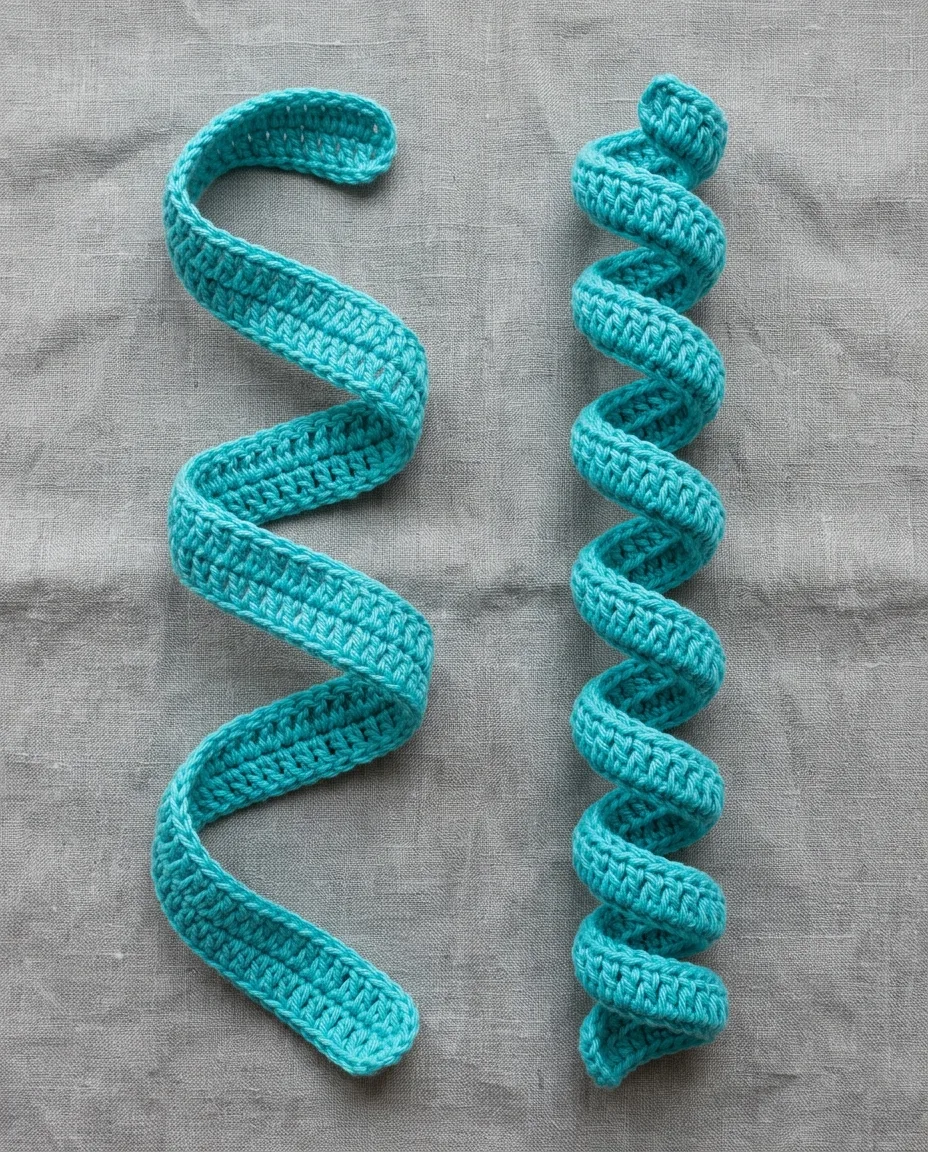
Fresh off the hook, a corkscrew spinner looks great on the table. Hang it up and gravity pulls the twists apart. Within a day it hangs longer and flatter. A flat ribbon has almost nothing for the wind to push against, so it just sways.
Stiffen it. Soak the spinner in fabric stiffener, squeeze out the extra, then hang it with a small weight at the bottom to dry. Twist the coil back into shape with your fingers while it’s wet. Overnight is usually enough. Diluted white school glue also stiffens yarn, but rain washes it out in a week or two, so save it for an indoor window.
Rain is the other half of this cause. Cotton yarn soaks up water and gets heavy, and a wet cotton coil sags even after stiffening. Acrylic yarn holds far less water. For a spinner that lives outdoors, acrylic plus a clear outdoor acrylic sealer spray over the dried stiffener lasts longest. Expect to re-stiffen once a season anyway.
Cause 3
Too few stitches per chain
 Save
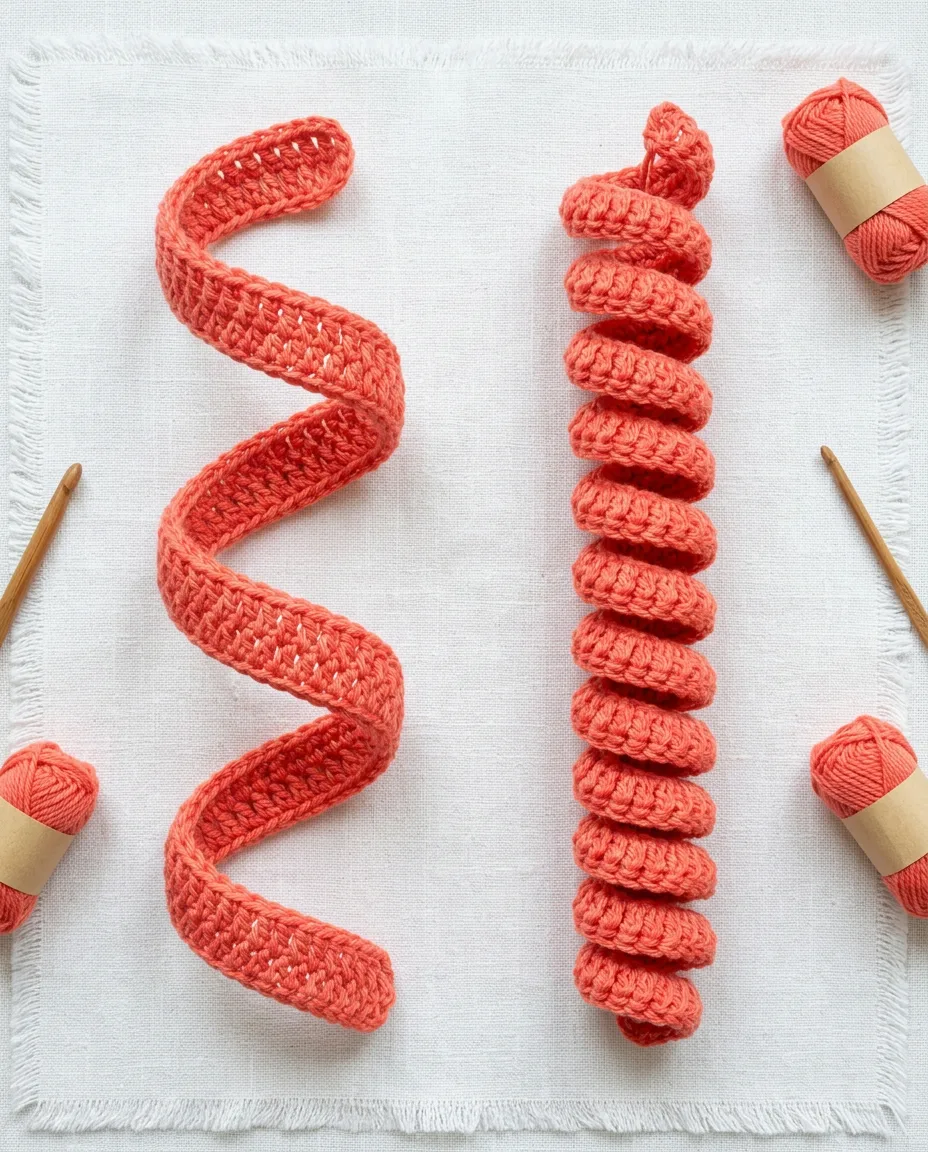
Not every limp coil is a stiffening problem. Some spinners were never tightly curled to begin with. A corkscrew spinner curls because you cram far more stitches into each chain than the chain has room for. The extra fabric has nowhere to go but around, and it twists into a spiral.
Two stitches in each chain gives a lazy wave. Four gives a tight coil with many close turns, and that’s the version that spins well. Look at your spinner. If you can count only three or four turns along its whole length, this is your cause.
This is the one fix that means remaking the spinner. Chain 60 for a spinner about a foot long. Then work 4 double crochets into each chain, starting in the fourth chain from the hook. For each double crochet, wrap the yarn around the hook once, back to front. That’s a yarn over, and you’ll do three more. Push the hook into the chain. Wrap again and pull up a loop. Three loops on the hook now. Wrap and pull through two of them, then wrap and pull through the last two. That’s one stitch. The strip will start twisting on its own after a few inches, which is exactly what you want.
Cause 4
Lacy stitches let the wind through
 Save
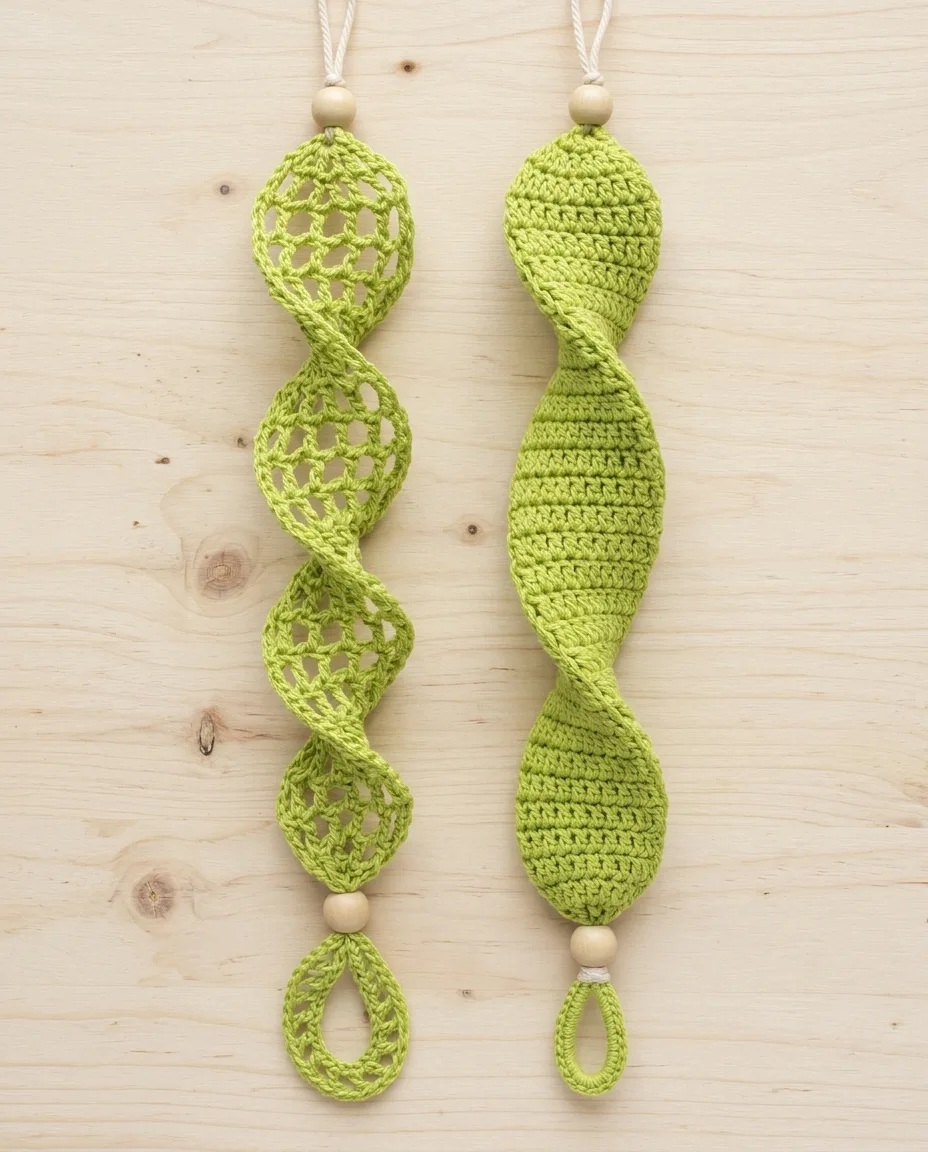
Open stitches look pretty in a spinner. Chain spaces, mesh, big gaps between clusters. But wind doesn’t push on holes, it slides straight through them. A lacy coil can be perfectly stiff with a good swivel and still turn only in a strong gust.
Solid fabric works better. Double crochet worked into every chain, with no chain spaces, gives the wind a closed surface. Going down a hook size helps too. Try a 4 mm (G) hook with worsted weight acrylic, the medium-thick yarn most craft stores stock. It makes a firmer coil than the 5 mm hook printed on most yarn bands. Denser fabric also holds stiffener better, since there’s more yarn to soak it up.
Want to keep a lacy one you love? Hang it indoors near a fan or an open window, where the air moves steadily. Outside, it’s mostly decoration.
Cause 5
If the bead pulls it sideways
 Save
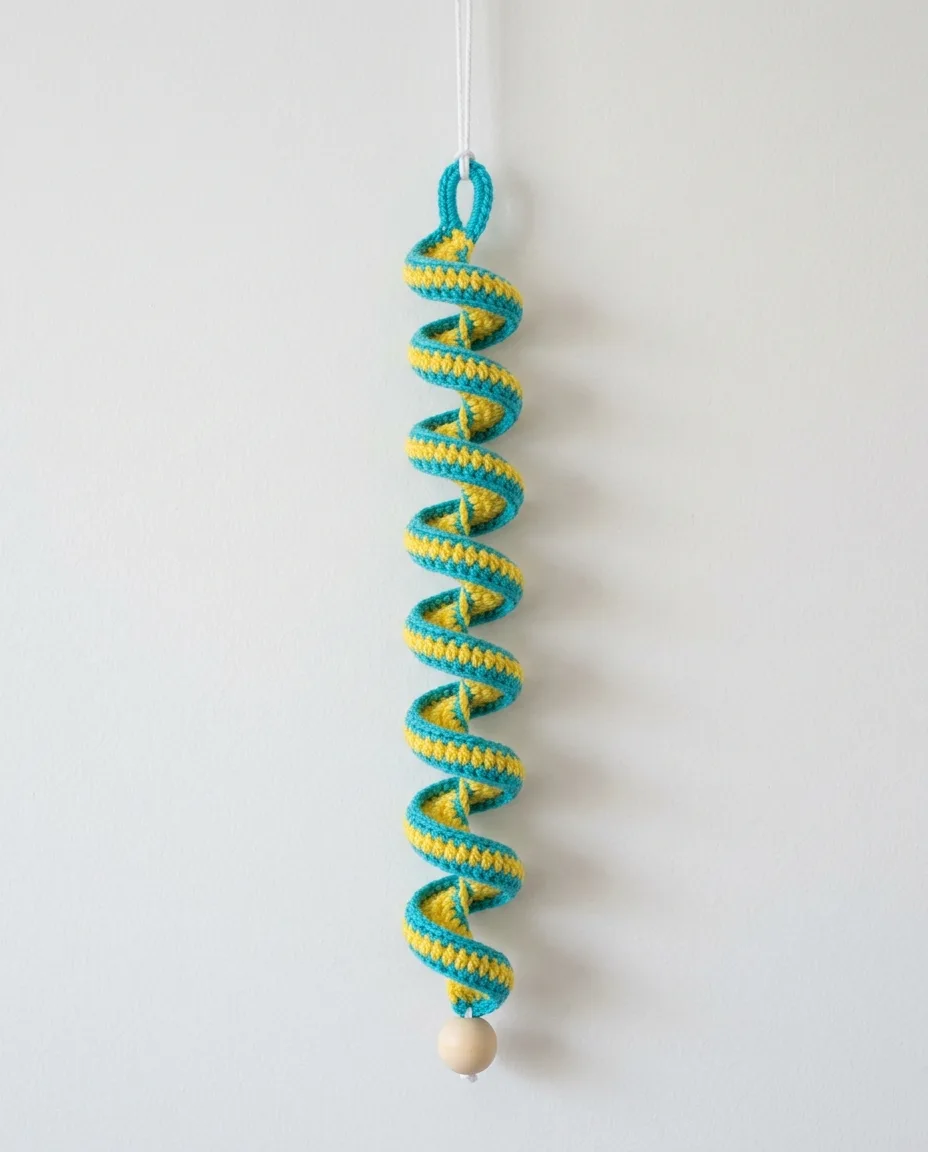
A spinner turns around an invisible line running from the cord down through the bottom tip. Anything that drags that line off center makes it wobble. Then it bumps the wall or simply refuses to start. The usual culprit is a bead or tassel tied to one edge of the coil instead of its center.
Hold the spinner up by its cord and look at it from the side. It should hang plumb, straight down. If the bottom drifts left or right, retie the bead to the middle of the last stitches. The top cord needs the same treatment, so tie it through the center of the first row. One small bead is plenty. Heavy weights stretch the coil and slow it down.
And long yarn tails count as weight too. Weave them in and trim them close.
Cause 6
The spot is too sheltered
 Save
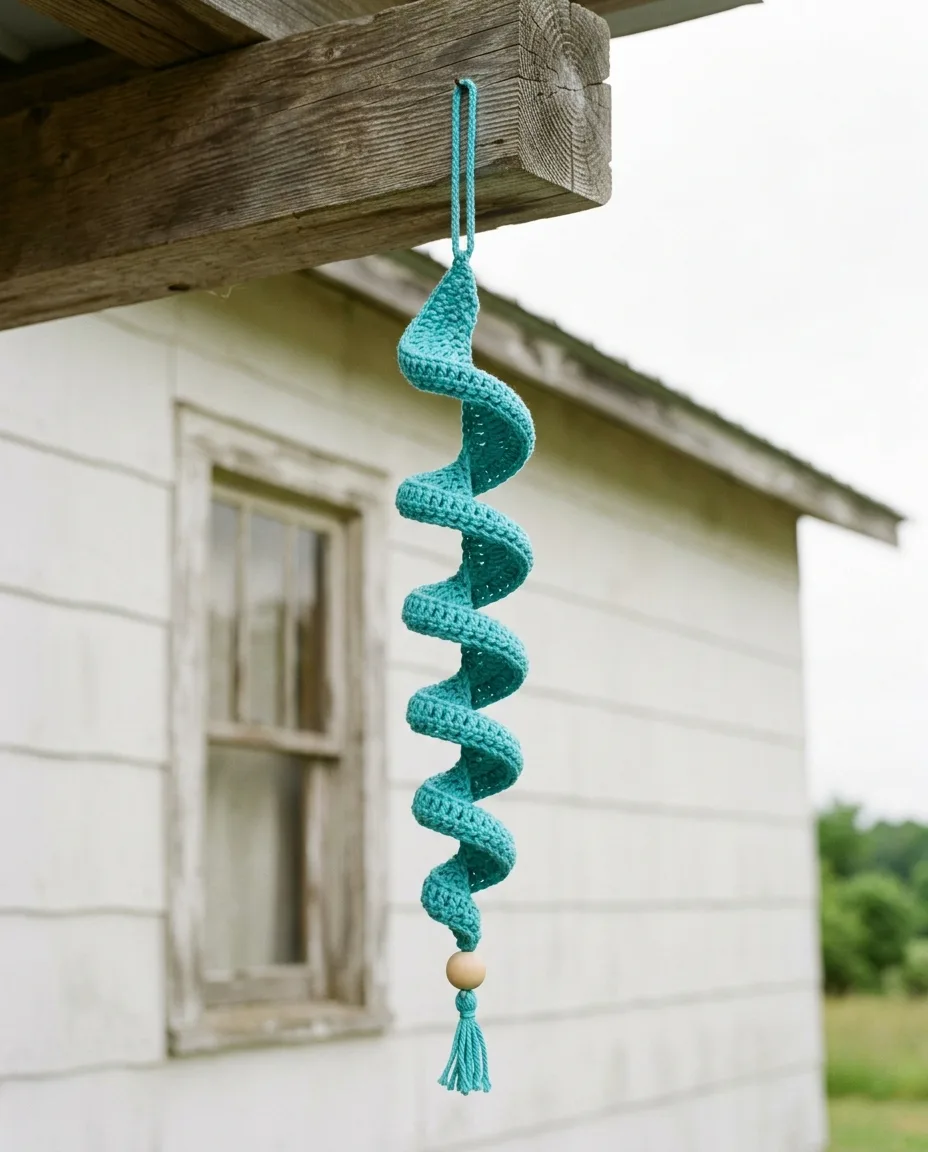
Sometimes the spinner is fine and the hook it hangs from is the problem. Under a deep porch roof, the air barely moves. Against a wall, the wind hits on one side only, and the spinner gets pushed flat against the siding instead of turning.
Move it out to the edge. The end of a porch beam, a tree branch away from the trunk, or a shepherd’s hook in the open garden all get moving air from more directions. Keep a clear gap between the spinner and anything it could brush against, so it can’t catch on the way around. And give it a day before judging. Some afternoons are just still.
Indoors, a sunny window catches less wind than it seems to. A spot near a ceiling vent or a fan does better. A spinner there turns slowly and steadily, which is honestly the nicer look for a kitchen window anyway.