Quick fix
Usually your tension drifted between squares, or a different hook or yarn crept in. Check each new square against your first one, then block them all to one size before joining.
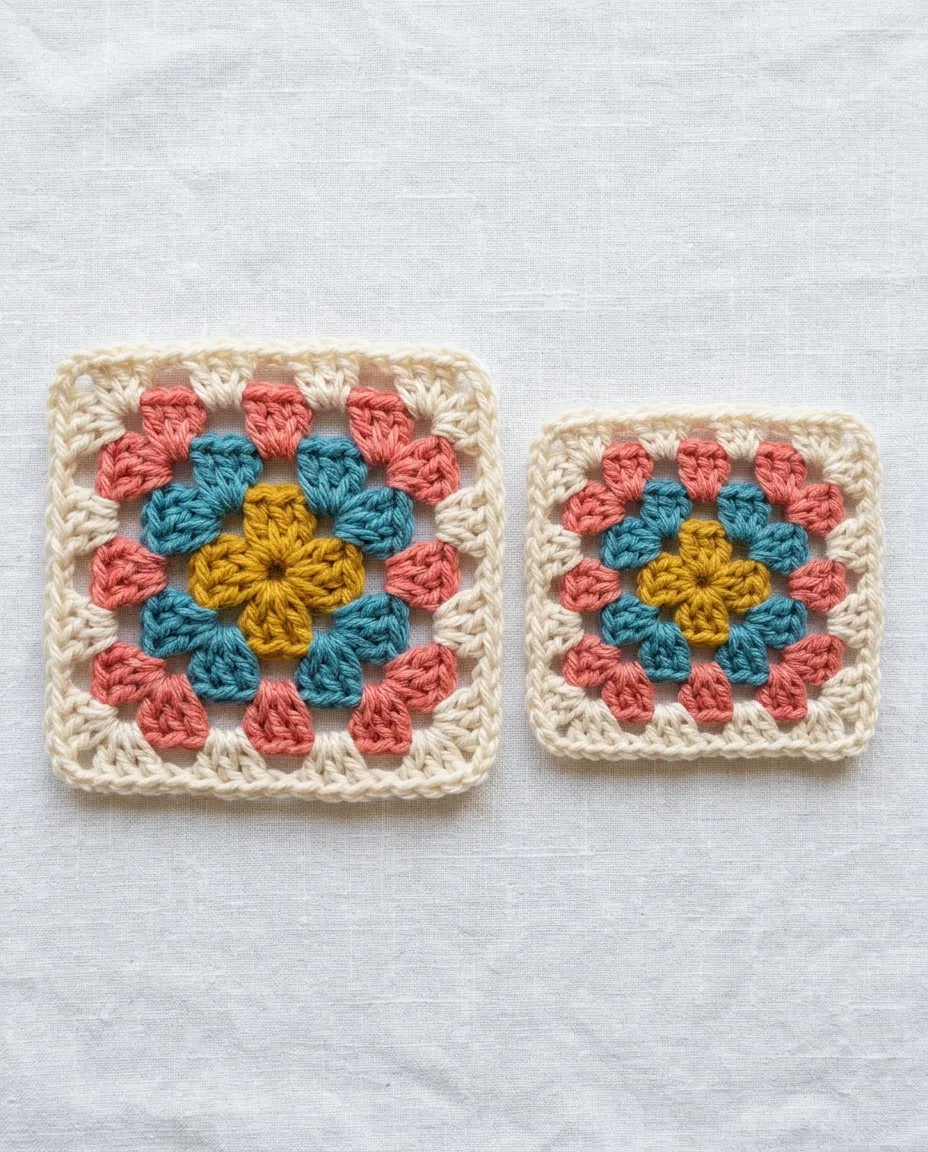
Most people blame the yarn when their granny squares won’t match. It’s usually the hands. One pattern and one ball of yarn can still give you squares that differ by half an inch, and nobody did anything wrong. Tension, meaning how tightly you hold the yarn as it feeds onto the hook, drifts over a project that takes weeks.
A granny square is built from clusters. Each cluster is three double crochets worked into the same space. To make one double crochet, wrap the yarn around the hook once and push the hook into the space. Pull up a loop. Three loops sit on the hook now. Wrap again and pull through two of them, then wrap and pull through the last two.
Small differences add up fast. Every round grows the square on all four sides at once, and a slightly taller stitch repeats all the way around.
But a mismatched pile is fixable. The six causes below are in the order they usually turn up. Most squares can be rescued by blocking, without ripping anything out. If one square is much bigger than the rest, though, blocking alone won’t close the gap.
Cause 1
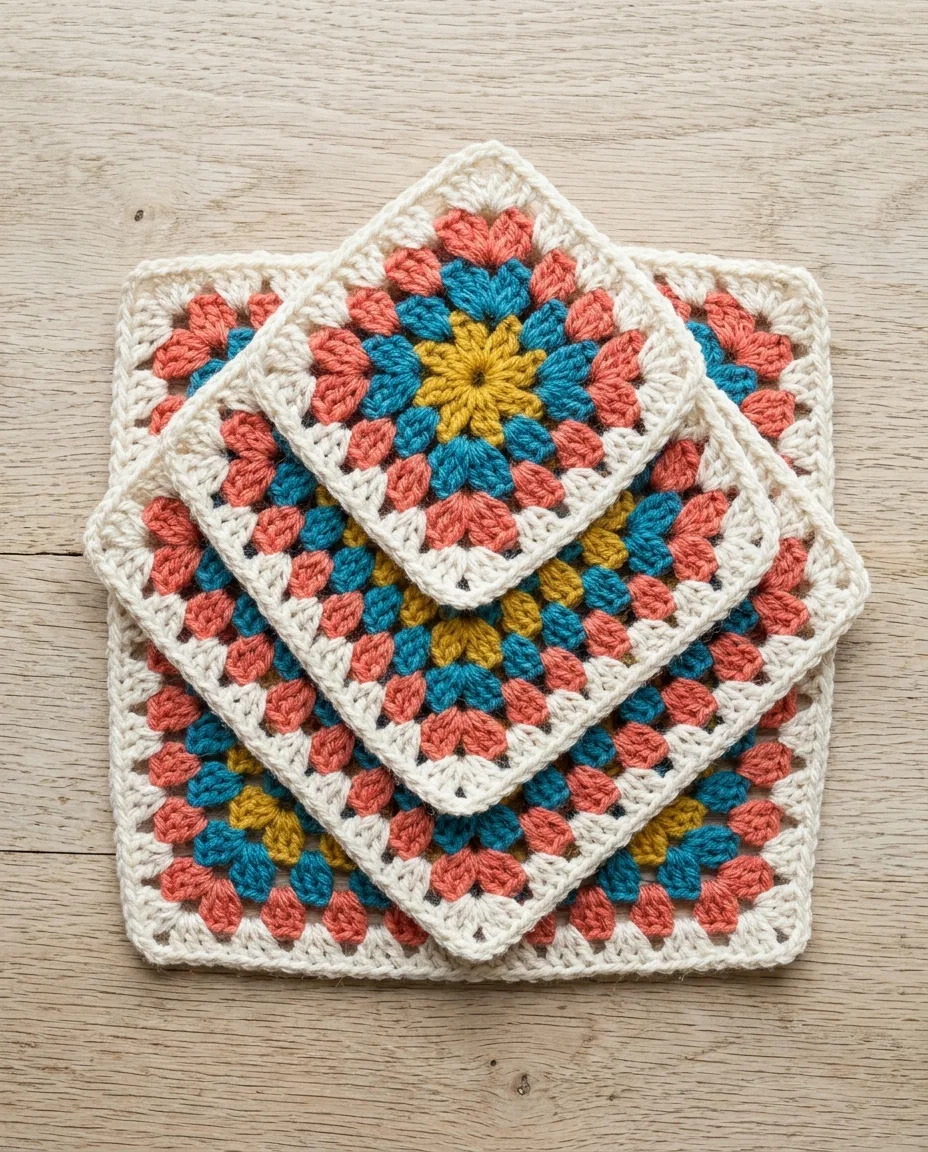
Your tension changes from one day to the next
 Save
Tension is usually the culprit. Squares made on a tired evening tend to come out tighter. The first few squares of a project are often tight as well, while your hands get used to the yarn. Then by square thirty you’re relaxed, and everything loosens. Holidays do it too. So does switching from the couch to a train seat. None of it shows on a single square. Line up ten, though, and it’s obvious.
Watch the first loop you pull up in each double crochet. Tall loops make tall stitches. Keep that loop level with the one already sitting on the hook. That one habit matters more than how hard you grip.
Measure as you go. Lay each new square on top of your first good one, corner to corner. Bigger? Rip back the last round and work it again with a slightly firmer hold on the yarn. Smaller means the opposite: let the yarn run through your fingers a little more freely.
No ruler needed. Your first square is the template. Every new square should match it within about an eighth of an inch (3 mm) before you start the next one. Keep that template out of the pile and use it right to the end.
Cause 2
A different hook got into the project
 Save
Hooks labeled the same size aren’t always the same. Brands shape the head and throat differently. A 5 mm aluminum hook and a 5 mm bamboo one can make loops of slightly different sizes in the same hands. Swap one for the other halfway through a blanket and the squares drift.
This happens more than it sounds. A hook goes missing, a spare comes out of the drawer, and nobody notices for a dozen squares. Pick one hook for the whole blanket. Put a twist of tape on it if you own several in the same size.
If the hooks already got mixed up, sort the finished squares into two piles by size. The smaller ones can be blocked a little larger. Or give them a row of their own, where one long seam hides the difference.
Cause 3
The yarn isn’t quite the same weight
 Save
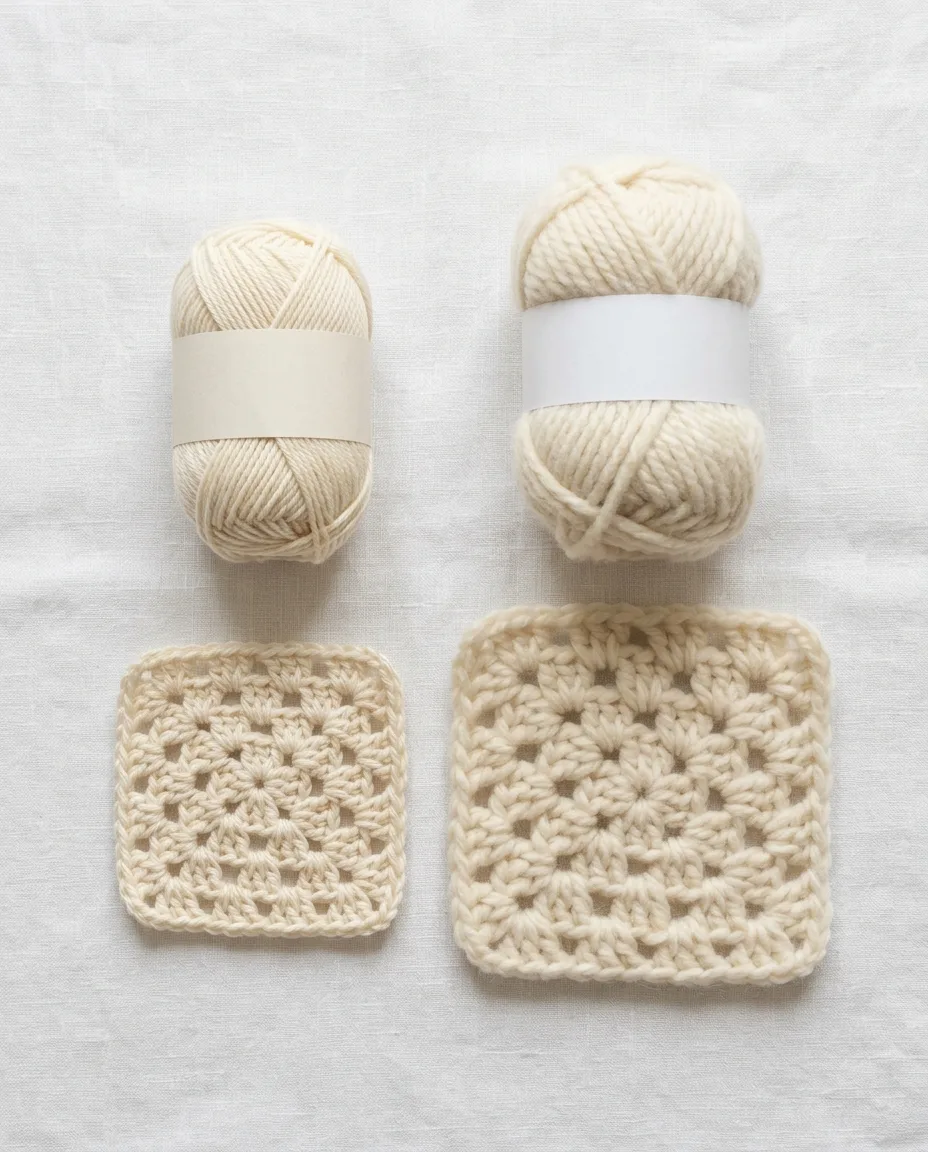
Worsted weight, the medium yarn most granny square patterns ask for, covers a range. One brand’s worsted can be noticeably thicker than another’s. And two dye lots of the same yarn can feel slightly different in the hand, even with the same label.
Scrap blankets run into this one the most. A square finished in fluffy acrylic comes out larger than one finished in tight cotton, even with the same hook. Cotton also gives less when it’s blocked. It mostly stays the size it came out.
Check each label for the yardage and the weight of the ball. Yarns with very different yards per ounce won’t make matching squares. Stuck with a mix anyway? Put the thicker yarn in the center rounds of every square, so each square gets an equal share of it.
Cause 4
Corner chains vary from square to square
 Save
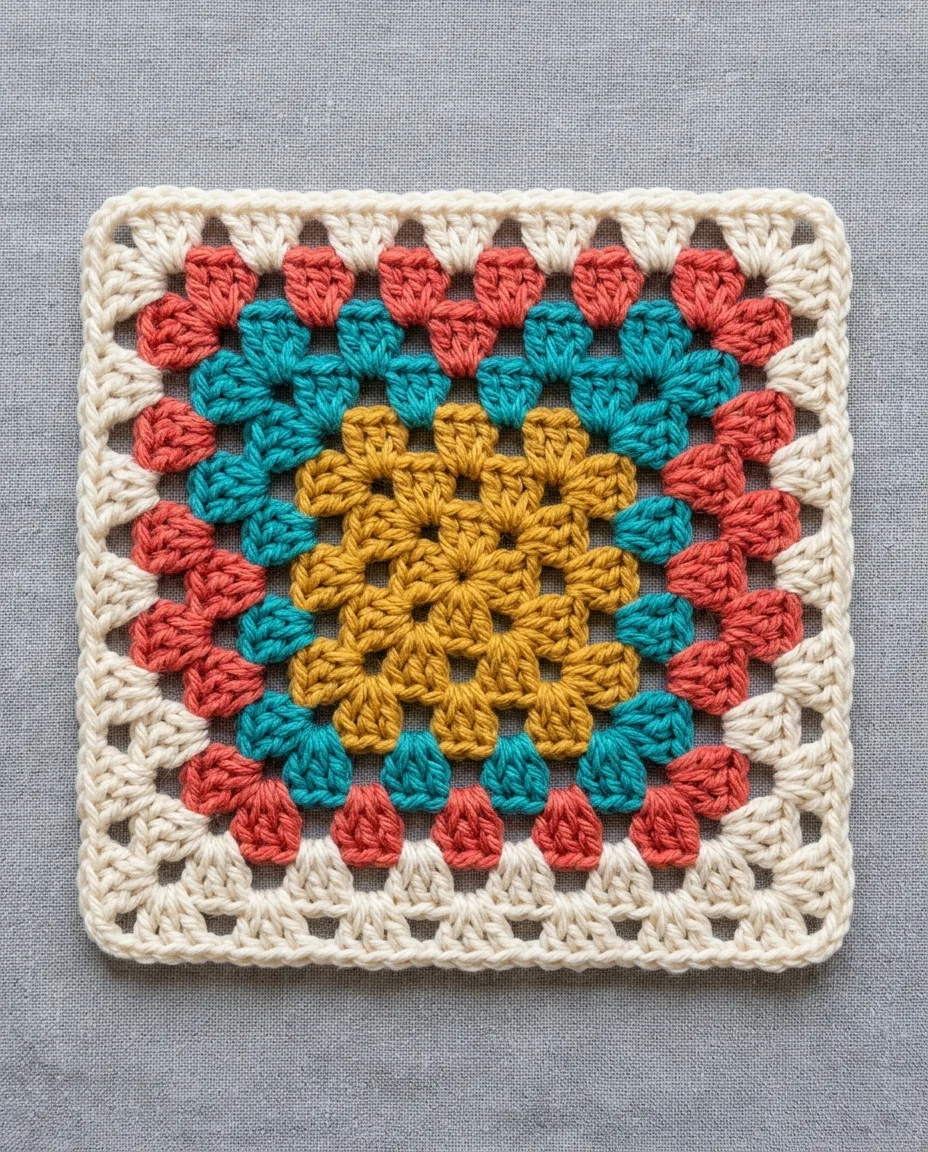
Corners are where squares quietly grow. A common corner is three double crochets, two chains, then three more double crochets, all worked into the same corner space. Work three chains instead of two on some squares and those corners poke out further. Over four or five rounds it shows.
One chain or none: patterns disagree on what goes between clusters along the sides. Mixing the two changes the width of every side.
Count the chains at each corner of your first square. Write the corner and side counts on a sticky note and keep it with the yarn. Not glamorous. It stops this cause cold, though.
Cause 5
Some squares have an extra round
 Save
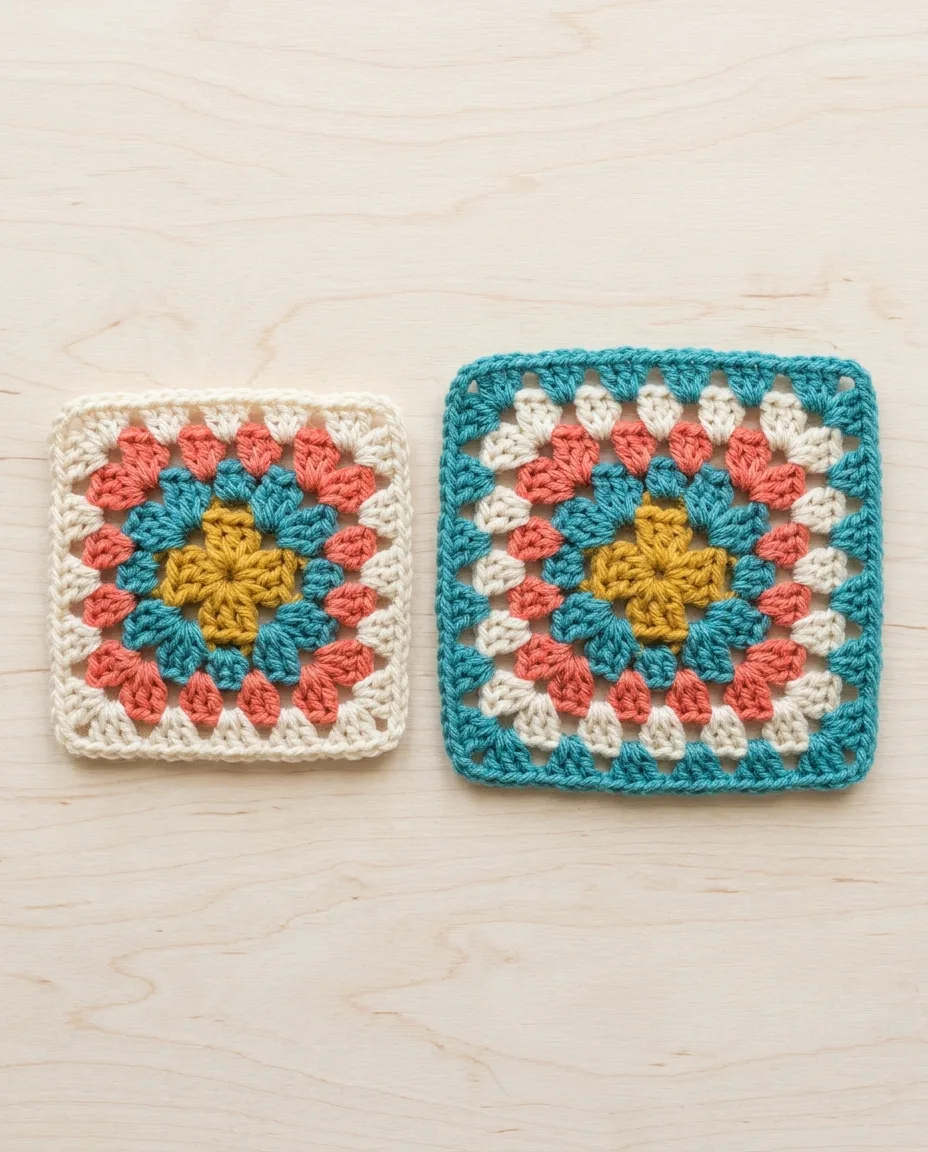
Losing count of rounds is easier than it sounds, especially in a solid color. Each round adds one double crochet of height to every side. One round too many makes a square clearly bigger, and blocking can’t take that back out.
To check a square, count the clusters along one side, corners included. That number goes up by one with every round. Four clusters on a side means four rounds.
Solid squares are the risky ones. Striped squares come with a built-in counter, one color per round. For a single-color blanket, clip a stitch marker into the first stitch of each new round, or keep a tally on paper next to the yarn.
Cause 6
The squares were never blocked
 Save
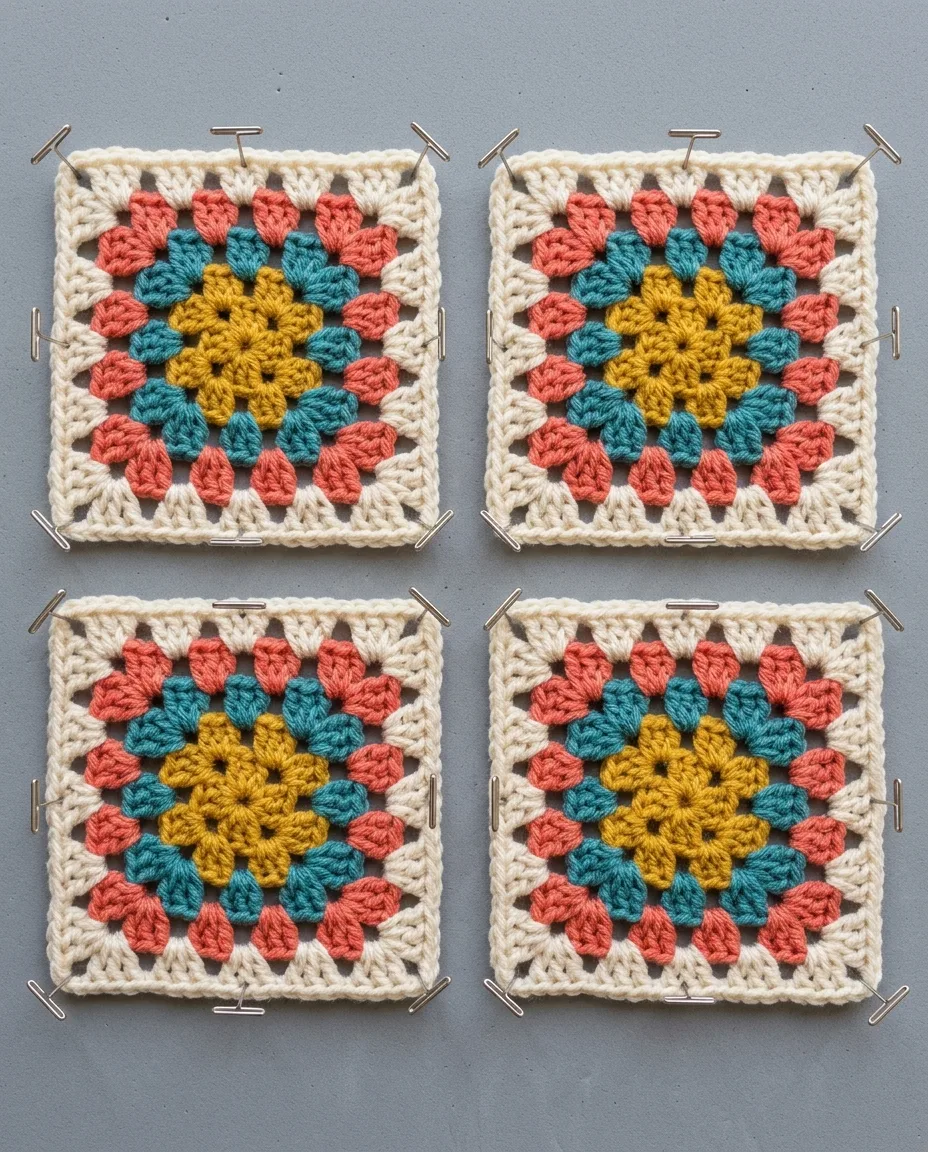
Squares straight off the hook look more different than they really are. Blocking, which means wetting a piece and pinning it flat to dry, evens out small gaps better than most people expect. Two squares a quarter inch apart on the table often match once they’ve been pinned to one size.
Take the target size from your template square. Mark it out on a foam mat or a folded towel with four pins. Wet each square and squeeze it out in a towel. Pin it to the same marks and leave it until it’s dry all the way through, which can take most of a day.
Acrylic yarn barely moves with water alone. Hold a steam iron just above the pinned square, never touching it, and let the steam sink in. Too much heat flattens acrylic for good (and there’s no undoing that), so keep the iron moving. Wool and cotton do fine with plain water.
Blocking has limits. It stretches a small square up a little. A big one hardly shrinks at all. So block every square to the size of the larger ones, and rework the last round of any square that’s still way off.