Short answer
Simple crochet gives your hands one small motion to repeat and a stitch count to check, which leaves little room for your thoughts to wander. Start with a plain single crochet dishcloth in smooth cotton, a project easy enough for a tired evening.
Put the phone in another room, pick up a 5 mm (H) hook and work one row of single crochet. That’s the whole idea. Crochet gives your hands a small job with a clear finish line. A plain project in smooth yarn keeps that job simple enough to repeat without much thought. It won’t cure stress, and nobody honest will promise that it does. Still, a row of stitches beats another half hour of scrolling, and it leaves you holding something real.
How hard is it? The first evening is clumsy. Your hands won’t know where the yarn goes, and the first row will look lumpy. By the third or fourth session the motion usually stops needing words. That’s when it starts to feel restful.
Why a repeated stitch holds your attention
Single crochet is one short movement done over and over. You push the hook into a stitch and wrap the yarn over it from back to front, a move every pattern calls a yarn over. Pull that loop back through. Two loops on the hook now. Yarn over again and draw it through both. That’s one single crochet.
And then you do it again, thirty times across a row. The movement is small enough to fit in your lap. It also needs just enough attention that your thoughts can’t drift far. Lose focus and you skip a stitch. Pay a little attention and the row comes out even, which is why plain crochet suits a busy head better than a hard pattern.
Counting helps too. Each row ends on the same number, so there’s a small check built in. Thirty? Good. Most guides skip this part, yet the count does a lot of quiet work (you always know whether you’re on track).
 Save
Match the project to the evening you’ve had
Not every project relaxes. A sweater with shaping asks you to follow a chart and measure as you go. On a tired night that feels like homework. Keep two projects going instead. One should be easy enough to work while half-listening to a podcast, and the other can be the interesting one for days when you’ve got more to give.
| Project | Attention it needs | Good for |
|---|---|---|
| Plain dishcloth in single crochet rows | Low | Tired evenings, waiting rooms |
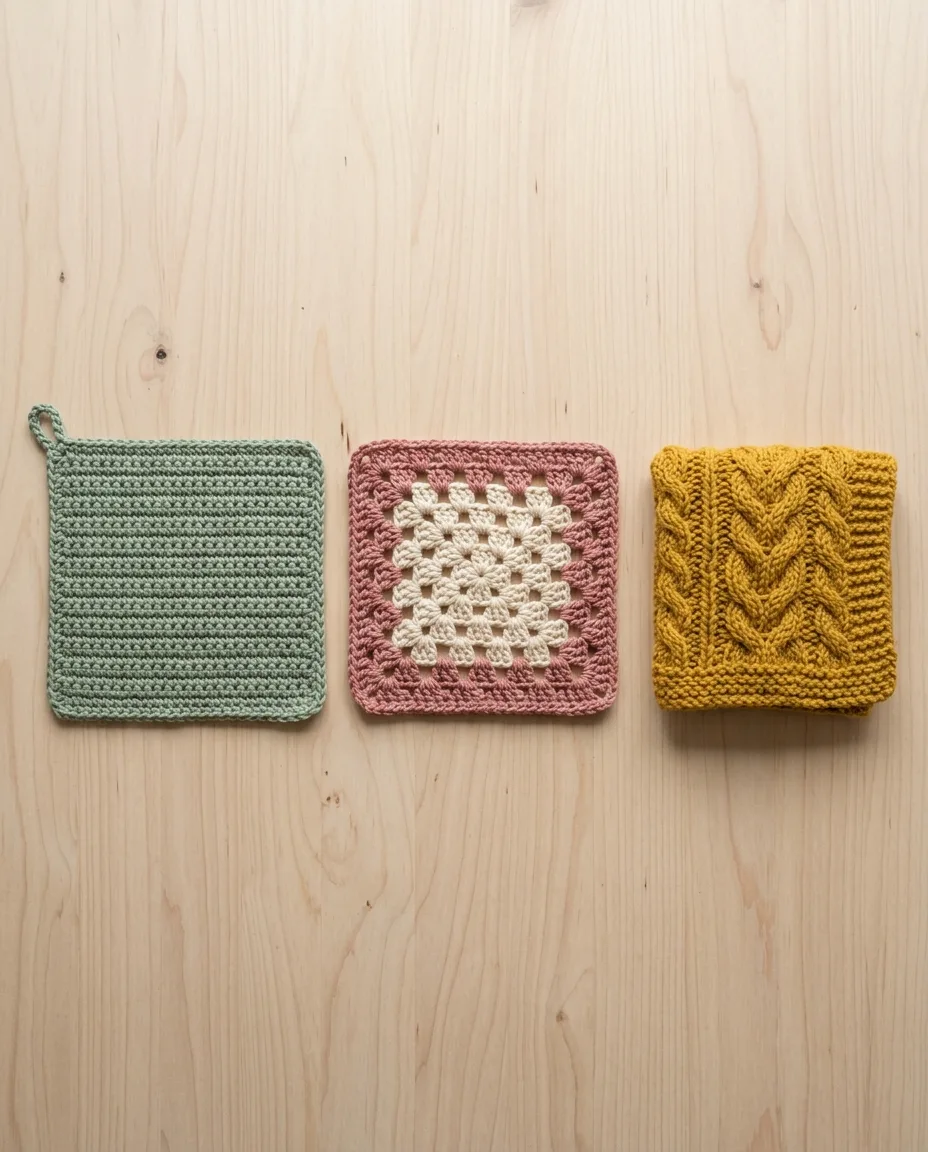
| Granny square | Low once learned | Short breaks, one square per sitting |
| Striped scarf | Low, with a color change now and then | Long stretches in front of the TV |
| Cables and raised textures | Medium | Weekends with a clear head |
| Shaped garment | High | When you want a real challenge |
Granny squares earn their spot on that list. Each square is small and done in one sitting, so even a hectic day gets a clear ending. The catch is the pile of yarn ends you weave in later. Some people find that soothing. Others put it off for months.
 Save
A first project for winding down: one plain dishcloth
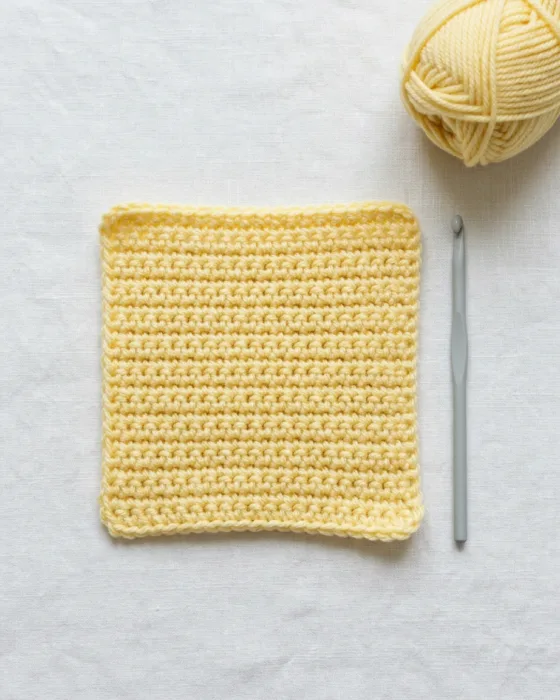
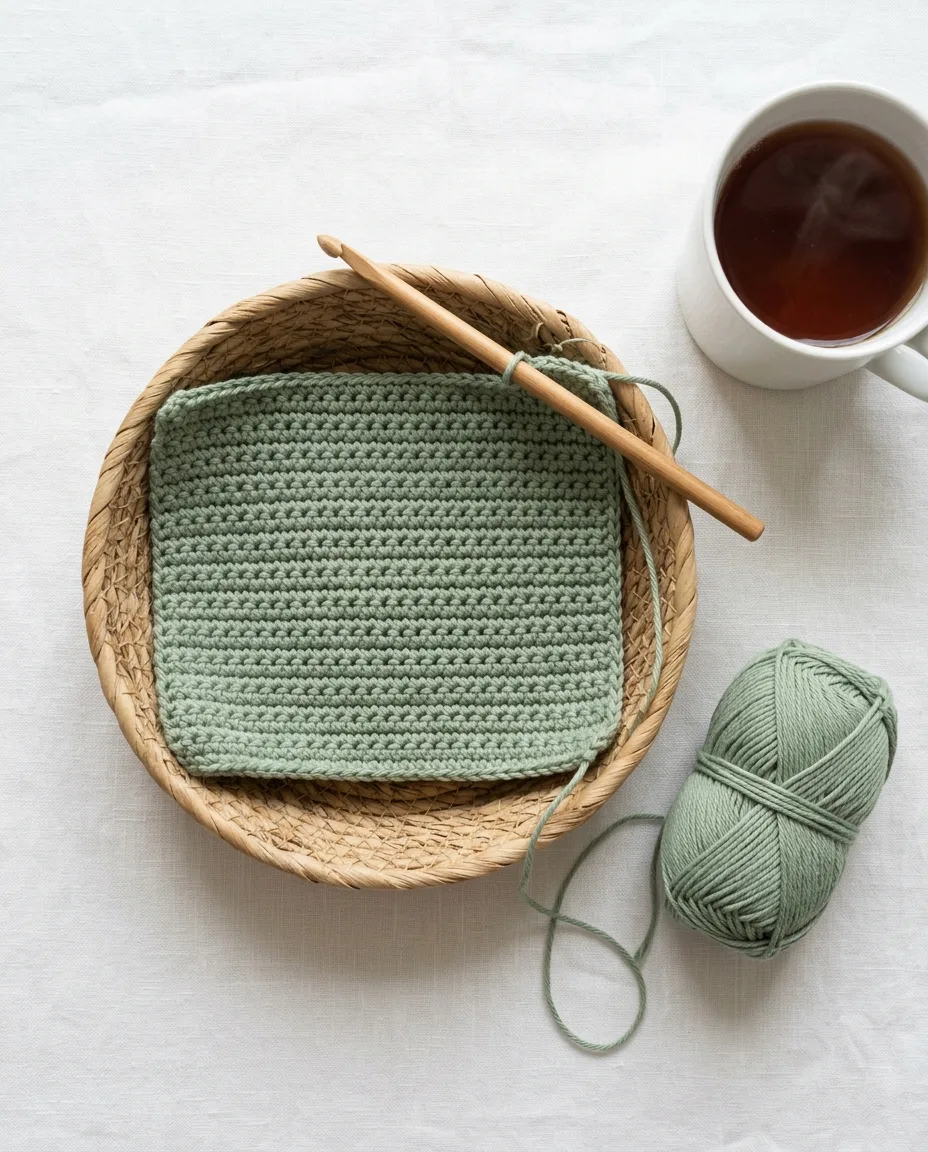
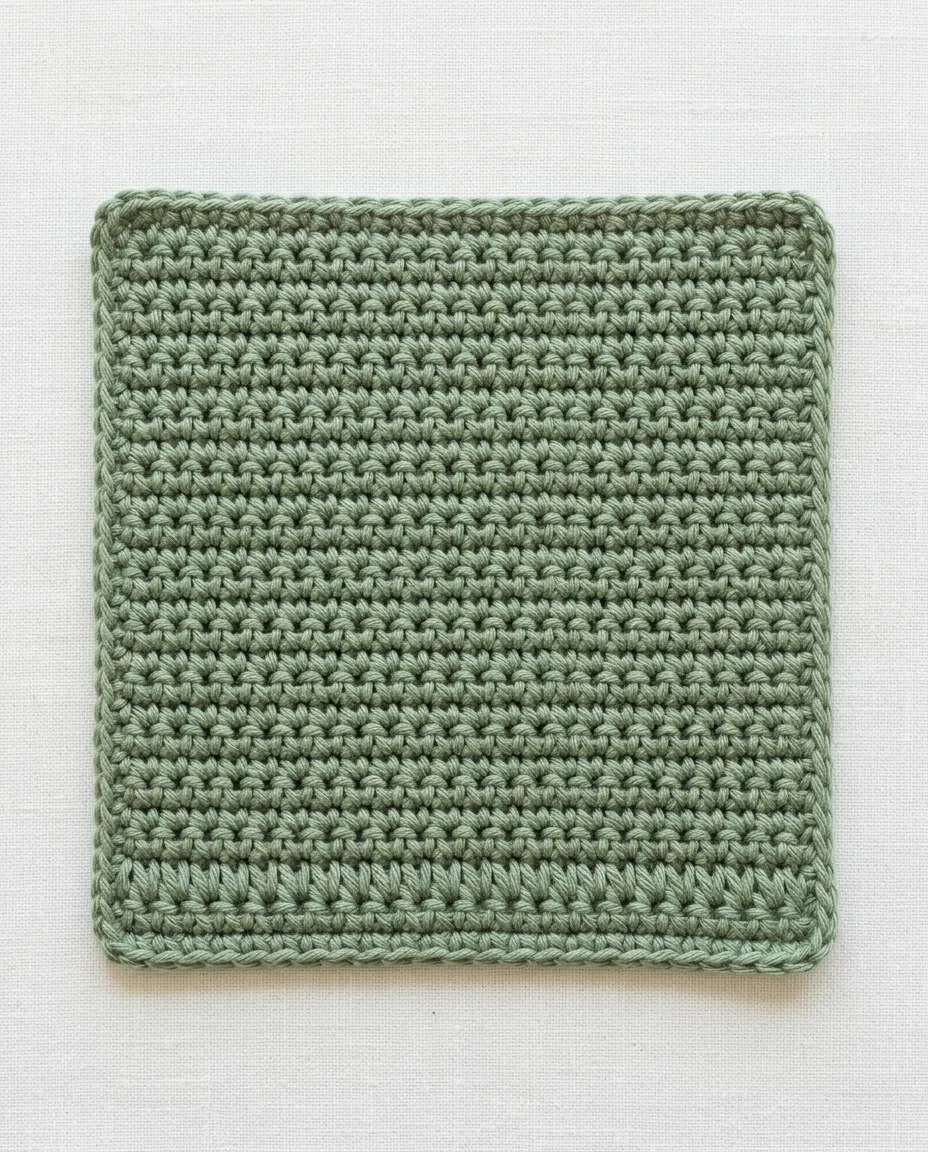
A dishcloth is the best first project for this. It’s flat and square, with no shaping at all. You’ll make it in single crochet rows, using cotton in worsted weight, the medium thickness that fills most of the yarn shelf. Pair it with a 5 mm (H) hook. Cotton shrugs off hot water, so the finished cloth gets real use. All terms here are US crochet terms.
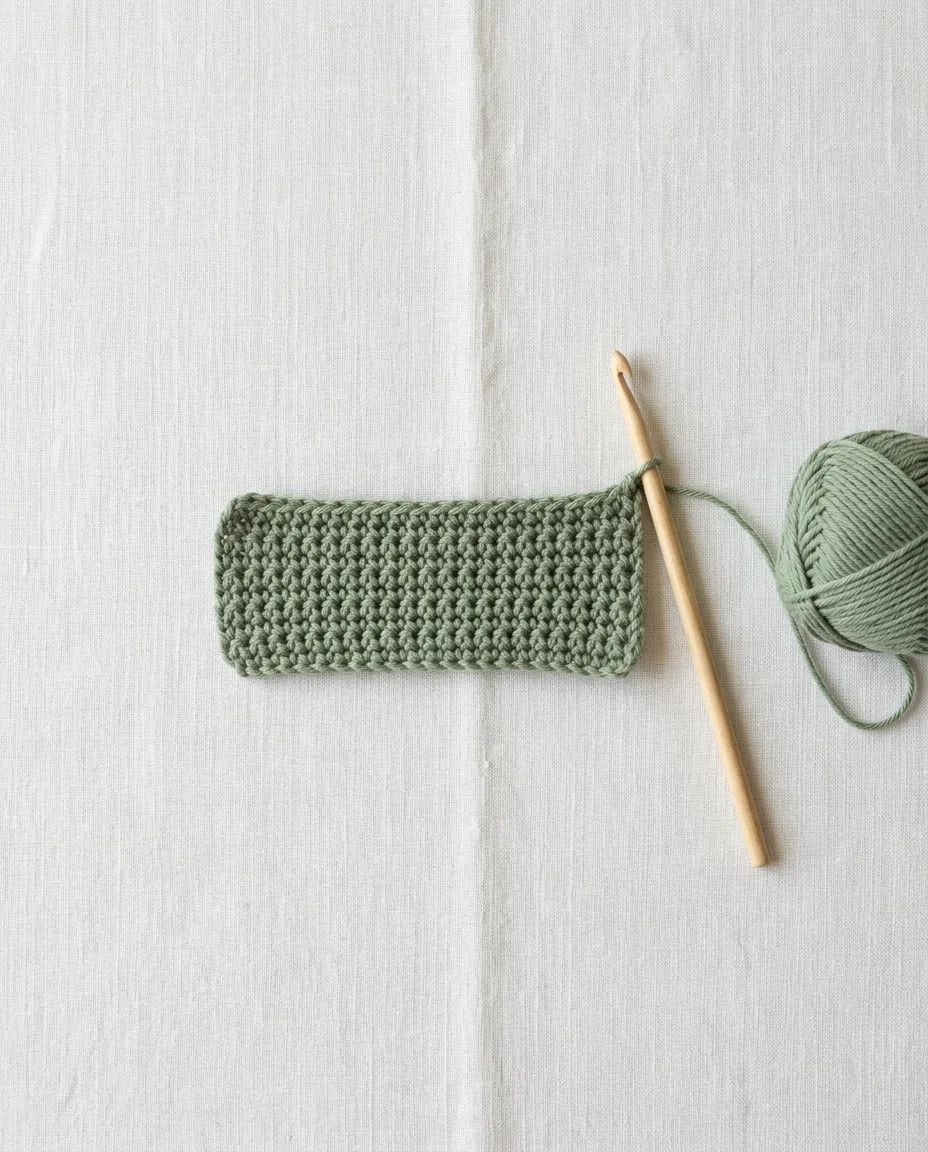
Make a slip knot on the hook first, a loop that tightens when you tug the tail. Then yarn over and pull the new loop through the one already sitting there. That’s one chain. Do it 31 times for your starting chain. Don’t pull tight, though. A loose chain is far easier to work into on the next row, and a tight one makes the bottom edge pucker. If you can’t find the next chain to work into, it’s too tight, so start over a hook size up just for the chain.
- sc in 2nd ch from hook and in each ch across 30 sts
- ch 1, turn, sc in each st across 30 sts
Repeat Row 2 until the piece is as tall as it is wide, about 34 rows. It should come out near 7.5 inches (19 cm) square, though your tension, meaning how hard you pull the yarn, will nudge that. Nobody checks your gauge, meaning how many stitches fit in an inch, on a dishcloth. Good place to learn.
 Save
Watch the last stitch of each row. It hides right next to the turning chain, and missing it makes the cloth one stitch narrower. Count every row for the first ten or so. Twenty-nine? You skipped the end stitch, so undo back to it. Thirty-one usually means a stitch went into the turning chain by mistake.
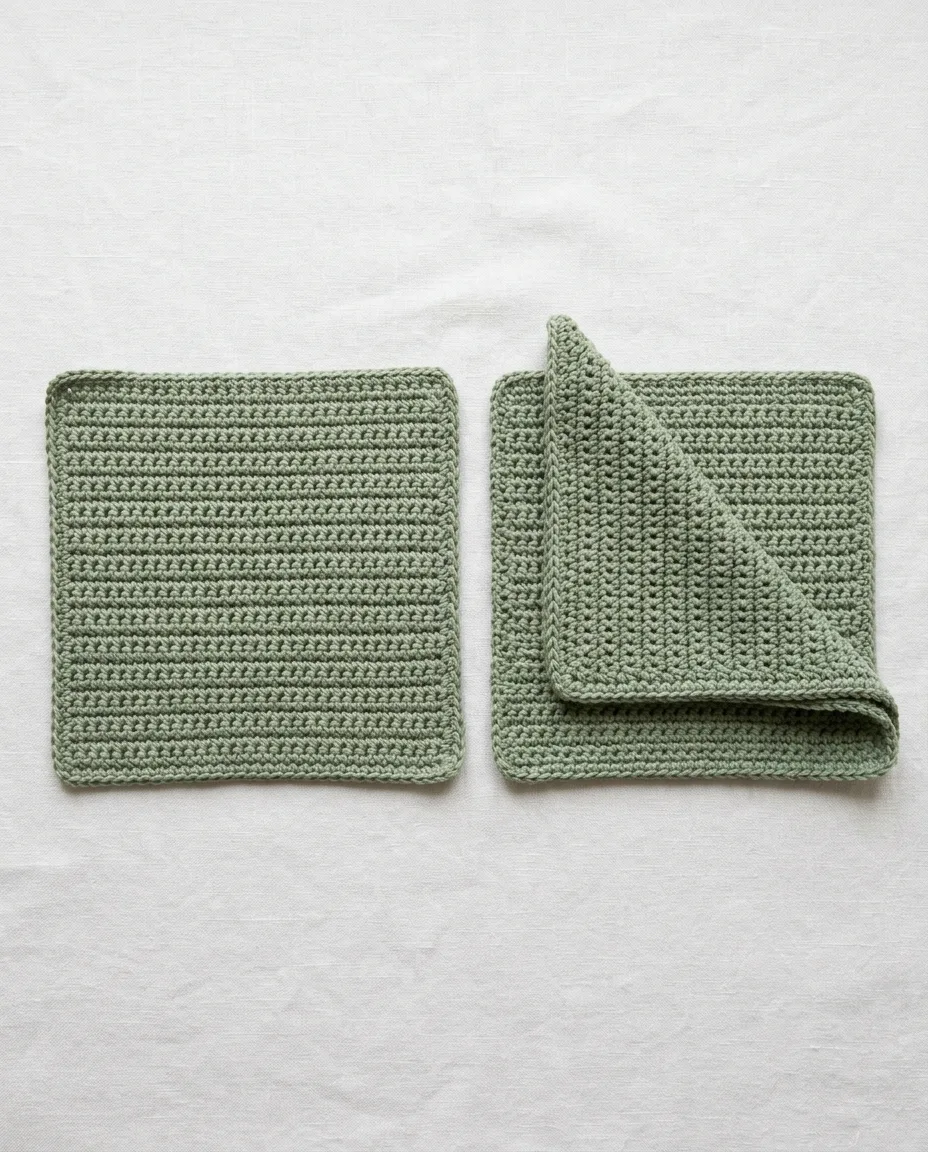
When it’s square, cut the yarn with a 6 inch (15 cm) tail and pull it through the last loop. Thread the tail on a yarn needle, a blunt needle with an eye wide enough for yarn. Weave it through a few stitches and trim. Then make another one, because the second cloth is usually neater and by then your hands mostly run on their own.
 Save
Relaxing until it isn’t: where crochet gets frustrating
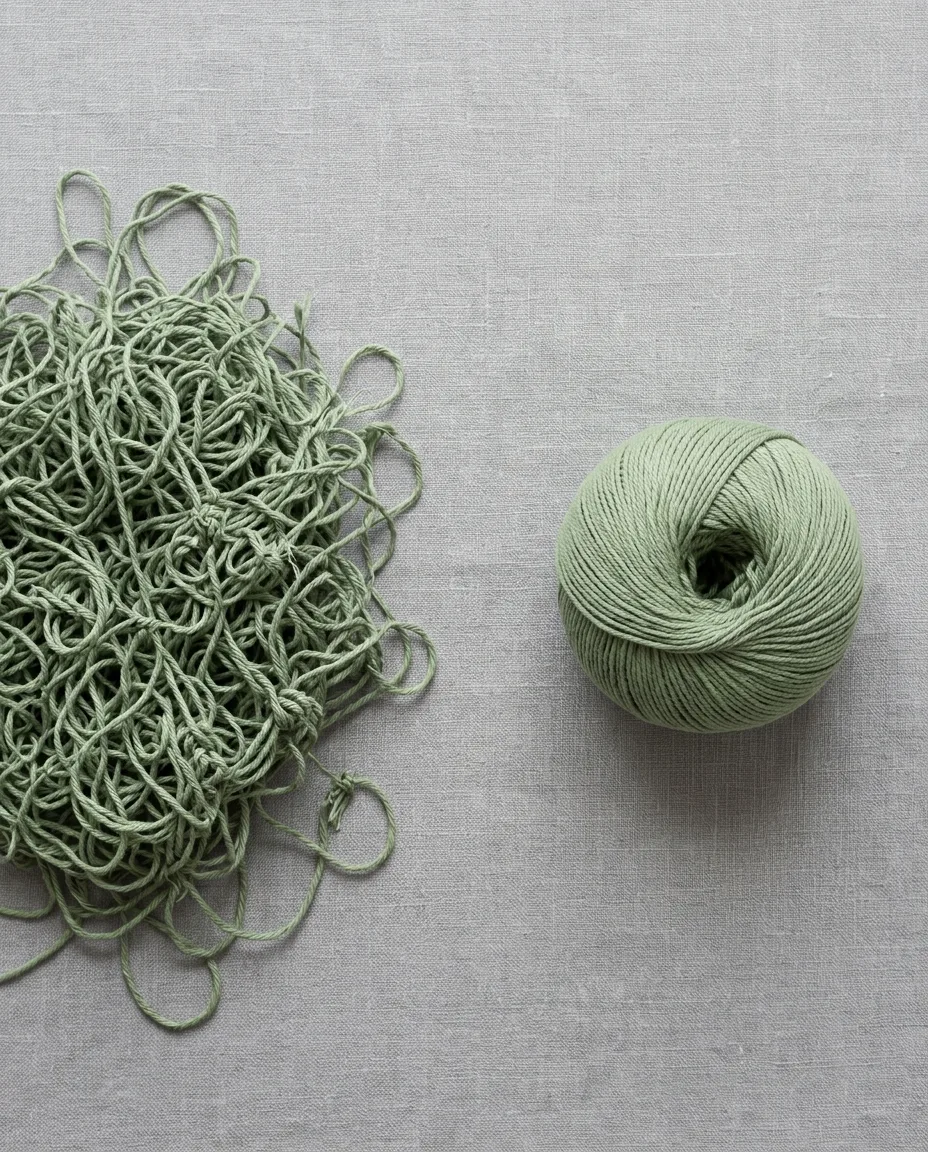
Tangles are the fastest way to lose the mood. A ball that knots halfway through means picking at knots instead of stitching. Yarn often comes as a skein, a loose twisted loop that tangles easily. Wind it into a ball before you start.
 Save
Then there’s the urge to fix every flaw. A stitch slightly bigger than its neighbors won’t show in a dishcloth. Leave it. Ripping back a whole row for one loose loop turns a calm hour into a tense one, and the cloth looks the same afterward.
Hands can get sore too. The usual reason is gripping the hook hard, knuckles pale, like a pencil during an exam. Hold it lightly and let the yarn slide through your fingers. If your hand or wrist aches, stop for the day; no dishcloth is worth pushing through pain.
No one needs to finish on schedule, either. A project with a deadline, like a gift due next Friday, is a different hobby altogether. Keep at least one going with no due date.
Fitting rows into a crowded day
20 stitches is a full session if that’s all the time there is. Crochet stops cleanly. Pull the last loop long so it can’t slip off, set the work down, and it waits for you. A row a day finishes the dishcloth in about a month.
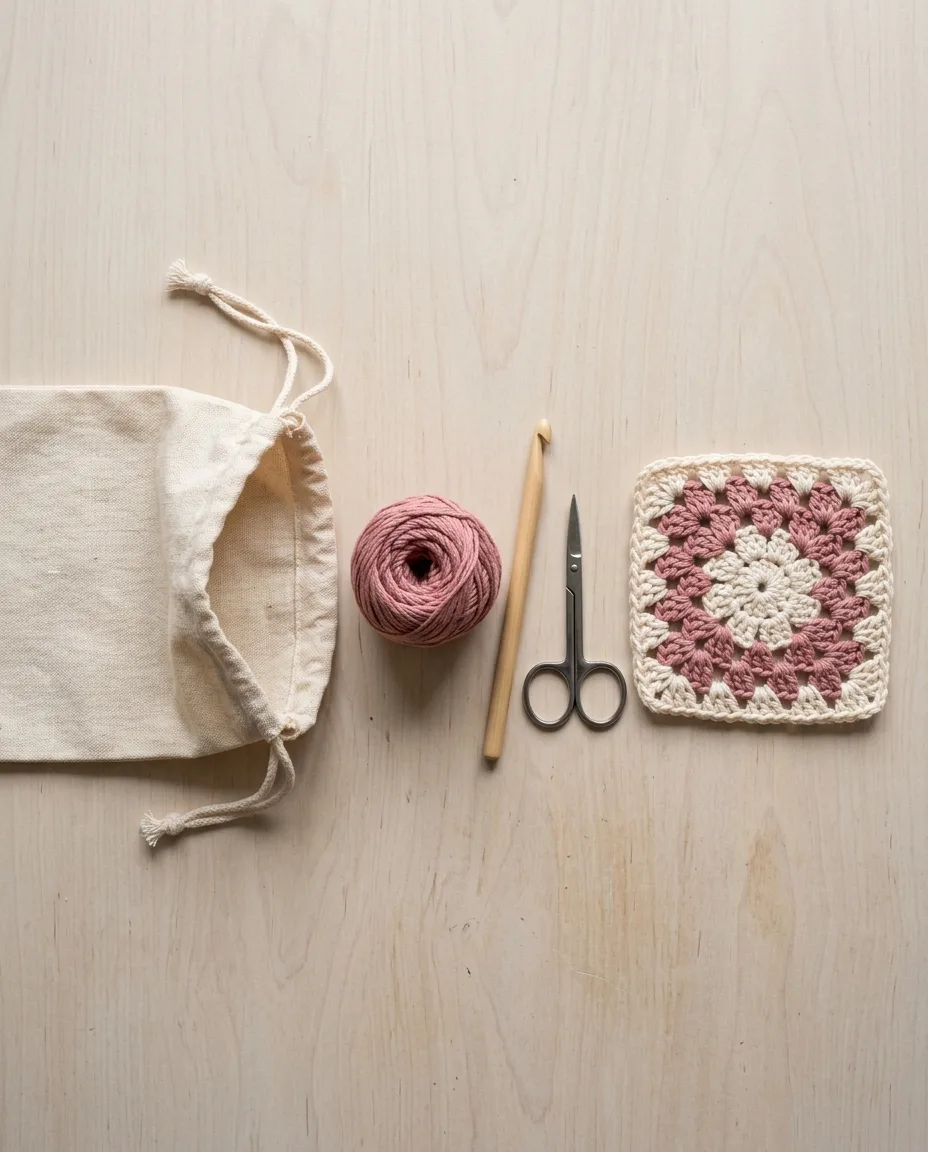
Keep a small kit by the door. A cotton pouch holds a ball of yarn and a hook. Add small scissors and it’s complete. Waiting rooms and train rides suddenly have a use. Skip big projects here, since a half-made blanket doesn’t travel.
 Save
Evenings work too. Give the hook the same slot each day, and leave the project on the arm of the chair.
What to buy, and what to skip
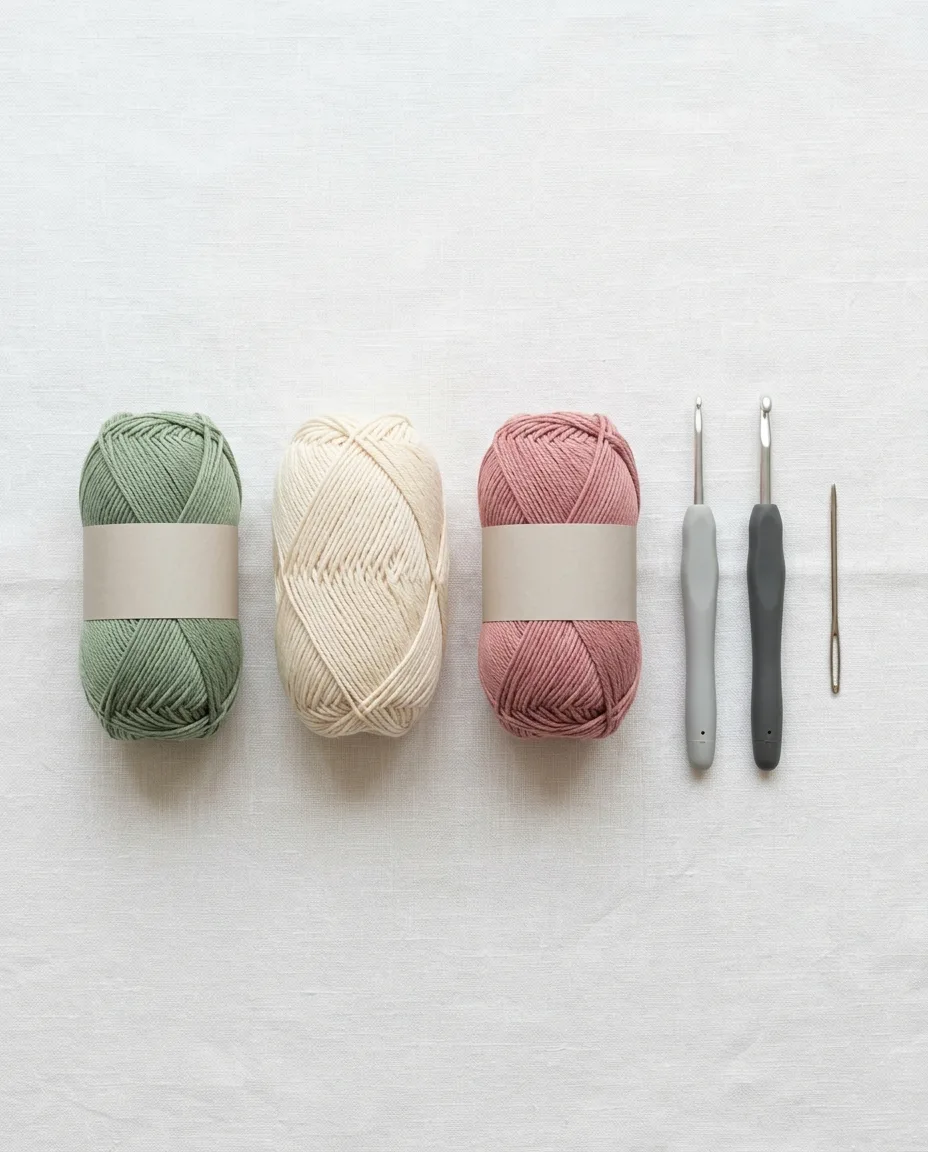
Smooth cotton or acrylic in a light color is the easiest start. You can see every stitch, and the yarn won’t split around the hook. Dark yarn hides stitches. Fuzzy yarn like mohair hides them completely, and then every row turns into guesswork.
Soft rubber handles are worth the small extra cost if your hand tires. Buy one in the size you’ll use most, 5 mm (H) for worsted weight. You’ll also want a blunt yarn needle for weaving in ends.
 Save
But skip the big kit with twenty hooks and a rainbow of yarn. It looks generous. Mostly it means choosing, and choosing is the last thing a tired mind wants. One hook and two balls of cotton will carry you through the first month.