Quick fix
Most curling comes from stitches pulled too tight on a hook too small for the yarn. Go up half a millimeter in hook size and wet-block the finished piece flat.
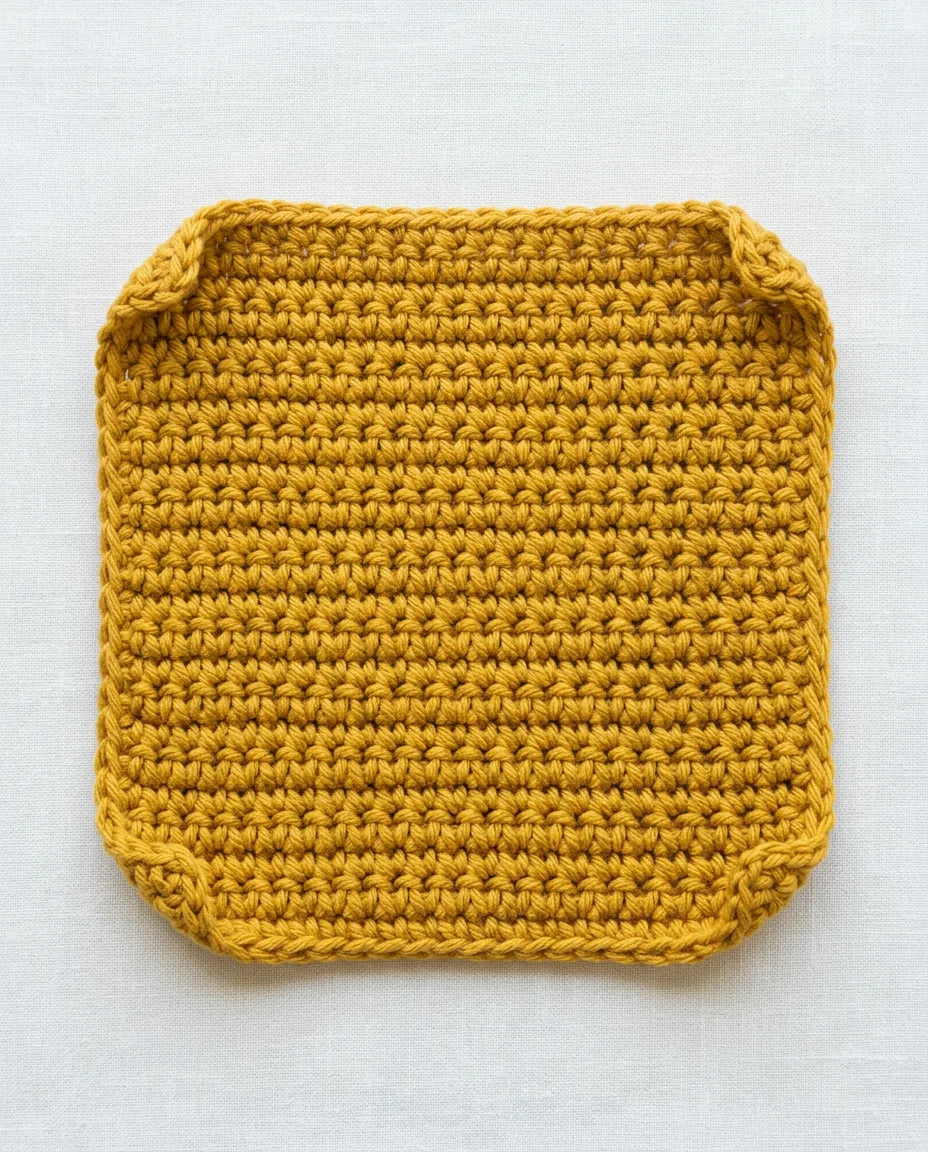
A new crocheter finishes her first dishcloth at the kitchen table and lays it down. Before she even lets go, the corners lift off the wood. She flattens it with both hands. It springs right back into a shallow bowl, bottom edge pulled in tighter than the top, as if it had been made for some other, rounder table. The pattern never mentioned this. And the stitches look fine.
Curling is the number one complaint about a first flat piece. It has five separate causes, and they are easy to mix up. Two come down to how hard you pull the yarn. One lives in the starting chain. Another is built into single crochet itself, and the last comes from working into only half of each stitch. Each cause leaves its own shape behind. So the shape tells you the fix. All hook sizes below assume worsted weight yarn, the medium thickness sold for hats and scarves, which usually pairs with a 4 mm (G) to 5 mm (H) hook.
Read the curl before you fix it
Look at the shape first. Corners rolling toward you on every edge mean tension (how tight each loop is as you form it) or the structure of single crochet. Is the bottom edge shorter than the top, so the piece flares like a skirt? That one is the starting chain. A circle rising into a cup has too few increases. Rows rolling up lengthwise into a tube, with a ribbed surface, come from working into one loop only. Get the diagnosis right, because the fixes don’t cross over. A bigger hook won’t flatten a cupped circle, and no blocking fixes a chain that is 10 percent too short.
Cause 1
The stitches are pulled too tight
 Save
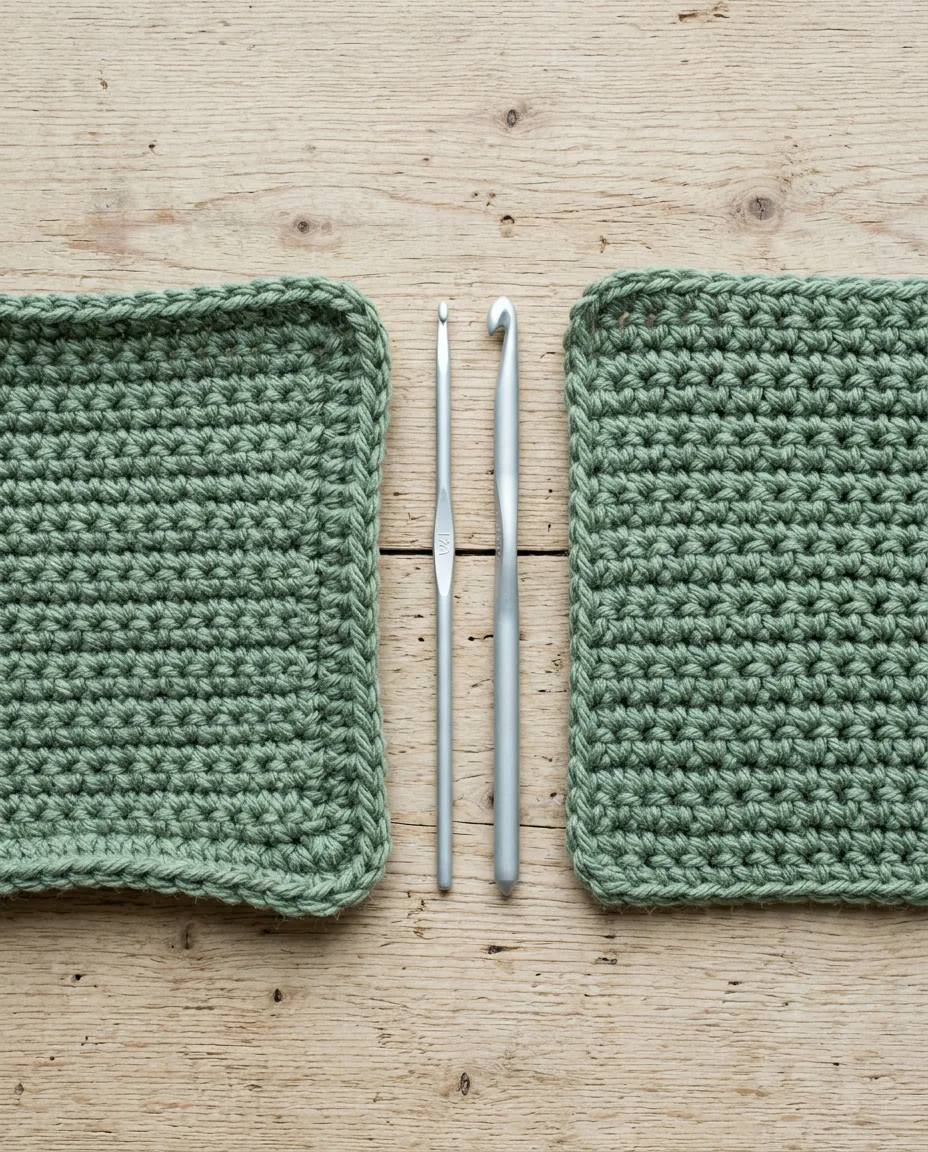
Tight stitches curl for a plain reason. A single crochet is narrower on top than at its base. Pull each loop hard and the gap widens, so every row ends up a hair narrower on top than the row below. Twenty rows of that and the fabric bends into a curve. Feel it, too. Tight fabric is stiff, almost like a board, and that stiffness is the fastest way to confirm this cause. At the right tension it bends like a thick cotton towel.
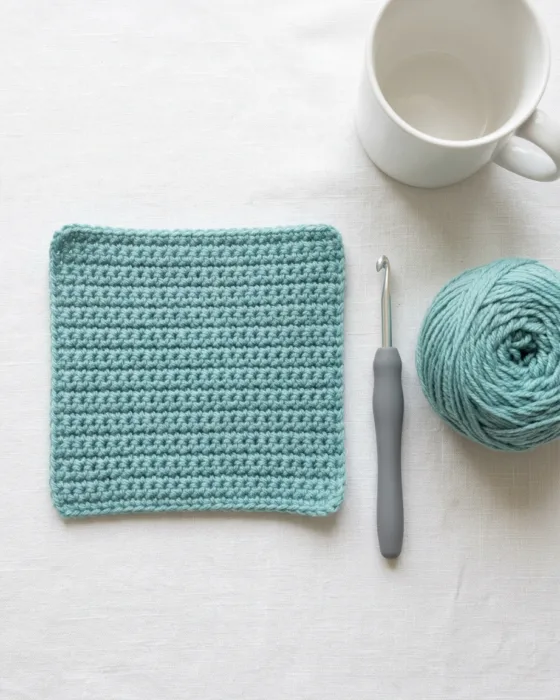
Go up half a millimeter in hook size. If the band says 4 mm, try 4.5 mm (7) and make a swatch, a small test square, about 20 stitches wide and 15 rows tall. Let the yarn slide through your fingers with a light drag. Clamping down on it is what makes the loops tight. The loop you pull up should match the width of the hook shaft. Matching it is the whole job of the hook size. Plenty of people pull the loop up and then give it a second tug before the next stitch. Drop that habit. The hook already sets the loop size, and that extra tug is where most of the tightness comes from.
Now count stitches across 4 inches, 10 cm, of the swatch. Worsted on a 4.5 mm hook should land somewhere around 14 to 16 single crochets. Under 13, the fabric goes loose and floppy. Over 17, it will curl whatever else you change. Trying to “just relax” rarely moves that number much. A hook size does, and fast.
Cause 2
The starting chain is tighter than the rows
 Save
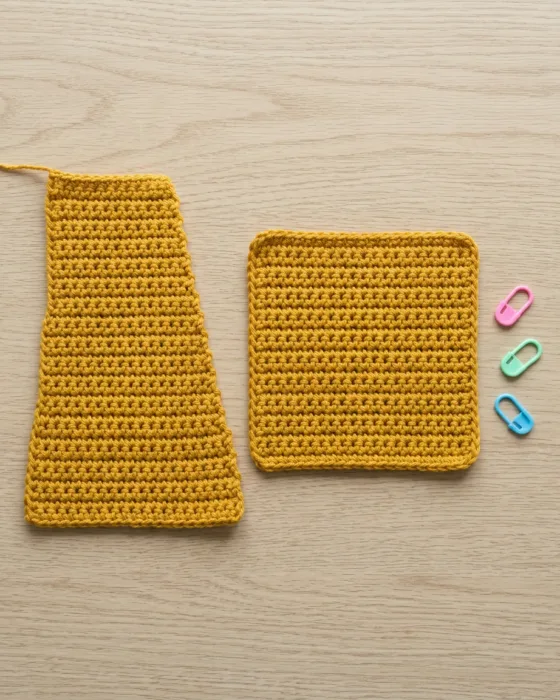
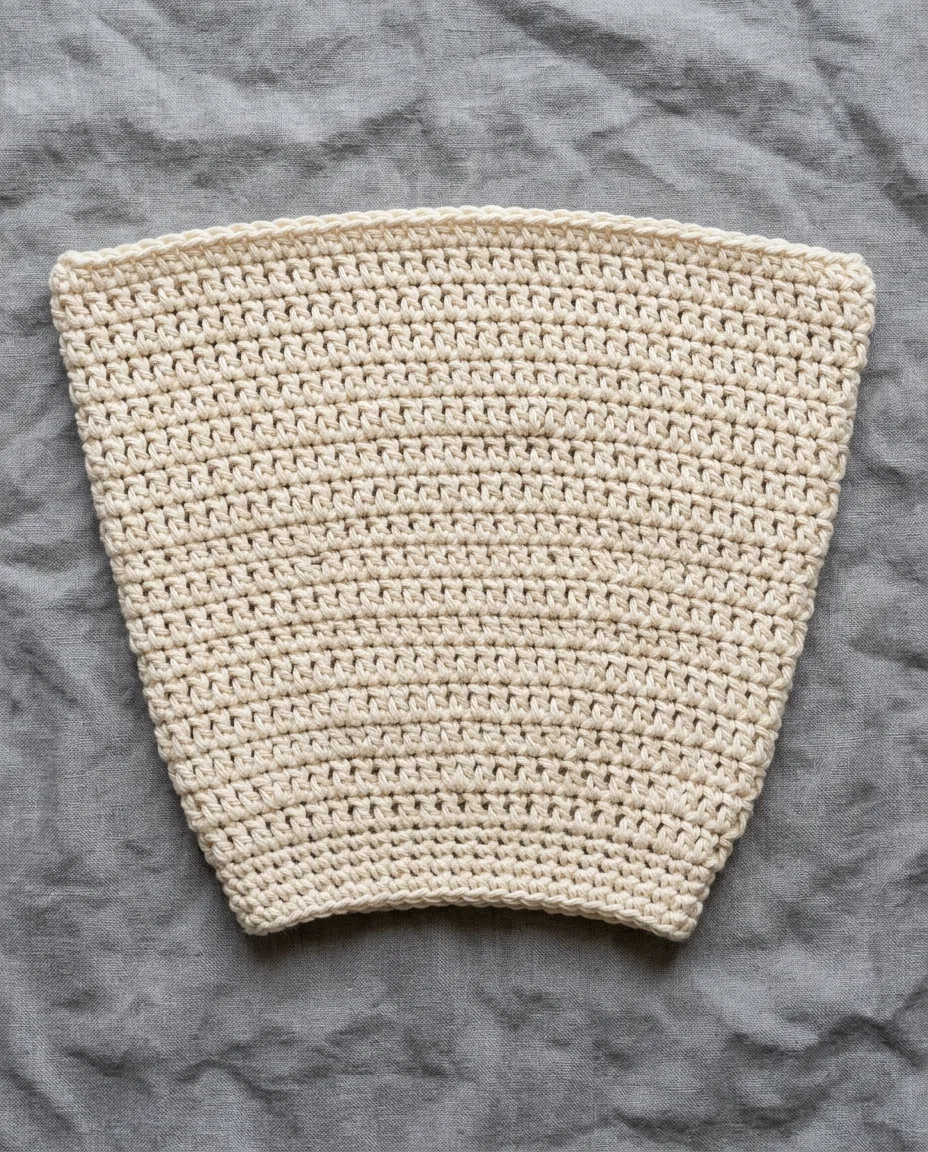
Most people chain tighter than they crochet. Chains are thinner than stitches to begin with. Put those together and a tight chain of 40 can come out a full inch shorter than the 40-stitch row worked into it. The row has nowhere to go. So the bottom edge pinches in, and both ends curve upward like a boat. Meanwhile the top stays straight. Straight on top, pinched at the bottom: that lopsided shape gives this cause away every time.
Switch to a bigger hook for the chain only, one full size up from the body hook. It’s the simplest fix. Working the body on 4.5 mm? Chain with a 5.5 mm, then switch down for Row 1. The chains come out larger and the first row settles into them without pulling. On the finished piece, nobody can tell.
Or skip the chain entirely. A foundation single crochet (fsc) builds the chain and the first row together, and it stretches exactly as much as the rows above it. It takes a few tries to get the feel. Chain 2. Put the hook into the second chain from the hook and pull up a loop, so two loops sit on the hook. Yarn over (wrap the yarn over the hook from back to front). Pull through one loop only. You’ve just made the chain part. Yarn over again and pull through both loops, and the stitch is done. For the next one, insert the hook under the two strands of the chain part you just made. Repeat. Count the finished stitches the same way you’d count a row.
Cause 3
Single crochet curls on its own
 Save
Nothing is wrong with your hands here. For a single crochet, the hook goes under both top loops of the stitch below and pulls up a loop. Then you wrap the yarn and draw it through both loops. The back of that stitch carries more yarn than the front. Stack 30 rows and the thicker side pushes the whole fabric into a curve, usually toward the front within the first 6 to 10 rows. Dishcloths and scarves in all single crochet do it at every tension. Even a perfect one.
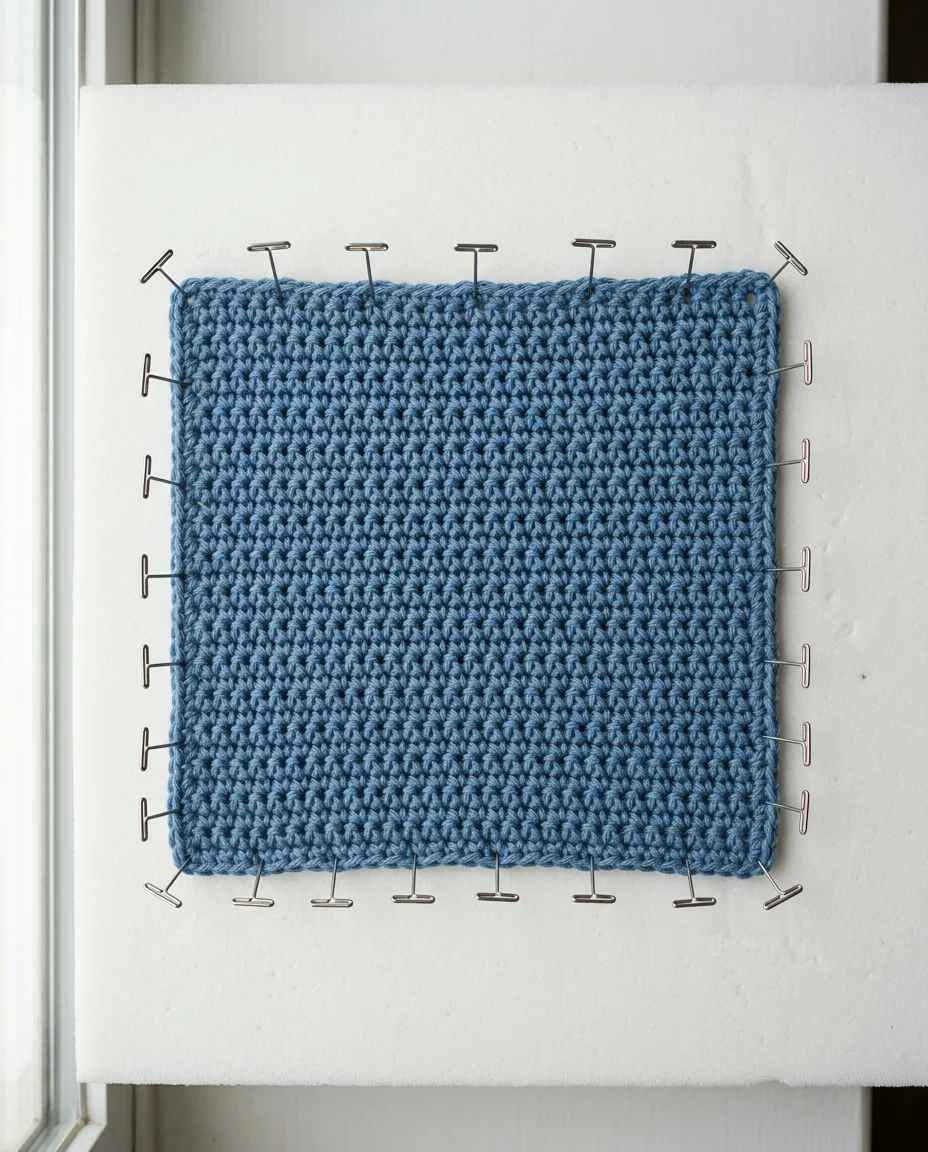
Blocking fixes most of it. That means wetting the finished piece and letting it dry pinned flat. Soak cotton in cool water for 20 minutes. Roll it in a towel to stop the drip, then pin it square on a towel or foam mat, with a pin every 2 inches along each edge. Leave it 24 hours. Acrylic is fussier. It won’t hold a wet block, but steam works. Hover an iron on its steam setting an inch, 2.5 cm, above the pinned piece and never let it touch. Direct heat melts acrylic flat and shiny, and there’s no undoing that.
Borders help hold the edges down as well. Two rounds of single crochet around the whole piece, with 3 stitches in each corner, put weight right where the curl starts. For a scarf, though, the smarter move is to pick a different stitch before you start. Half double crochet (hdc) sits flatter. Yarn over first, then insert the hook. Draw up a loop so three loops sit on the hook, yarn over, and draw through all three. Each row comes out a little taller, and the fabric barely curls.
Cause 4
A flat circle has the wrong number of increases
 Save
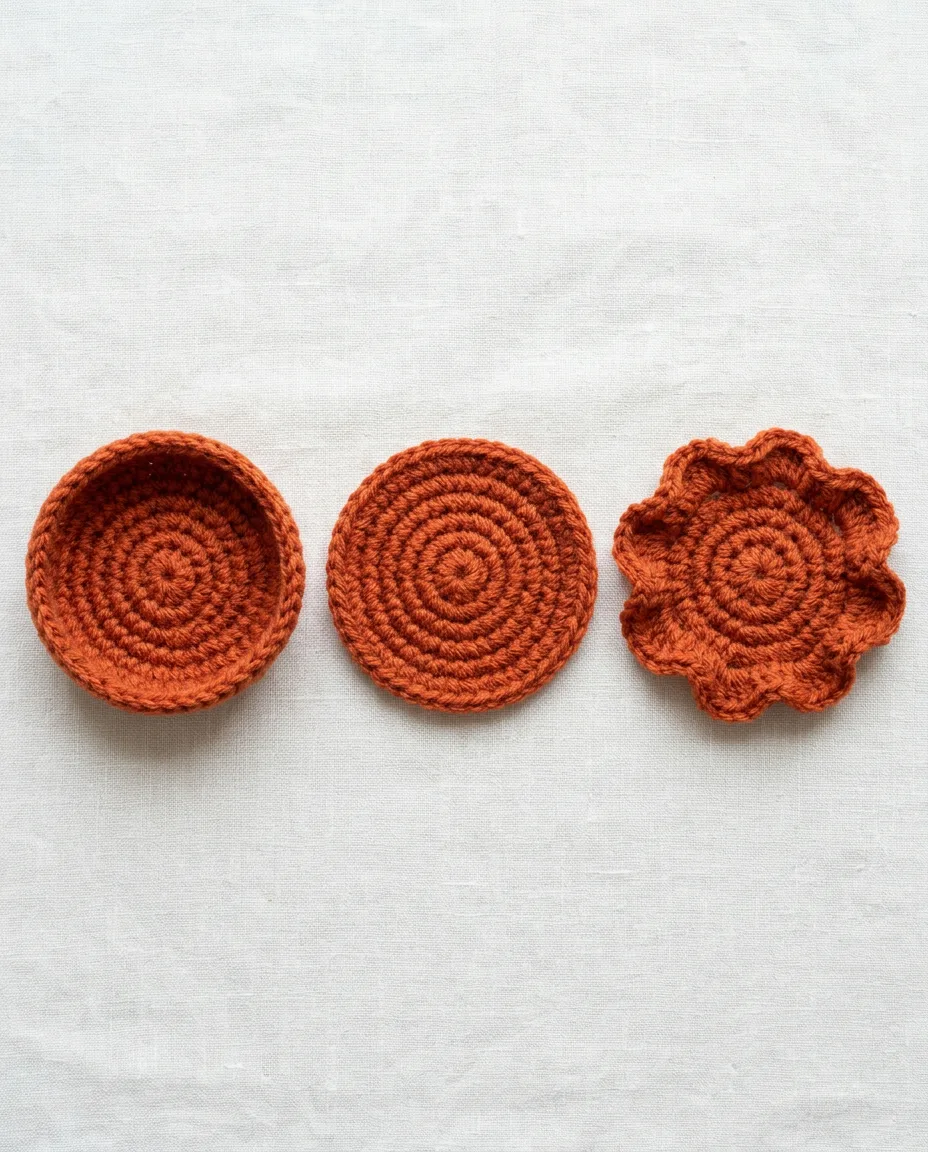
Six new stitches a round. That keeps a single crochet circle flat, with counts running 6, 12, 18, 24. Each round must grow by the same amount, and the amount depends on stitch height. Eight for half double crochet. Twelve for double crochet, the taller stitch that starts with a yarn over before the hook goes in. You bring up a loop to get three on the hook, then twice yarn over and pull through two. Add fewer than that and the edge comes up short for its distance from the center. Up it goes, into a cup.
Too many increases do the reverse. The edge grows faster than the circle can lie flat, and it ripples. One circle can even do both at once. It cups in the middle, then waves at the edge, because the maker started throwing in extra stitches to compensate.
Check the count at the end of every round. If Round 5 of a single crochet circle shows 28 stitches where it should have 30, pull that round back and find the missing increases. Don’t push on and hope. But cupping isn’t always a mistake. Amigurumi, the Japanese word for crocheted stuffed toys, does it deliberately by stopping the increases once the circle is wide enough. A flat disc becomes a ball this way. It’s also why a toy pattern and a coaster pattern can’t be swapped.
Cause 5
Every row is worked into one loop only
 Save
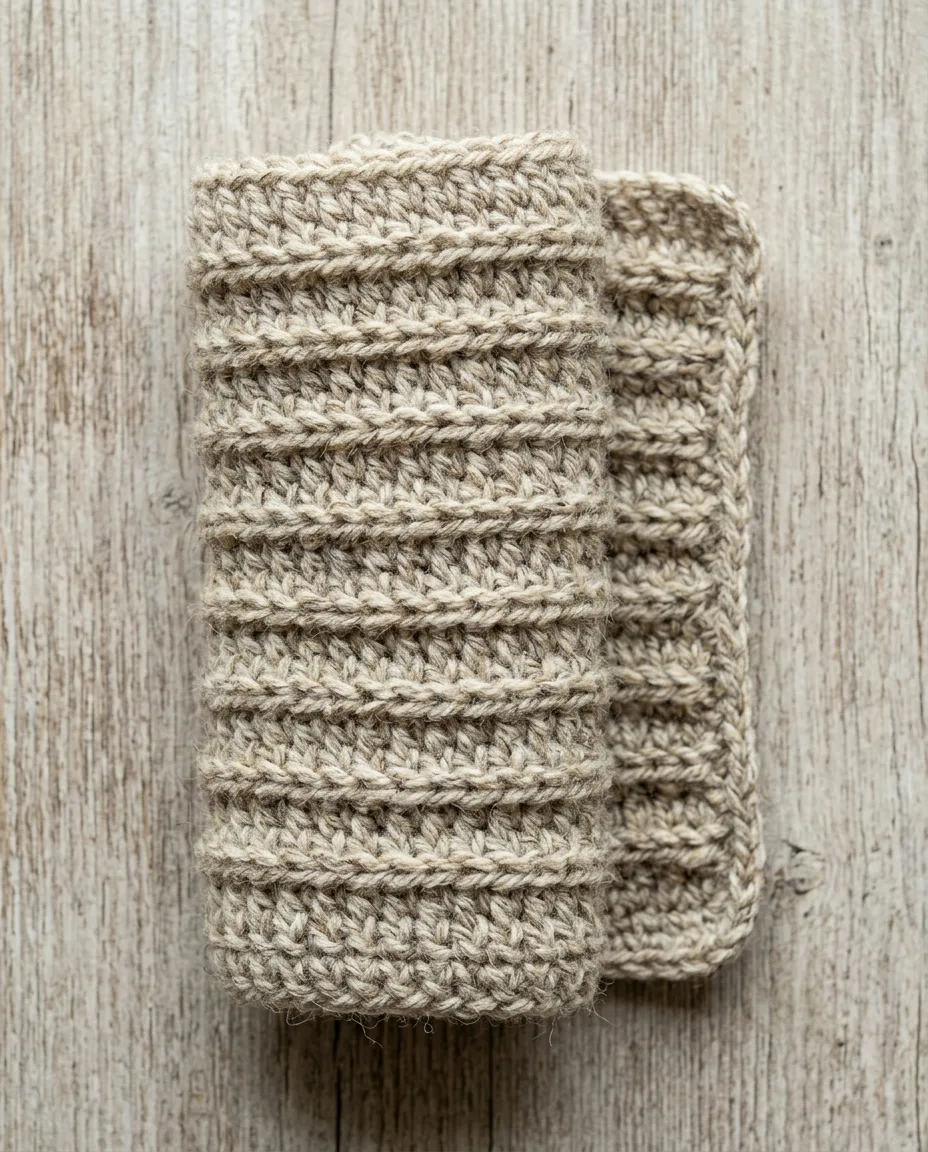
Every stitch has two top loops. The front loop is the strand nearest you, and the back loop is the one behind it. Normally the hook goes under both. Work under the back loop only (BLO) and the front loop is left sitting there as a raised line, which is exactly how ribbing on a hat brim gets made. Those unworked loops stack up on one face and pull on it. A whole piece in BLO rolls toward that side, and front loop only does the same thing in reverse. Beginners slide into the back loop by accident all the time. Hold the work at a steep angle and that’s the loop the hook finds first.
Look down at a stitch from above. A line of unworked Vs running across where the surface should be smooth? Then you’ve found your cause. Hold the work flatter and aim the hook under both strands of the V. When a pattern asks for back loop only on purpose, add one row under both loops every 6 rows. Or plan to block and border it, as in the single crochet section. Brims and cuffs are supposed to curl, so leave those alone. A blanket in BLO is a different story, and no blocking will keep 200 rows of it flat for long.