Quick fix
Most sagging comes from loose stitches in a heavy cotton yarn with nothing stiff inside to carry the weight. Work tight single crochet on a smaller hook, add a flat base and a fabric lining, and use short or wooden handles.
She finished the tote in June. Square, crisp, a nice mustard cotton. By August it hung from her shoulder like a long sock, the handles thin as shoelaces and the bottom brushing her knee. Nothing had unraveled. The bag had simply stretched.
That happens to a lot of crocheted bags, and it’s rarely one mistake. Crochet fabric is a chain of loops, and loops pull longer when you hang weight from them. A bag full of groceries does exactly that, all day. So the fix is usually a mix of three or four small changes. Some go in before you start. Others you can add to a bag that has already drooped.
Below, the causes run roughly from most common to least. Check the first two before anything else. They cover most saggy bags on their own.
Cause 1
The yarn has no bounce
 Save
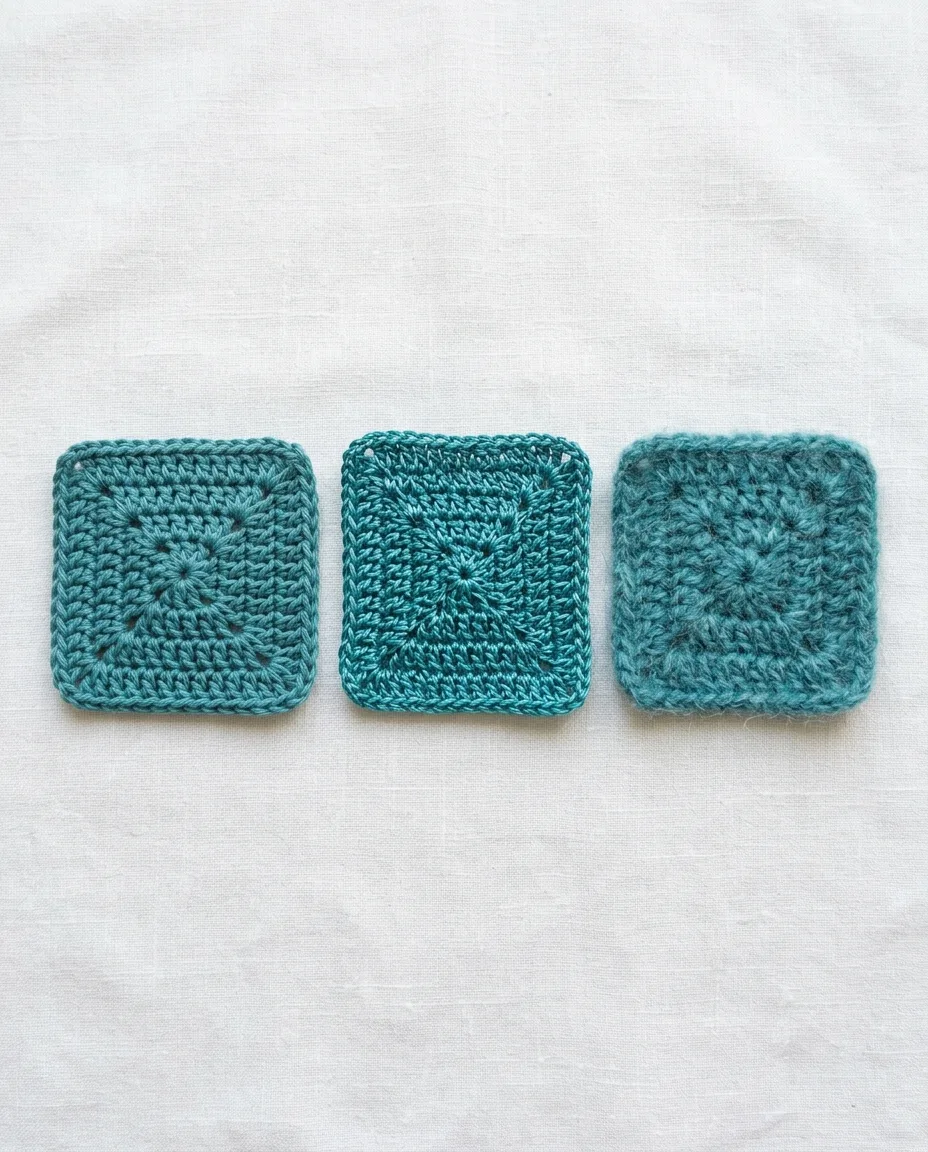
Cotton is the yarn most bag patterns ask for, and it’s the yarn that sags most often. It’s heavy and strong. But cotton has almost no spring. Pull a cotton swatch long and it stays long, while wool pulls back toward its first shape when you let go.
Shiny plant-based yarns are worse. Bamboo, rayon and anything sold as “silky” are heavier still, and they drape like a curtain. Lovely on a shawl. On a bag they keep stretching for weeks.
Want a bag that holds its shape with almost no tricks? Look at jute, hemp, or the twisted polyester cord sold for macramé. They’re stiff and a little rough on the hands. They also barely stretch at all.
And if you love cotton, keep it. Just plan to firm it up with the fixes further down. A cotton blend with some acrylic or wool in it springs back a little better than pure cotton, though the difference is smaller than the label suggests.
Cause 2
Your stitches are too loose
 Save
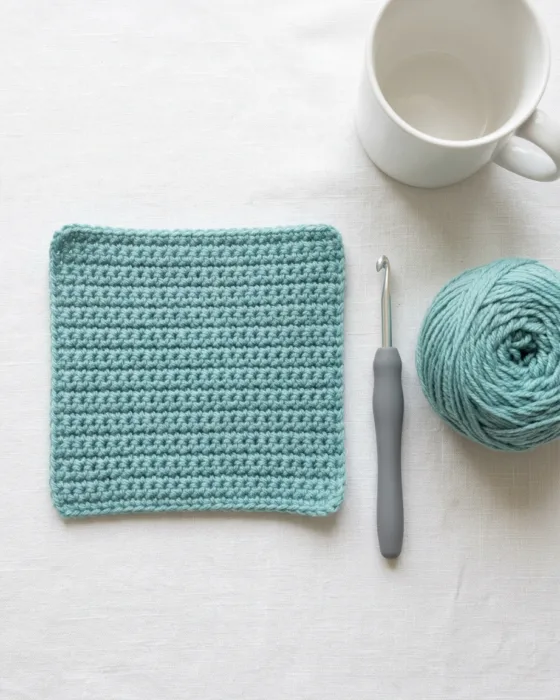
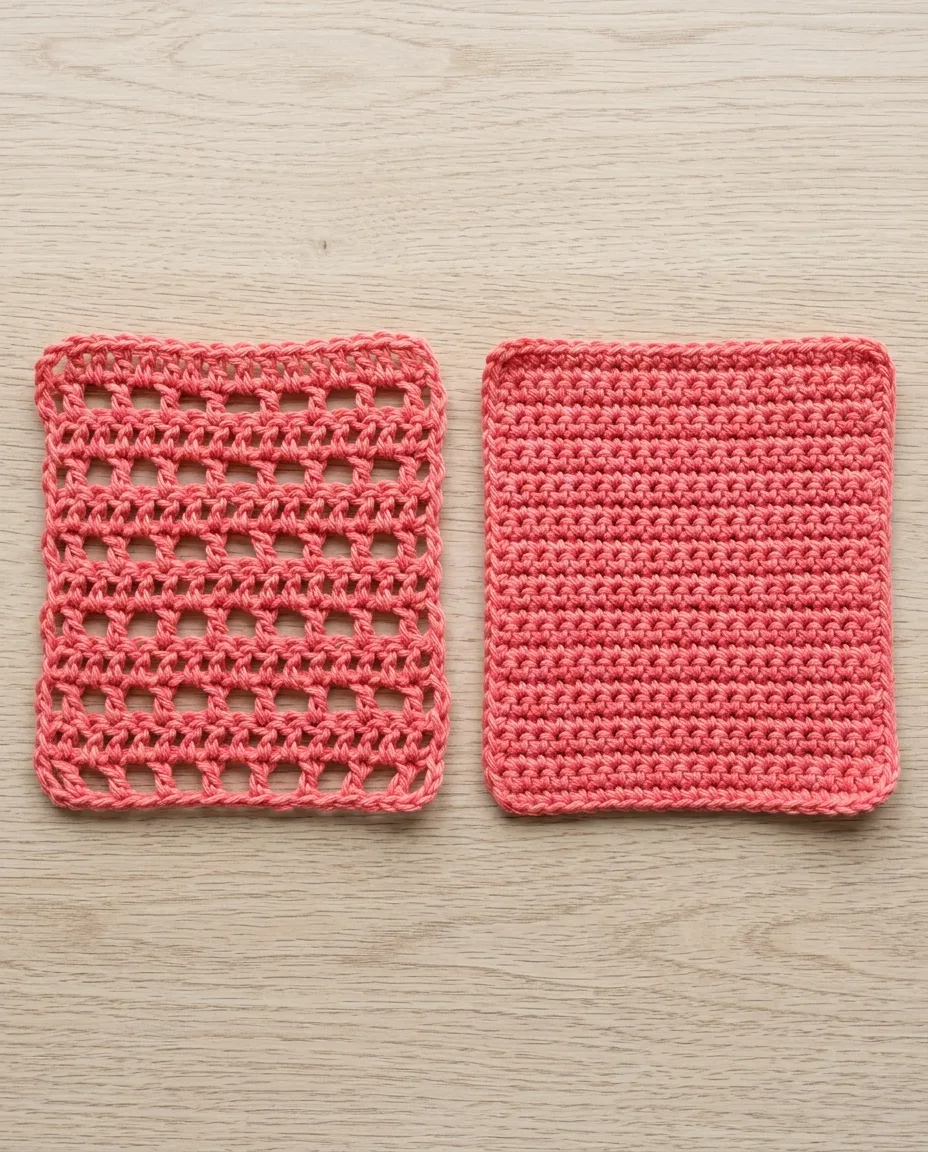
Look at the fabric against the light. If you can see clear holes between the stitches, that’s where the stretch comes from. Every gap is room for the loops to slide and pull longer once there’s weight inside.
Go down a hook size or two. Yarn bands list a suggested hook size, and that size is meant for soft, drapey fabric. A bag wants the opposite. For worsted weight cotton (the medium thickness most bag patterns use), a band might say 5 mm (H). Try a 4 mm (G) or even a 3.5 mm (E) instead.
Your hands will notice. Tight stitches are slower, and the hook has to push a little to get into each one. Fair trade for a bag that stays square.
Check your gauge before you commit. Gauge just means how many stitches and rows fit into 4 inches (10 cm). Crochet a small square, count, then pull it hard between your hands. If it grows more than a little, go down another hook size. The swatch is ugly but useful. Five minutes of it saves a whole bag.
Cause 3
Tall and lacy stitches stretch first
 Save
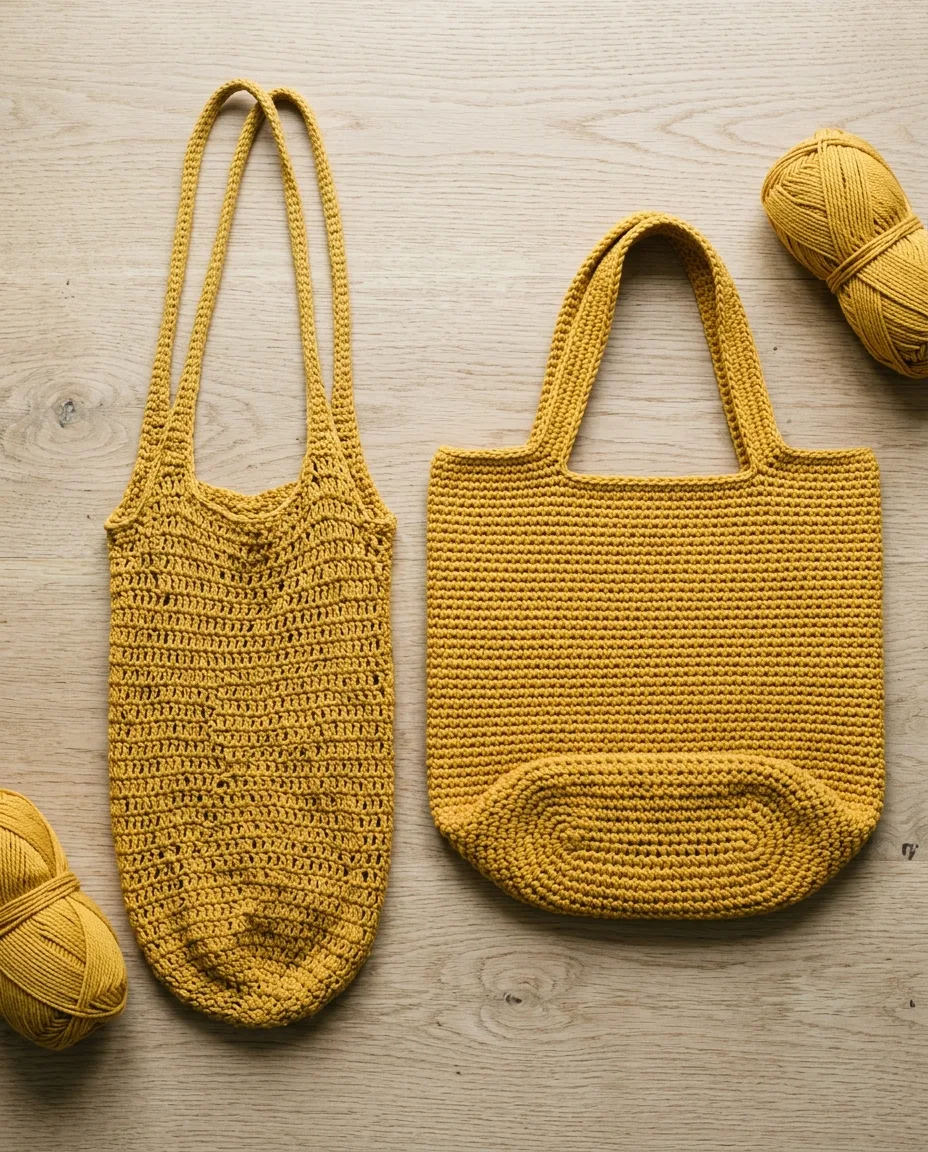
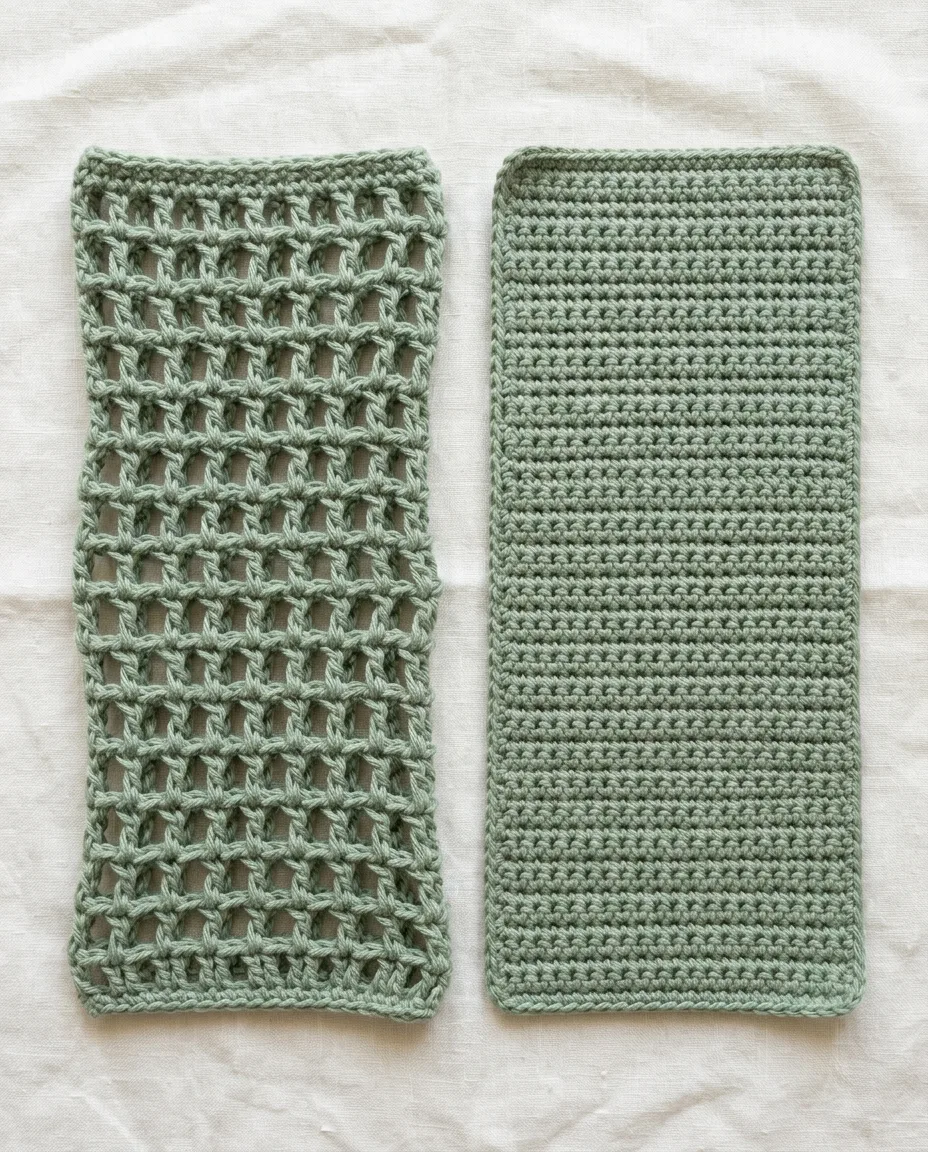
Mesh market bags look great empty. Fill one with apples and it can drop to twice its length. Tall stitches with open spaces between them are built to move, and moving is the problem.
Double crochet is the usual culprit. You wrap the yarn around the hook once (that wrap is called a yarn over), push the hook into the stitch, and pull up a loop. Then you work off the loops on the hook two at a time. The result is a tall post with a lot of yarn in it and not much holding it in place.
Single crochet is much shorter and much firmer. The hook goes into the stitch, you wrap the yarn and pull up a loop. Two loops on the hook. Wrap again and pull through both. That’s it. Rows of single crochet sit stacked tight against each other, so the fabric has little room to give.
No need to give up mesh entirely. Work the base and the bottom few inches of the sides in single crochet, then switch to mesh higher up. The weight sits on the dense part. The mesh only has to hold its own shape.
Cause 4
Straps carry all the weight
 Save
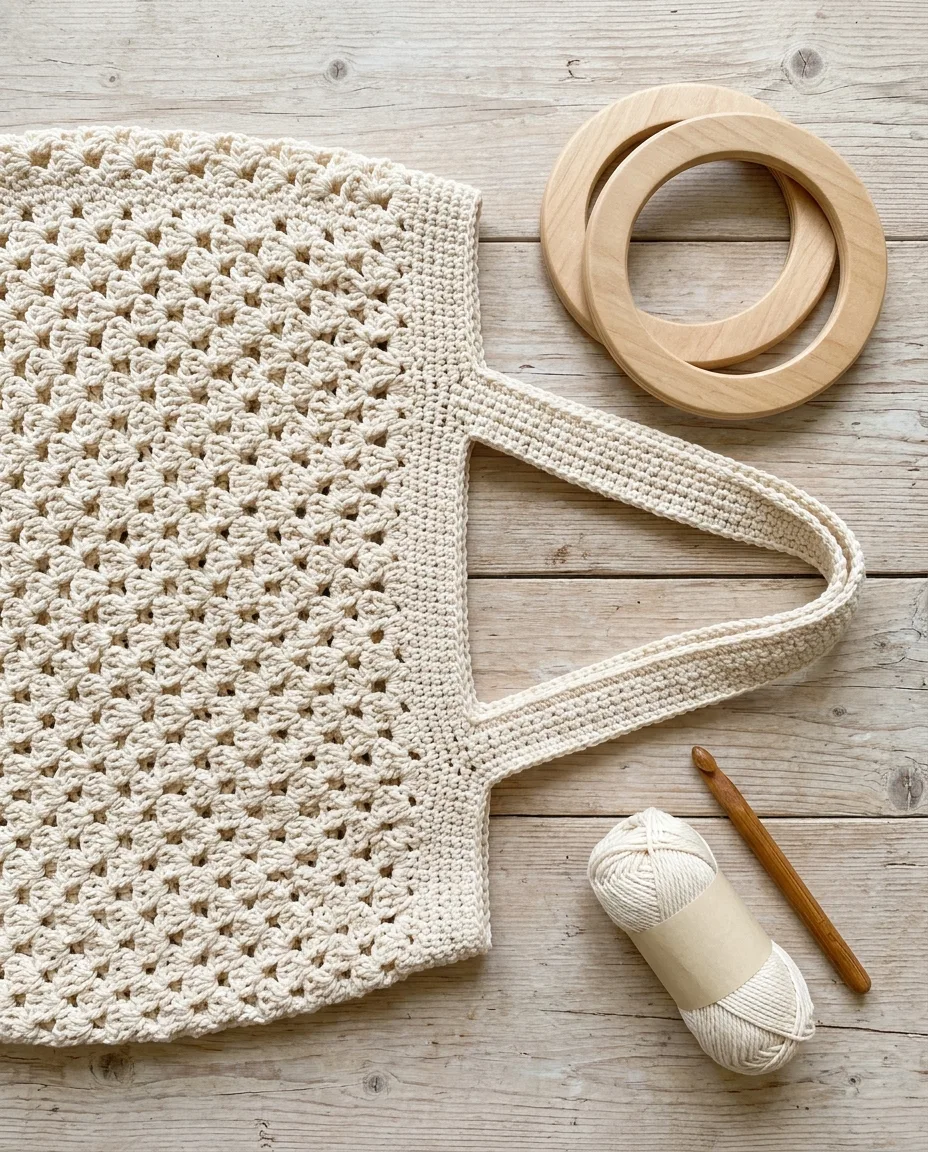
Every pound in the bag hangs from two narrow strips. That’s why handles often stretch first, sometimes by several inches. The body can still look fine.
24 inches of shoulder strap has twice as much fabric to give as a 12-inch hand strap. Long straps stretch more. If the bag is going to be heavy, shorter handles behave better.
How the strap is worked matters too. Work the strap lengthwise, with a long starting chain and a few rows of single crochet along it. That stretches less than many short rows stacked end to end. A row of slip stitches down each long edge firms it further. For a slip stitch, push the hook into the stitch, wrap the yarn, and pull it straight through both the stitch and the loop on your hook.
Honestly, the surest fix is to skip crocheted straps altogether. Wooden or bamboo ring handles don’t stretch. Cotton webbing works too. Sew a strip of it behind a crocheted strap. Now the webbing takes the weight, and the crochet is only there for looks.
Cause 5
Nothing stiff holds the base and sides
 Save
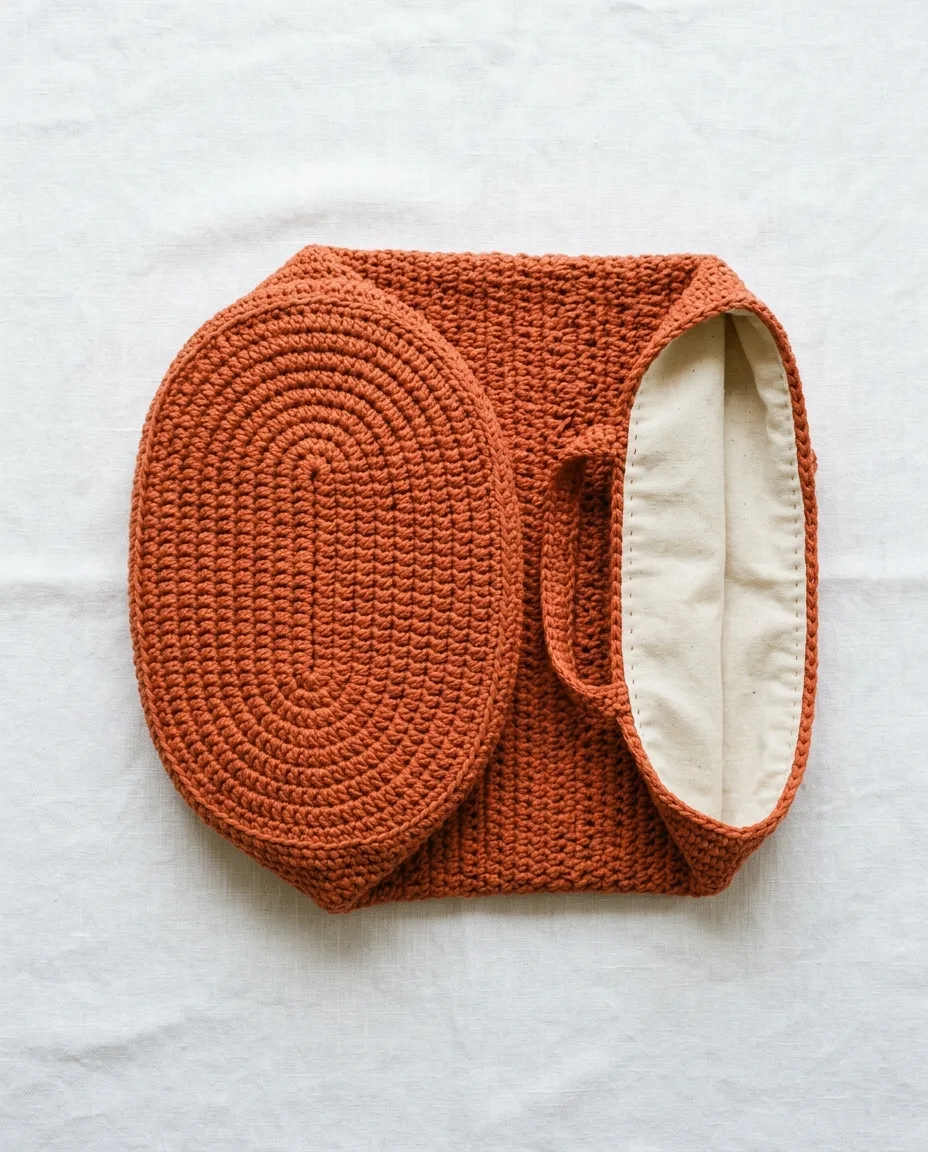
Round, floppy bottoms let everything inside roll to the center. Then the sides pull down after it. A flat base spreads the load out.
Most sturdy bags start with an oval worked in rounds of single crochet. It sits flat on a table before you start the sides. If it cups or ripples instead, the increases are off, and the base will sag later. Fix it before going further.
Then slip something stiff inside. A piece of plastic canvas cut to the shape of the base works well, and so does a store-bought bag base insert. Both stay rigid when the bag gets wet.
Lining the bag is the other big help. Cut plain woven cotton a little smaller than the bag and sew it in along the top edge. Woven fabric doesn’t stretch the way crochet does, so the lining ends up carrying the weight. The crochet around it barely gets pulled. It’s the most work of any fix here, mostly because it means sewing. It also does the most.
Cause 6
It was hung up to dry
 Save
Never hang a wet crocheted bag. Water makes cotton heavy, and a wet bag on a hook stretches under its own weight for hours. A bag that kept its shape all season can lose it in one wash.
Squeeze the water out gently, then roll the bag in a towel and press. Lay it flat on a dry towel. Push it back to its proper width and length with your hands while it’s still damp, and leave it there until it’s fully dry. Flip it once.
Storage counts too. A full bag left on a door hook for a month will keep growing. Empty it, or store it flat on a shelf.
Can you rescue a bag that has already stretched? Partly. Washing a cotton bag and drying it flat, pushed back into shape, pulls some of the length back. It won’t undo all of it. After that, add a lining and a base insert. Those two together usually stop the sagging for good.