Quick fix
Drop to a 3.5 mm (E) hook for worsted yarn and keep your tension even to the last round. Then stuff in small tufts until firm, use invisible decreases, and put gray fiberfill behind dark yarn.
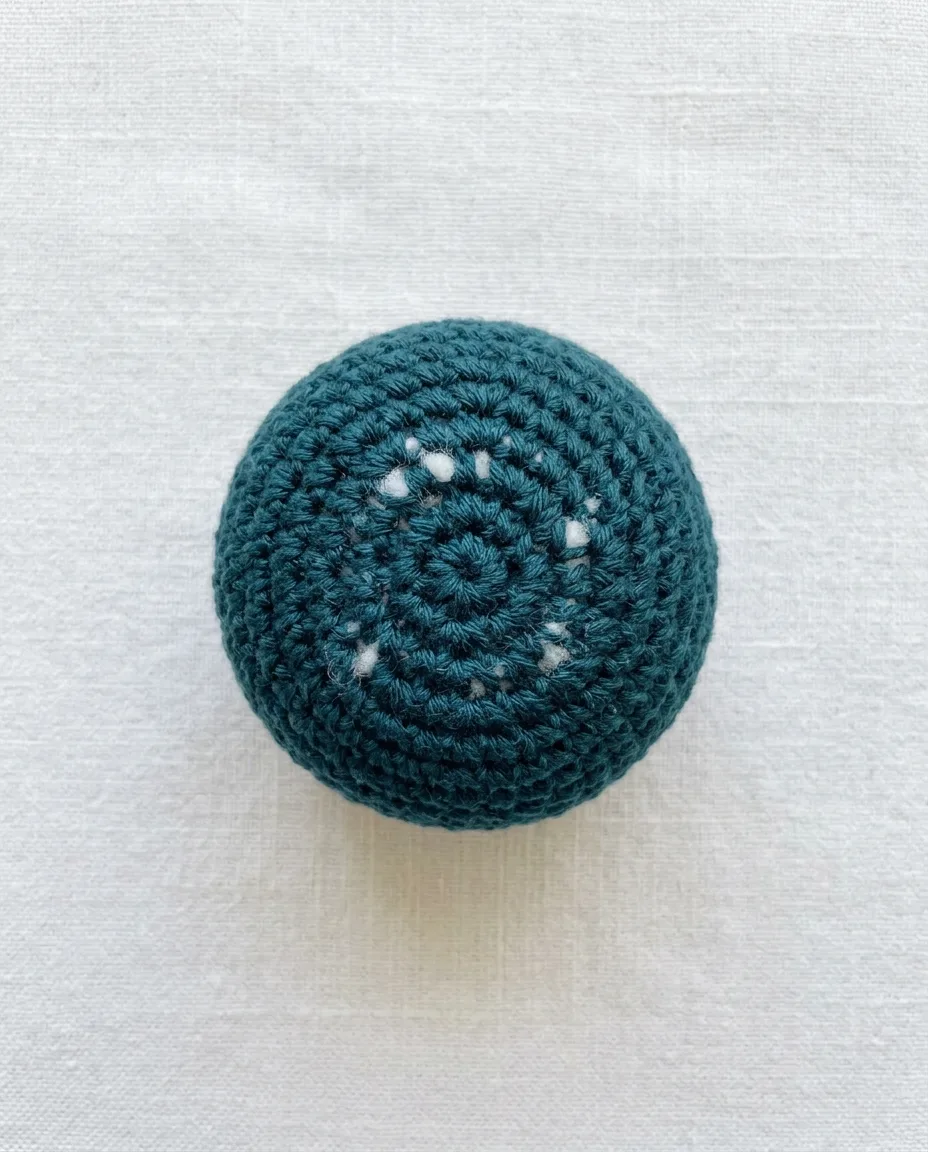
Halfway through stuffing a dark teal bear, a crocheter turns it over under the lamp. White fluff winks back between the stitches. It wasn’t there when the body was empty. Now it’s everywhere, little specks of cloud sitting in every gap.
This is one of the most common amigurumi complaints, and it’s fixable. Usually it comes down to one or two causes from the list below. Most of them are about how tight the fabric is. A couple are about the stuffing itself.
Some quick background first. Amigurumi, the Japanese practice of crocheting small stuffed toys, needs a much denser fabric than a scarf or a blanket. Toy fabric is meant to act like a wall. Polyester fiberfill, the fluffy white stuffing sold in bags at craft stores, will push into any opening it can find. So a gap that looks tiny on an empty piece gets wider once the toy is full.
But don’t rip the whole thing out yet. Check the causes in order. The first one alone fixes most toys.
Cause 1
Your hook is too big for the yarn
 Save
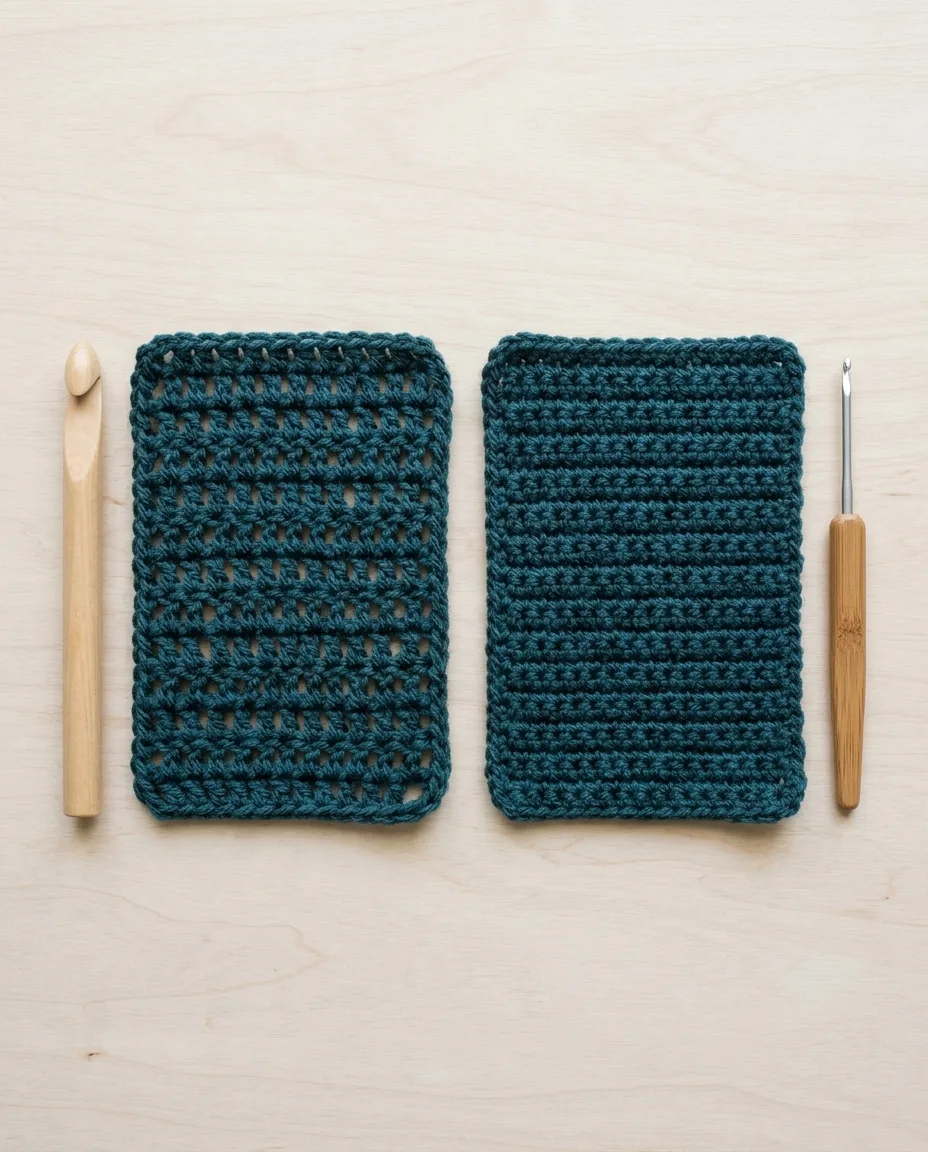
Yarn bands suggest a hook size for blankets and sweaters. For toys, that number is too big. Worsted weight yarn, the medium thickness most amigurumi patterns use, usually lists a 5 mm (H) hook on the band. For a toy you’d drop to 3.5 mm (E) or even 3.25 mm (D).
Going down a size or two looks wrong at first. The stitches feel stiff and your hands work harder. That’s the point, though. A smaller hook makes smaller loops, and smaller loops leave less space between stitches. Not sure if your fabric is tight enough? Hold the empty piece up to a window. Light should barely come through. If you can see pinpricks of daylight across the whole surface, stuffing will show there later.
Thinner yarn has the same problem in its own size range. Sport weight cotton wants something closer to a 2.5 mm hook. Try a 10-stitch swatch with your yarn and two hook sizes before starting a new toy. It takes five minutes and saves you from a body you’ll end up redoing.
Cause 2
Your tension loosens as you go
 Save
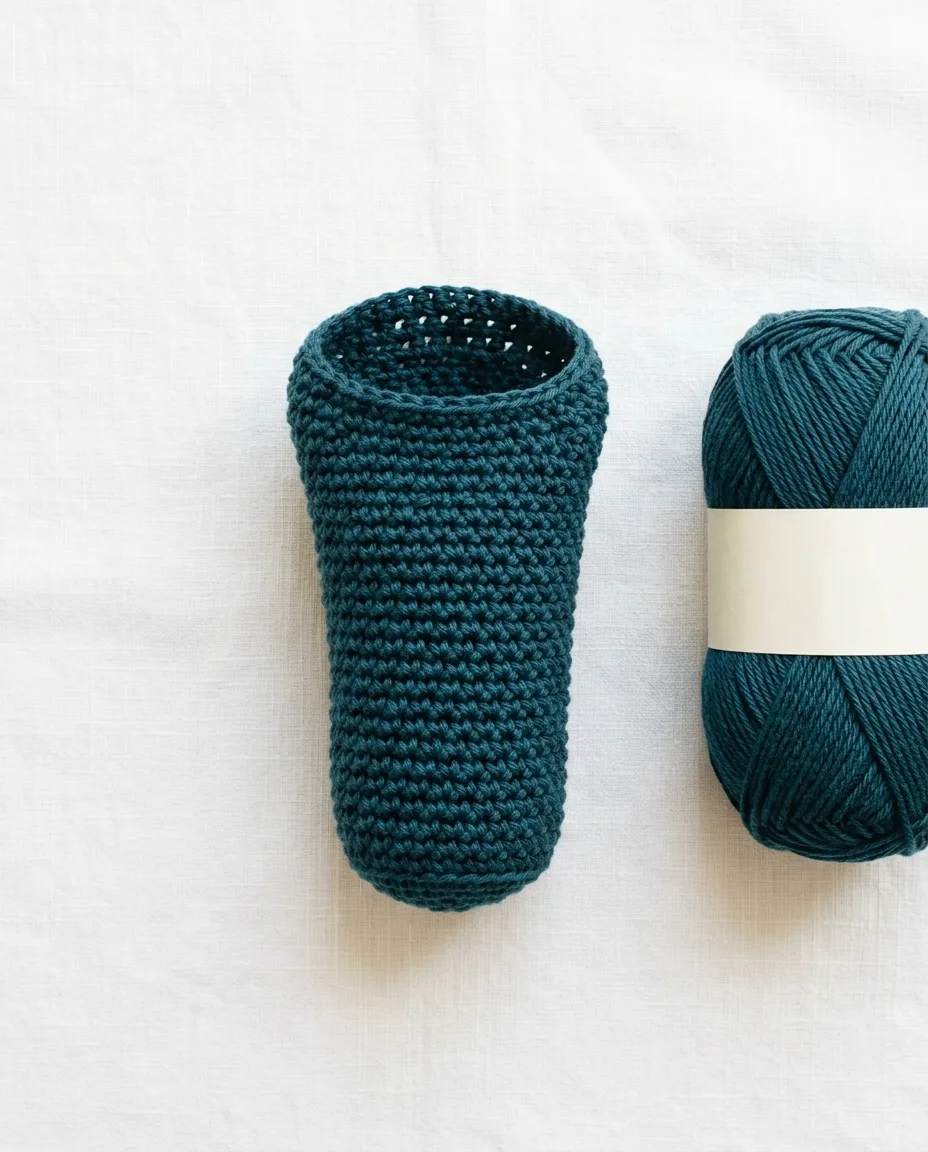
Tension is how hard you pull on the working yarn, the strand coming from the ball, as it feeds through your fingers. Plenty of people start a piece with tight, careful stitches. Twenty rounds later the hand relaxes, and the stitches grow without anyone noticing.
You can see it on a finished body. The bottom is dense. The rounds near the top look a little airy, with gaps that weren’t there earlier. Those gaps are right where the stuffing ends up showing.
And there’s a second trick worth knowing here, called yarn under. In a normal single crochet you wrap the yarn over the hook from back to front, a move called a yarn over. For yarn under, push the hook into the stitch, then catch the yarn from underneath, hooking it from front to back. Pull up that loop. Two loops on the hook. Now do a normal yarn over and pull through both. That’s one stitch.
Yarn under stitches come out shaped like little X’s. They sit tighter and shorter than the usual V’s. Some patterns look a bit different worked this way, since the toy comes out slightly smaller. Worth it for a dark toy, though, where every gap shows.
Take breaks between parts if the loosening only shows up when you’re tired. Sounds silly, works.
Cause 3
Too much stuffing stretches the fabric
 Save
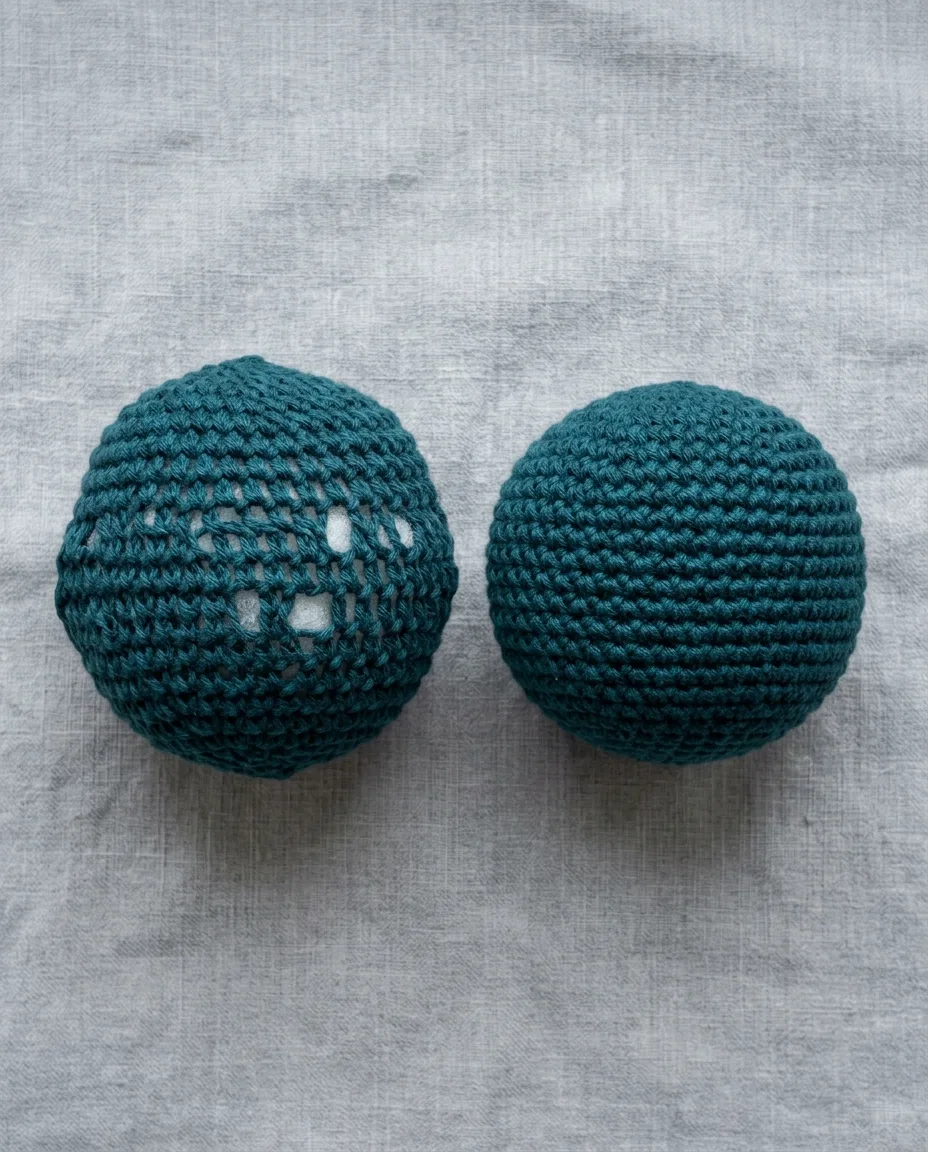
Firm is good. Overstuffed isn’t. Crochet fabric stretches, and when a toy is packed past its natural shape, the stitches pull apart from each other. Even a tight fabric starts showing white at that point.
Squeeze the piece as you stuff it. You want it to spring back and hold its shape. When the stitches start looking stretched sideways, with the V’s going wide and flat, you’ve gone past the line. Pull a tuft or two back out.
Necks and narrow parts are the usual trouble spots. People cram stuffing into a thin arm with the back of a pencil. The arm bulges, and the stitches around it open up. A thin limb needs only a little stuffing, pushed in gently with a chopstick or the blunt end of a crochet hook.
One more check: a round body should look round. If it’s starting to look like a balloon about to pop, stop.
Cause 4
Standard decreases leave little holes
 Save
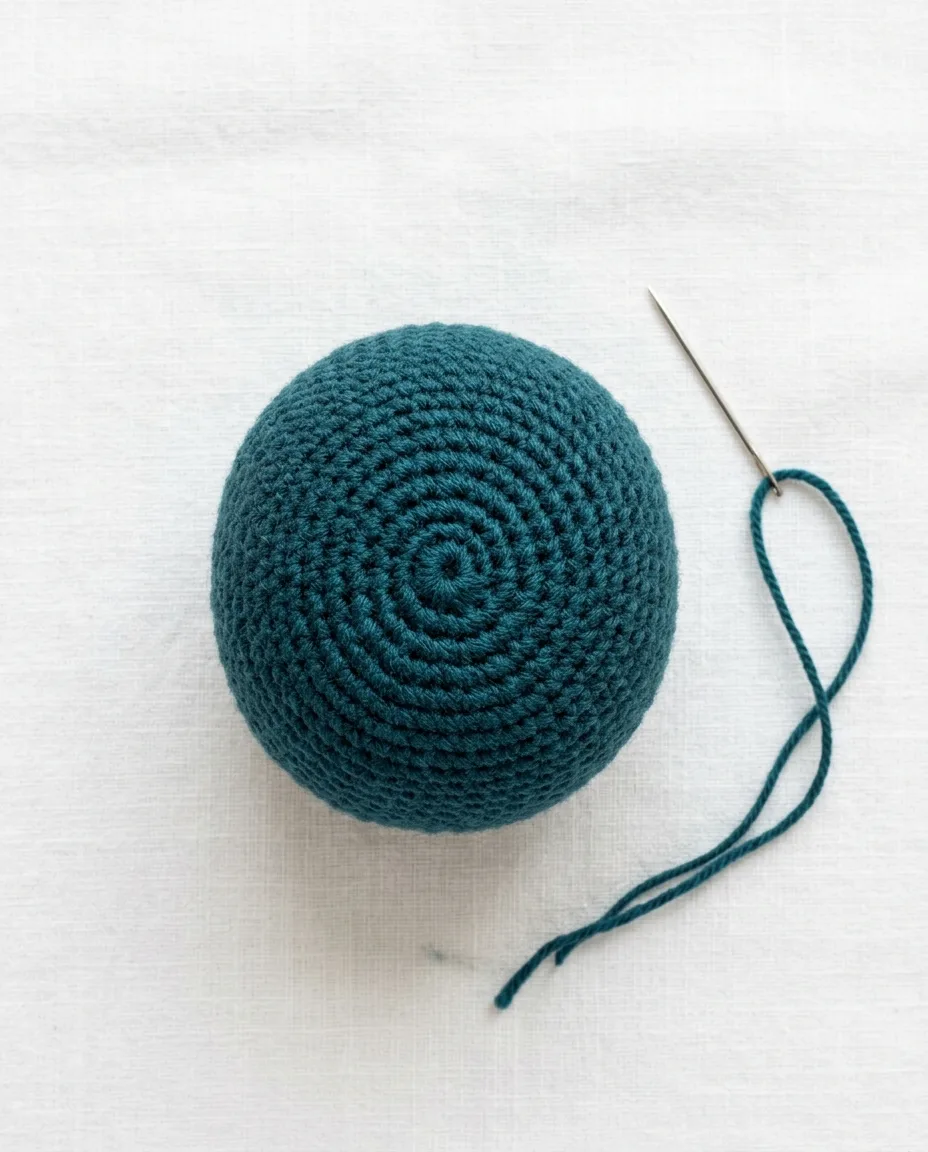
No amount of tight crochet hides a gap at a decrease. A decrease turns two stitches into one, and it’s how the top of a ball or a head closes in. The regular version pulls through both loops of two stitches, and it leaves a small bump with a gap beside it. Stuffing finds those gaps fast.
The invisible decrease is the fix. Each stitch has two loops along the top, the front loop (closest to you) and the back loop, which sits behind it. Here’s how it goes:
- Push the hook through the front loop only of the next stitch.
- Then through the front loop only of the stitch after it. Three loops on the hook now.
- Yarn over and pull through those two front loops. Two loops left.
- Yarn over again and pull through both. Done, one stitch from two.
Because only the front loops get used, the back loops stay in place and close the fabric behind the decrease. You’ll see a smooth top where the old method left a ring of tiny holes.
Use it on every decrease in a toy. It’s a little slower. The difference on a dark toy is obvious from across a room.
Cause 5
White fiberfill shows through dark yarn
 Save
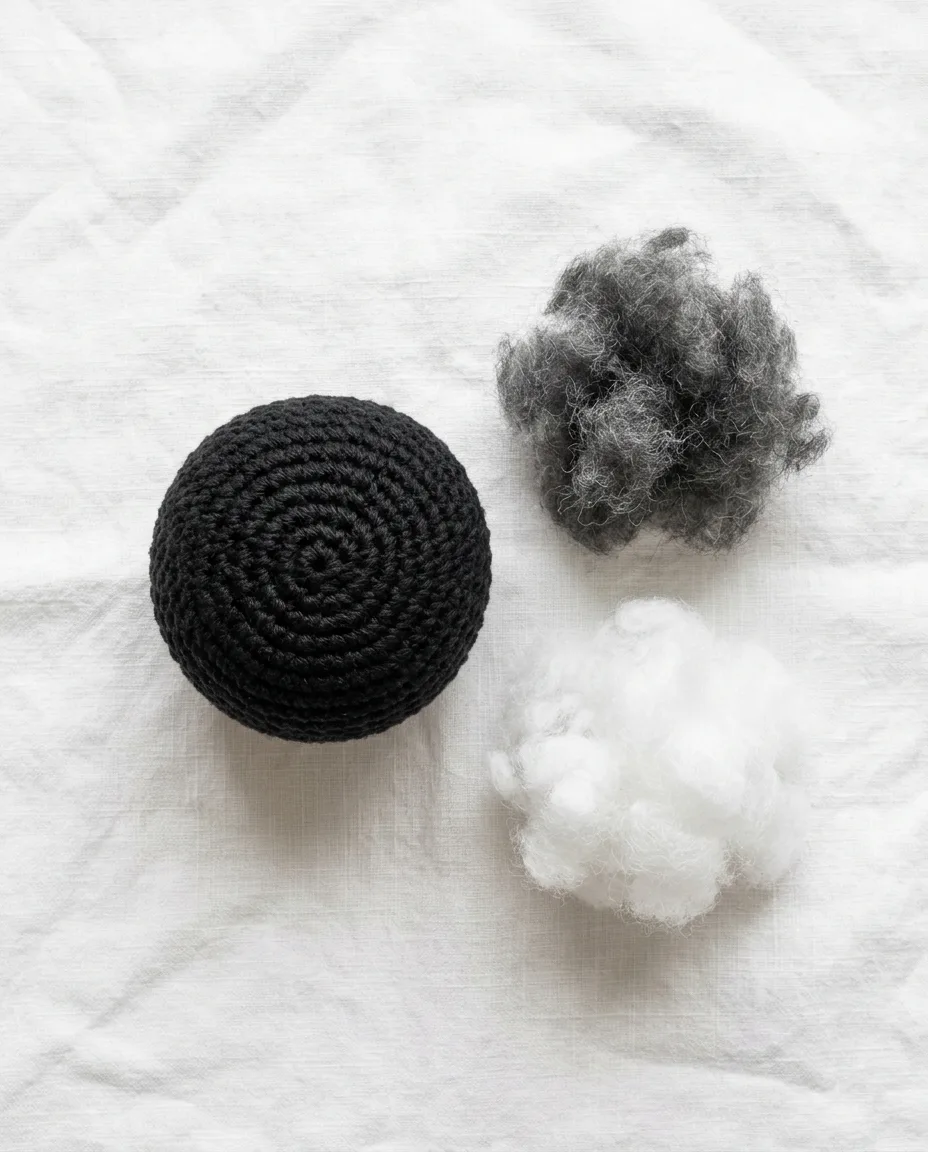
Sometimes the fabric is fine. The gaps are the normal size every crochet fabric has, and the only problem is contrast. White stuffing behind black, navy or deep brown yarn shows through even small spaces. Behind a cream bunny, the same gaps would never be noticed.
Several craft stores sell fiberfill in gray or black. Gray works behind almost any dark color. It’s the simplest fix and costs about the same as white.
No colored stuffing on hand? Line the piece. Cut a small square from an old pair of dark tights or a scrap of thin knit fabric. Push it into the empty piece, stuff inside it, then tie the top closed before you finish the last rounds. The lining holds the white fluff back from the stitches.
Light yarn has the reverse issue, though it’s rare. Dark stuffing behind pale pink can look grubby. Match the stuffing to the yarn and the problem mostly disappears.
Cause 6
Lumpy stuffing pushes through in spots
 Save
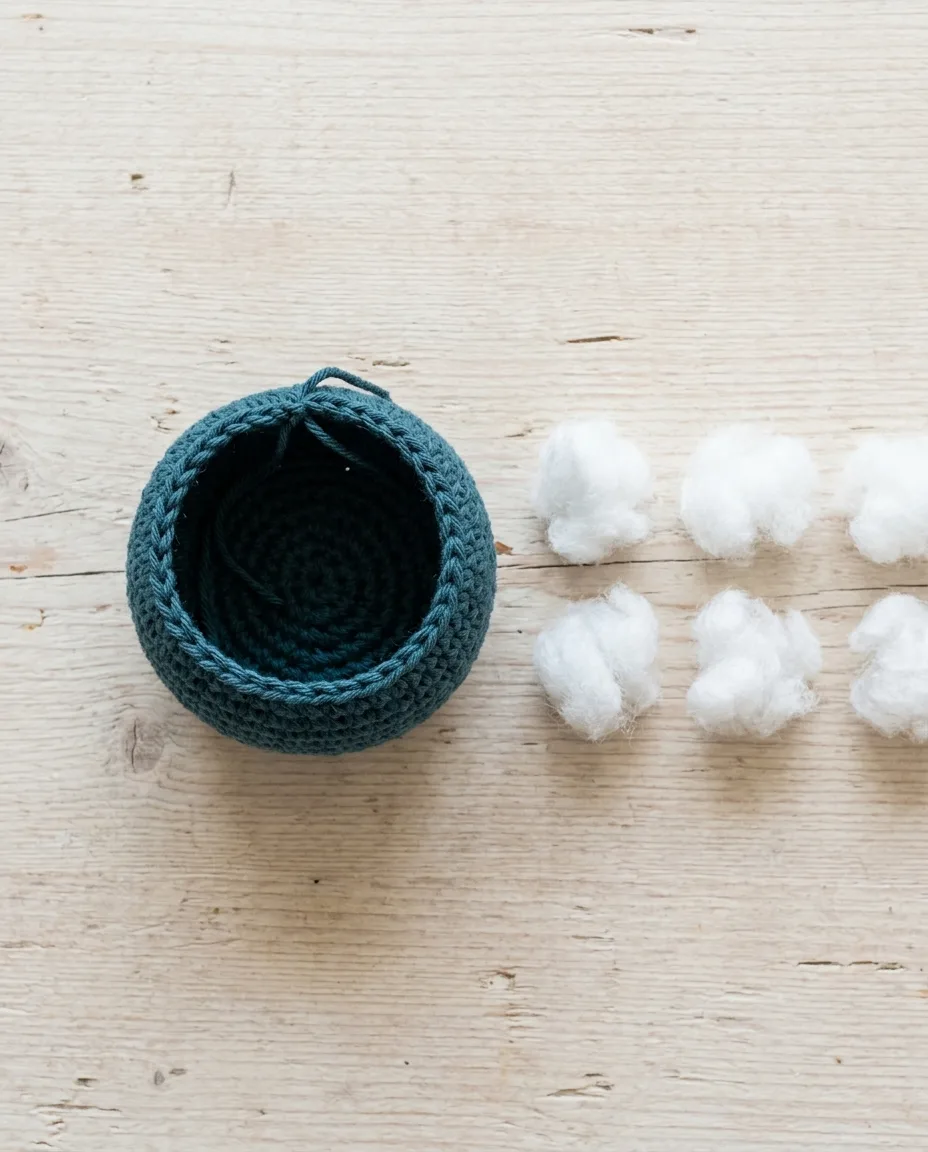
Fiberfill comes out of the bag in dense, matted wads. Push a big wad straight into a toy and it sits in clumps. Each clump presses hard on one patch of fabric, so the stitches over it stretch and show white. The patches between clumps sag. Pull it apart first. Tear each handful into tufts about the size of a walnut and fluff them between your fingers until they look like cotton candy. Then add them a few at a time.
Start at the far end of the piece. Fill the bottom and the edges before the middle, pressing each tuft into place before the next goes in. Rolling the toy between your palms every few tufts spreads the stuffing out and shows you where a lump is forming.
Feel a hard knot under the surface after closing? Work it loose from outside with a blunt yarn needle, pushing the needle between stitches and teasing the fiber apart. It’s fiddly. It’s still faster than unpicking the last round.
If none of these fit, look at the yarn. Slippery bamboo blends and fuzzy brushed yarns don’t grip themselves well, and their stitches drift open under pressure. A smooth cotton or acrylic in a darker shade stays shut much better on a stuffed toy.