Bullion stitches are worth every bit of the fuss. Once the hook stops fighting you, anyway. Each one is a tight coil of yarn standing up off the fabric like a little spring. A whole row looks like rolled cords laid side by side. Nothing else in crochet gives you quite that texture. It’s an intermediate stitch, and the hard part is a single moment: pulling the hook back through the coil. Get the hook or the yarn wrong and the wraps catch, bunch up and just sit there.
Expect the first 10 or so to look rough. Everyone’s do. You’ll wrap the yarn around the hook many times per stitch. Each of those wraps is a yarn over (one turn of yarn around the hook, back to front), and it takes a few tries to feel natural. All the terms here are US crochet terms.
- Wrap the yarn around the hook 7 times. Loosely. Work back toward the handle.
- Now look at the wraps. Side by side on the wide part of the shaft is right. Piled up means start over.
- Hook goes into the next stitch.
- Yarn over and pull up a loop. Count them: 9 loops on the hook.
- Pinch the wraps between thumb and middle finger. Hold on.
- One more yarn over.
- Draw that loop through all 9. Roll the hook downward as it goes, and let it ease out one wrap at a time.
- A light tug on the last loop. That’s one bullion.
Where a bullion stitch looks its best
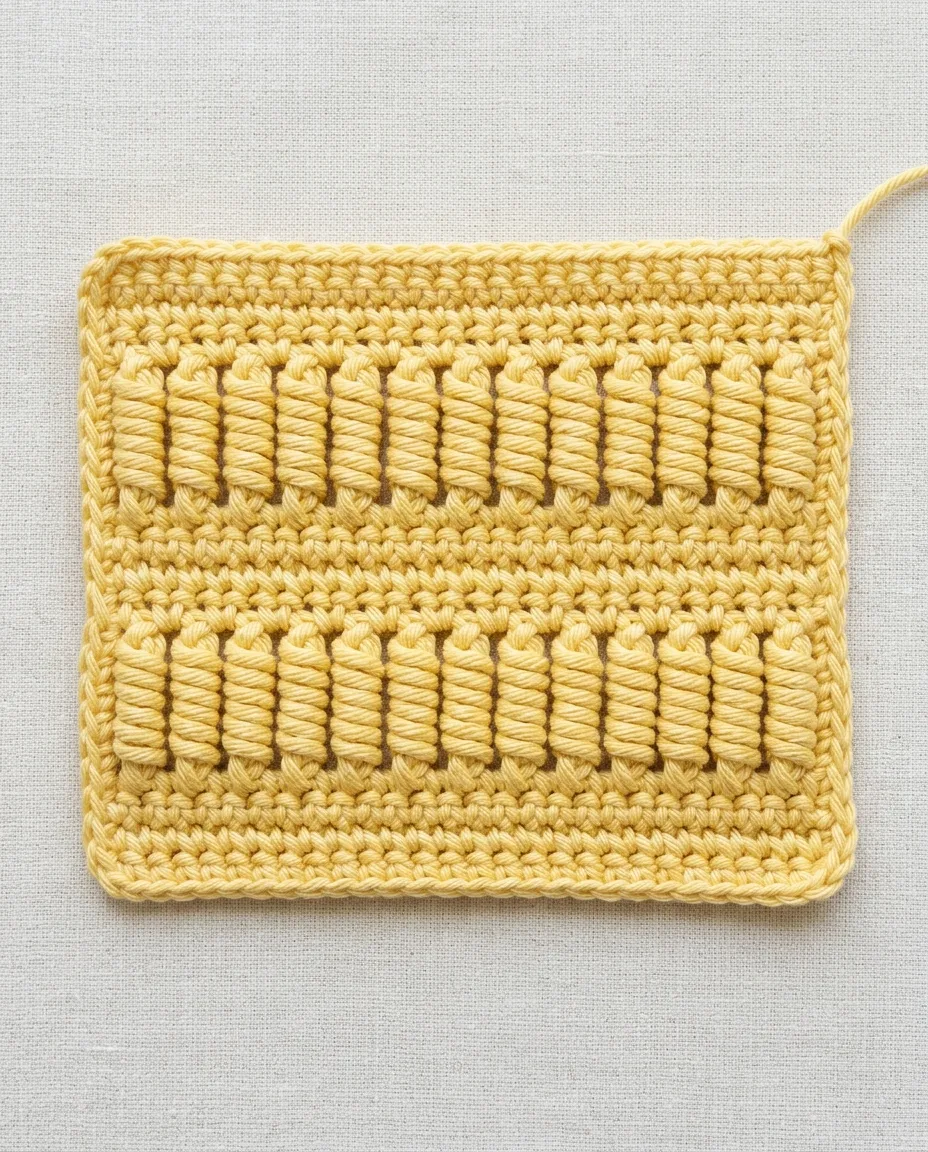
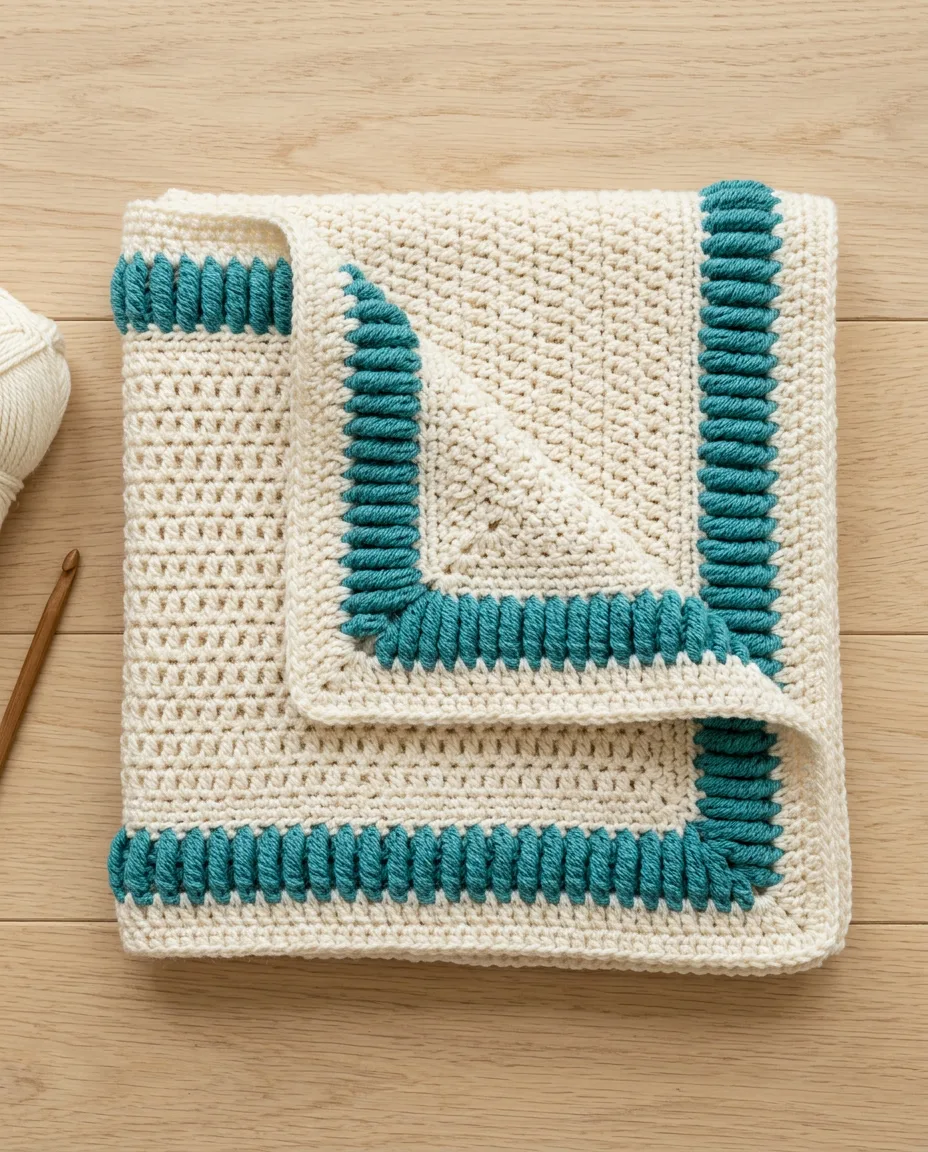
Give bullions room and they look great. Crowd them and they turn into lumps. One row across a blanket border reads as a raised band, and two rows with plain rows between them make neat ridges. Flowers and spirals are the classic use (a ring of bullions fans out into petals with no help from you).
But skip them for anything that has to drape. Each coil is stiff. It swallows a lot of yarn, too. Keep bullions as an accent on a hat brim or a pillow edge, and leave the sweater body to something softer.
 Save
Pick a hook and yarn that let the wraps slide
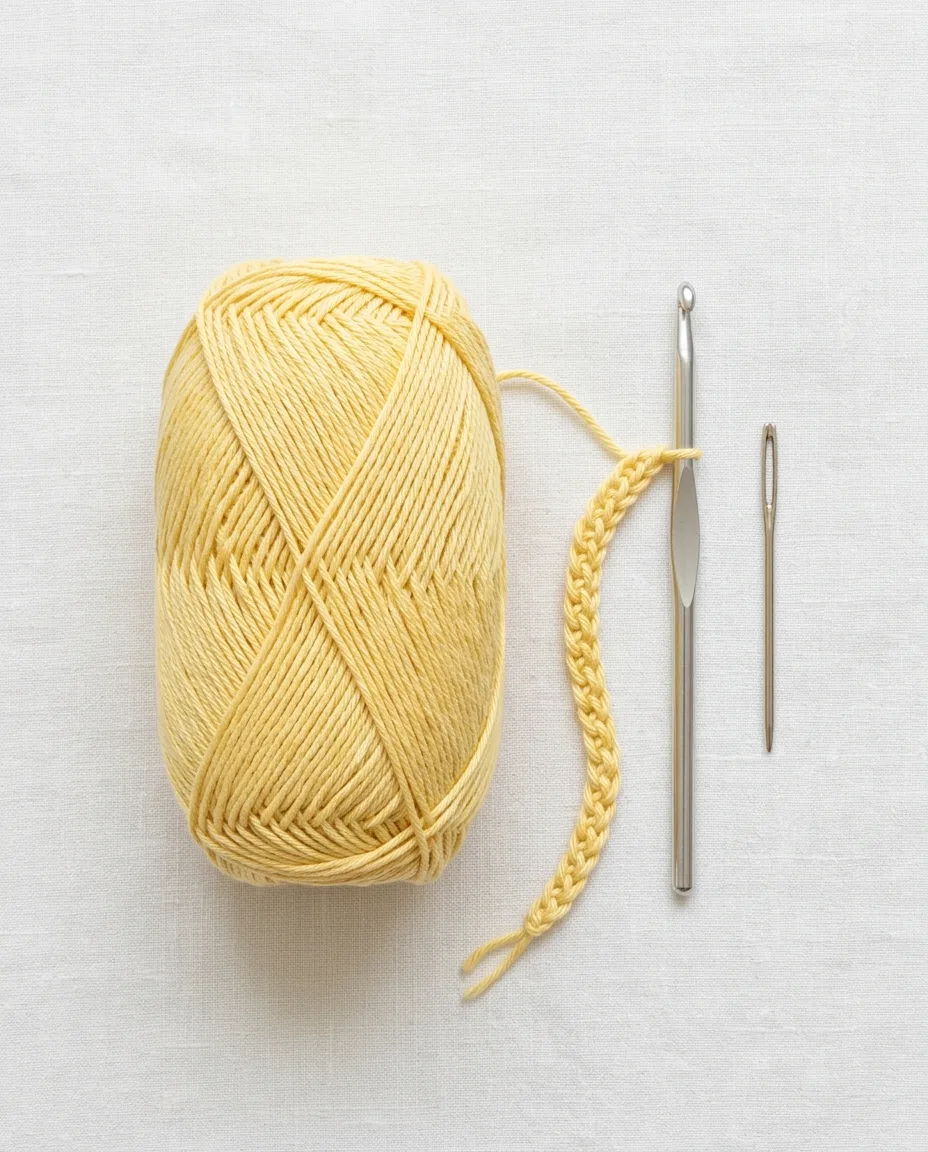
Blame the hook first. Lots of hooks have a throat that narrows hard right behind the tip, then widens again toward the handle. Your wraps sink into that dip. Then they jam the moment they hit the wider part, and no amount of wiggling helps. So look for a hook whose shaft stays the same width all the way from the throat to the thumb rest. Polished metal slides best. Wood and matte plastic grab.
Yarn is the other half. Smooth, tightly twisted cotton or acrylic slips off in one clean pass. Fuzzy yarn? It splits as the hook comes through, a single strand of one wrap snags, and the coil tears open. Mohair and chenille are close to hopeless here.
One more trick: go up a hook size from what the yarn band says. A 5 mm hook with worsted cotton gives each wrap a bit of breathing room.
 Save
Practice rows for a bullion swatch
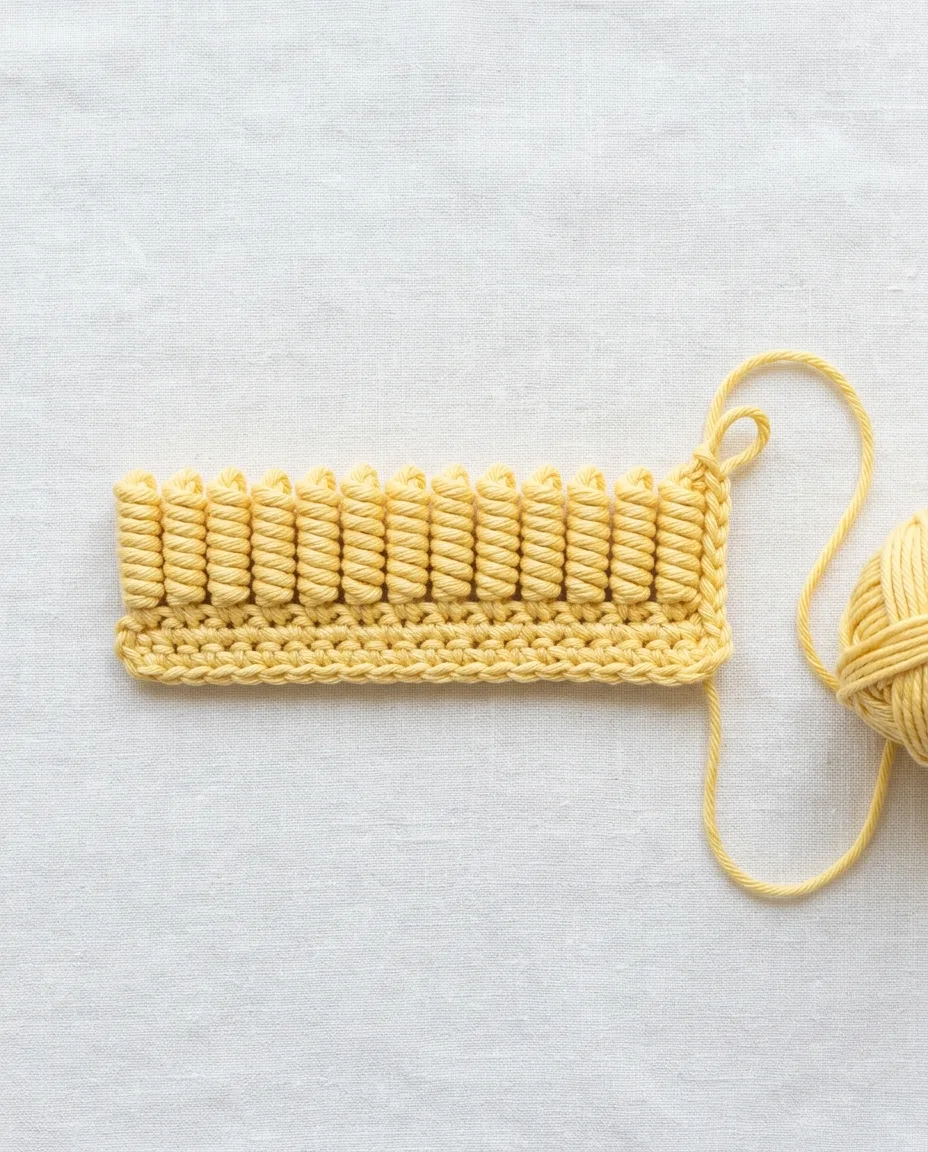
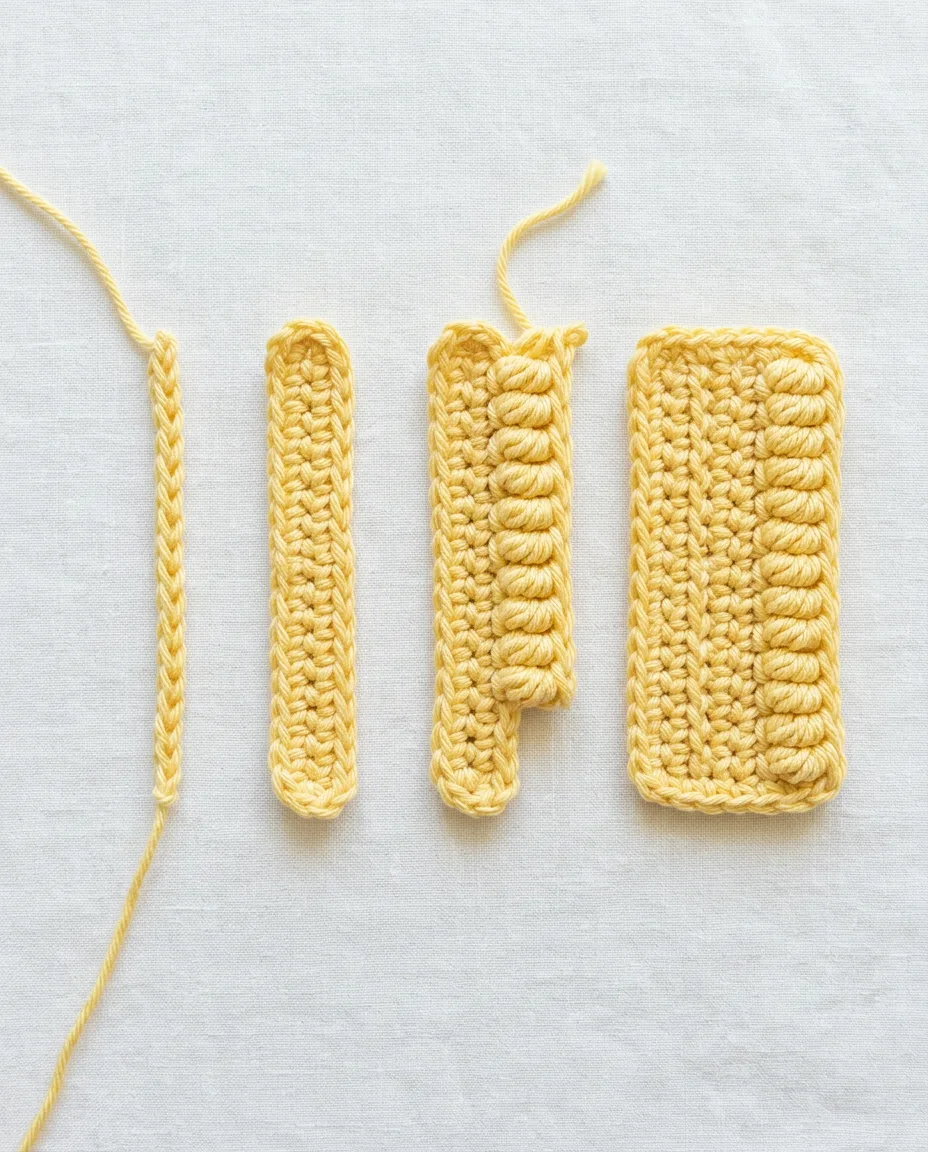
A swatch, meaning a small test piece, is the place to get your wraps even before they go on anything real. This one swaps between rows of single crochet and rows of bullions. For a single crochet, put the hook into a stitch and pull up a loop. Then yarn over once more and pull through both loops on the hook. Those plain rows keep the swatch flat. They’re the firm base the coils need.
- sc in 2nd ch from hook and in each ch across, turn (15)
- ch 3, bullion in each st across, turn (15)
- ch 1, sc in each st across, turn (15)
- ch 3, bullion in each st across, turn (15)
- ch 1, sc in each st across (15)
That ch 3 at the start of each bullion row lifts the yarn up to coil height. Don’t count it as a stitch. On the single crochet rows, put your hook into the top of each bullion. The gaps between them look tempting. Ignore them, or the edge starts to wander. The full fix is in the plump puff stitch guide.
 Save
When the coil snags or bunches
Never wrap right at the tip. That’s how wraps end up stacked on top of each other, the problem almost everyone hits first. Start each wrap where the shaft is widest and nudge them toward the handle as you go.
And if the hook won’t budge at all? The wraps are gripping it. Loosen up while wrapping and try again (tight hands are a hard habit to drop). The only tightening in a bullion happens at the very end, on that last loop.
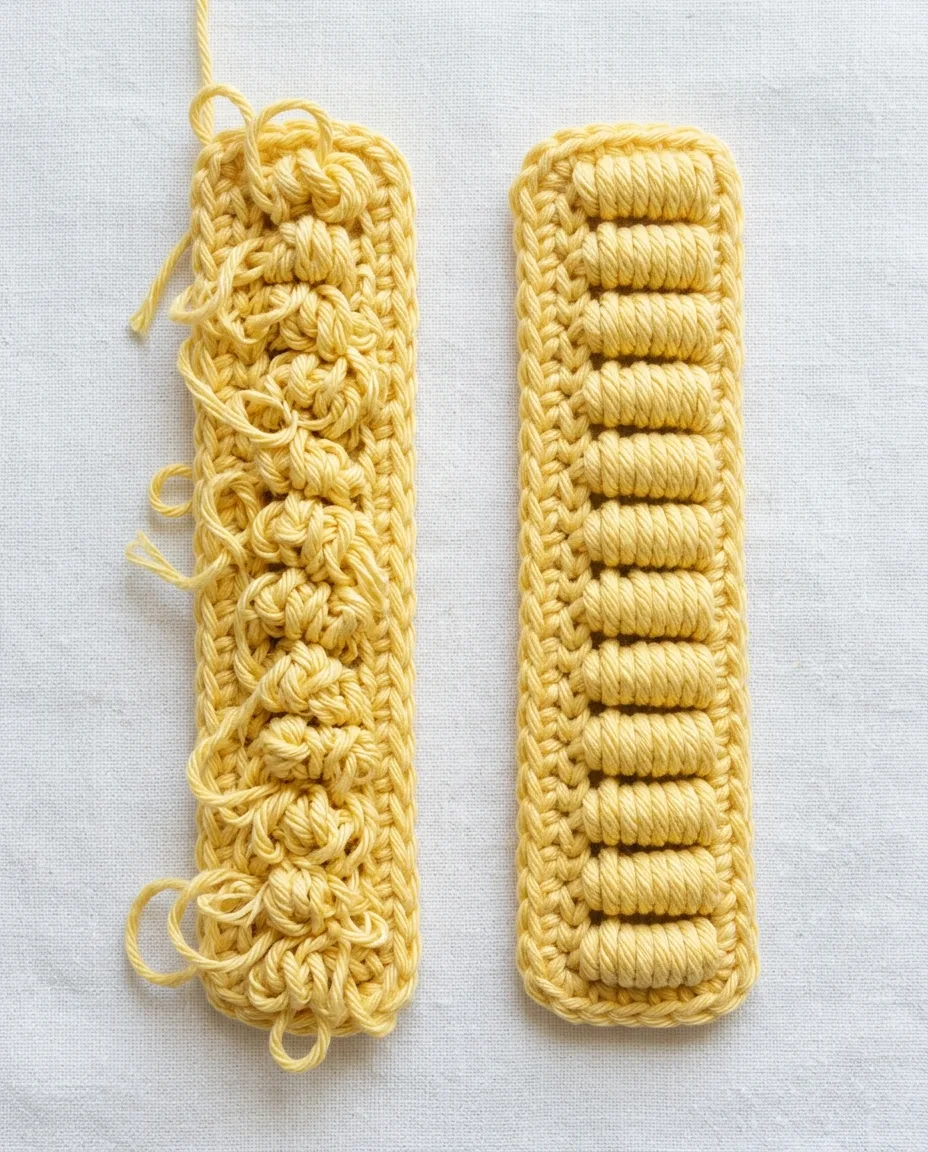
Lumpy coils are a speed problem. The hook came through too fast. Pinch harder, roll the hook as it travels, and if a wrap still catches, stop and ease it over the hook head with a fingernail. Sometimes the whole thing knots anyway. Pull it out and start again. Forcing it frays the yarn and the stitch still looks bad.
 Save
A bullion wheel to try next
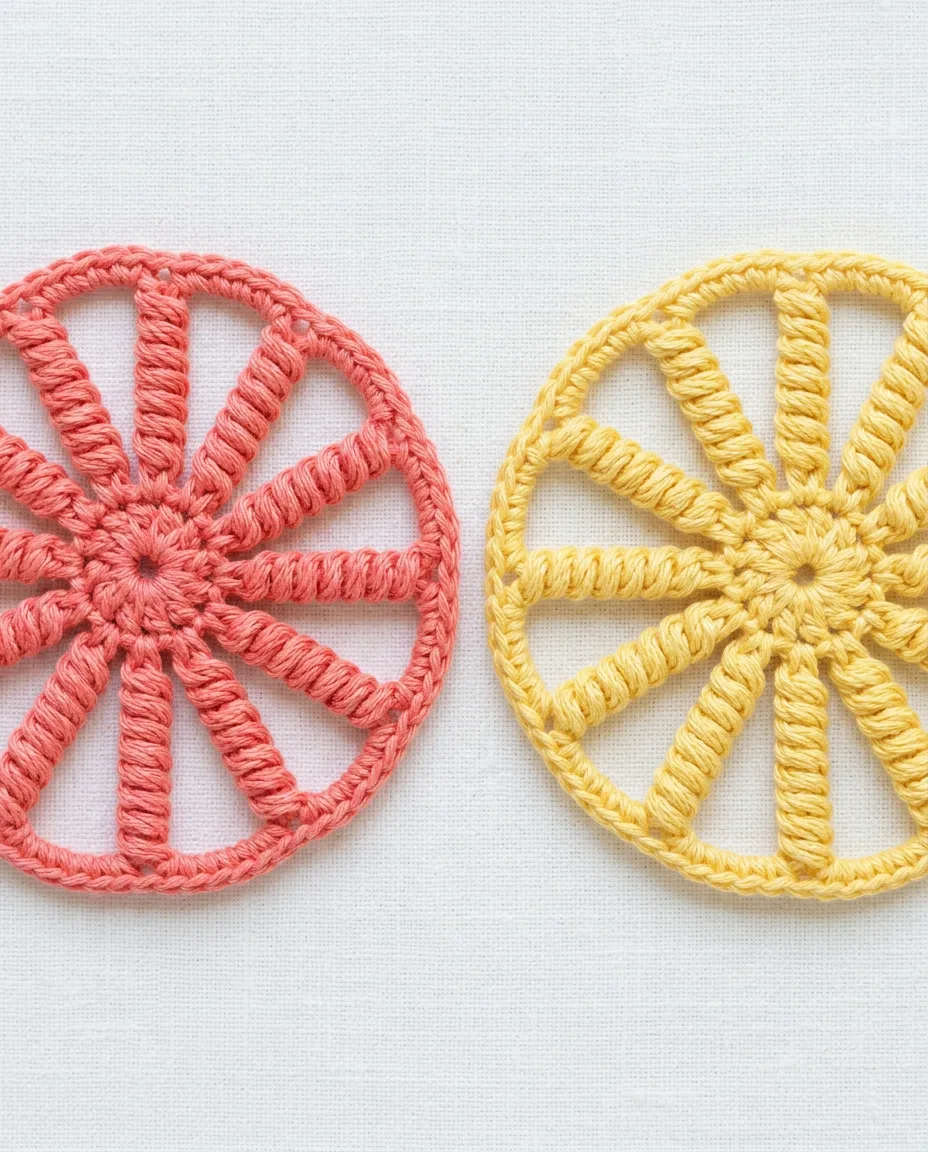
Seven wraps per coil, a dozen coils in a magic ring, and you’ve got a small wheel. It’s the natural next step once the swatch stops feeling awkward. The magic ring is just a loop of yarn you can pull shut by the tail. Bullions fan out around it like spokes on a bike wheel.
- MR, ch 3, 12 bullions into ring, sl st to top of ch 3 12 sts
Tug the tail to close the center. In worsted cotton the wheel comes out about 2 inches (5 cm) across. Sew a few onto a tote bag or a hat band. Or put one at the middle of a bigger motif. A round of single crochet worked around the spoke tips turns it into a solid ring, like the pair in the photo. Want petals? Go to 10 wraps per coil, and the longer coils curl over into something close to a rose.
 Save
Count your wraps on every single stitch until the number sticks. A row with 6 wraps here and 8 there looks wobbly, even from across the room.
 Save