Three loops go into every trinity cluster. And one of those three spots always belongs to the cluster before it, too. That shared spot is the whole trick. Worked across a row, it packs little triangles shoulder to shoulder into a firm cloth that looks almost woven. It’s a good second stitch if single crochet already feels comfortable in your hands.
All terms here are US crochet terms. You only need one other stitch, single crochet, and the steps teach it as they go.
Pick a light cotton. Dark yarn swallows the triangles, and fuzzy acrylic blurs them (they’re tiny, so they need all the help they can get). Worsted weight is the medium yarn most craft stores stock, and a 5 mm hook is what its band usually asks for.
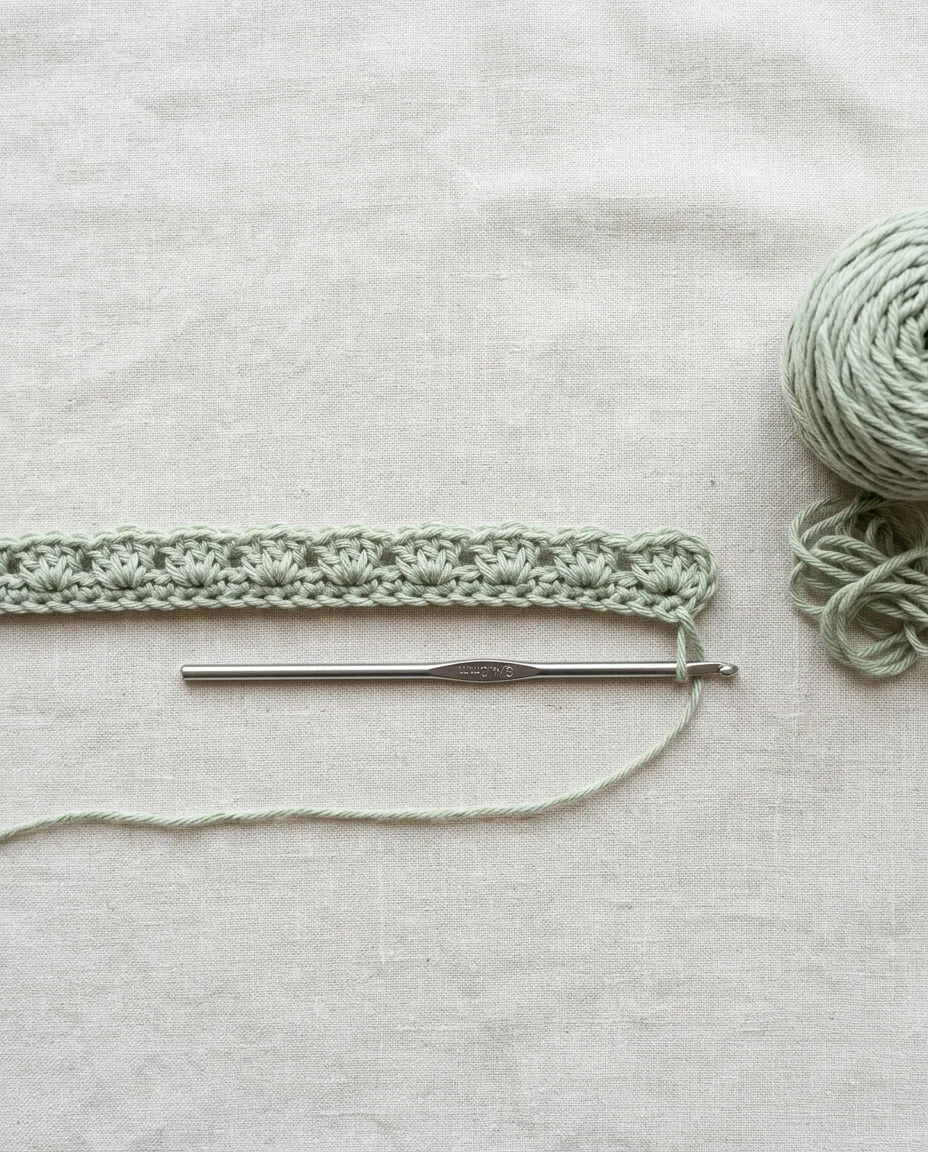
Working the first row into the chain
Chain 18 first. Every chain is one small move, wrapping the yarn around the hook back to front and pulling it through the loop already there. That wrap is called a yarn over, and the steps lean on it constantly.
- Single crochet into the second chain from the hook. Hook in, yarn over, pull up a loop. Yarn over again. Through both loops.
- Back into that same chain. Yarn over, pull up a loop. Two loops on the hook.
- Next chain, another loop. Three loops now.
- Into the chain after that for one more. Four loops sitting on the hook.
- Yarn over and pull through all four. That’s one cluster done.
- Chain 1. It pinches the cluster shut.
- Now the next cluster. Its first loop comes from the chain where the last cluster ended, then the next two chains give the other two. Close it the same way, through all four.
- Chain 1, cluster, chain 1, cluster. Stop once you’ve made the eighth.
- Single crochet into the last chain. It’s the same one the eighth cluster finished in. Turn.
 Save
Before turning, count. You want 17 stitches. Short a few? A cluster probably started in a fresh chain when it should have gone into the shared one.
Rows two and up
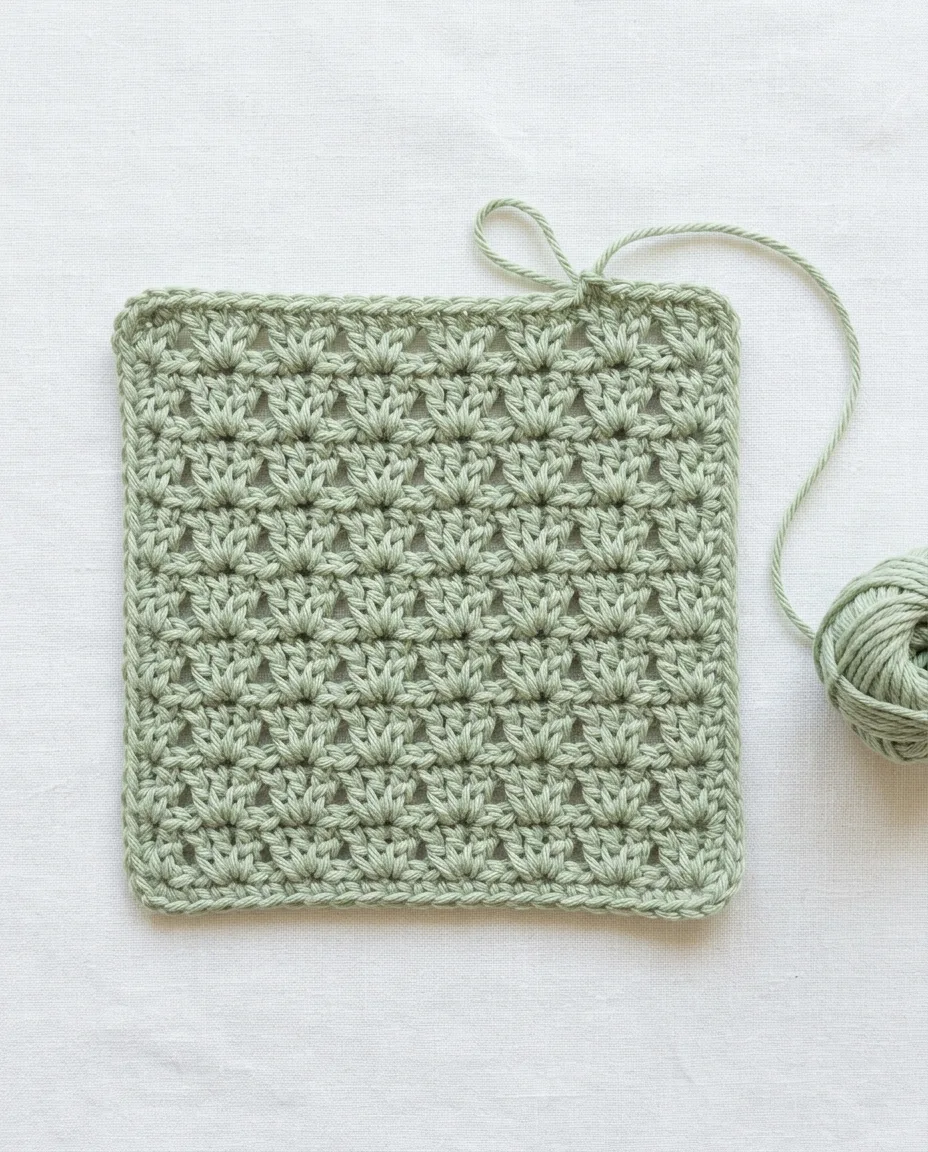
Chain 1 and turn, and don’t count that chain as a stitch. Single crochet into the first stitch. The first cluster starts right there in the same stitch, grabs its second loop from the next cluster top and its third from the chain gap after it. The guide to the crochet lemon peel stitch covers the whole method.
After that it’s a rhythm. Chain 1. Next cluster starts in the gap the last one ended in, then takes the next cluster top, then the next gap. Your final cluster lands in the edge single crochet. One more single crochet goes into that same stitch before you turn.
Every row from here is a repeat of row two, with eight clusters and 17 stitches each time.
Already comfortable with written patterns? Here’s the short version.
- sc in 2nd ch from hook, sc3tog over same ch and next 2 ch, (ch 1, sc3tog over same ch and next 2 ch) x7, sc in same ch as last leg, turn 17 sts
- ch 1, sc in first st, sc3tog over same st, next cluster and next ch-1 sp, (ch 1, sc3tog over same sp, next cluster and next ch-1 sp) x6, ch 1, sc3tog over same sp, next cluster and last sc, sc in same sc, turn 17 sts
- Rep Row 2 to desired length 17 sts
 Save
What the finished fabric looks like
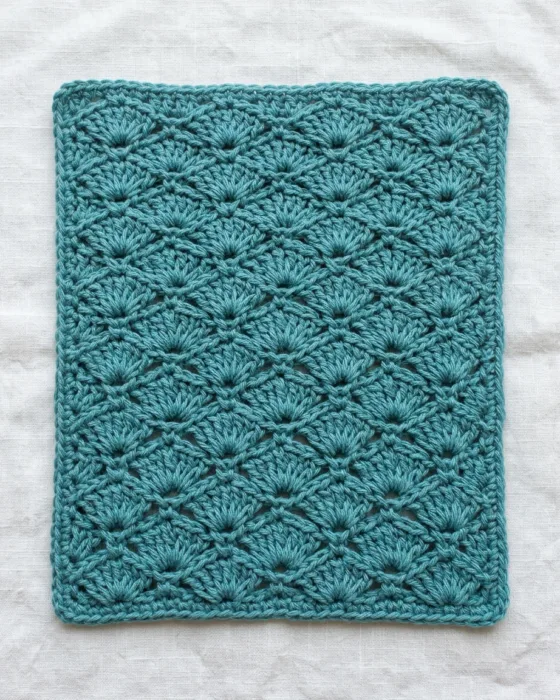
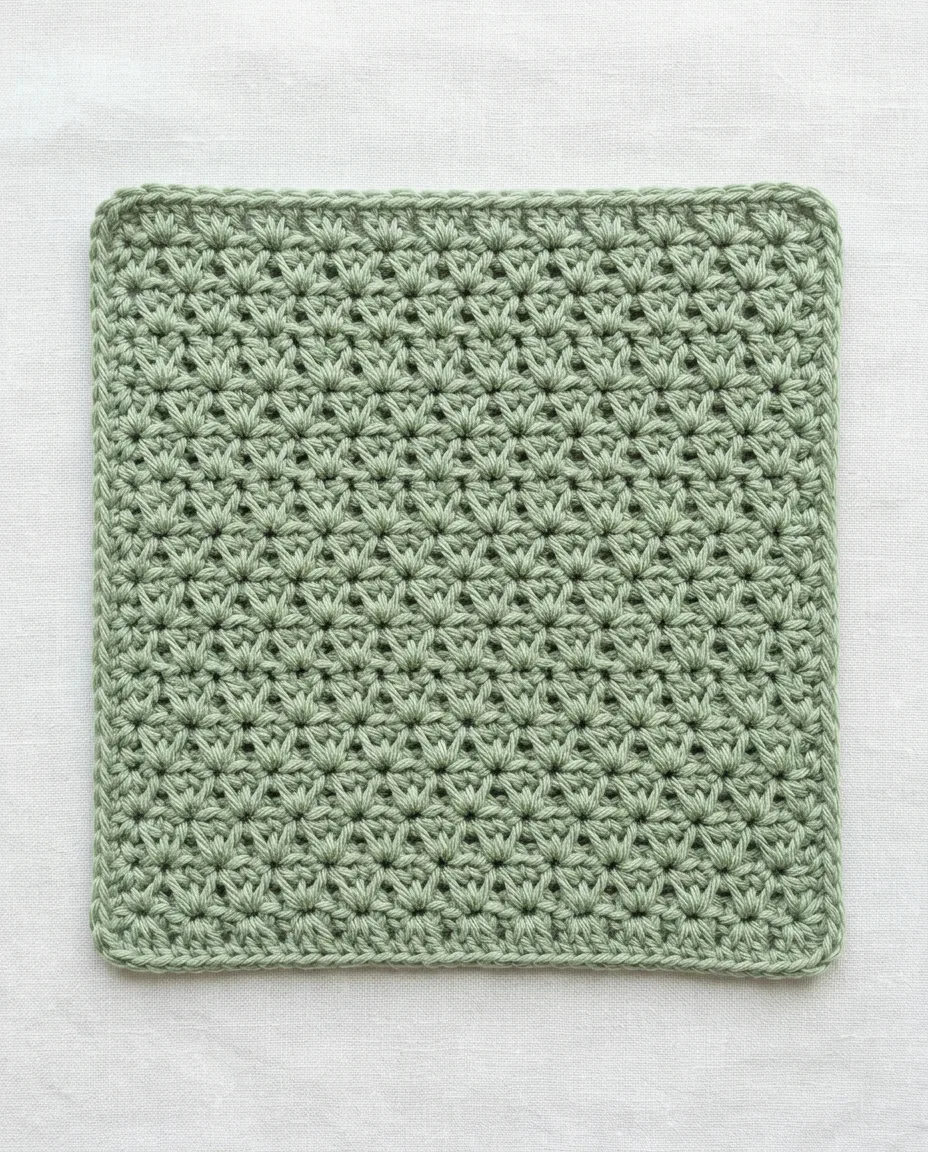
Each cluster tips toward its neighbor and comes to a point. On the next row the points tuck in between the ones below. Step back and you see a grid of small triangles. Squint and it almost reads as a basket weave. Flip it over and the back is plainer. Just rows of ridges, really.
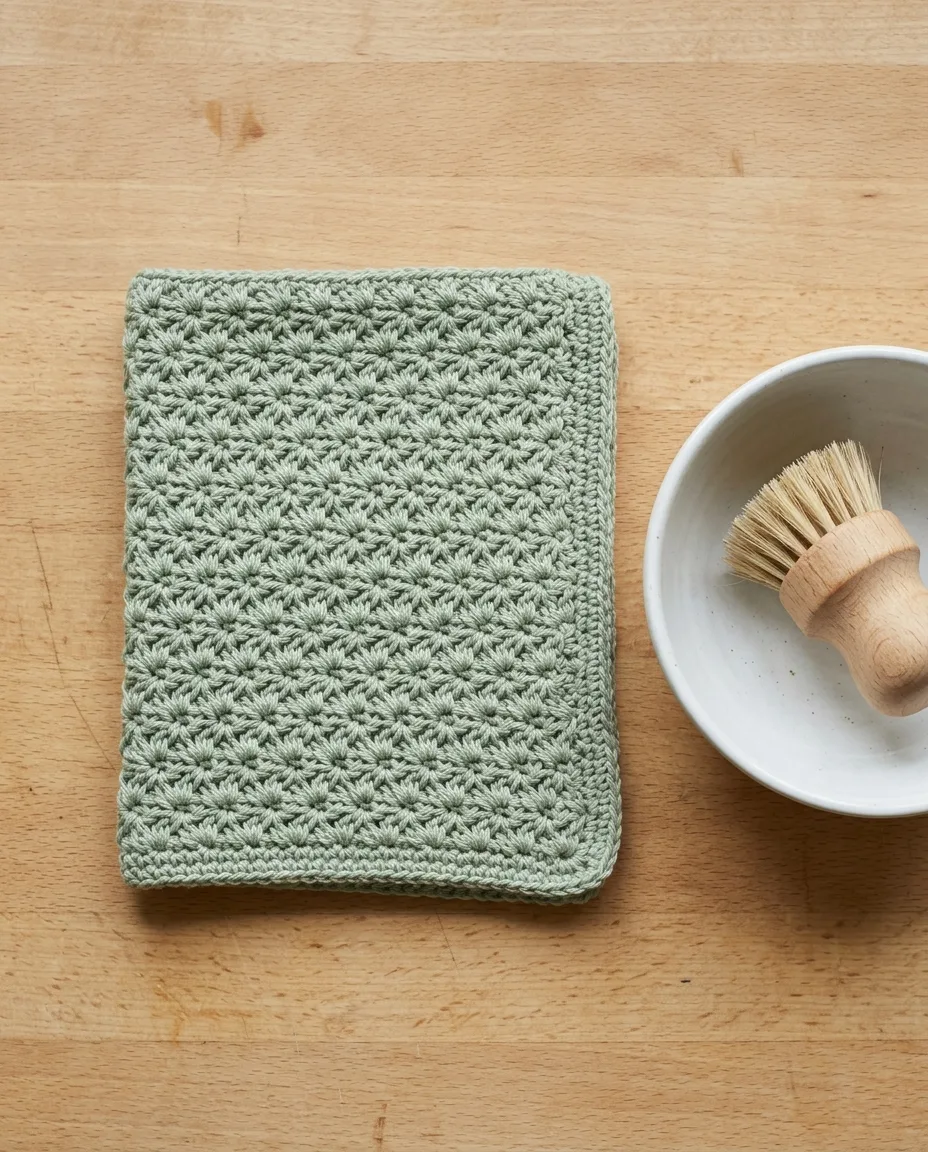
It’s dense. Worsted cotton on a 5 mm hook gives a stiff cloth that holds its shape on its own. Great in a dishcloth or a basket. In a scarf, though? That stiffness is the last thing you want.
Choosing a hook for the texture you want
Hook size changes this stitch more than most. Drop to a 4.5 mm (7) hook and the triangles shrink while the cloth goes rigid. On a 6 mm (J) they loosen up and small holes open between them. The 5 mm sits right in the middle.
No need to fuss over gauge, which is how many stitches fit in an inch, unless you’re matching someone else’s pattern. For a dishcloth, go by feel. Make 10 rows, a small test piece called a swatch, and squeeze it. You want it to bend and then spring back.
Where trinity stitch earns its place
Kitchen cotton is where this stitch shines. Those clusters scrub well, and the cloth dries flat. Coasters and bag bases need to hold a shape, so they suit it too. Cushion covers work if you go up a hook size. Want a wider cloth? Start with a longer chain, any even number works. Nothing else changes.
But skip it for anything that should drape. A cardigan in trinity stitch would feel like cardboard. It also eats more yarn than plain single crochet, since every cluster pulls up three loops. Buy an extra ball. There is a fuller walkthrough in the guide to the crochet star stitch.
 Save
If your edges start to slant
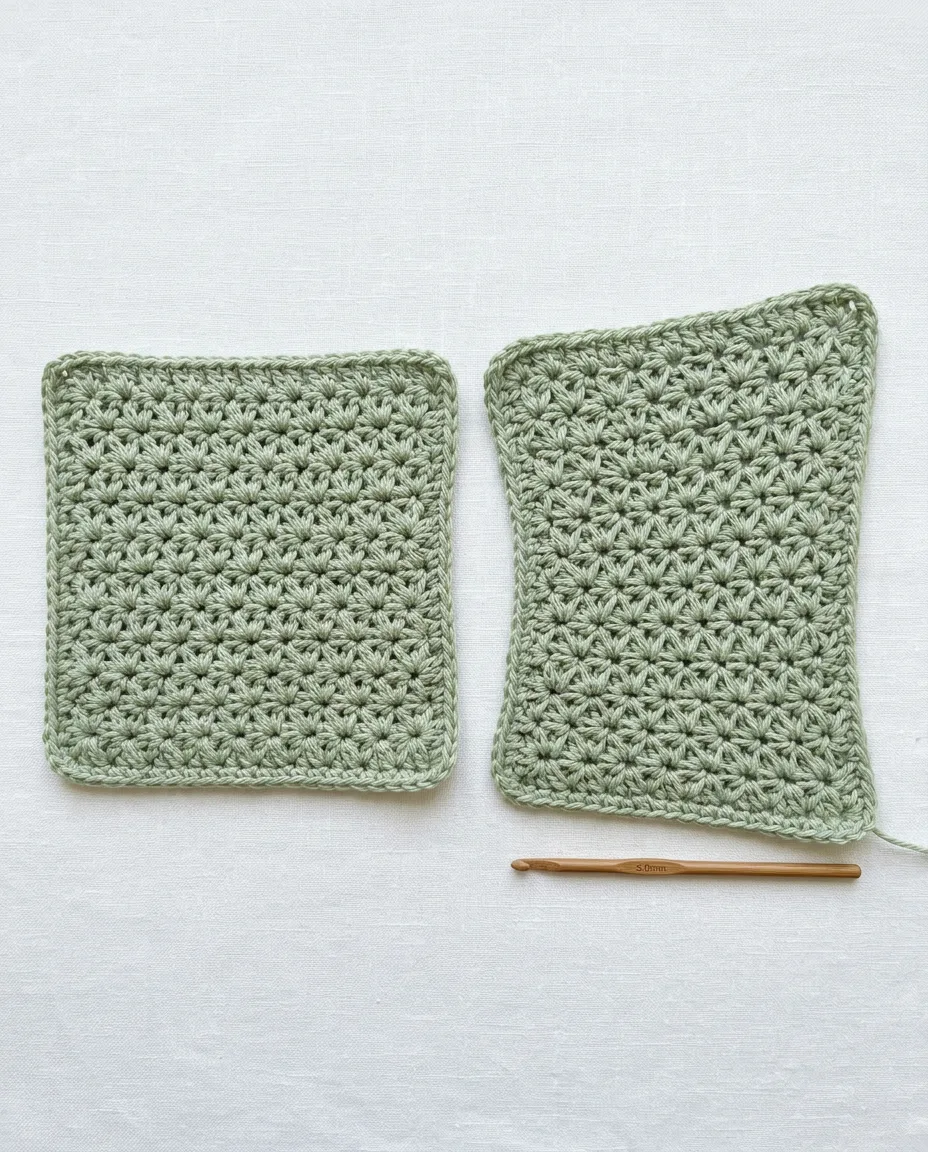
Almost every slanted swatch comes down to a stitch lost or gained at the edge. Watch both ends. The first cluster of a row has to start in the same stitch as the opening single crochet. The last one ends in the edge stitch, with one extra single crochet tucked in beside it.
For the first 6 rows, count every row. Drifted away from 17? Pull back to the last good row and redo it. Tight tension is the other usual culprit, because snug loops fight you when you close a cluster. Then the cloth curls. Going up to a 5.5 mm hook calms it down.
 Save
Two colors for a striped triangle grid
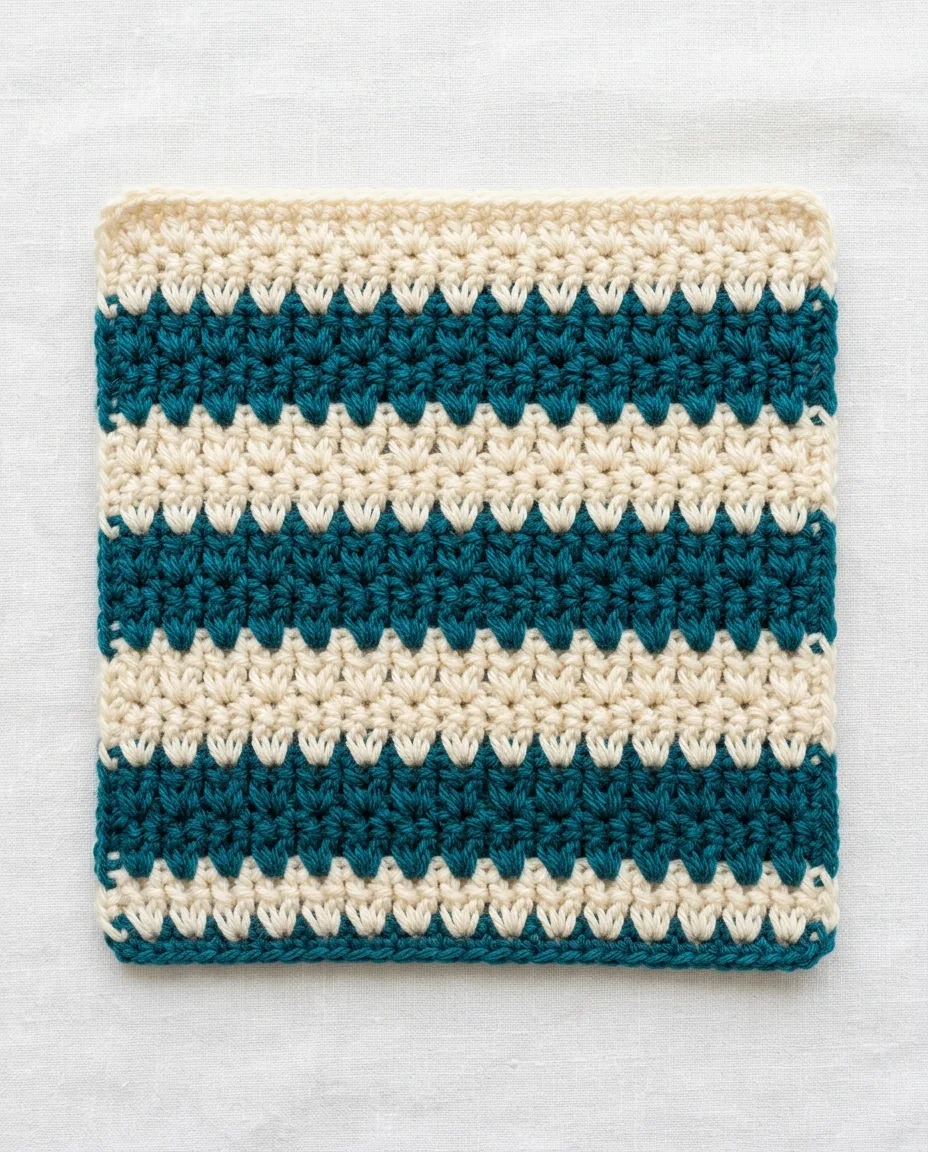
Switch colors every two rows and the triangles line up into bands of points. Here the change happens at the edge single crochet. Finish the last cluster in the old color. Then catch the new color on the final yarn over of that edge stitch. The alpine stitch guide breaks the whole project into steps.
Light against dark works best. Cream with a deep teal shows every point. Two close shades melt into something more like tweed, and plenty of people like that better.
 Save
Finishing and washing the swatch
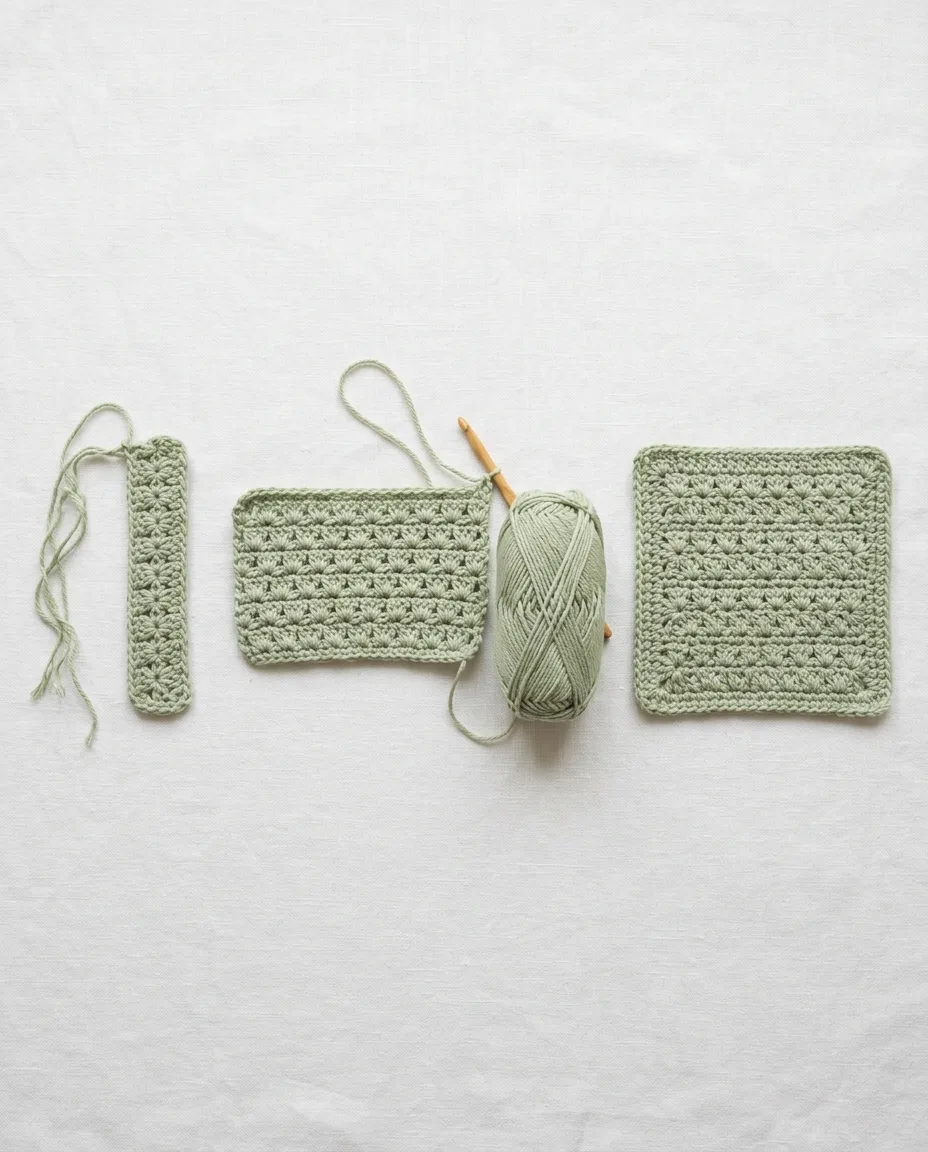
Weave in both tails with the yarn needle. Send each one through the backs of a few clusters, then turn around and come back the other way. Cotton tails work loose if they only travel one direction.
A cotton trinity cloth shrugs off hot water and goes straight in the washer. Lay it flat to dry. The stitch is tight enough that the triangles stay crisp wash after wash.
 Save