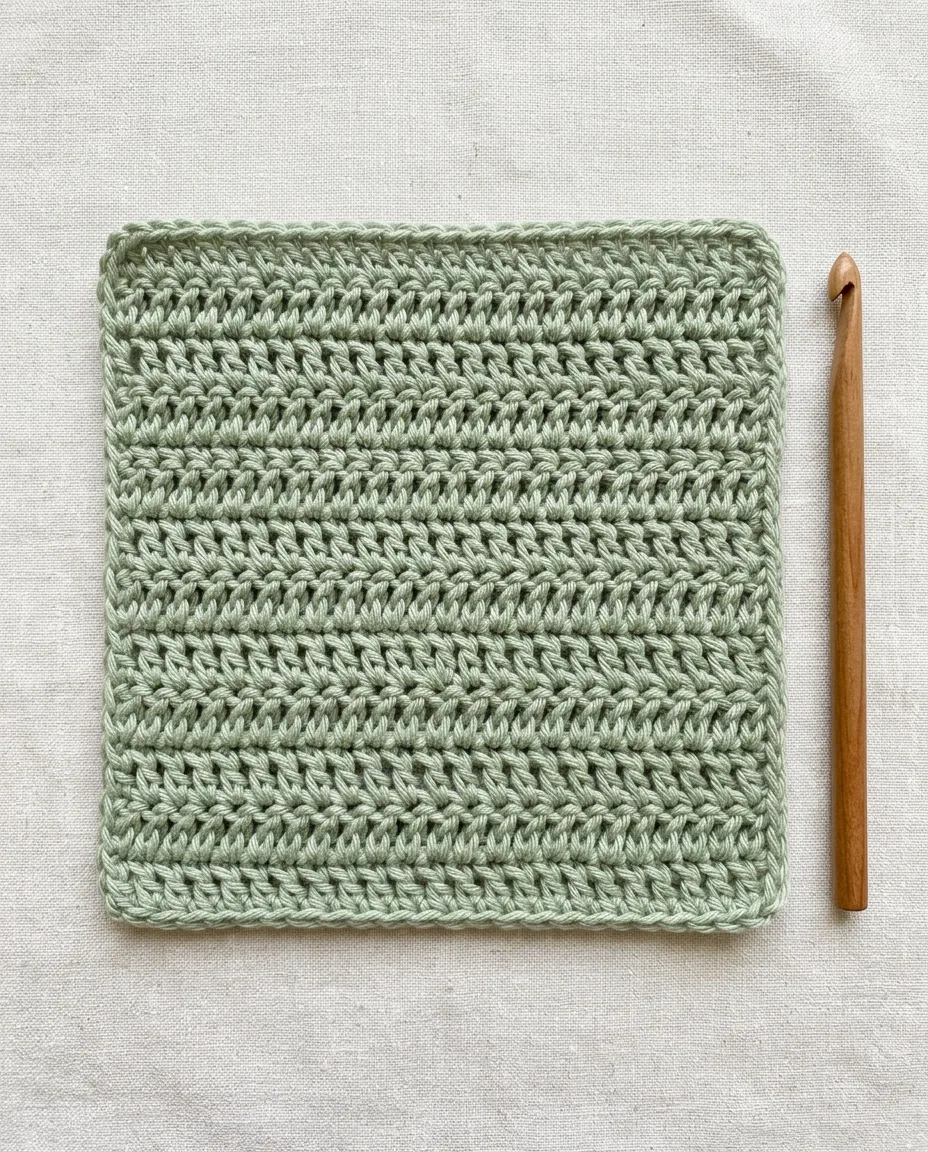
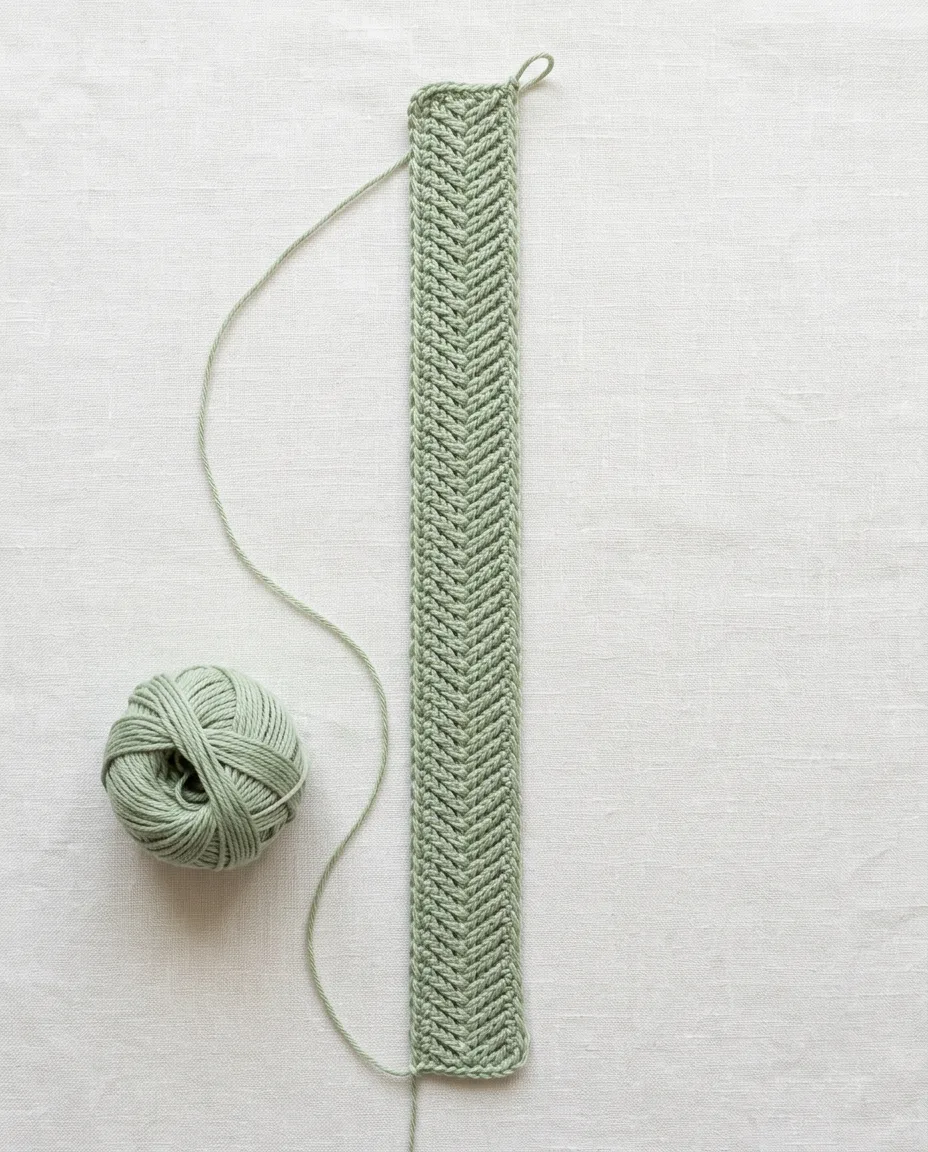
Two yarn overs go into every herringbone half double crochet. That’s two wraps of yarn around the hook, the same two a regular half double crochet uses. Only one pull-through changes. And that tiny shift turns plain ridged rows into slanted bars that lean one way, then the other, like a woven tweed.
US crochet terms throughout. The only skill you need first is a chain. Know how to chain, have a rough idea what a half double crochet is, and you can learn this in a single sitting.
Worsted weight is a medium-thick yarn, labeled size 4 on most bands. Smooth cotton or acrylic shows the slant best. Fuzzy yarn hides it. Dark yarn hides it too, so keep both for later, once your hands know the stitch.
Work one herringbone half double crochet
Read through the steps once before you pick up the hook. Steps four and five eventually blur into one smooth motion. Not at first, though. Go slowly for the first few stitches, because that pull-through is where every mistake in this stitch starts.
- Chain 17. Count back to the third chain from the hook.
- Yarn over, which means wrapping the yarn over the hook from back to front. That puts 2 loops on the hook.
- Push the hook into the third chain from the hook.
- Yarn over again. Pull a new loop back through the chain, so 3 loops sit on the hook.
- Don’t stop here. Keep pulling that new loop straight on through the next loop on the hook, the yarn over from step 2. Two loops remain.
- Yarn over once more.
- Pull through both loops. That’s one stitch.
- Now one stitch in each chain across. You should have 15.
- Chain 2 and turn. This turning chain just lifts the yarn up to the height of the new row. It doesn’t count as a stitch.
- Work a stitch into the first stitch of the row, then one in each stitch across. 15 in all.
From here, repeat those last two steps for every row. Twelve rows give you a swatch that’s nearly square, about 4 inches (10 cm) each way.
 Save
Why plain rows look woven
Start with the regular version. In a normal half double crochet you wrap, put the hook in and pull up a loop. Then you wrap again and draw through all 3 loops at once. Those 3 close together and the stitch sits upright. The double crochet gaps guide lists what to check first.
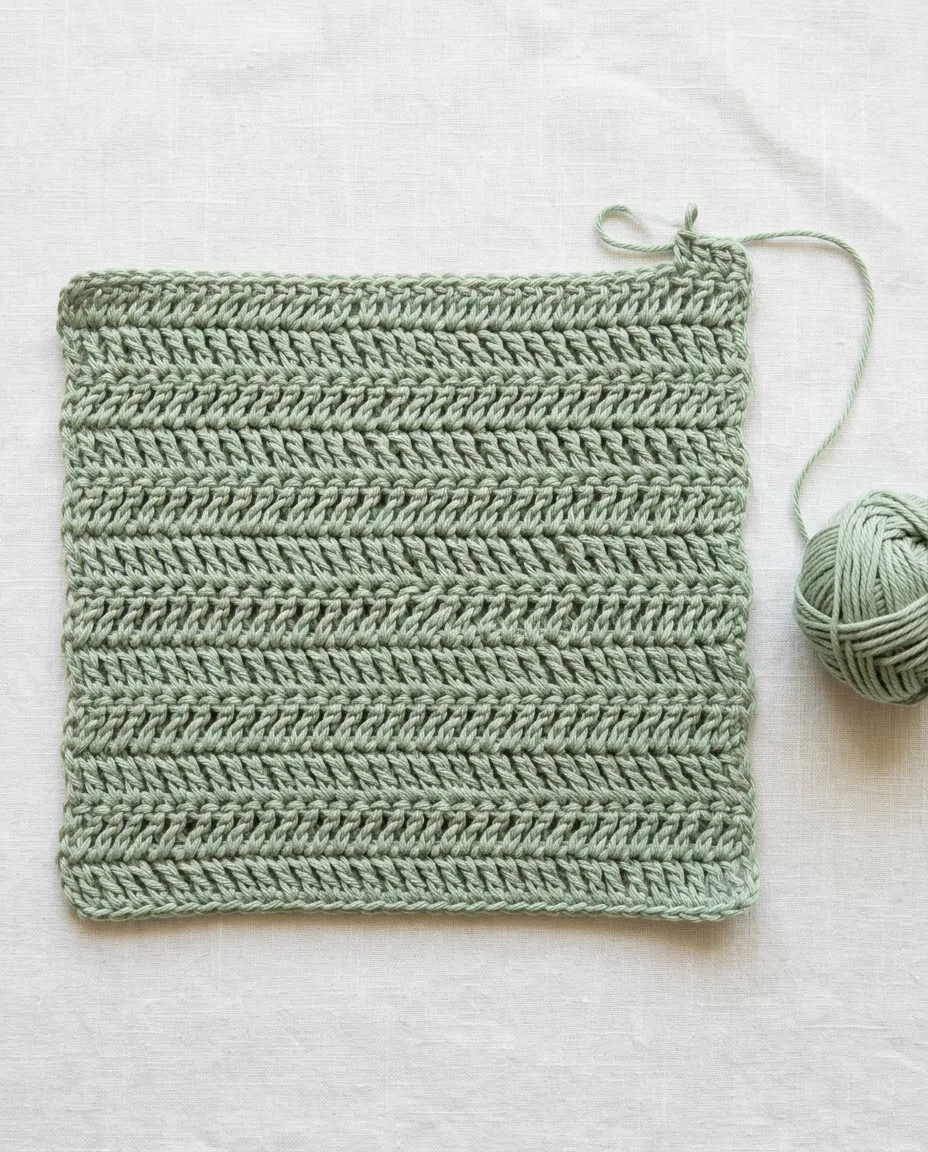
Herringbone closes one loop early. Dragging the new loop through the yarn over twists the base of the stitch, so it tips sideways. Every stitch in the row tips the same direction.
Then you turn the work. Now you’re working from the other side, so the next row leans the opposite way. Two rows stacked make a small V. Ten rows? The whole surface reads as diagonal bars in alternating rows, that classic herringbone weave from tweed jackets. There’s no color change anywhere. The stitch does it all by itself. There is a fuller walkthrough in the guide to treble crochet for drapey rows.
 Save
Keep the edges straight
15 stitches per row. Guard that number. Count every row for the first five or six, and after that your eye catches a missing stitch before you even start counting.
Stitches go missing in two spots. The first stitch of a row belongs in the very first stitch, right at the foot of the turning chain. It looks too close, so people skip it. The last stitch goes into the final stitch of the row below. That one hides under the old turning chain. Tilt the work toward you and it shows up.
Chain 2 is the right height for turning. Go down to chain 1 and the edge pulls in and ripples. A chain of 3 does the reverse, leaving a loose loop at each edge that looks like a little gap.
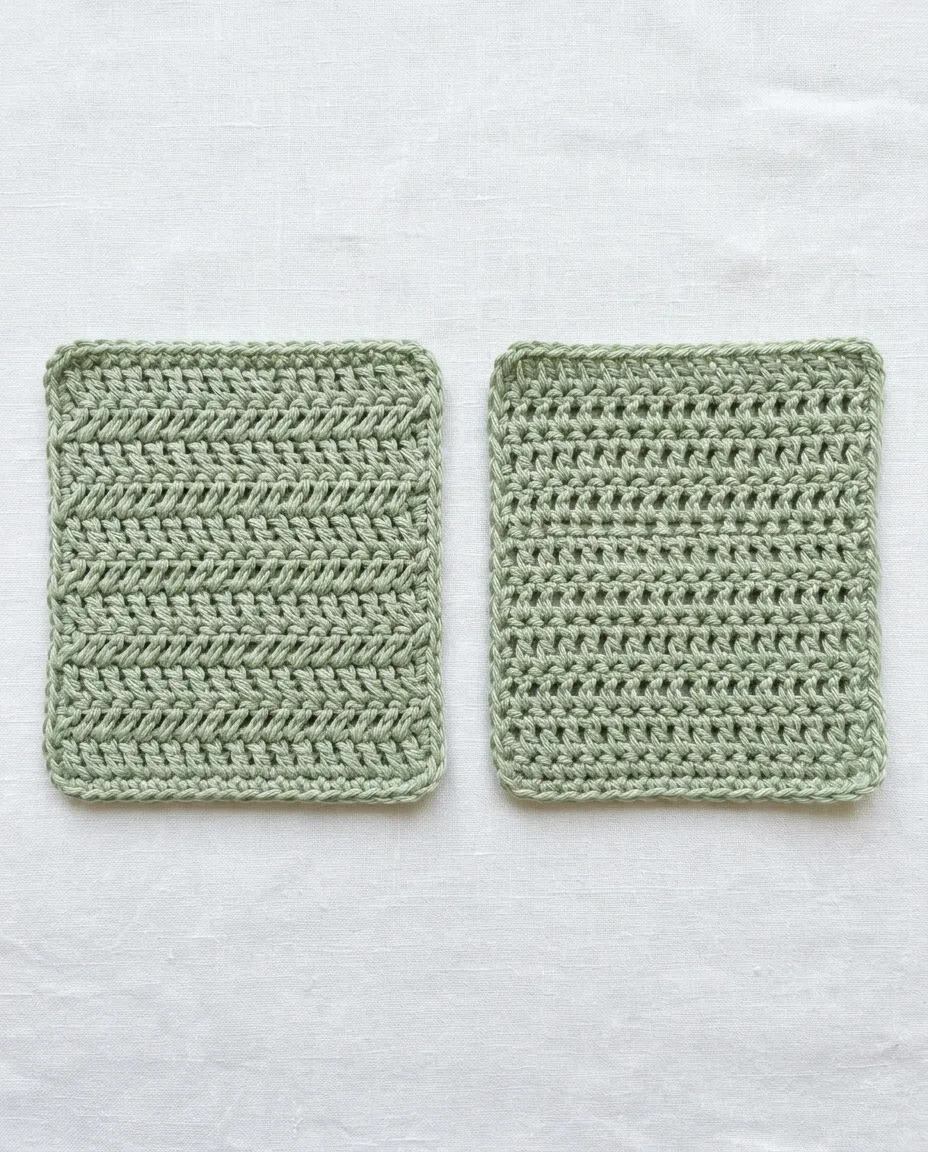
Herringbone and regular half double crochet side by side
Make 12 rows of each with the same hook and yarn. The difference is easy to measure.
| Trait | Herringbone half double | Regular half double |
|---|---|---|
| Surface | Slanted bars, direction flips each row | Upright posts with a ridge behind |
| Row height | A little shorter | Standard |
| Feel | Firmer, with less stretch | Softer and more drapey |
| Gaps | Very few | Small gaps between posts |
Herringbone eats a bit more yarn for the same size, roughly 10 percent. On a big project, buy one extra ball.
 Save
Where it shines
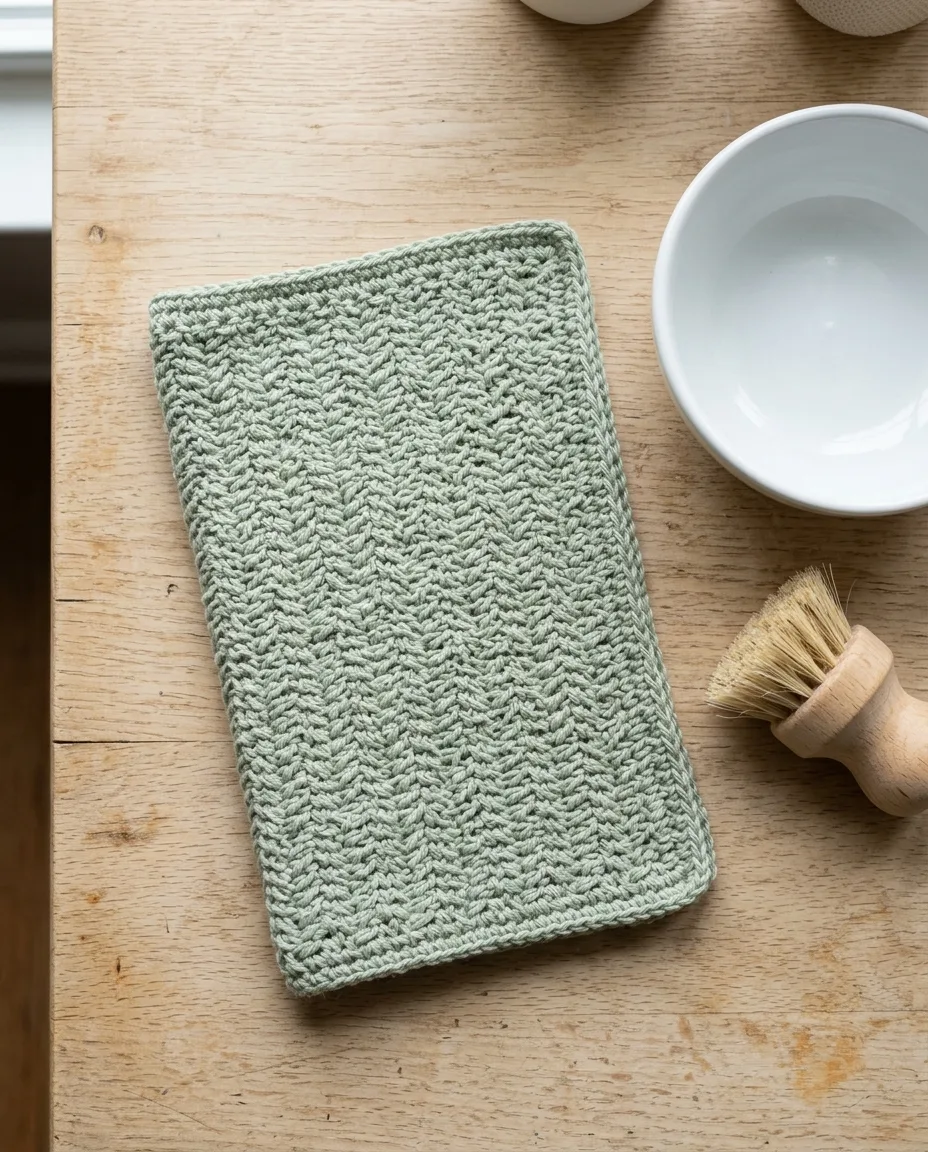
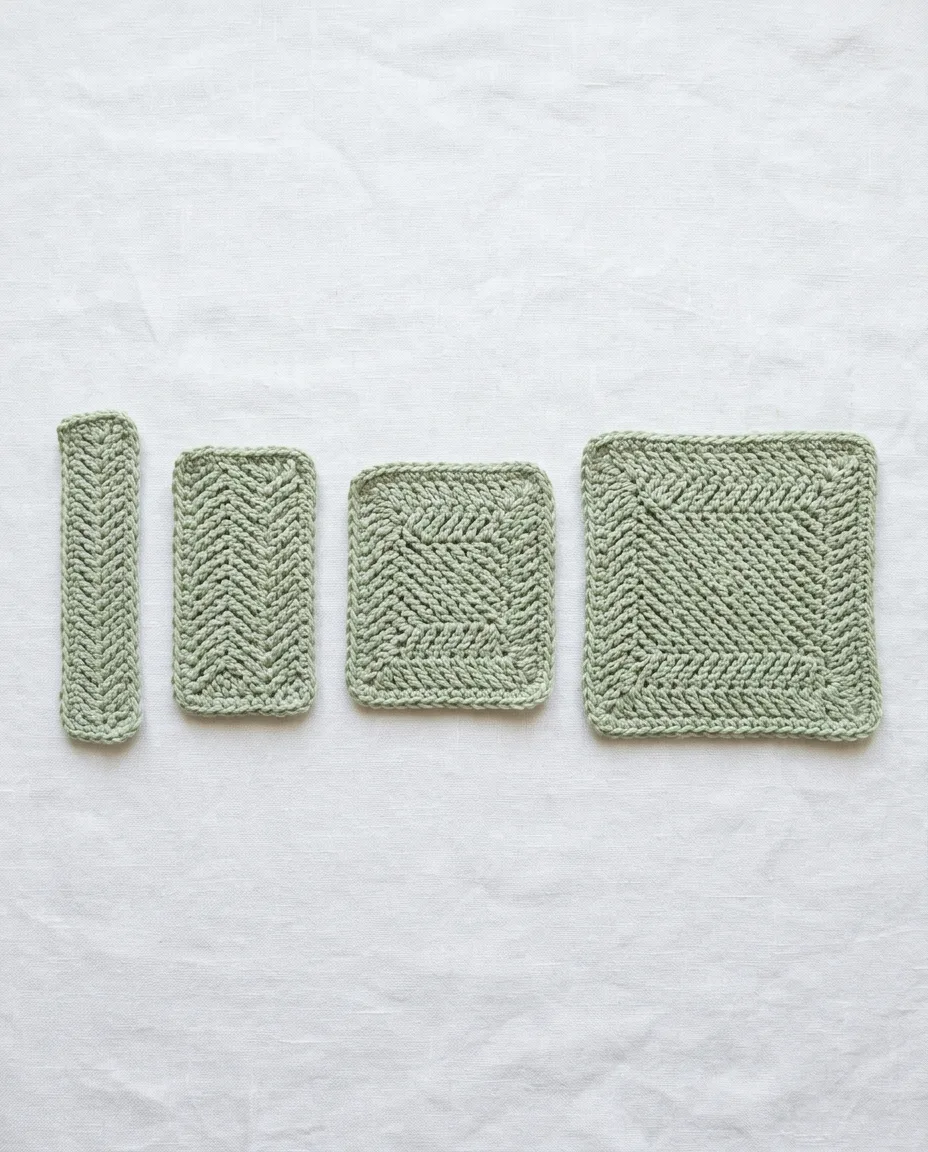
Firm fabric with few gaps is made for things that get used hard. Dishcloths are the obvious place to start. A 30-stitch square is a quick weekend make. Bag panels keep their shape and won’t sag when loaded. Coasters lie flat.
Scarves and cowls work too. Just go up a hook size. A 6 mm (J) hook with worsted loosens the fabric enough to fold softly around a neck. Blankets? Possible, but slow going. The stitch is short, so covering the same length takes more rows than most people want to do.
Solid colors and pale shades show off the weave best. Tweed yarns with little flecks of color look great with it. Heavily variegated yarn is the one to avoid. When the color shifts every few inches, the slant breaks up until you can’t see it.
 Save
Where it goes wrong
Too-tight fabric is the complaint you’ll hear most. That early pull-through squeezes the loop, and nearly everyone pulls it smaller than necessary. Does the hook drag going in? Go up half a size, from 5 mm to 5.5 mm. Or lift the new loop a little taller before it passes through the yarn over. Either fix works.
Pulling through the wrong loop is the second mistake. Draw the new loop through both loops at step 5 and the stitch collapses into something close to a slip stitch. A slip stitch is one loop pulled through the work and the hook in one go, with almost no height. So the row comes out flat and visibly shorter. Before you yarn over again, check that 2 loops are still on the hook.
Never judge the pattern after one row. The weave needs two rows sitting together before it shows up. A single row just looks like slightly crooked half double crochet, and beginners rip it out all the time thinking they did it wrong.
Swatch getting narrower toward the top? It’s lost stitches at the edges. Go back to the counting advice above and fix it the moment you notice, because each row you add makes the repair longer.
A variation worth trying: work it in rounds
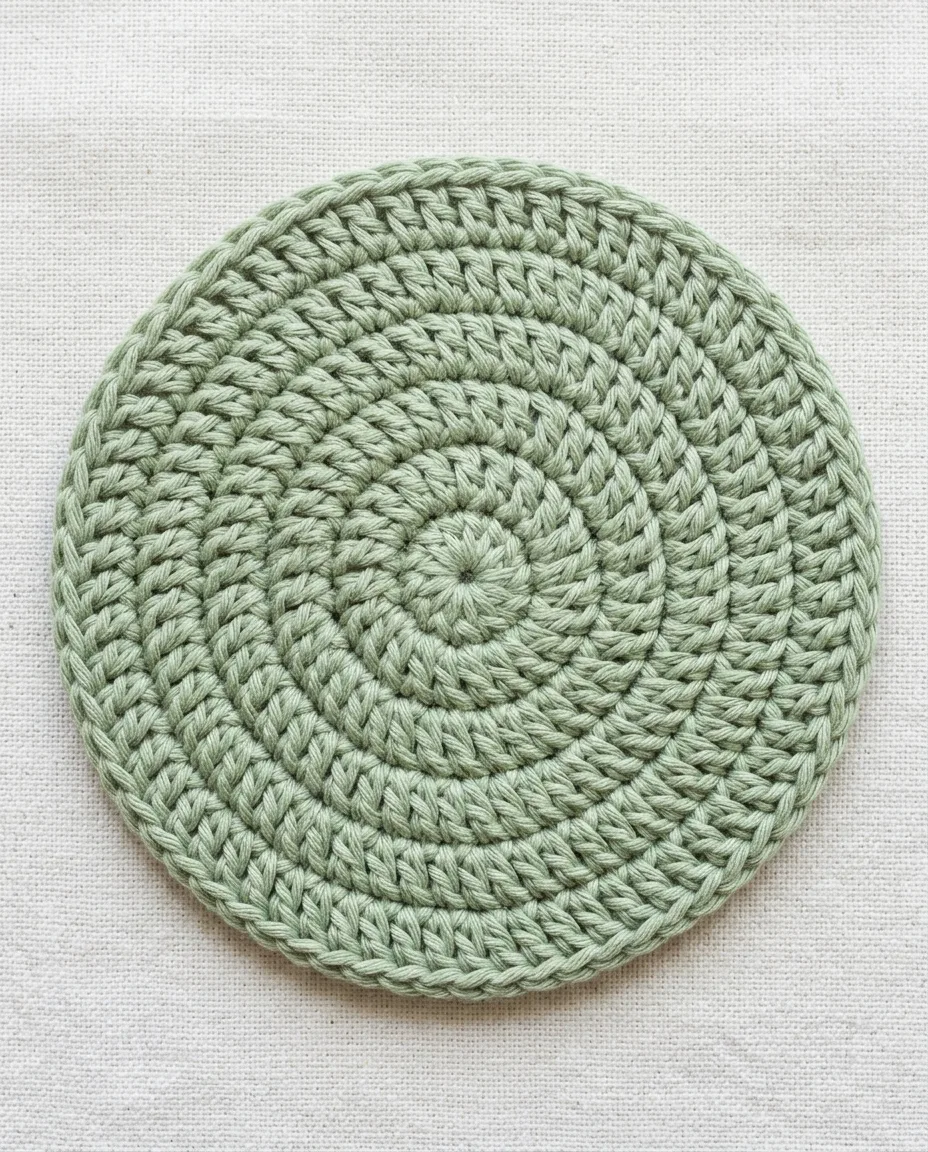
Skip the turning. Work in joined rounds instead, and every stitch leans the same way. The fabric picks up a spiral twist. It looks good on hats and on the bottom of a round basket.
 Save
And the taller double crochet takes the same trick. Here’s the herringbone double crochet. Yarn over and insert the hook. Pull up a loop through the stitch and the next loop on the hook together. Then wrap and draw through 1 loop. Wrap once more and finish through the last 2. It leans harder and opens up more, so it’s the softer pick for a scarf. But learn the half double version first. One fewer step to keep track of. The half double crochet guide breaks the whole project into steps.
 Save
Ready for a first project? Chain 32 and work 30 stitches across for about 28 rows. You end up with a dishcloth roughly 8 inches (20 cm) square, using about 90 yards of worsted cotton.