Three loops sit on the hook after the first pull-through of a double crochet. The height of the first one decides most of the gap. Bring it up to about two chains tall and the stitch stands straight next to its neighbors. Go taller? The post leans. A thin slot of light opens beside it, and every tall stitch in the row adds one more.
Double crochet (dc) is the tall basic stitch of crochet. Its post is a short stack of wrapped yarn, and two of those stacks side by side never meet perfectly. So some space is normal. A hole you could push a pencil through is something else, and it nearly always traces back to one of four causes. First comes the stitch itself, worked with a snug hand. Then each cause in turn, and the edges after that.
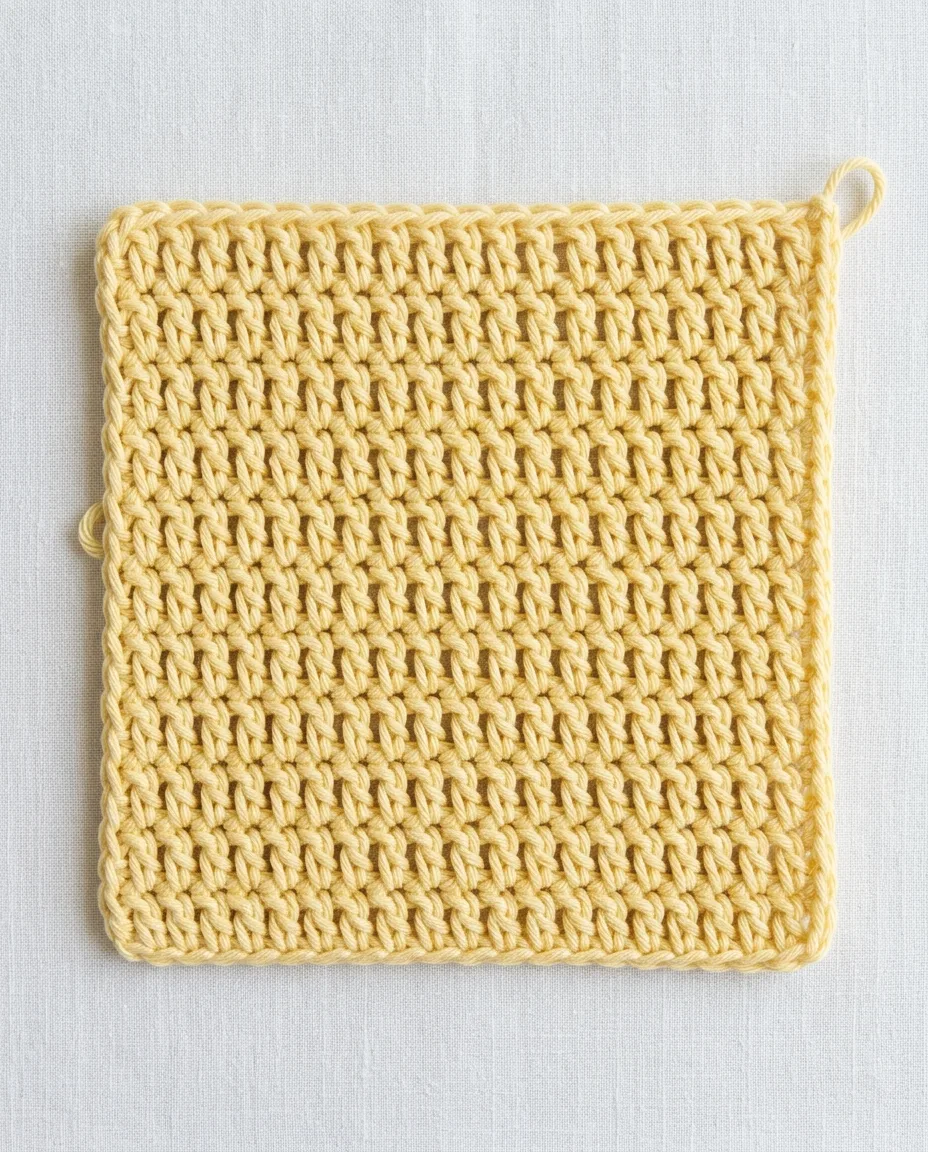
Worsted is a medium-thick yarn, labeled size 4 on most bands. Practice in a light color. Dark yarn hides gaps. Cream or pale yellow shows every one of them, which is exactly what you want while you’re learning.
Work one double crochet with no slack
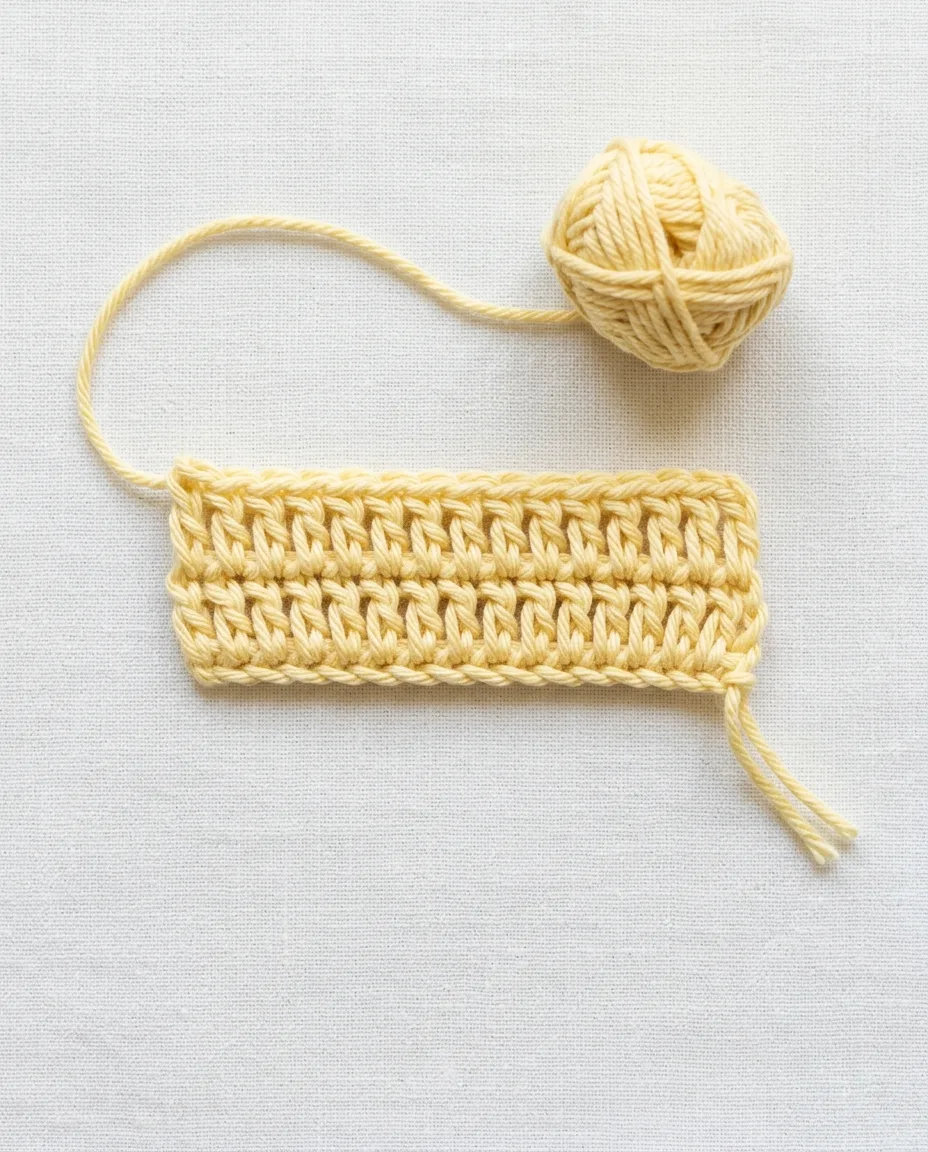
Chain 17 to start. Each step below is a single movement of the hook. You’ll do a yarn over four times per stitch, and that just means wrapping the yarn over the hook from back to front.
- Yarn over once. One wrap now sits on the hook next to the working loop.
- Find the fourth chain from the hook and push the hook in under its top two strands.
- Yarn over and pull up one loop. Stop at roughly the height of two chains. Three loops are on the hook now.
- Yarn over again, and this time pull through only the first two loops. Two stay behind.
- One more yarn over. Pull through the last two loops, and the stitch is finished with one loop left.
- Tug the working yarn lightly so the top of the stitch closes around the hook. That’s the strand still running to the ball.
- Carry on with one double crochet in each chain to the end. Chain 3 and turn. From the second row on, the hook goes under both top strands of every stitch.
Those three skipped chains at the beginning count as the first stitch. That makes 15 across. The chain 3 at the start of each row counts as a stitch too, so the number stays at 15 every time. Let a row drift to 14 or 16 and the edge pulls in or bulges out. That alone opens gaps down the sides.
Step 3 decides it. Most beginners lift that loop right up into the throat of the hook, the narrow groove just behind the tip. Don’t. Keep it down on the round part below, called the shaft. You get a shorter post, a denser one. And with less room around it, a hole has nowhere to form.
 Save
Gaps start in four places
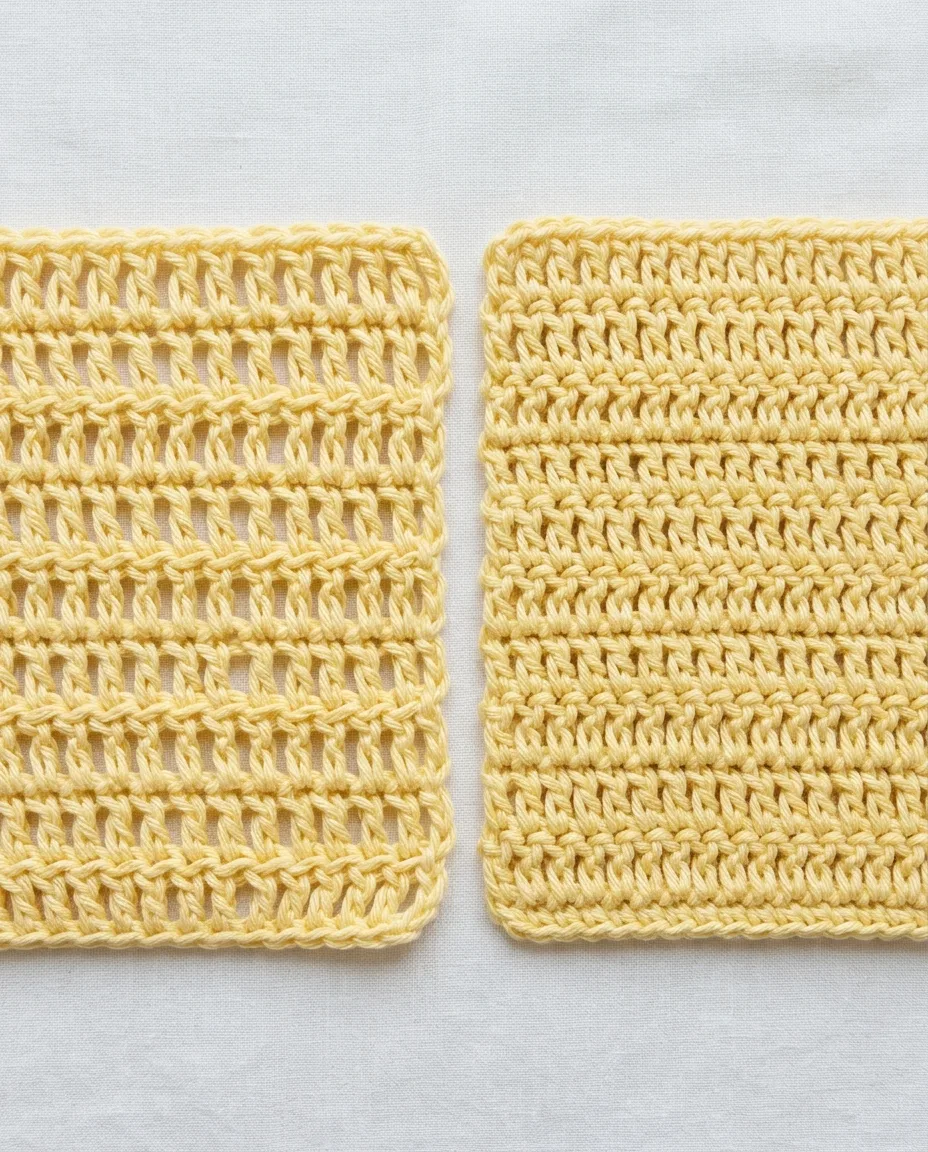
Not every gap is a mistake. Double crochet posts are round, and round things leave small spaces where they touch. Hold even very neat fabric up to a window and you’ll see pinpricks of light between the posts. Ignore those. The ones worth fixing show up with the swatch lying flat on the table.
 Save
The first loop is too tall
This cause makes more holes than the other three combined. Tall first loop, tall loose post. Loose posts then sag apart under their own weight. So watch your hand at step 3, and if the loop climbs into the throat, stop sooner on the next stitch. Twenty stitches done slowly and on purpose usually resets the habit. Not glamorous, but it works.
The hook is a size too big
5 mm (H) is what most worsted labels recommend. That size gives a loose drape, good for a scarf. A dense dishcloth or a bag wants less. Go down to 4.5 mm, or even 4 mm (G). Gauge is the count of stitches and rows that fit in 4 inches, 10 cm, and a smaller hook squeezes more of them into the same space. Try it yourself. Work one row on each hook and lay them next to each other. Across a 15-stitch row, the difference is often a full stitch.
The hook goes into the wrong place
Look closely at the top of a finished stitch. Two strands lie across it in a sideways V. Your hook belongs under both. If it slips between two posts instead, it shoves them apart, and a hole appears under every stitch. Working only into the front loop (the strand nearest you) causes a different problem. It leaves a ridge with a line of light behind it. Other patterns use that ridge as texture on purpose. Here it just looks like a gap.
The yarn hand lets go
Tension means how firmly the yarn runs through your fingers while you work. Wrap the working yarn over your index finger and under the next two, so it drags a little on its way to the hook. Slack yarn makes every yarn over bigger. Bigger wraps mean a taller post. A light tug after the last pull-through helps, as in step 6. But don’t yank. A hard tug tightens the top of one stitch and leaves the next one loose, and then the row looks uneven while the holes just move somewhere else.
The edge gap: chain 3 or a chainless start
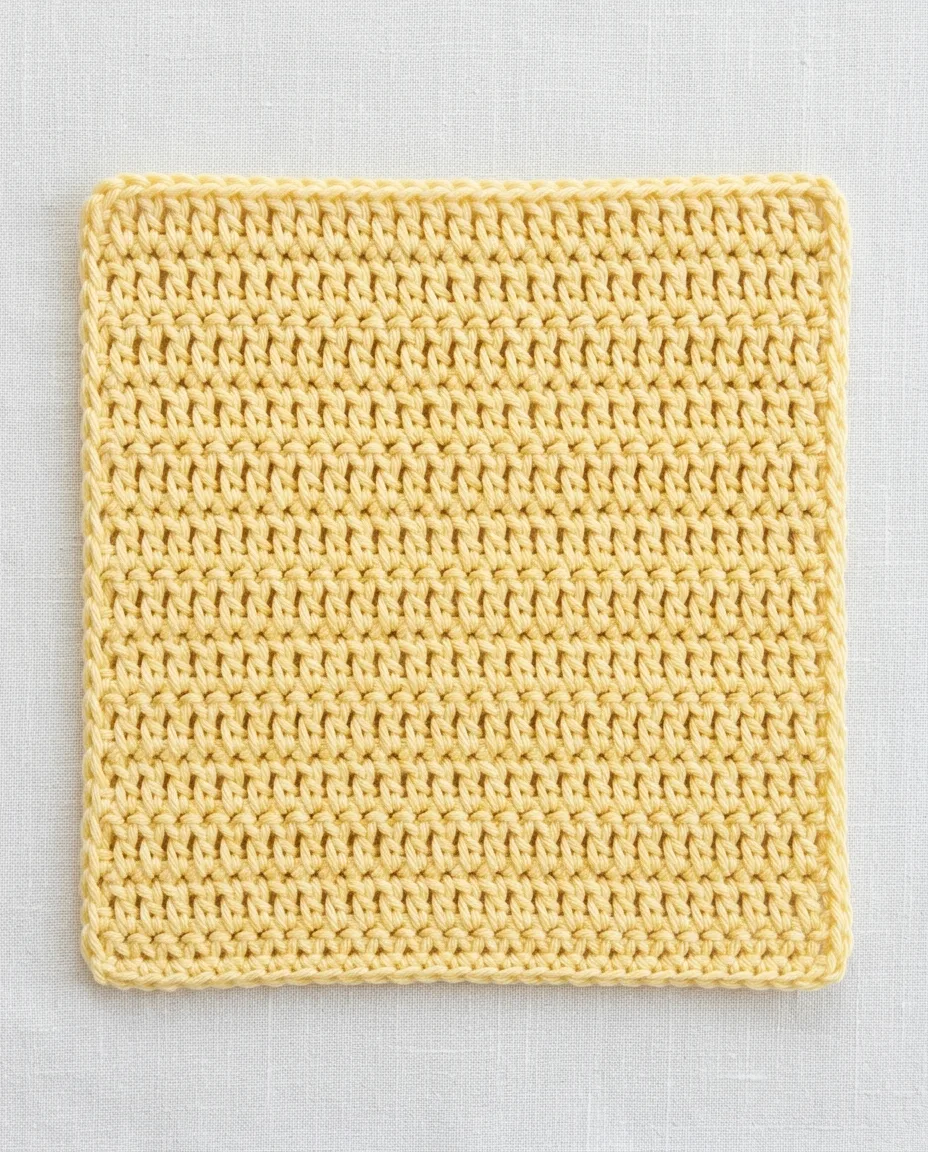
Clean stitches in the middle of a row can still leave a hole at each end. Why? The chain 3 that opens the row is thinner than a real post, and it stands slightly apart from its neighbor. Stack those chains down the side of a swatch and you get a ladder of little holes.
Two fixes work. One is to chain 2 instead of 3 and still count it as a stitch. The shorter chain lines up better with a snug post. The other is a chainless start, and it’s the neater of the two. Pull the loop on your hook up to double crochet height and pinch it there. Yarn over. Put the hook in the first stitch and finish the stitch as normal. That tall loop takes the place of the chain, so the edge comes out straighter. Expect to need a few rows before you trust it.
Whichever start you choose, the last stitch of every row goes into the top of the turning chain below. That’s the chain that began the row underneath. Skip it and you drop a stitch per row, which makes the edge slope inward with a gap at each step.
 Save
Dense double crochet belongs in bags and dishcloths
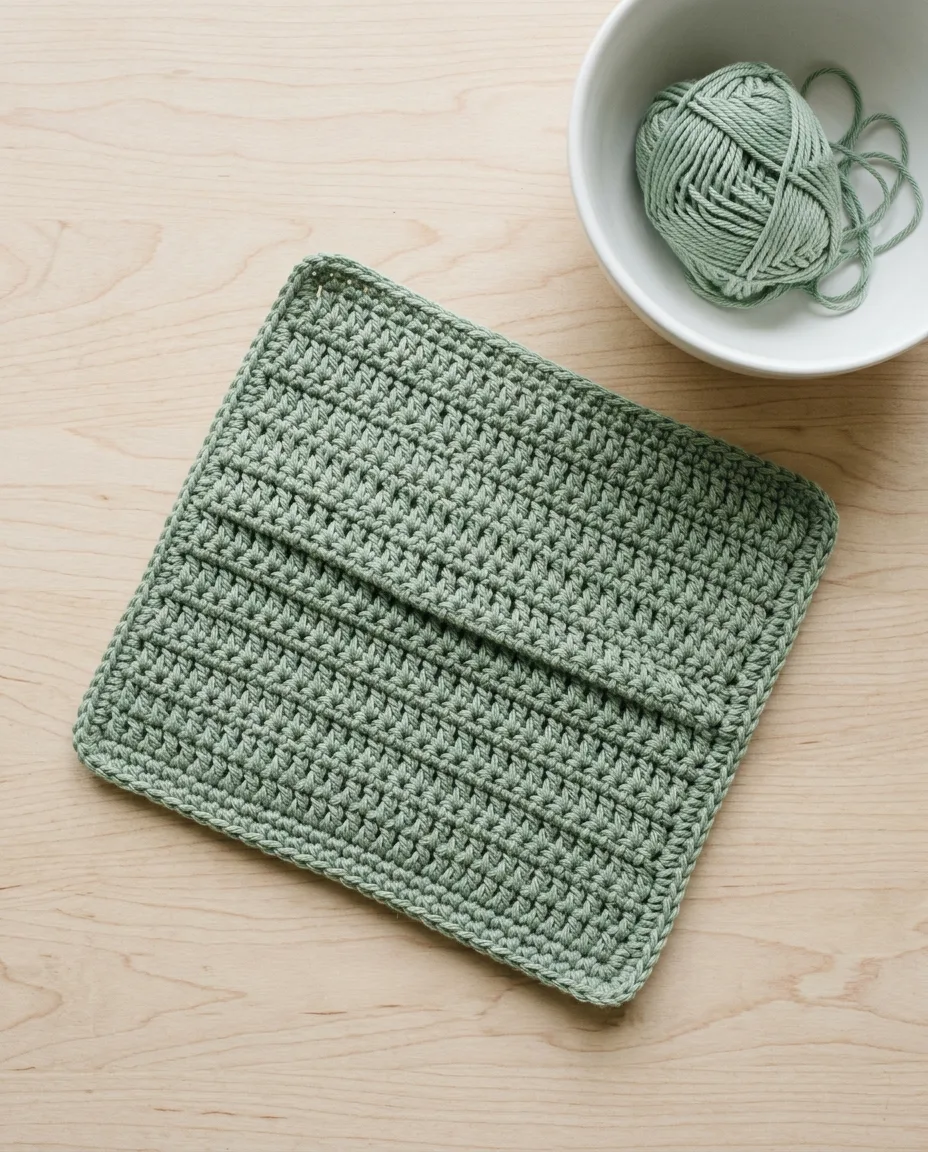
Snug double crochet grows quickly and still holds things. Work a market bag base this way and your keys stay inside. Cotton dishcloths scrub better with fewer holes. For a baby blanket, go with the smaller hook, because small fingers catch in big gaps.
 Save
But dense isn’t always better. A shawl wants air, and so does a summer top. There the 5 mm hook and its looser posts drape far more nicely. Decide what the fabric is for before you chase down every gap. A slightly open scarf hangs well and eats less yarn.
Try the linked double crochet for a solid fabric
Linked double crochet ties each stitch to the one beside it. No gap can open. Start by finding the horizontal bar halfway up the post of the previous stitch. Put the hook under that bar, wrap the yarn and draw up a loop. Now go into the next stitch and draw up a second loop the same way. Three loops on the hook. The rest is a plain double crochet, two loops at a time, twice.
At the start of a row, chain 2 and treat the second chain from the hook as the bar. The finished fabric looks almost woven, with a fine line running across each post. There’s a cost, though. It eats more yarn and goes slower. It’s stiffer too, which is great in a bag and a fight in a scarf.
 Save
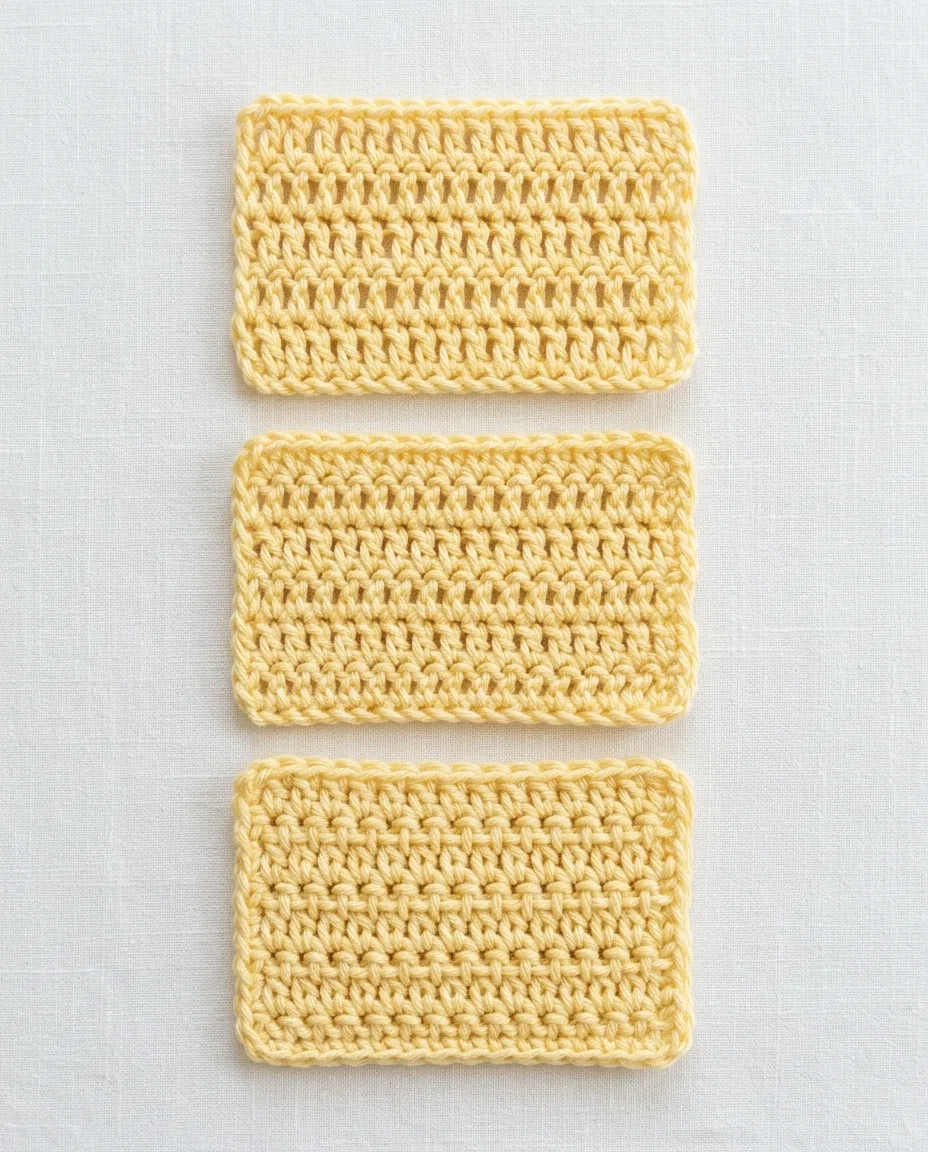
A fair test is fifteen stitches across and ten rows tall. Make one swatch on each hook and a third in linked double crochet. Lay all three out together, loosest at the top. Then let the project in front of you pick the winner.