Quick fix
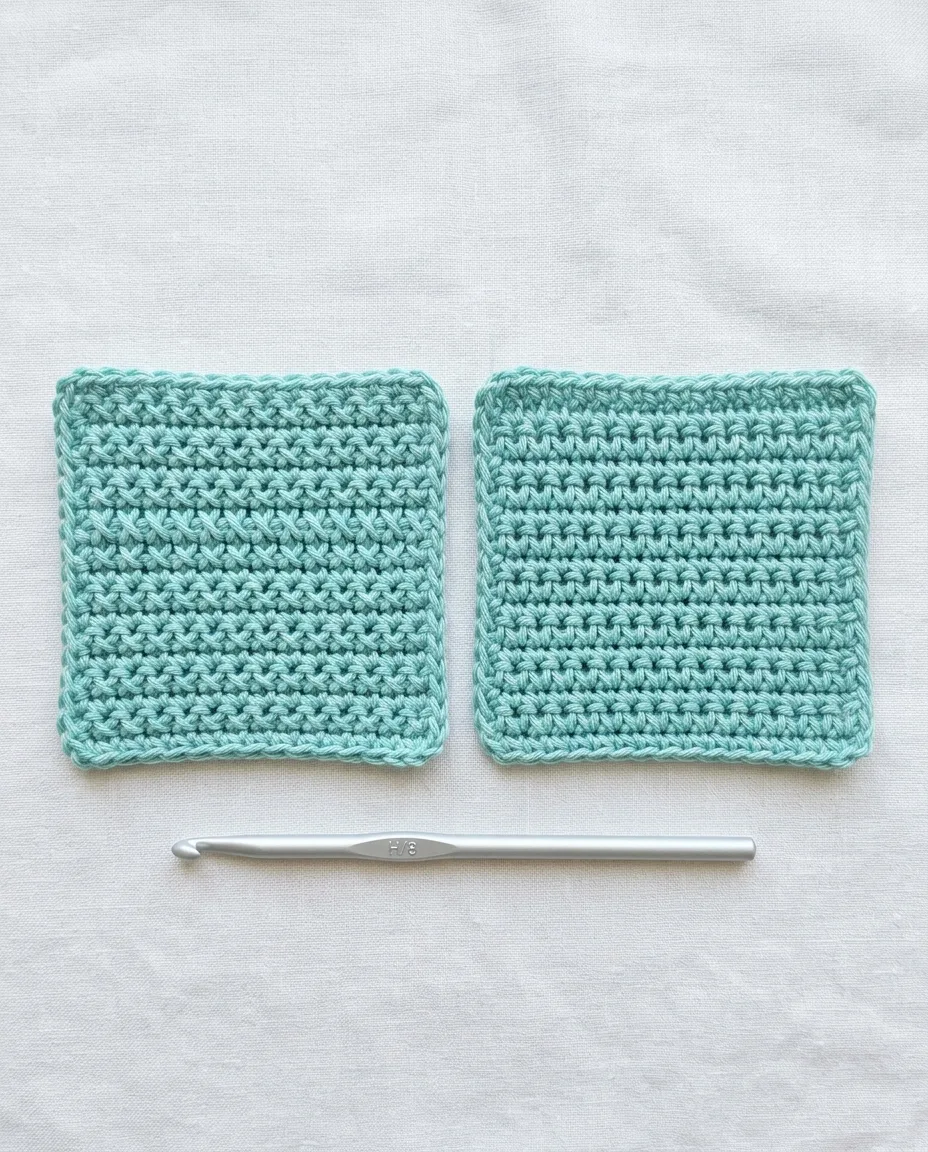
Most twisted stitches come from wrapping the yarn under the hook, which crosses each stitch's legs into an x. Wrap it from behind, over the top and toward you, and the next row opens back into Vs.
A single crochet stitch has two legs and a top made of two loops. From the front, those legs should open into a V. When they cross into a small x, or a whole column of stitches leans off sideways, the fabric looks twisted. Five things cause it. Two of them aren’t really mistakes at all.
Start with the first cause. It’s the most common by a long way, and you can check it in under a minute with the piece already in your hands. The other four matter most for toys, where you work around and around without ever turning the piece.
Cause 1
The yarn wraps the wrong way around the hook
 Save
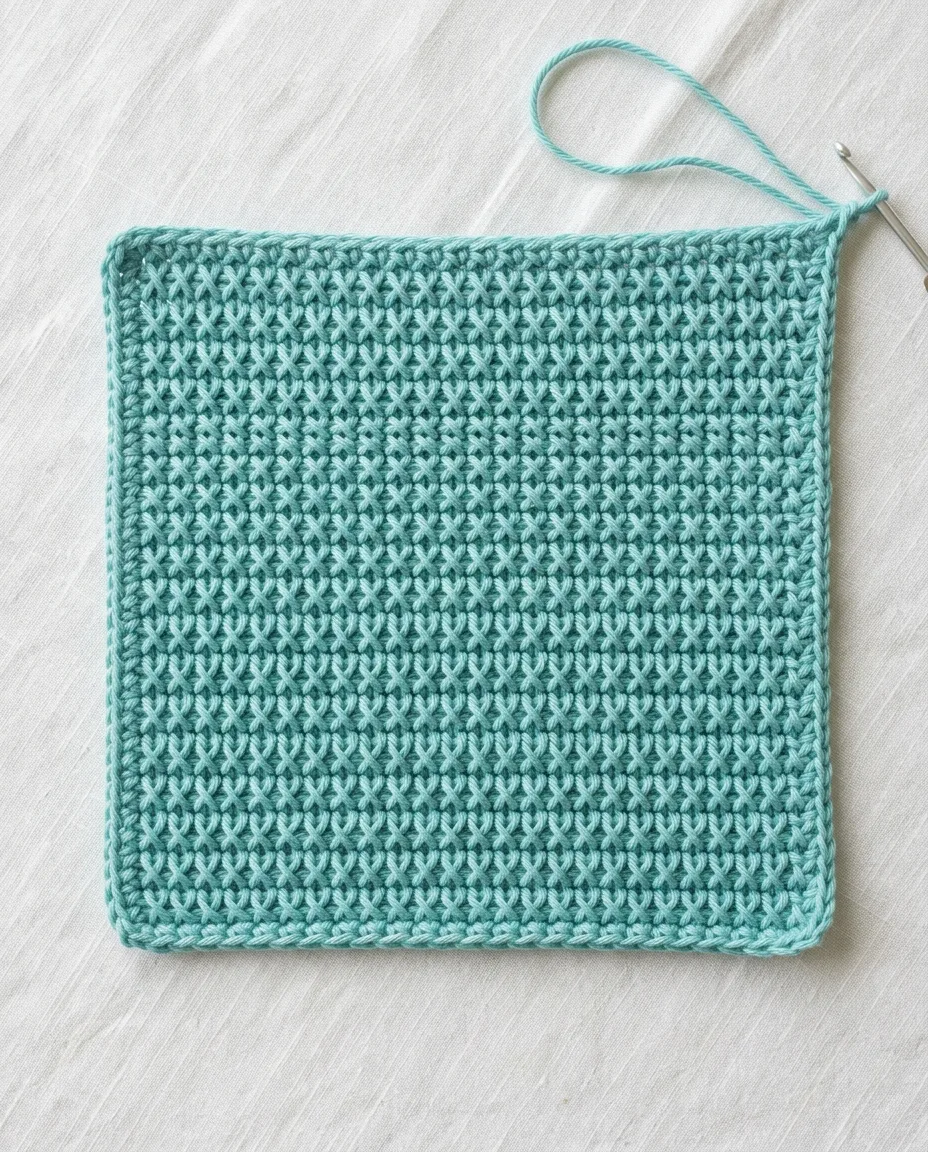
Look hard at one stitch. Do the legs cross? Then the yarn is going under the hook when it should go over. Plenty of self-taught crocheters do this for years. The fabric holds together fine. It’s just tighter, a bit stiffer, and it won’t match a single photo in a pattern.
Watch your hook on the next wrap. The yarn should start behind the hook, travel over the top and come down in front, toward you. That wrap over the top of the hook is what patterns call a yarn over. It’s the wrap every pattern assumes unless it says otherwise. If the hook dips under the strand and scoops it up from the front, you’re doing a yarn under.
Switch the wrap for one row. It’ll feel odd. Your hand has the old motion memorized, so the first ten or so stitches are clumsy (slow down, nobody’s timing you). After a row or two the legs open back into Vs. The stitches loosen a little too, so a toy may need a hook one size smaller to stay dense.
But there’s an exception. Some toy makers wrap under on purpose for single crochet. The x-shaped stitch is denser, and stuffing shows through it less. If that’s your toy, keep it. Use it in every stitch, though. Mixed wraps leave patches that look rumpled next to each other.
Cause 2
Single crochet in a spiral always leans
 Save
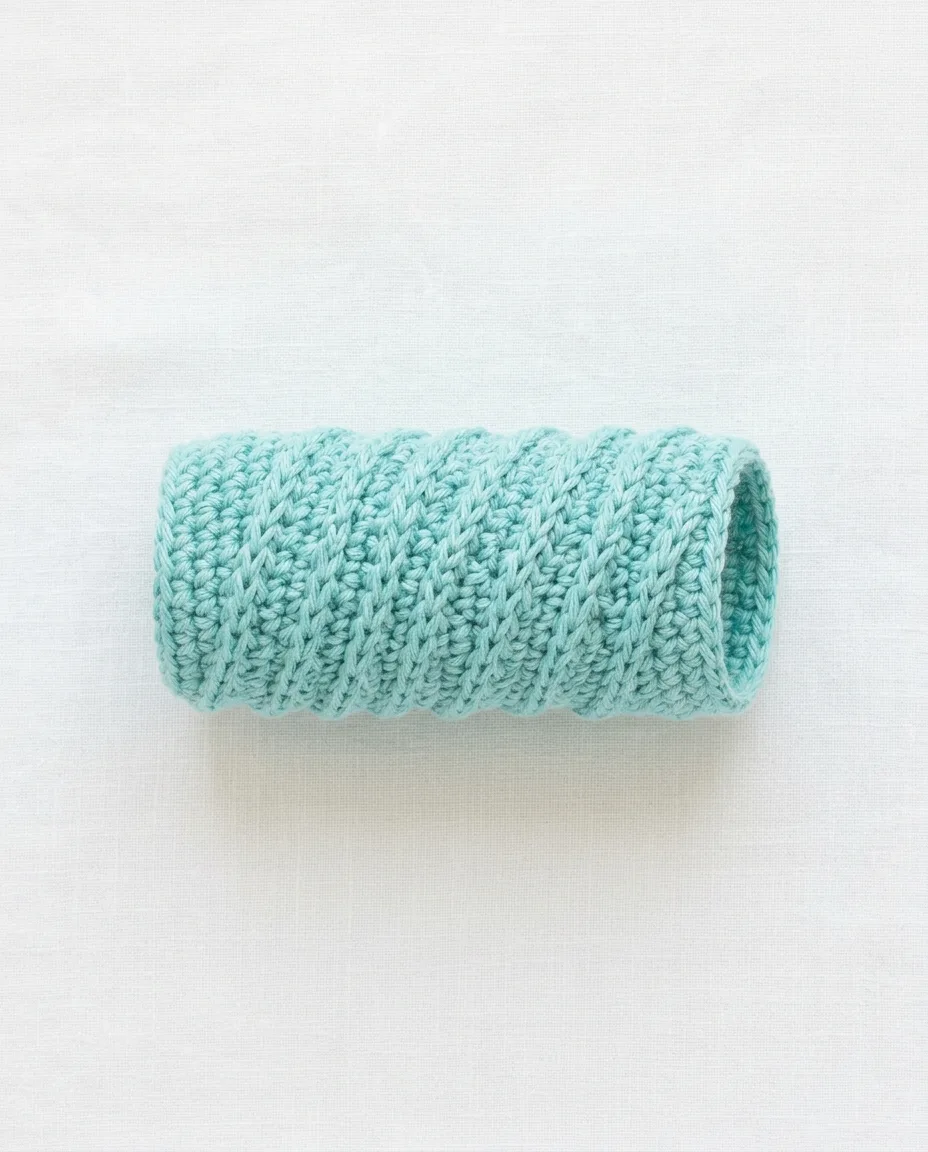
Most toys are worked in continuous rounds: one long spiral with no join and no turn. Single crochet worked this way drifts. Each stitch sits a fraction to the side of the one below. After 15 or 20 rounds, the columns wind around the piece like stripes on a barber pole. Right-handed crocheters see it lean one way. Left-handers see the mirror image.
No change in how tightly you hold the yarn stops it. The lean is how a spiral of single crochet behaves, and every toy in a shop photo has it too.
Two things reduce it. The yarn under wrap from the first cause is one, which is why some makers use it on purpose. Its x-shaped stitches stack straighter. The other is joined rounds. At the end of each round, work a slip stitch into the first stitch. Put the hook in and wrap the yarn. Then pull it through the stitch and the loop on your hook in one go. Chain 1, turn the piece, and work the next round in the other direction.
Turning cancels the drift. The columns stand up straight. You pay for it with a faint seam line where each round joins, so put that seam at the back of the toy.
Faces show the lean most. Eyes placed by counting stitches from the start of a round can end up off to one side by Round 12. Stuff the head first, then place the eyes by eye, lined up with where the nose will go.
Cause 3
Your starting chain rolled before row one
 Save
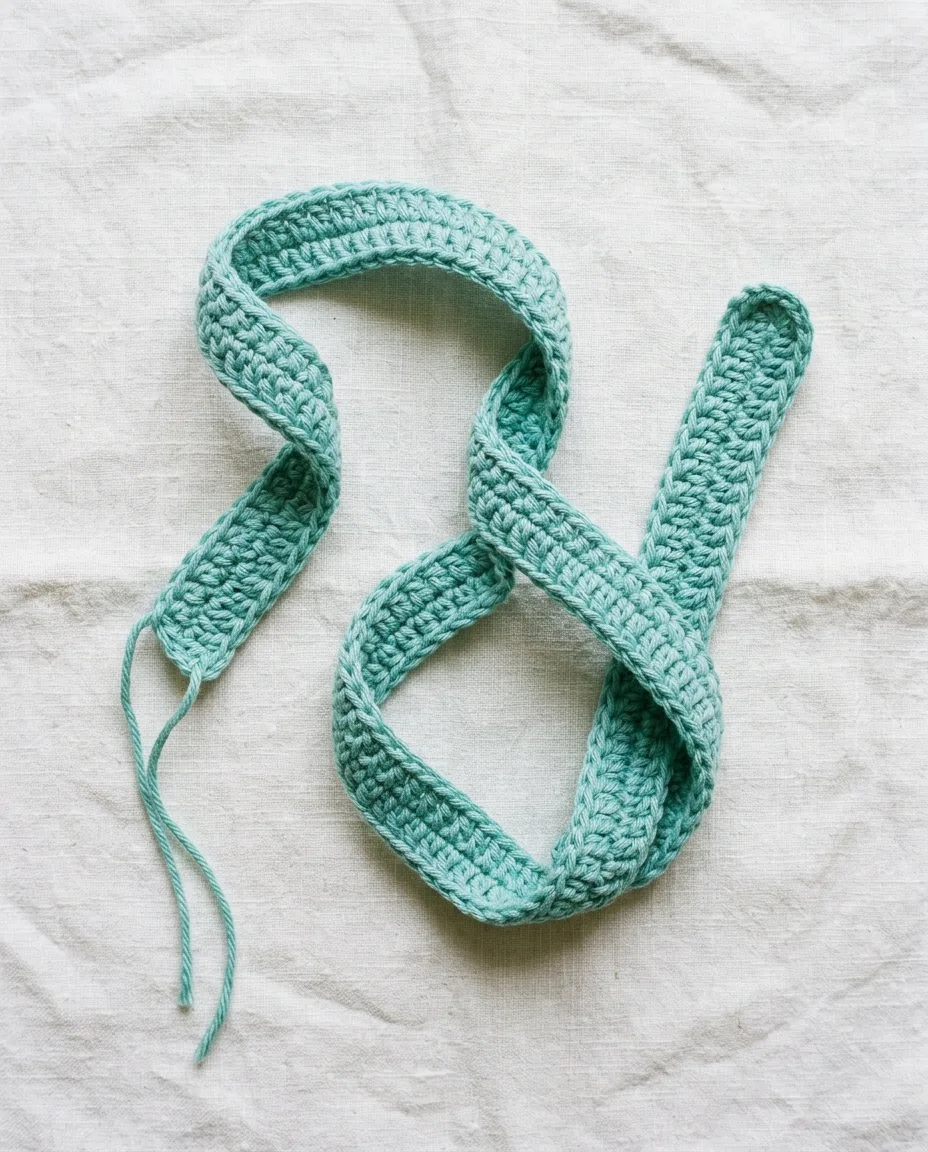
Sometimes each stitch looks fine and the whole strip twists anyway. That points back to the foundation chain, the row of chain stitches everything else gets worked into. Chains roll easily. Somewhere along yours, the side you were working into flipped over, and the hook started going into a different part of each chain.
Lay the chain flat before row one. Its front shows a line of small Vs. Turn it over and the back shows one bump running down the middle of each chain, usually called the back bump. Pick one of those places and work every stitch of the first row into it.
The back bumps give the neatest bottom edge. They’re fiddlier to find, though, especially in dark yarn. Lost track partway along? Pinch the chain flat just ahead of the hook so the next 5 or 6 chains can’t roll.
Rings follow the same rule. Join a twisted chain into a circle and you get a loop with a half turn in it. It won’t lie flat, and blocking won’t fix that, so it has to come out. Before the slip stitch that closes the ring, set the chain on the table and check that every V faces up.
Cause 4
The yarn itself is twisting as you work
 Save
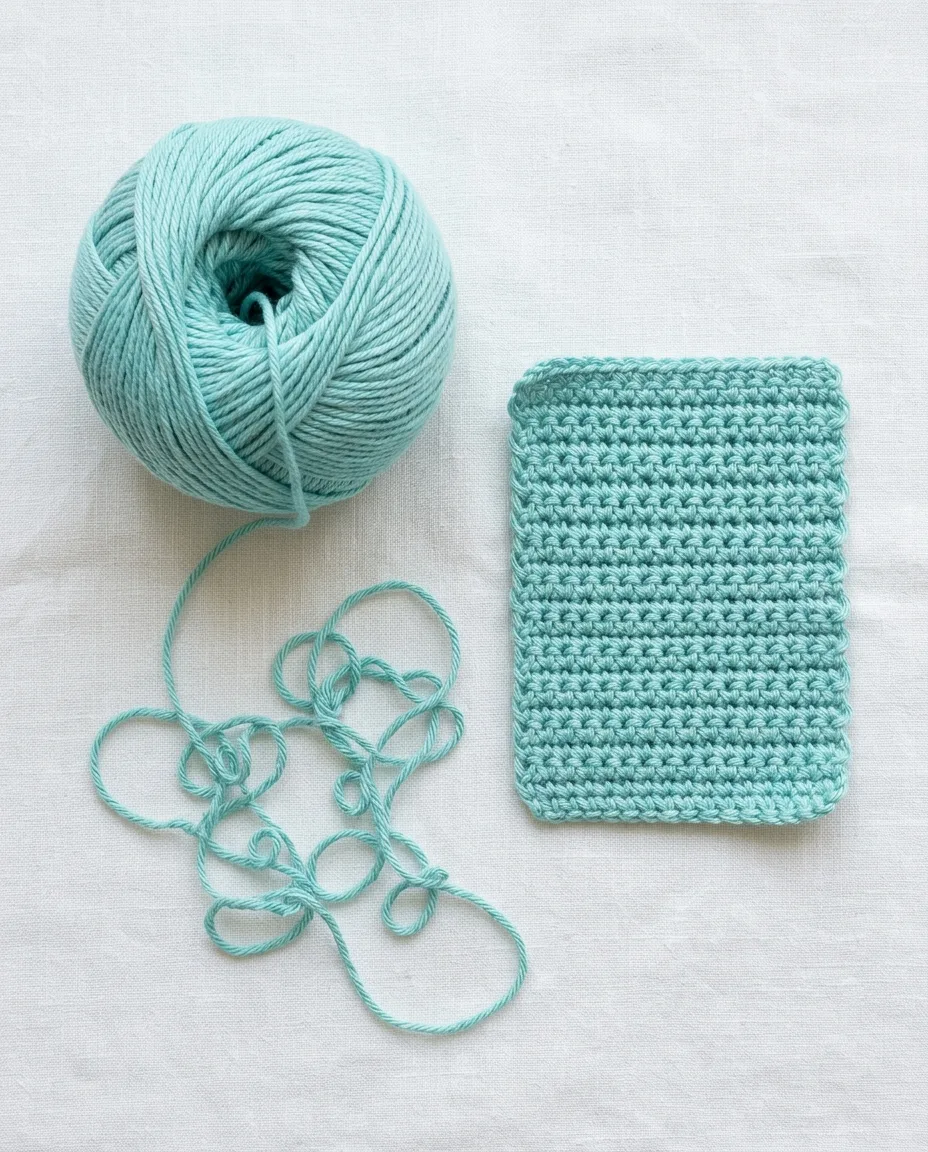
Most yarn is a few thinner strands, called plies, twisted together. Each wrap around the hook adds a little twist to that strand or takes a little out. Which one depends on the yarn and on your wrap.
Too much added twist and the strand kinks back on itself between the ball and the hook. Stitches made from it lean and look slightly corkscrewed. Too much taken out and the plies drift apart. The hook starts splitting the yarn, and each stitch comes out fuzzy and lopsided, with one strand left behind as a stray loop.
Ten seconds is all the fix takes. Let the work hang from the hook and spin until the strand relaxes. Do it every few rounds on a toy and every few rows on a flat piece.
Kinks keep coming back? Try the other end of the ball. A center-pull ball feeds yarn off its end, and that changes the twist slightly with every pull. Yarn taken from the outside of a ball that’s free to roll keeps its twist. Soft, loosely plied cotton is the worst for splitting. Mercerized cotton has a smooth, shiny finish and holds together much better under a small hook.
Cause 5
You’re looking at the inside of the piece
 Save
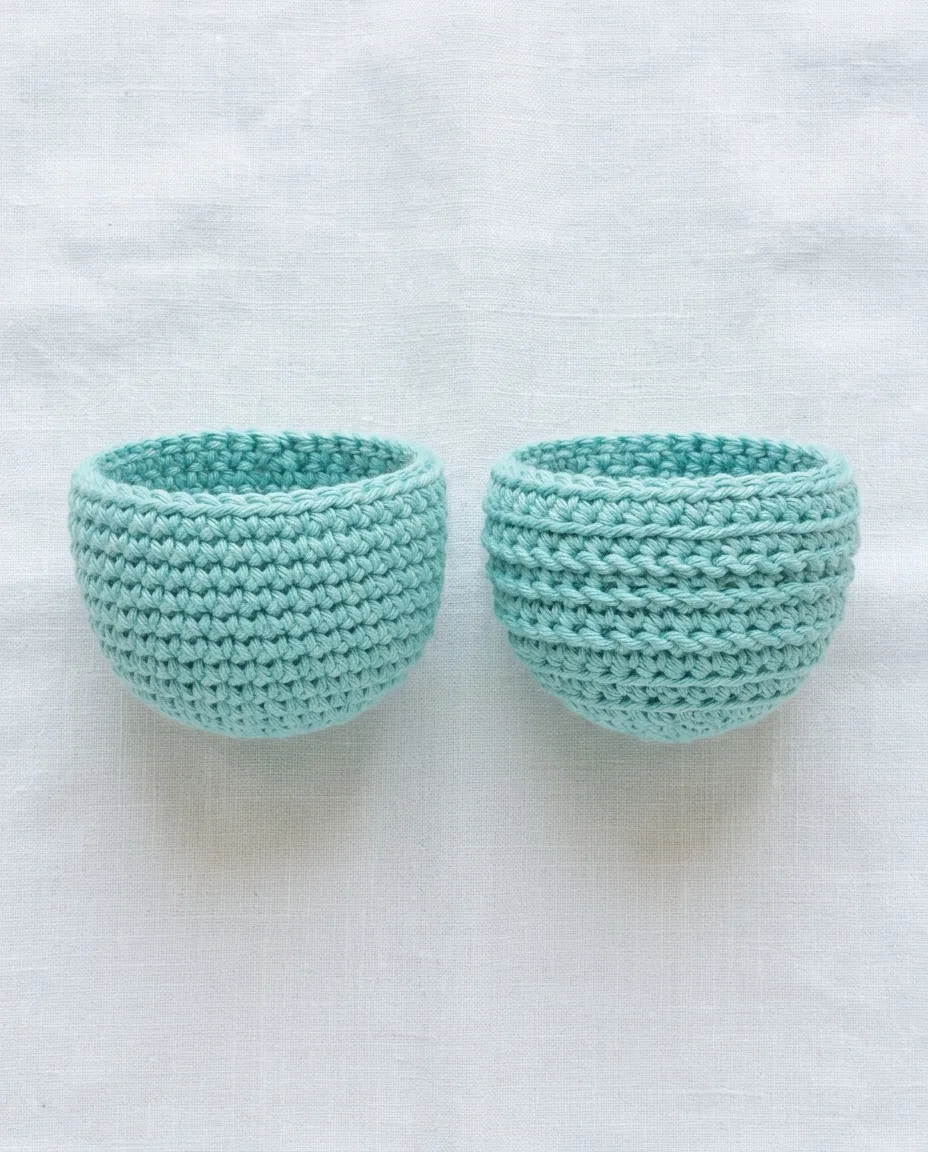
Single crochet has two faces. On the right side you see neat Vs. The wrong side shows horizontal bars and bumps between the stitches, and at a glance those read as twisted stitches.
Toys catch people out here. Most start from a magic ring, a loop of yarn that pulls shut later. You wrap the yarn into a loop around two fingers, put the hook through it and pull up a loop. Six single crochet go into that ring, then the tail pulls it shut. The flat circle begins to cup after three or four rounds. It can cup toward you or away from you. Work along the far edge with the hollow facing you, and the bumpy side ends up on the outside.
Push the cup right side out, Vs facing out, and keep working along the near edge. The tail from the ring is a handy clue. It usually hangs on the wrong side, so it belongs inside the toy.
Some makers prefer the bumpy side and use it as the outside on purpose. That’s fine. Either face works as long as every piece of the toy uses the same one. A head showing Vs sewn onto a body showing bumps looks like two different yarns.