Quick fix
Usually the sweater was pinned wider than its pattern width, or heat in the wash shrank the yarn, and both take length away. Soak it again, pin the length to the pattern first and the width second, and dry it flat.
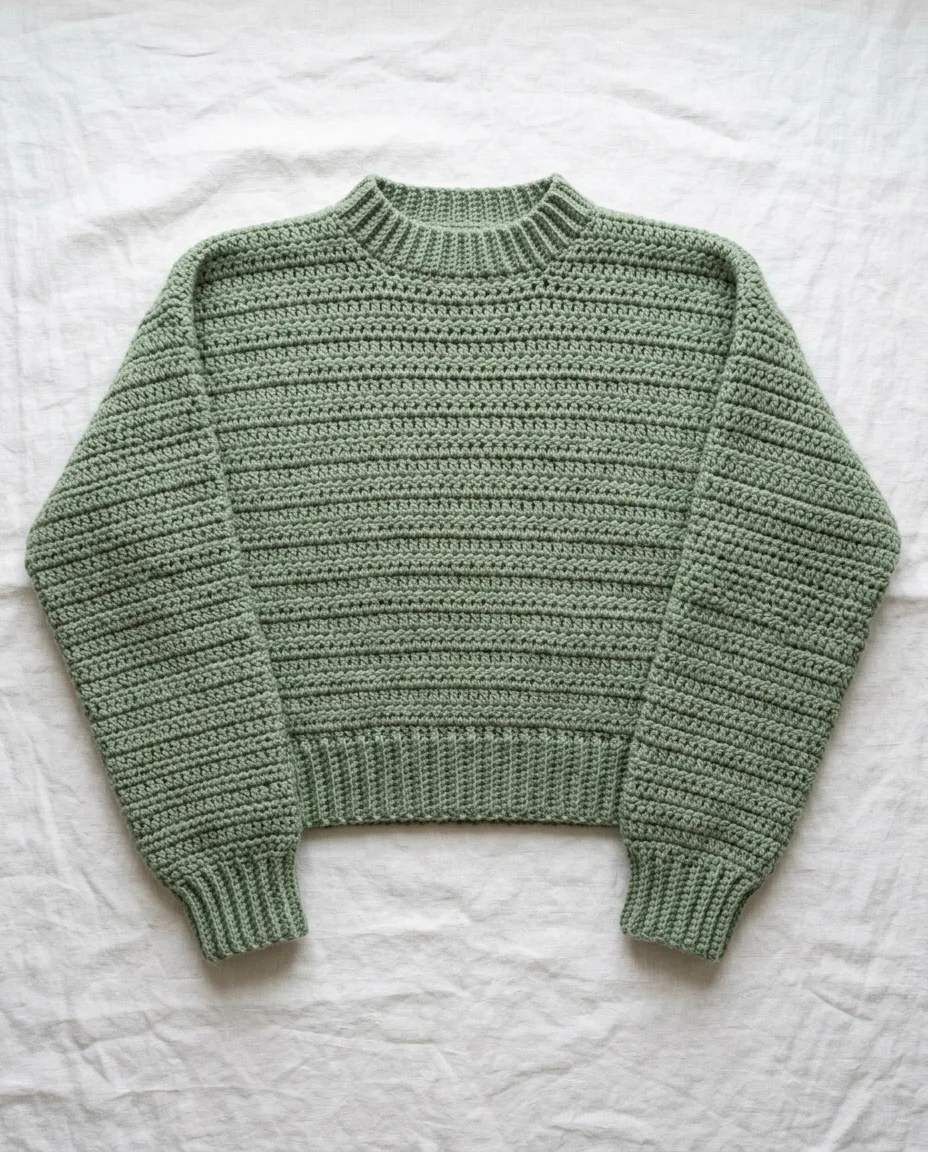
Most crocheters think blocking only ever makes a sweater bigger. It often does. But a wet sweater can come off the mat shorter than it went on. Sometimes it’s an inch or two, and the hem lands at your belt instead of your hip.
Here’s what’s going on. Crochet fabric is a loose mesh of loops, and water lets those loops slide. Pull the mesh one way and it gives the yarn back from the other direction. Heat and rubbing can also shrink some fibers outright. So the question is which of those happened to yours.
That matters, because one kind of short is fixable and the other mostly isn’t. Pinning mistakes and seams come undone with a second soak. Felted wool doesn’t. Work through the causes below in order, since the first two cover most sweaters.
Before anything else, lay the sweater flat on a table, smooth it with your palms and measure from the shoulder to the hem. Do it dry, with nothing pulling on it. That’s your real length, and every fix below starts from it.
Cause 1
Row gauge came from an unwashed swatch
 Save
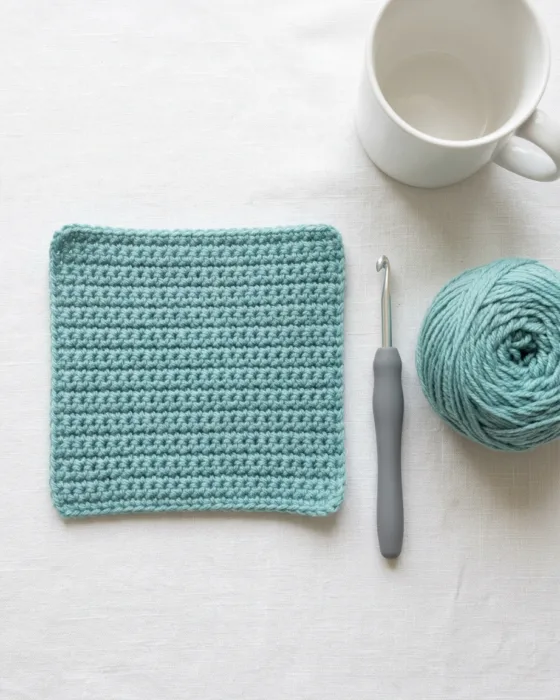
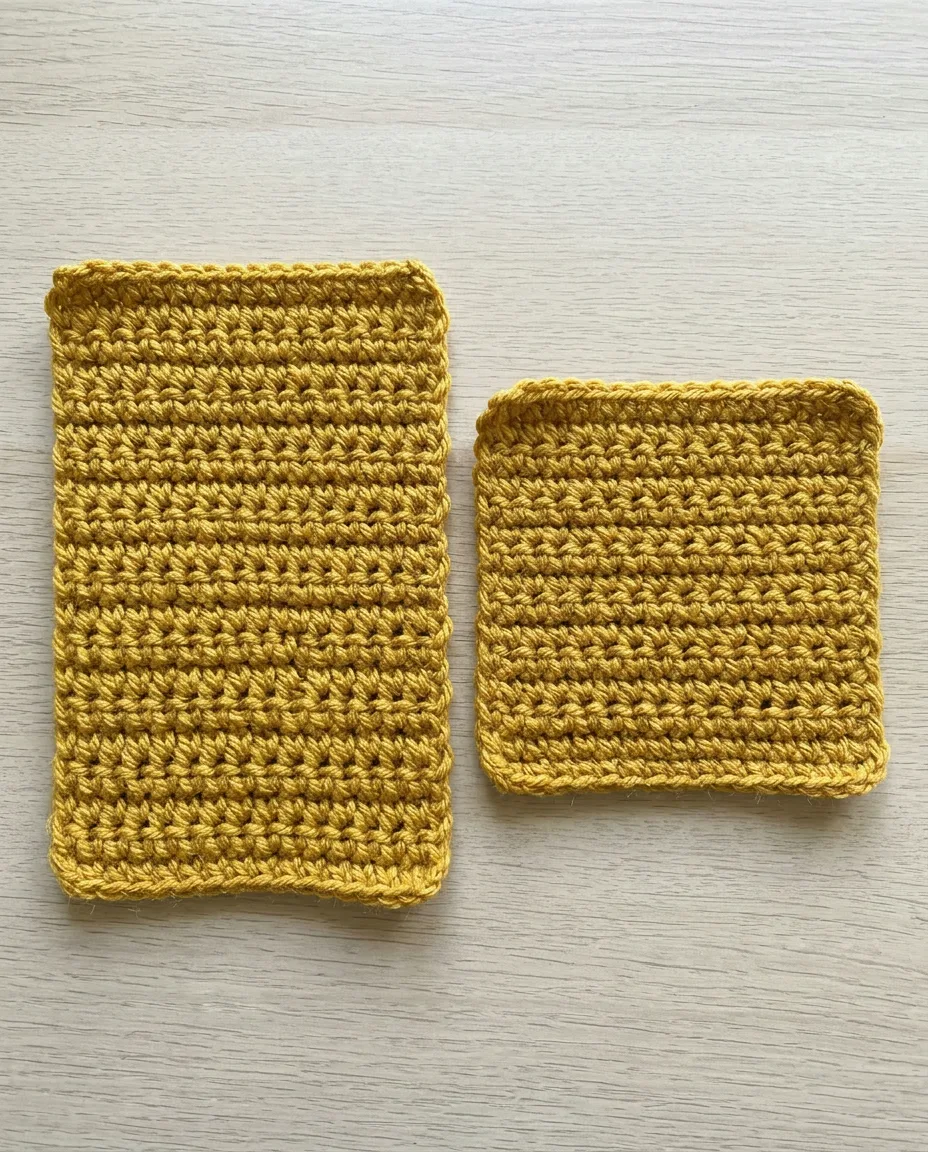
Gauge is the number of stitches and rows in 4 inches (10 cm) of fabric, and patterns give both. Plenty of people check the stitch count across and skip the rows. Then they measure that swatch fresh off the hook, before it has ever been wet.
And a swatch changes in the wash. Rows can settle closer together as the loops relax, especially in tightly worked fabric. A pattern that needs 14 rows to reach 4 inches might take 15 or 16 once the swatch is washed. Over a 20-inch body, that gap adds up to more than an inch.
The fix starts with the swatch you already made. Soak it, pin it gently, let it dry, then count rows again. If the washed count is higher than the pattern’s, the sweater needs extra rows.
Worked top down? Good news. Pull out the hem ribbing, add the missing rows to the body, then rework the ribbing. Bottom-up sweaters are harder. You can add a deeper border along the hem, which changes the look a little. For the next project, wash the swatch first. Every time.
Cause 2
Pinned out wider than the pattern
 Save
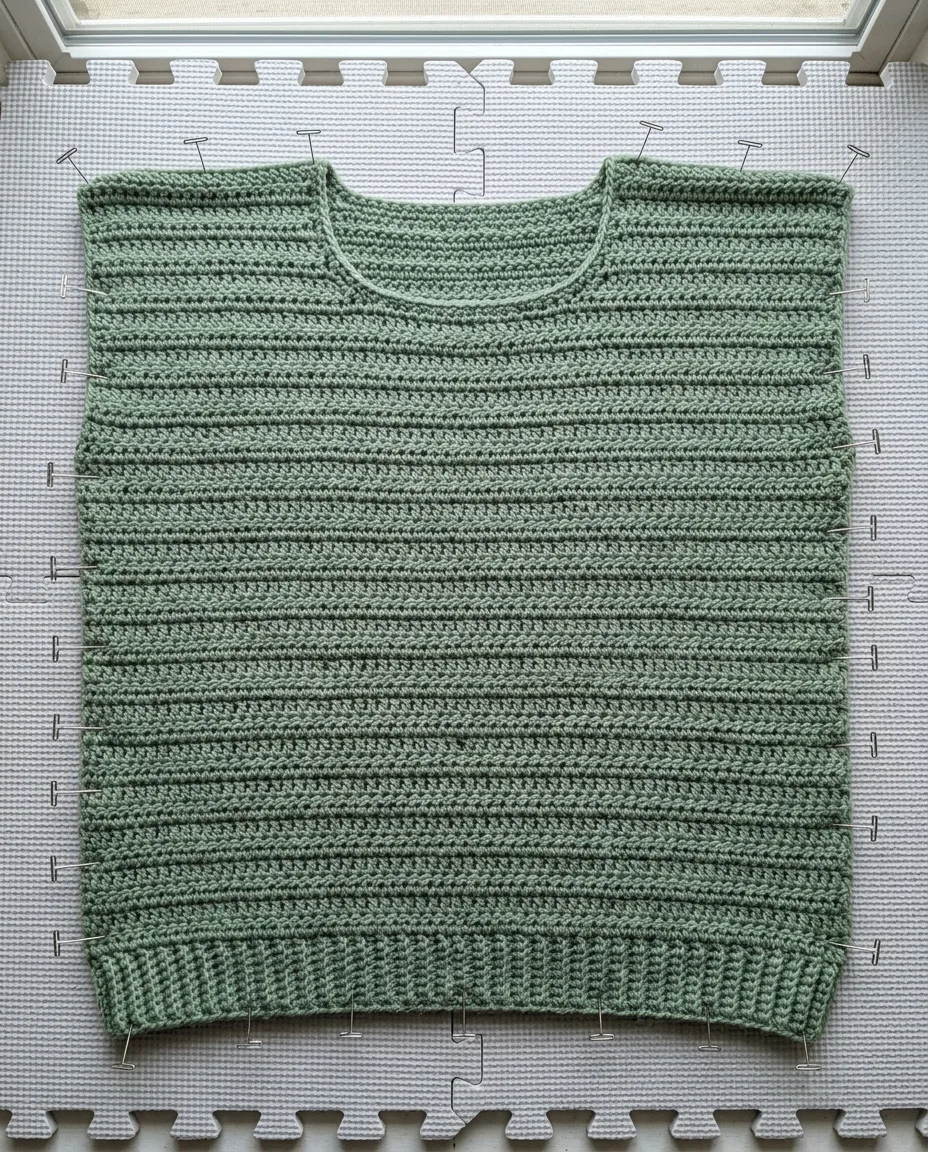
This is the one most guides skip. When a damp sweater gets stretched wide on the mat, the loops have to come from somewhere. They come out of the length.
Picture a fishing net. Pull it sideways and it gets shorter top to bottom. Crochet works the same way, just less dramatically. Pin a 20-inch-wide body out to 22 inches and you can lose a real chunk of height while it dries. It happens most when the sweater looked tight before blocking. You want it roomier, so you stretch the chest. Fair enough. But the hem pays for it.
20 minutes in lukewarm water is enough for a second soak. Press the water out in a towel without wringing. Now pin the length first: shoulder to hem, to the pattern’s number. Only then ease the width out, and stop at the pattern’s width even if you’d like more. Should the chest still feel snug after that, the sweater needed more stitches, and blocking can’t add those.
Cause 3
Too much heat or rubbing in the wash
 Save
Wool that isn’t superwash (yarn treated at the mill so it won’t felt) shrinks when it gets hot water and movement together. The fibers have tiny scales. Heat opens them, rubbing locks them together, and the fabric gets thicker and smaller in every direction.
You’ll know it when you see it. The stitches look fuzzy and blurred together, and the fabric feels stiff. Sometimes it’s only around the hem, where it got squeezed hardest.
No soak fully reverses felting. A long soak in lukewarm water with a spoonful of hair conditioner sometimes loosens a lightly felted piece enough to ease back a little length. Pin it to length while it’s soaking wet and leave it until bone dry. Badly felted fabric stays the size it is.
Next time, keep the water cool or lukewarm and the same temperature for soaking and rinsing. Don’t swish it around. Let it sit, then lift it out in both hands so the weight doesn’t drag on one spot.
Cause 4
Into the dryer it went
 Save
Never tumble dry a handmade sweater unless the yarn band says you can. A hot dryer can shrink cotton, and it will felt plain wool fast. Even on low, the tumbling packs the rows together.
Cotton is the tricky one here. Wet cotton is heavy, so a cotton sweater often stretches longer while it’s soaking. Someone sees that and throws it in the dryer to tighten it up. It comes out shorter than it started.
For cotton, a re-soak and a flat dry usually brings most of the length back. Pin to the pattern length and let the weight of the damp yarn help you. For wool that felted in the dryer, see the cause above.
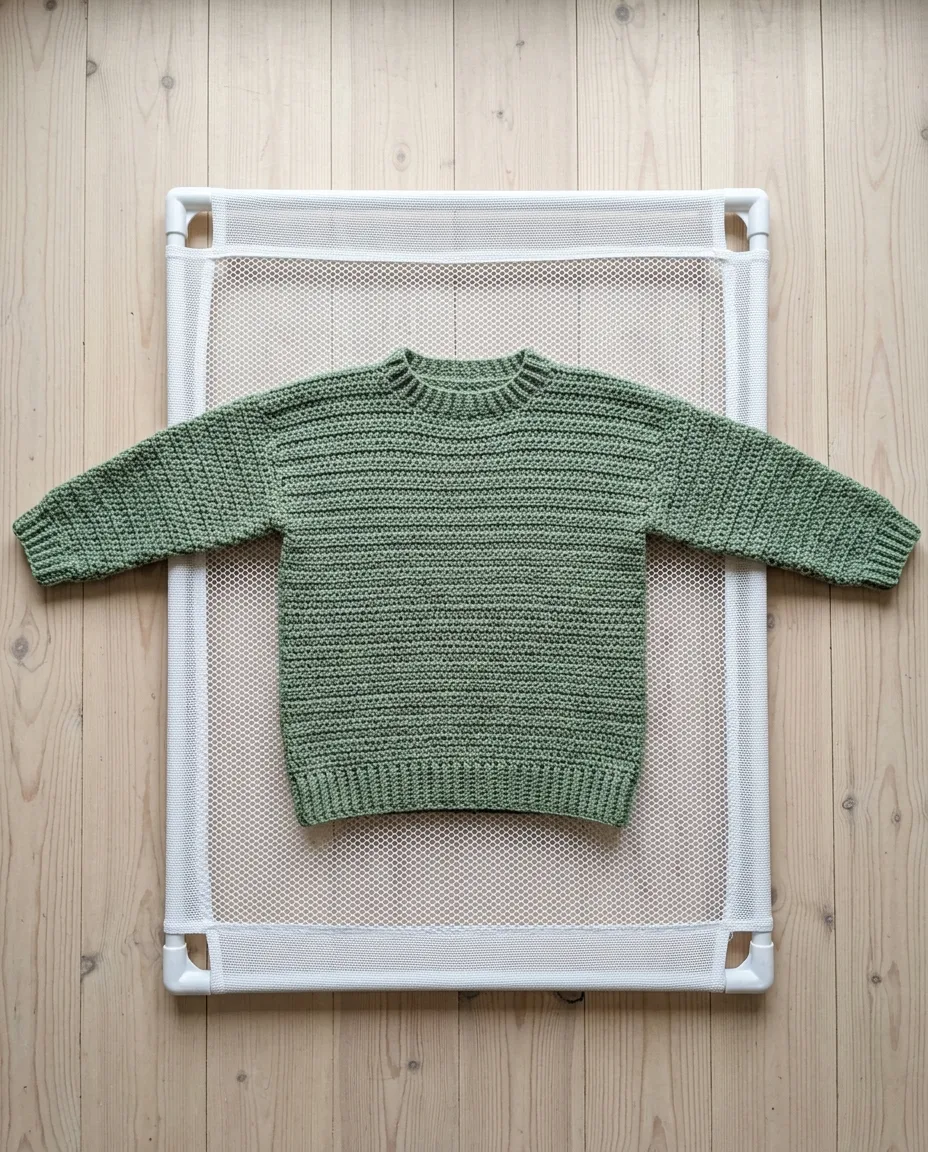
The habit that prevents all of it is simple. Dry every sweater flat on a towel or a mesh rack, out of direct sun, and turn it over once halfway through. Thick yarn can take two days. Waiting is fine. Slow, but fine.
Cause 5
Seams sewn tighter than the fabric
 Save
Not every short sweater is a blocking problem. Tight side seams gather the body up like a drawstring. Blocking just makes it obvious, since the fabric between the seams now lies flat while the edges stay bunched.
Look along the sides. Small ripples or a curve that pulls the hem up at the corners means the seams are the culprit. The center of the hem may even reach the right length while the sides fall short.
Undo one seam and sew it again, matching row to row. Pull each stitch of the seam snug enough to close the gap, then stop. The seam should stretch as far as the fabric beside it. Check by tugging gently: if the seam stops before the fabric does, it’s still too tight.
Crocheted seams are a common cause. They’re firm and they pull in. A loose whip stitch stretches more. Thread a yarn needle (a blunt sewing needle with a big eye) and pass it through the edges of both pieces. Bring it back over the top, then go in again one stitch along.
Cause 6
The “before” length was measured hanging up
 Save
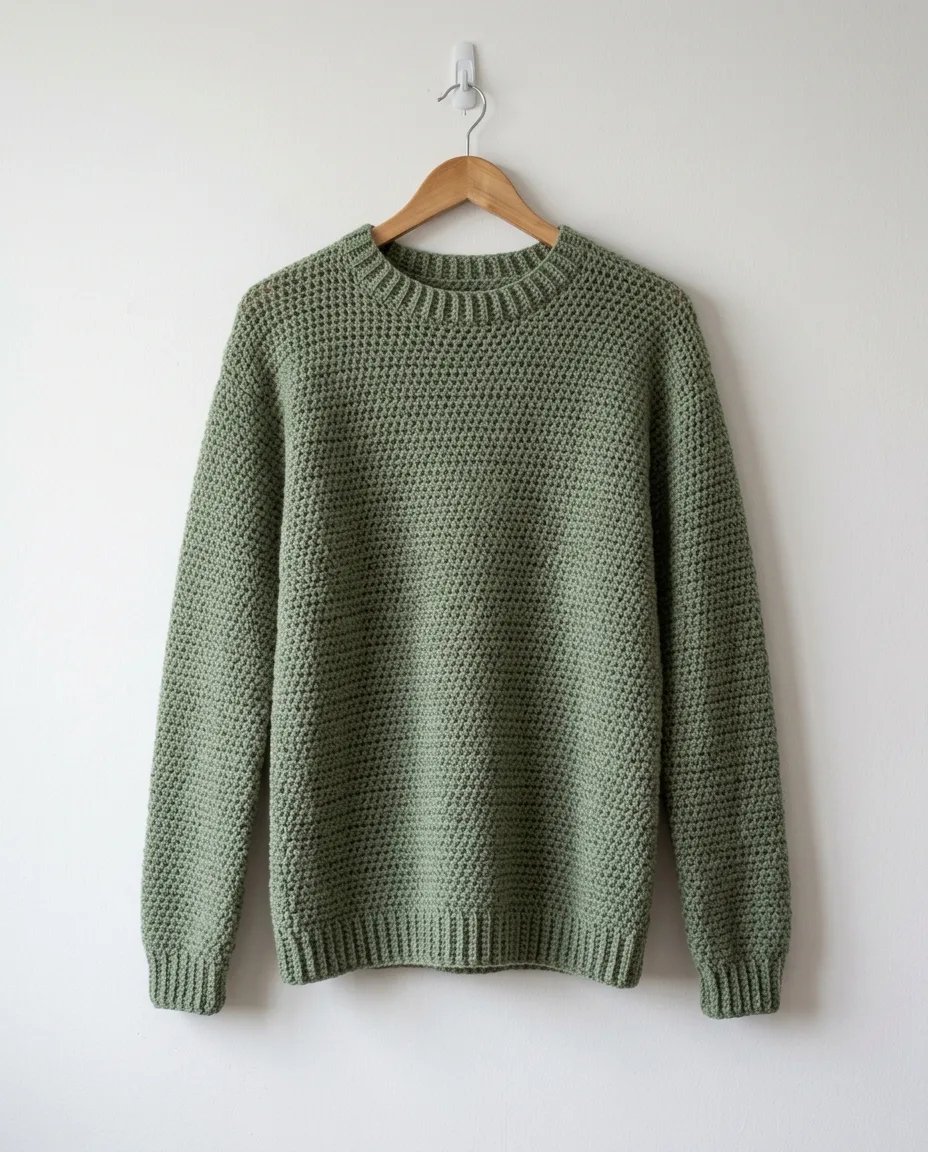
Sometimes nothing shrank at all. A sweater hanging from a hanger, or held up against your body, stretches under its own weight. Measure it like that and the number looks great.
Then you block it, lay it flat, and the true length shows up. It feels like blocking took the length away. It didn’t. It was never there.
Annoying? Very.
This one has a nice side effect, though. The sweater will hang a little longer on your body than it measures on the table, especially in cotton or heavy yarn. So try it on before changing anything. If it still sits too high once it’s on you, add rows at the hem the same way as for the swatch problem.
From now on, measure every piece flat on a table, smoothed but not pulled. Store sweaters folded in a drawer, since a hanger keeps stretching the shoulders.