Plenty of half double crochet scarves come off the hook behaving like a placemat. They stand up by themselves. They won’t wrap around a neck, and the edges flare out stiff as cardboard. The stitch isn’t the problem. A hook that’s too small, paired with hands that yank every loop tight, packs the yarn so densely it has nowhere left to bend.
Sort out those two things and half double crochet (hdc) gives you one of the warmest fabrics crochet can make. In height it sits between single crochet and double crochet. That middle height is the sweet spot. You get a solid fabric with very few gaps for wind to slip through, and it still folds and drapes once the hook is right. The double crochet gaps guide walks through the usual causes in order.
All the terms here are US crochet terms. For a practice swatch you’ll need:
Work one row of half double crochet
Chain 17 to start. A chain is just a loop pulled through the loop already sitting on your hook. Your first stitch goes into the third chain from the hook. Those two skipped chains? They don’t count as a stitch. From there, every stitch is the same five moves.
- Wrap the yarn over the hook from back to front. That wrap has a name: a yarn over.
- Now push the hook into the next stitch, under both loops at the top.
- Yarn over again and draw the hook back out through the stitch. Three loops should be on the hook.
- Then one more yarn over.
- Pull that last wrap through all three loops in one go. A single loop is left on the hook, and the stitch is finished.
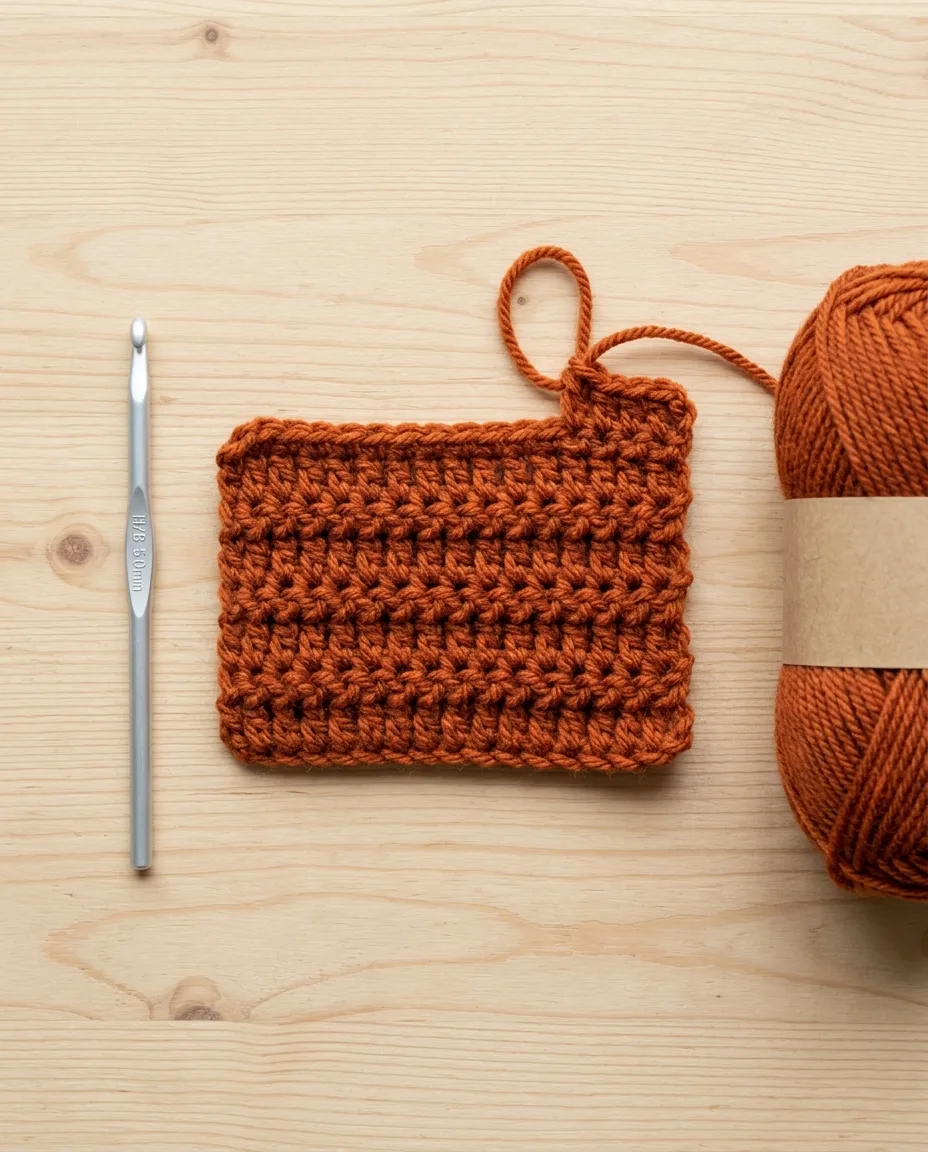
Put one stitch in each chain all the way along. Count them. You want 15. At the end, chain 2 and flip the work over. That chain 2 is the turning chain, and in this pattern it never counts as a stitch. So the first stitch of the new row goes straight into the very first stitch, right at the foot of the chain.
 Save
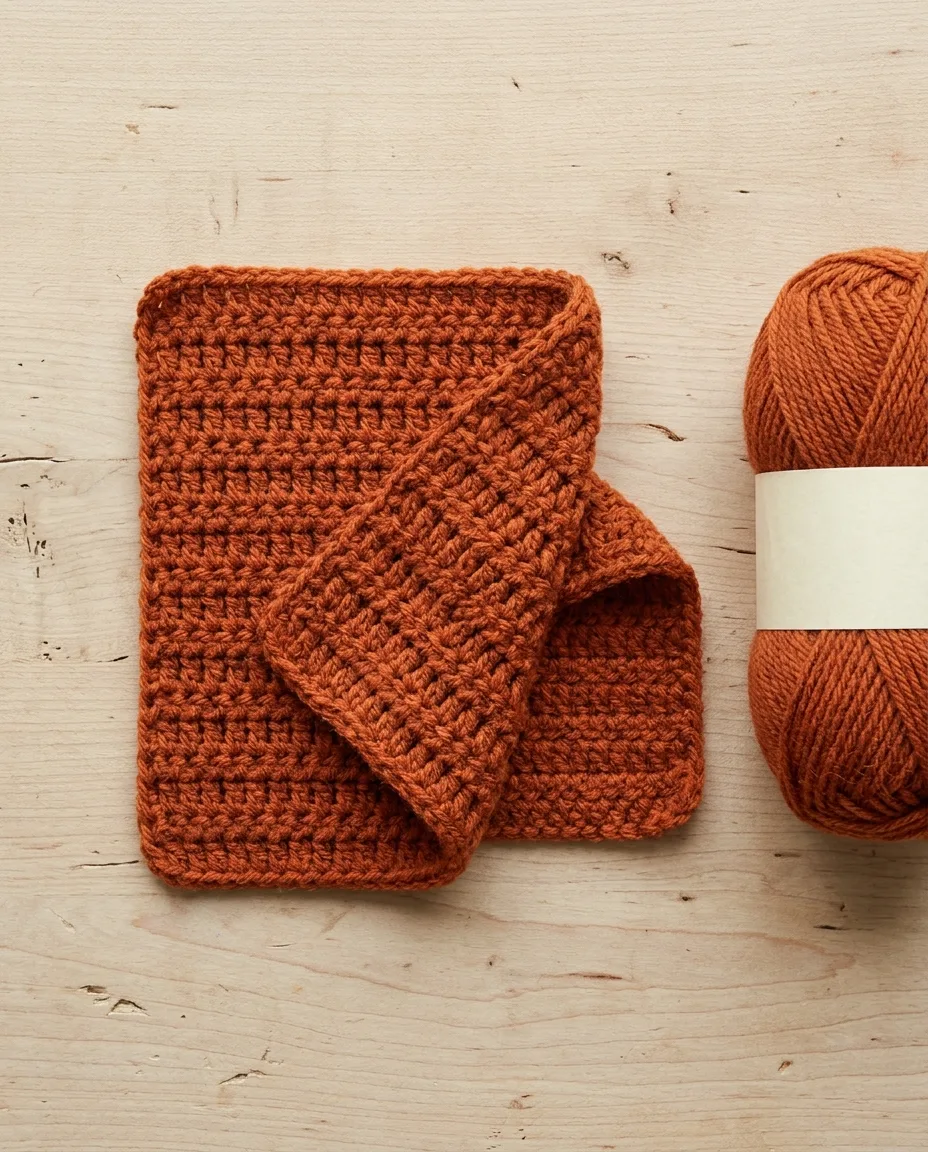
Four rows in, check the size. The swatch should measure about 4 inches (10 cm) across and a bit over 1.5 inches tall. Narrower than that means your tension is tight. It sounds like a small thing. It isn’t, and the next two sections show why.
Why the fabric holds warmth
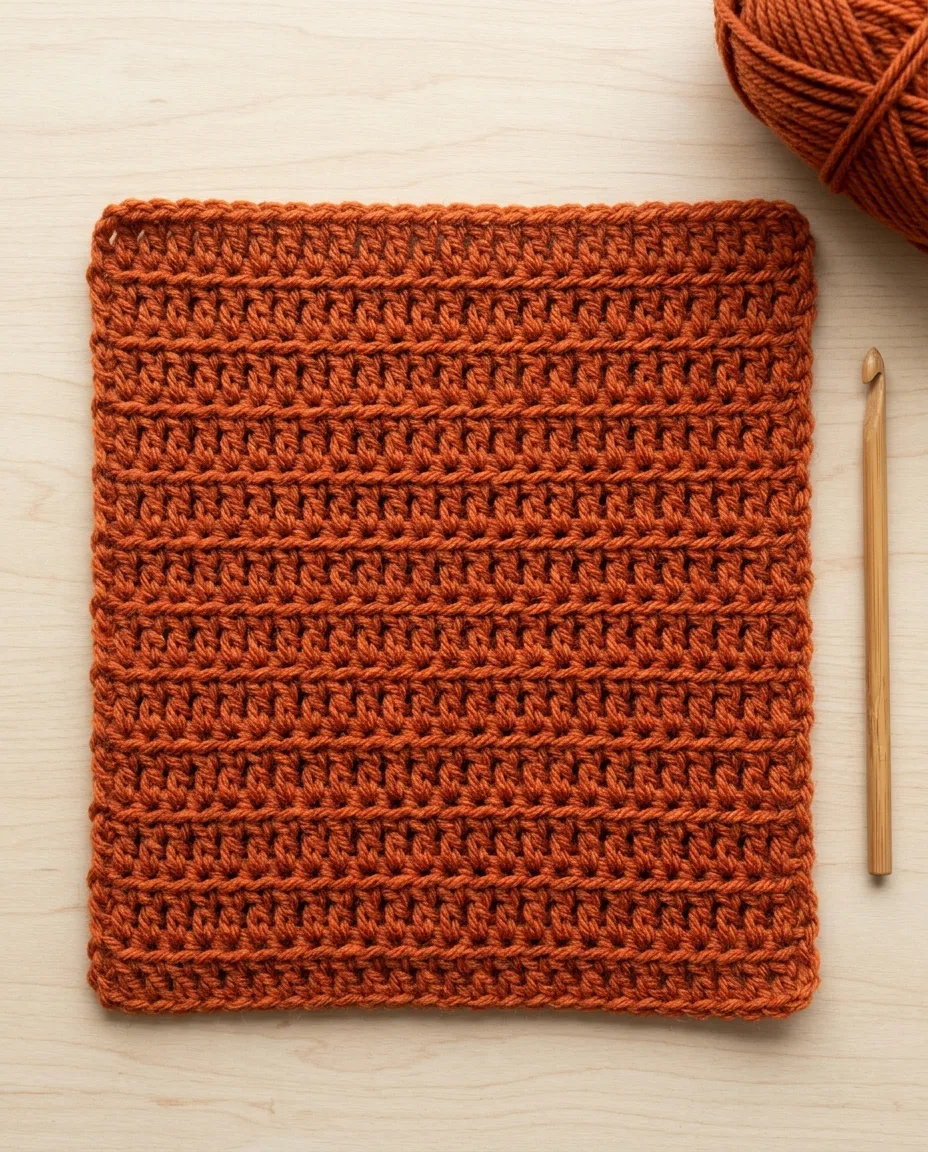
Look closely at the top of a finished row. Every stitch has the usual two loops making a sideways V. Just under that V, on the side facing you, there’s a third bar lying flat. That’s the first yarn over you made, wrapped around the post, which is the upright part of the stitch. Single crochet doesn’t have it. Row after row, those wraps sit shoulder to shoulder. They fill in the little holes that open up between taller stitches like double crochet, and with less open space, less air moves through.
Height helps as well. One row of half double crochet stands roughly one and a half times as tall as a row of single crochet. So you need fewer rows for the same length. Fewer rows means fewer stiff lines of stitch tops stacked up, and the piece bends more easily for it.
 Save
The yarn itself decides the rest. Wool traps a little air inside each strand, and that trapped air is what does the warming. Acrylic is easy to wash but feels thinner in the hand. Cotton? It turns into a heavy, cool fabric in this stitch. Keep it for dishcloths.
Go up a hook size and loosen your grip
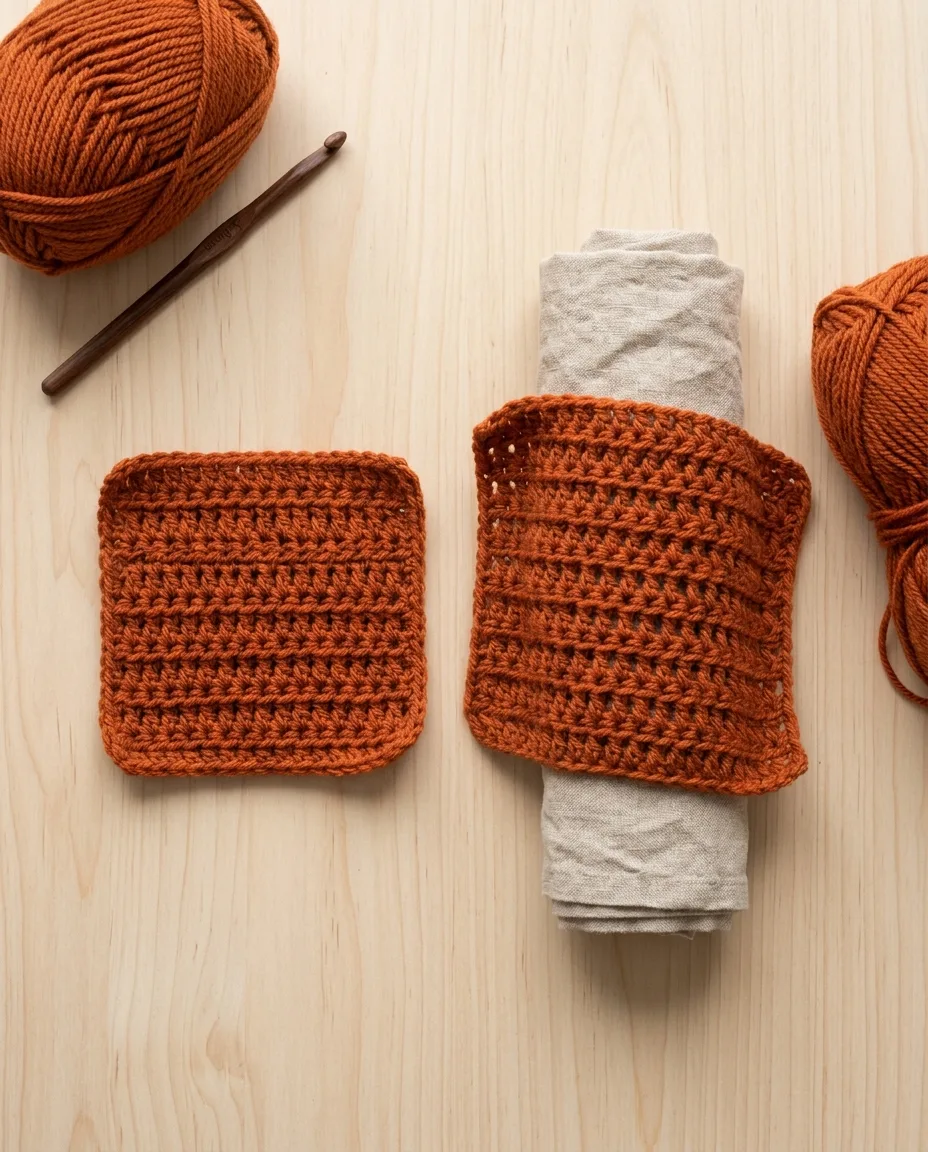
Two things make the fabric stiff, and you can test both in an evening. Start with the hook. Every yarn label prints a suggested size, usually 5 mm (US 8) for worsted. That’s fine for single crochet. But half double crochet carries that extra wrap in every stitch, and on the same hook the stitches end up jammed together. The guide to crochet slip stitch without tight fabric covers the fix step by step.
Reach for a 5.5 mm (US 9) first. Still firm? Go to a 6 mm (US 10). Work a 4-row swatch on each and hold them up next to each other. You’ll feel the difference straight away, because the looser one folds over your hand without any fight at all.
 Save
The other culprit is how you pull on the third step. When the loop comes up through the stitch, let it rise to the height of the loops already on the hook. Beginners tend to tug it short. Short loop, short stitch. And short stitches crowd together into something close to a board. So watch that loop on the way up. Once it stands as tall as the two loops next to it, the stitch has room to bend.
Gauge means how many stitches and rows fit in a set width, usually 4 inches. Patterns list it so your piece comes out the size they promise. For drape in worsted, aim for about 14 stitches and 10 rows over 4 inches. Go tighter and the fabric starts feeling like felt.
Keep the edges straight
Wavy sides almost always trace back to the turning chain. Count the chain 2 as a stitch on some rows but not others, and the row length wanders. One row lands at 15 stitches, the next at 16, and before long the edges ripple. The fix is boring but it works. Choose one rule and stick to it. Here that rule is simple: the chain 2 never counts, and the first stitch goes into the first stitch. Count every row for the first five. By then your eye will spot a missing edge stitch on its own.
But watch the last stitch. It hides just under the turning chain from the row below, and it’s easy to skip without noticing. Clip a stitch marker, a small clip that marks a spot, into it before you turn. Take the marker out when you work into that spot on the next row.
Don’t count on blocking to rescue fabric that’s too dense. Blocking means wetting the piece and pinning it flat until it dries. A stiff swatch does soften a bit, but going up a hook size does far more.
A softer variation: the third loop
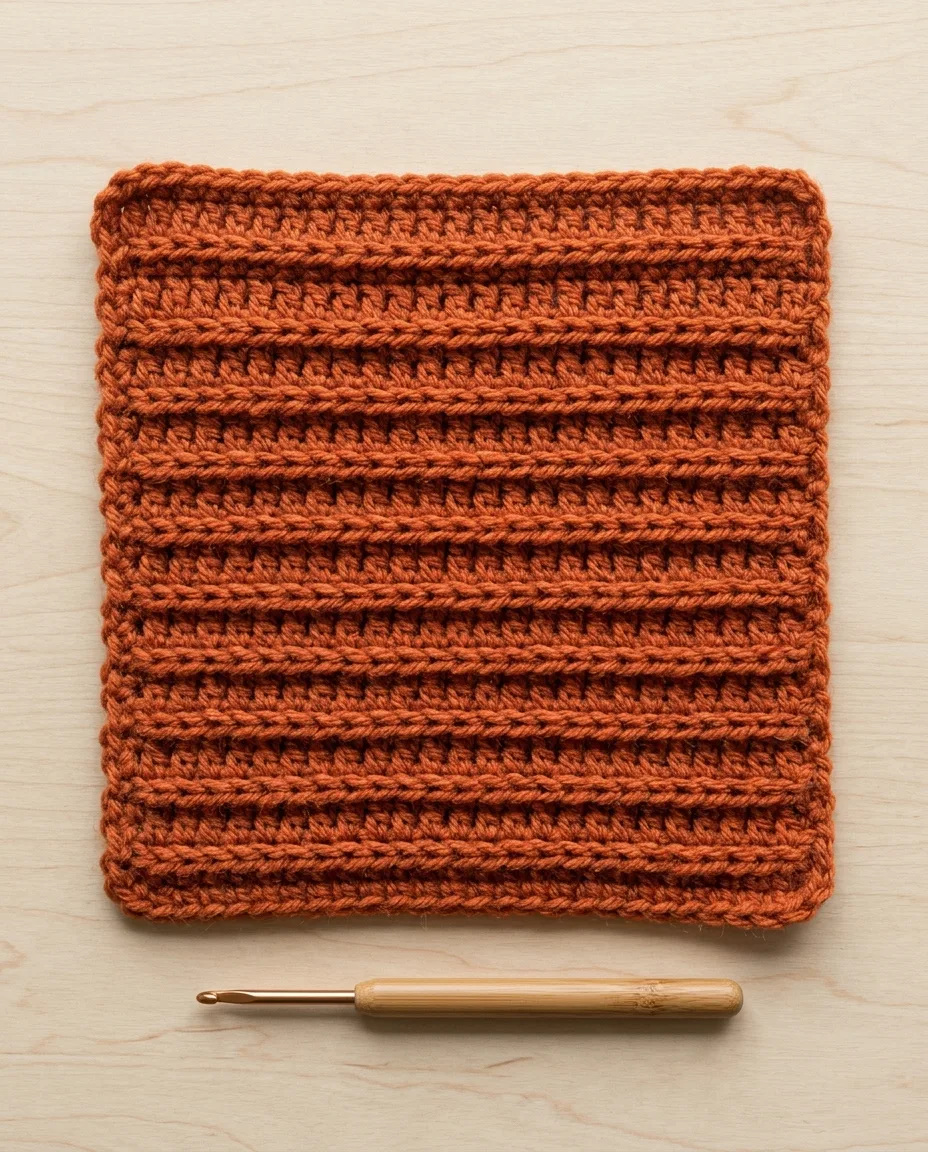
Working into the third loop changes the whole look of the fabric. Skip the two top loops. Slide the hook under just that flat bar sitting below them instead, and work the rest of the stitch exactly as before.
Now the two top loops lie flat across the front. Stack enough rows and they line up into raised ridges that look a lot like knitting. The fabric turns thicker and springier. It stretches more from side to side too, which makes it a good pick for a hat brim or a cowl.
 Save
One trade-off. This version comes out a bit shorter than plain half double crochet, since each row leans into the one below it. Add two or three rows to reach the same length. Keep the hook size you already settled on.
Hats and scarves that still bend
Anything that has to stay warm without getting heavy is a good fit for this stitch. Take a hat in worsted wool on a 5.5 mm hook. It blocks the wind and still folds small enough for a pocket. Or a baby blanket worked in rows, with no holes for little fingers to catch in.
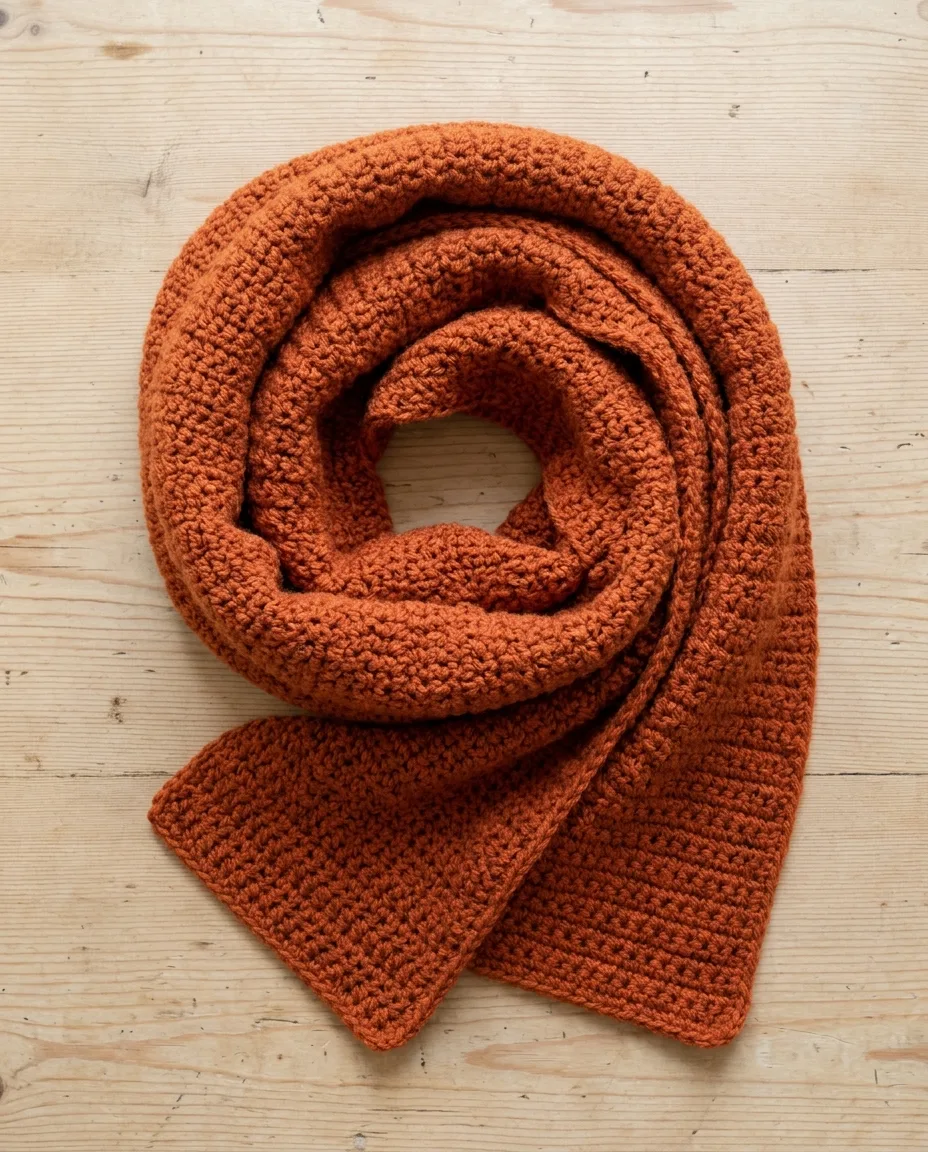
Scarves are where you find out if you got it right. A scarf has to go around twice and then hang over a shoulder. Use a 6 mm hook with worsted wool and make it about 22 stitches wide. Work rows until it reaches roughly 60 inches (152 cm), which eats up about 350 yards. Then wrap it twice. The rows should lie flat against each other, no ridges poking up. If they do poke up, your hook is still too small for your hands.
 Save
Wash wool in cool water. Dry it flat. Hot water and rubbing shrink wool and felt it, and felted half double crochet is exactly the stiff, unbending fabric you spent all that effort avoiding.
 Save
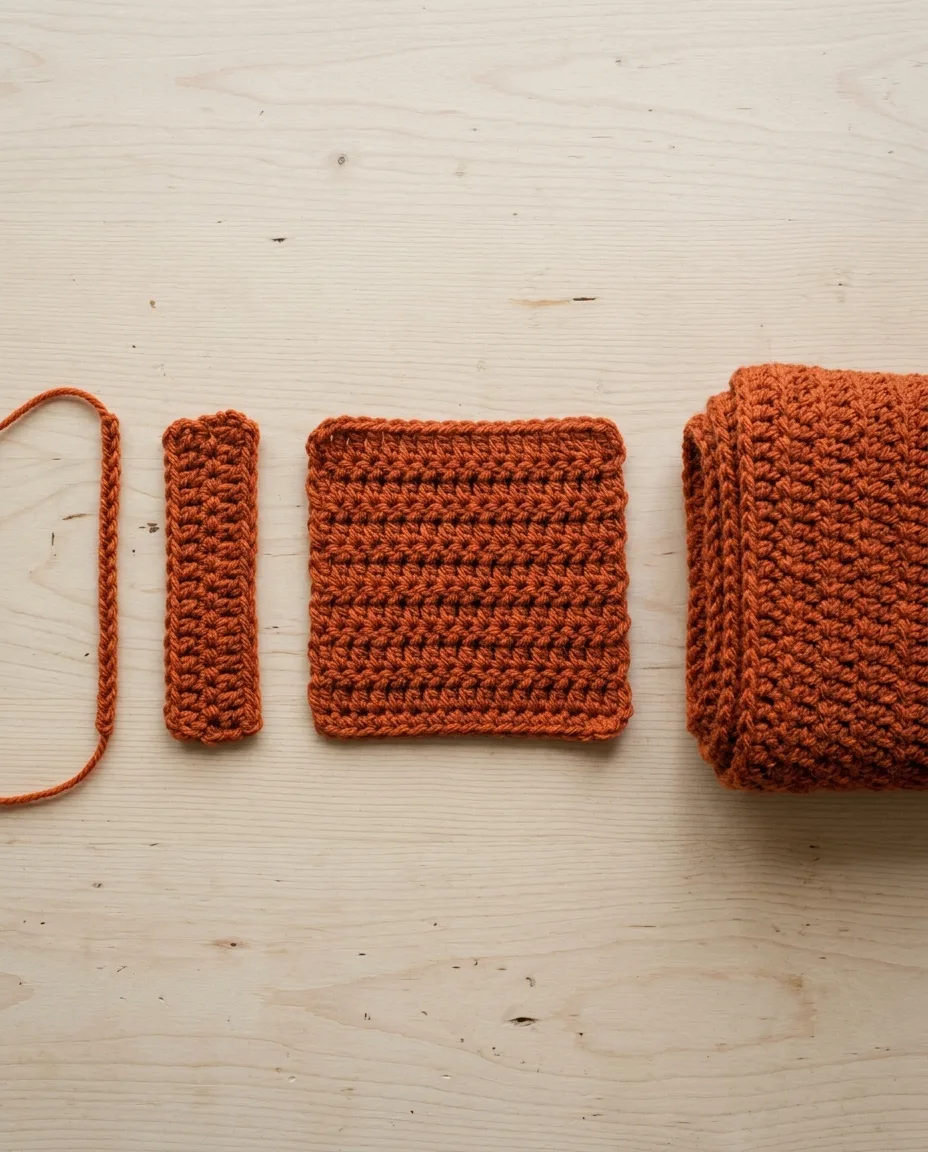
Honestly, your first swatch tells you most of what you need to know. Does it fold over your fingers? Does it let very little light through? If so, keep that hook and that grip for the whole project.