Quick fix
Most curling comes from stitches pulled too tight on a hook too small for the yarn. Go up half a millimeter in hook size and wet-block the finished piece flat.
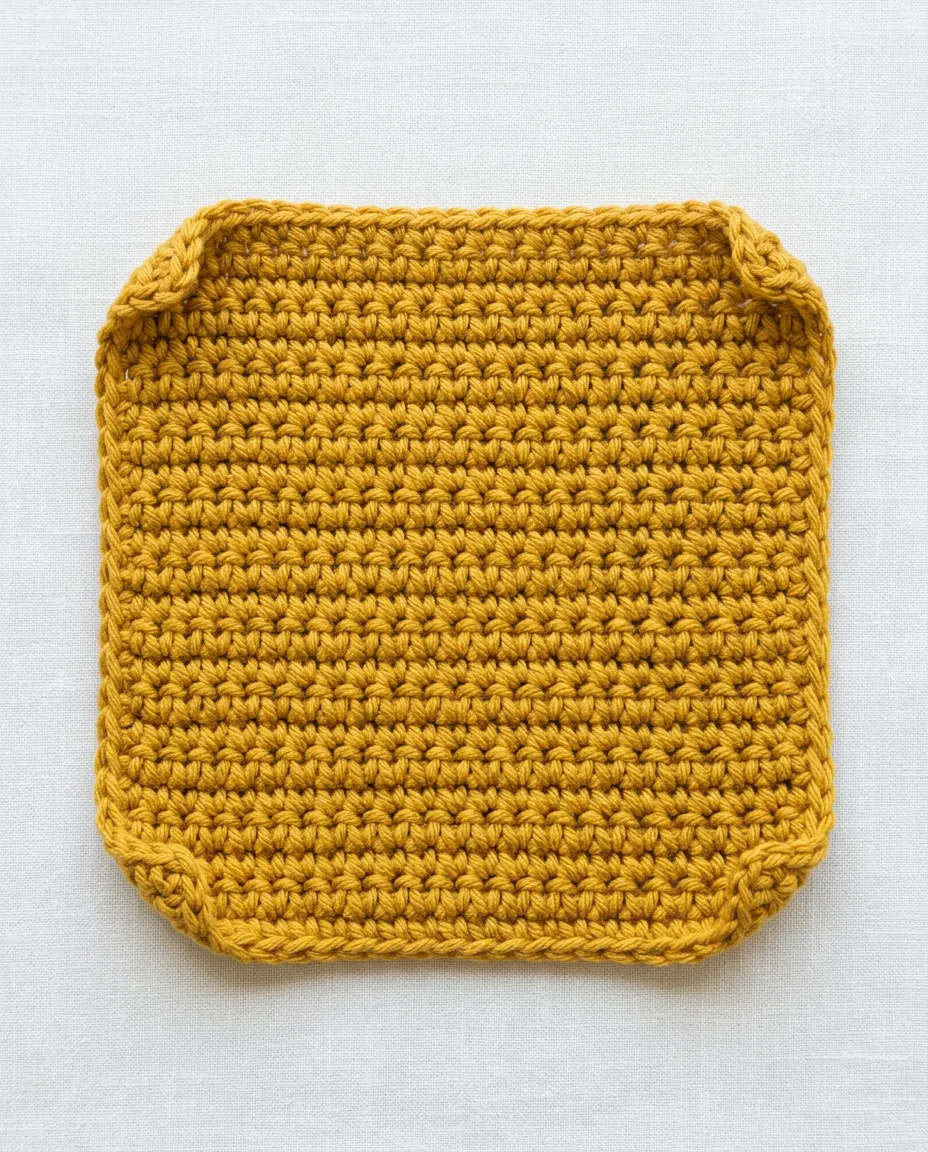
A new crocheter finishes her first dishcloth at the kitchen table and sets it down flat. The corners lift off the wood before she has let go of it. She presses it down with both hands. It springs back into a shallow bowl, the bottom edge pulled in tighter than the top, and the whole thing looks like it was made for a different, rounder table. Nothing in the pattern warned her, and the stitches themselves look fine.
Curling is the most common complaint about a first flat piece, and it has five separate causes. Two of them are about how hard you pull the yarn. One is about the starting chain. One is built into single crochet itself, and one comes from working into only half of each stitch. Each one leaves a different shape behind, so the shape tells you which fix to use. The hook sizes below assume worsted weight yarn, the medium thickness sold for hats and scarves, which normally pairs with a 4 mm (G) to 5 mm (H) hook.
Read the curl before you fix it
Corners that roll toward you on every edge point to tension, the tightness of each loop as you form it, or to the structure of single crochet. A bottom edge that is shorter than the top, so the piece fans out like a skirt, is the starting chain. A circle that rises into a cup has too few increases. Rows that roll up into a tube along their length, with the fabric ribbed, come from working into one loop only. Match the shape first. A bigger hook will not flatten a cupped circle, and blocking will not fix a chain that is 10 percent too short.
Cause 1
The stitches are pulled too tight
 Save
SaveTight stitches curl because the top of a single crochet is narrower than its base. Pull each loop hard and that difference grows, so every row is a touch narrower at the top than the row under it. Twenty rows of that pull the fabric into a curve. The piece also feels stiff and board-like, which is the quickest way to confirm this cause. A fabric at the right tension bends like a thick cotton towel.
Go up half a millimeter in hook size. If the yarn band suggests 4 mm, try 4.5 mm (7) and work a test square, a swatch, of about 20 stitches by 15 rows. Hold the yarn so it slides through your fingers with light drag. Clamping it is what makes tight loops. The loop you pull up should match the width of the hook shaft, which is what the hook size is for. Many people pull the loop up and then pull again to tighten before the next stitch. Skip that second pull. The hook sets the loop size on its own, and the extra tug is where most of the tightness comes from.
Count the stitches across 4 inches, 10 cm, of the swatch. Worsted yarn on a 4.5 mm hook lands around 14 to 16 single crochets in that width. Fewer than 13 and the fabric is loose and floppy. More than 17 and it will curl no matter what else you change. Hook size changes that number faster than any amount of trying to relax.
Cause 2
The starting chain is tighter than the rows
 Save
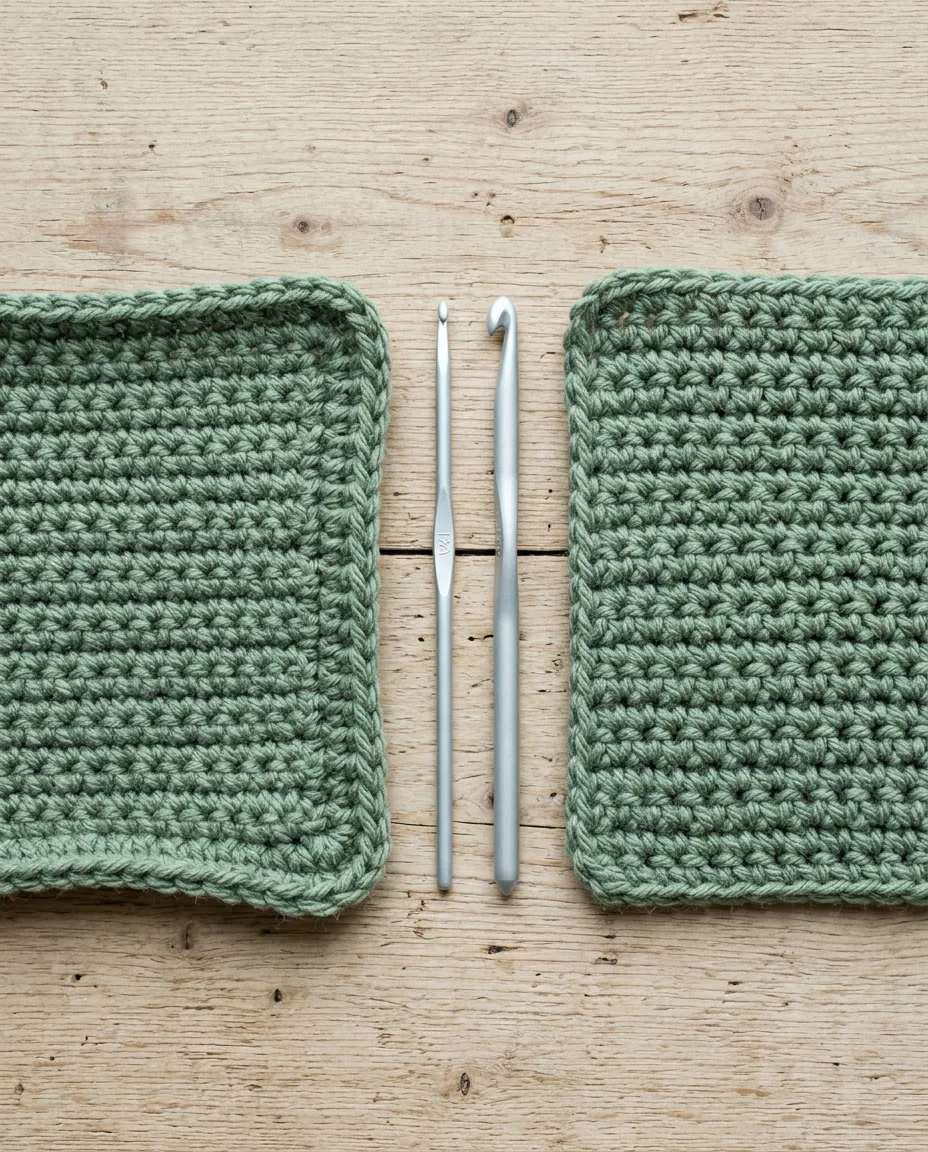
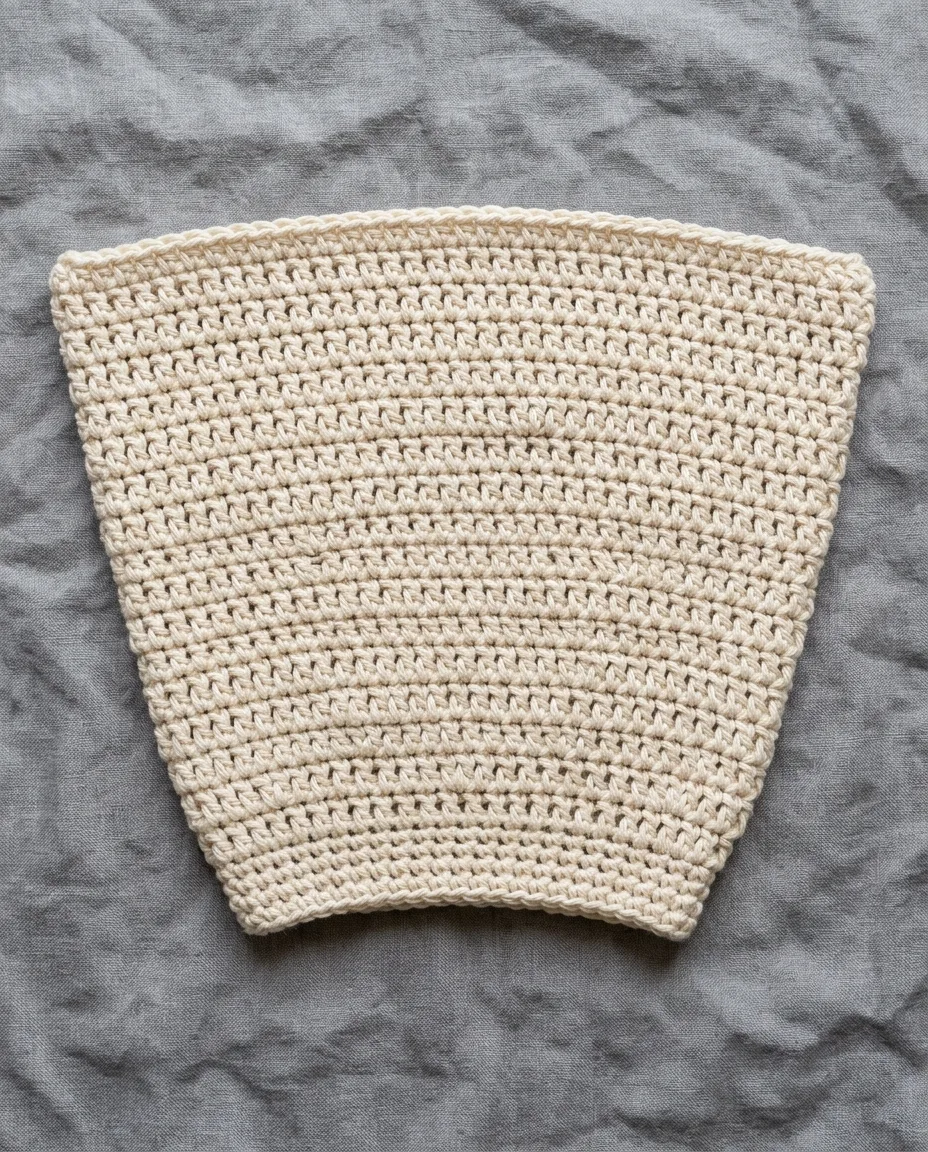
SaveChains are thinner than a row of stitches, and most people chain more tightly than they crochet. A tight chain of 40 can come out an inch shorter than the 40-stitch row worked into it. That row has nowhere to go, so the bottom edge pulls in and the piece curves upward at both ends like a boat. The top edge stays straight. That lopsided shape, straight on top and pinched at the bottom, is the giveaway.
Make the chain with a hook one full size bigger than the one for the body. For a 4.5 mm body, chain with a 5.5 mm hook, then switch down for Row 1. The chain stitches come out larger and the row sits in them without pulling. Nobody can see the difference on the finished piece.
Or remove the chain altogether. A foundation single crochet (fsc) builds the chain and the first row at the same time, and it stretches exactly as much as the rows above it. Chain 2. Insert the hook into the second chain from the hook and pull up a loop, so two loops sit on the hook. Yarn over, which means wrapping the yarn over the hook from back to front, and pull through one loop only. That makes the chain part. Yarn over again and pull through both loops, and that is the stitch. For the next stitch, insert the hook under the two strands of the chain part you just made, and repeat. Count the finished stitches as you would count a row.
Cause 3
Single crochet curls on its own
 Save
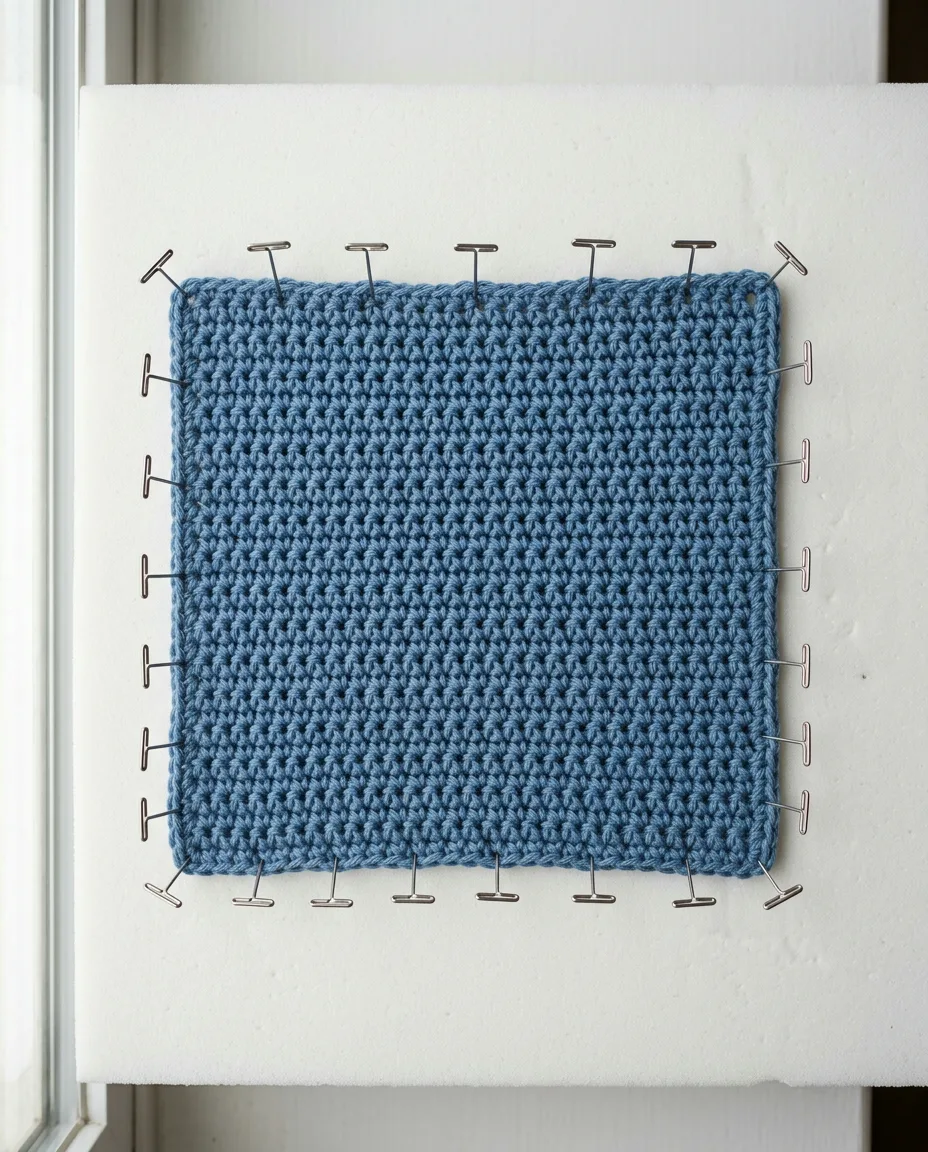
SaveNothing is wrong with your hands here. A single crochet is worked by inserting the hook under both top loops of the stitch below and pulling up a loop, then wrapping the yarn over the hook and drawing it through both loops. The back of that stitch carries more yarn than the front. Stack 30 rows and the thicker side pushes the fabric into a curve, usually toward the front in the first 6 to 10 rows. Dishcloths and scarves made in all single crochet do this at every tension.
Blocking, which means wetting the finished piece and drying it pinned flat, fixes most of it. Soak cotton in cool water for 20 minutes, roll it in a towel to take out the drip, and pin it square on a towel or foam mat. Pin every 2 inches along each edge. Leave it 24 hours. Acrylic does not hold a wet block, but steam works: hover an iron on its steam setting an inch, 2.5 cm, above the pinned piece and never touch it. Direct heat melts acrylic flat and shiny, and that cannot be undone.
Borders hold the edges down too. Two rounds of single crochet around the whole piece, with 3 stitches in each corner, add weight at the edge where the curl starts. For a scarf the better fix is to change the stitch before you start. Half double crochet (hdc) sits flatter: yarn over first, insert the hook, pull up a loop so three loops sit on the hook, then yarn over and draw through all three. The fabric comes out a little taller per row and barely curls at all.
Cause 4
A flat circle has the wrong number of increases
 Save
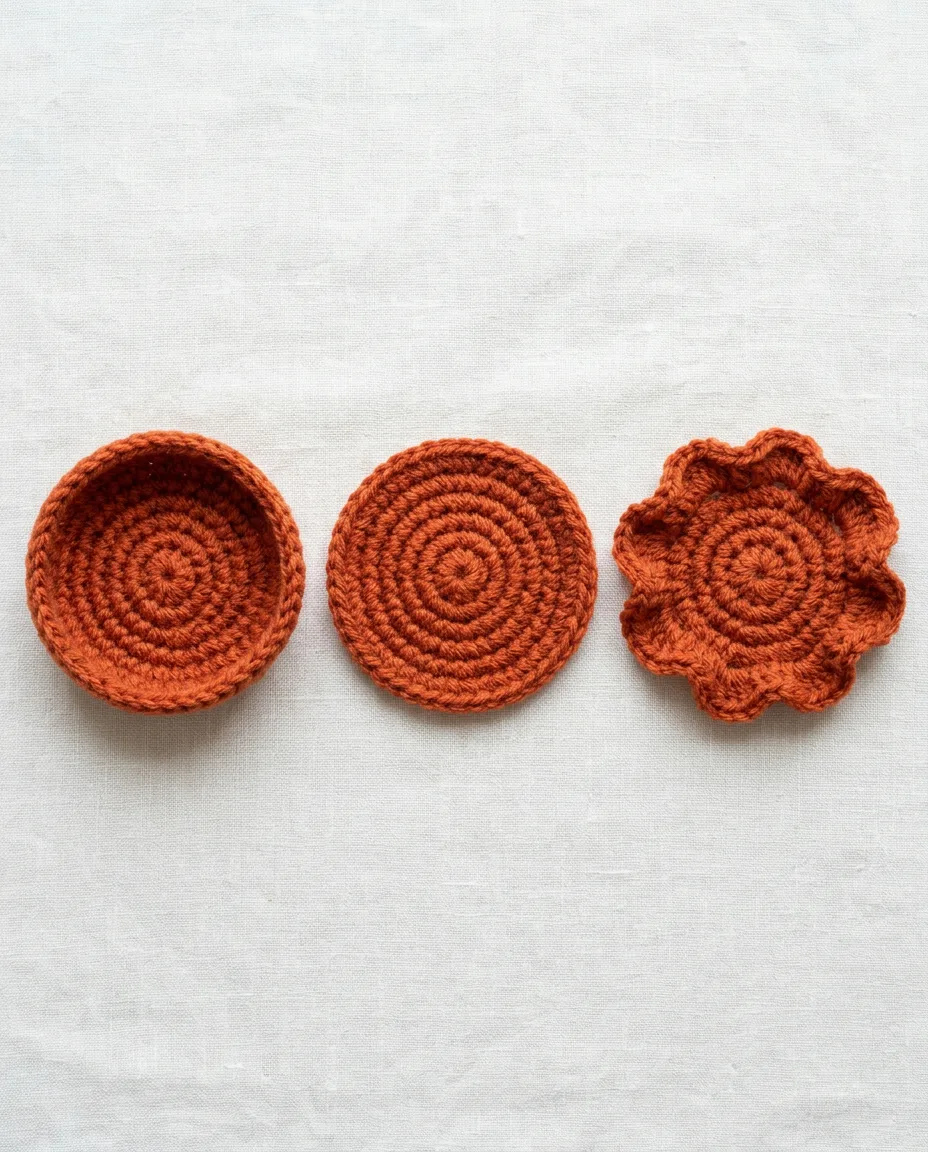
SaveSix new stitches a round keeps a single crochet circle flat, so the counts run 6, 12, 18, 24. Every round has to grow by the same number, and that number depends on the stitch height. Eight for half double crochet. Twelve for double crochet. That taller stitch starts with a yarn over before the hook goes in, then a loop pulled up to make three on the hook, then two passes of yarn over and pull through two. Fewer increases than that and the edge is too short for its distance from the center. It rises into a cup.
Too many increases does the opposite. The edge grows faster than the circle can lie flat, and it ripples into waves. The same circle can do both: cup in the middle and ripple at the edge if the maker started adding stitches to compensate.
Check the count at the end of every round against the number you expect. If Round 5 of a single crochet circle has 28 stitches where it should have 30, pull back that round and find the missing increases. Cupping is also sometimes deliberate. Amigurumi, the Japanese word for crocheted stuffed toys, uses the cupping on purpose by stopping the increases once the circle is wide enough. That is how a flat disc turns into a ball, and it is why a toy pattern and a coaster pattern cannot be swapped.
Cause 5
Every row is worked into one loop only
 Save
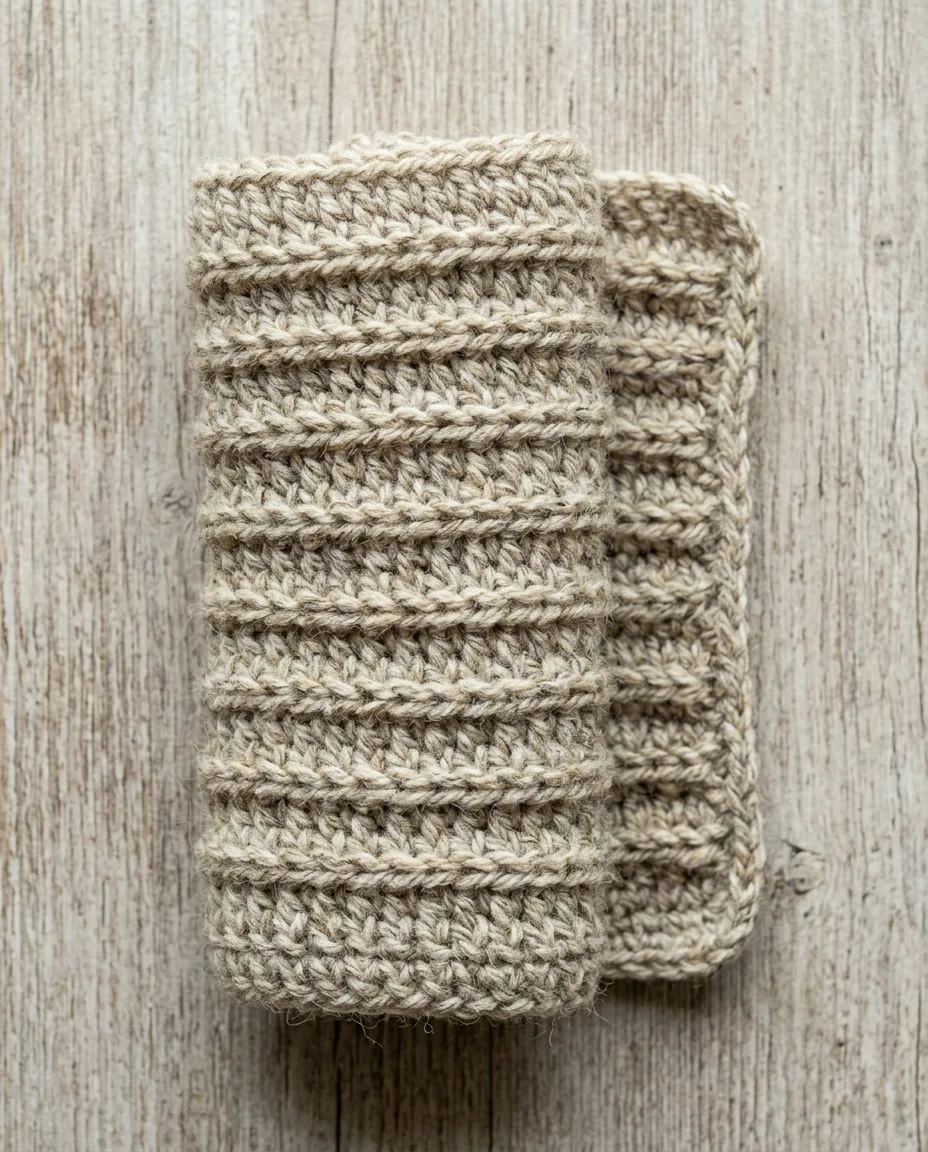
SaveEach stitch has two top loops: the front loop, which is the strand nearest you, and the back loop, the strand behind it. Normal crochet goes under both. Working under the back loop only (BLO) leaves the front loop unworked as a raised horizontal line, which is how ribbing on a hat brim is made. The unworked loops stack on one face of the fabric and pull it, so a whole piece in BLO rolls toward that side. The same happens with front loop only. Many beginners drift into the back loop by accident, because the hook finds it first when the work is held at a steep angle.
Look at a stitch from above. If you can see a line of unworked Vs running across the fabric where there should be a smooth surface, this is the cause. Hold the work flatter and aim the hook under both strands of the V. Where a pattern calls for back loop only on purpose, add one row under both loops every 6 rows, or plan to block and border the piece as described under the single crochet cause. A brim or a cuff should curl; it is rolling the way the designer wanted. A blanket in BLO should not, and no amount of blocking will keep 200 rows of it flat for long.