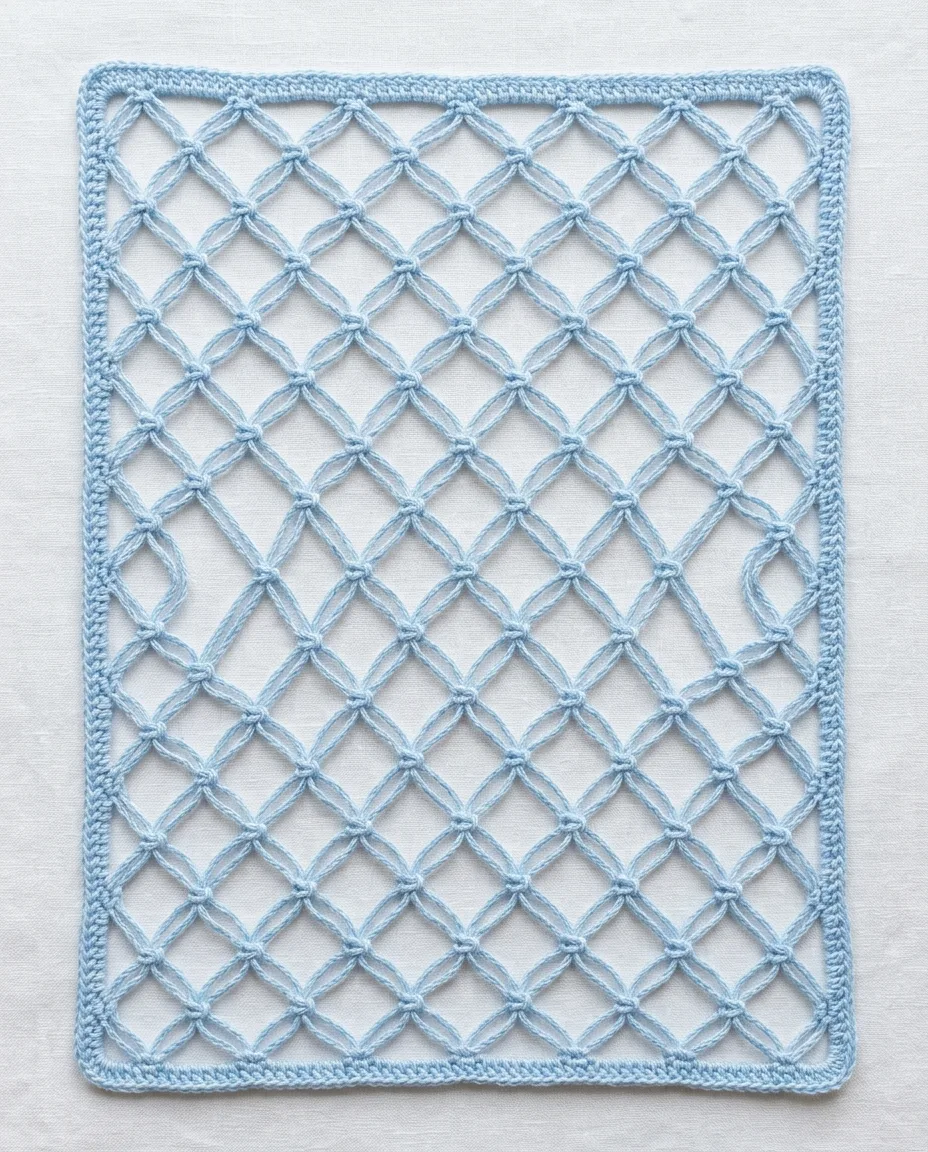
Pull a loop up until it’s about three quarters of an inch long, then lock it in place with one small knot. That’s a Solomon’s knot. Repeat it and the loops link into a net of open diamonds that looks far fussier than it is. Wraps and summer bags suit it best.
Honest rating? It’s an easy stitch with one hard habit. Every loop has to come out the same length. The hook moves are simple, and you only need a single crochet and a slip knot, the adjustable loop every project starts on. Getting twenty loops to match each other takes a few rows of practice, though, and the first swatch (a small practice piece) usually looks a bit drunk. The starburst stitch guide breaks the whole project into steps.
Some crocheters call it the lover’s knot or love knot. Same stitch.
How to make one Solomon’s knot
Start with a slip knot on the hook. That one loop is all you need. Each knot below grows out of the loop already sitting on your hook, so the first knot and the fiftieth are made the same way.
- Pull the loop on your hook upward until it’s about three quarters of an inch (2 cm) tall. Hold it there with your thumb.
- Wrap the yarn over the hook, back to front. Crocheters call this a yarn over.
- Draw that wrap through the long loop. It looks like a stretched-out chain stitch.
- Find the single back strand of the long loop. It runs behind the two front strands you can see.
- Slide the hook under that one strand. Yarn over and pull up a loop. Two loops on the hook now.
- Yarn over again and pull through both. That’s a single crochet, and it ties the knot shut.
- Pinch the knot and check the loop above it. Too short? Next time pull higher before the yarn over.
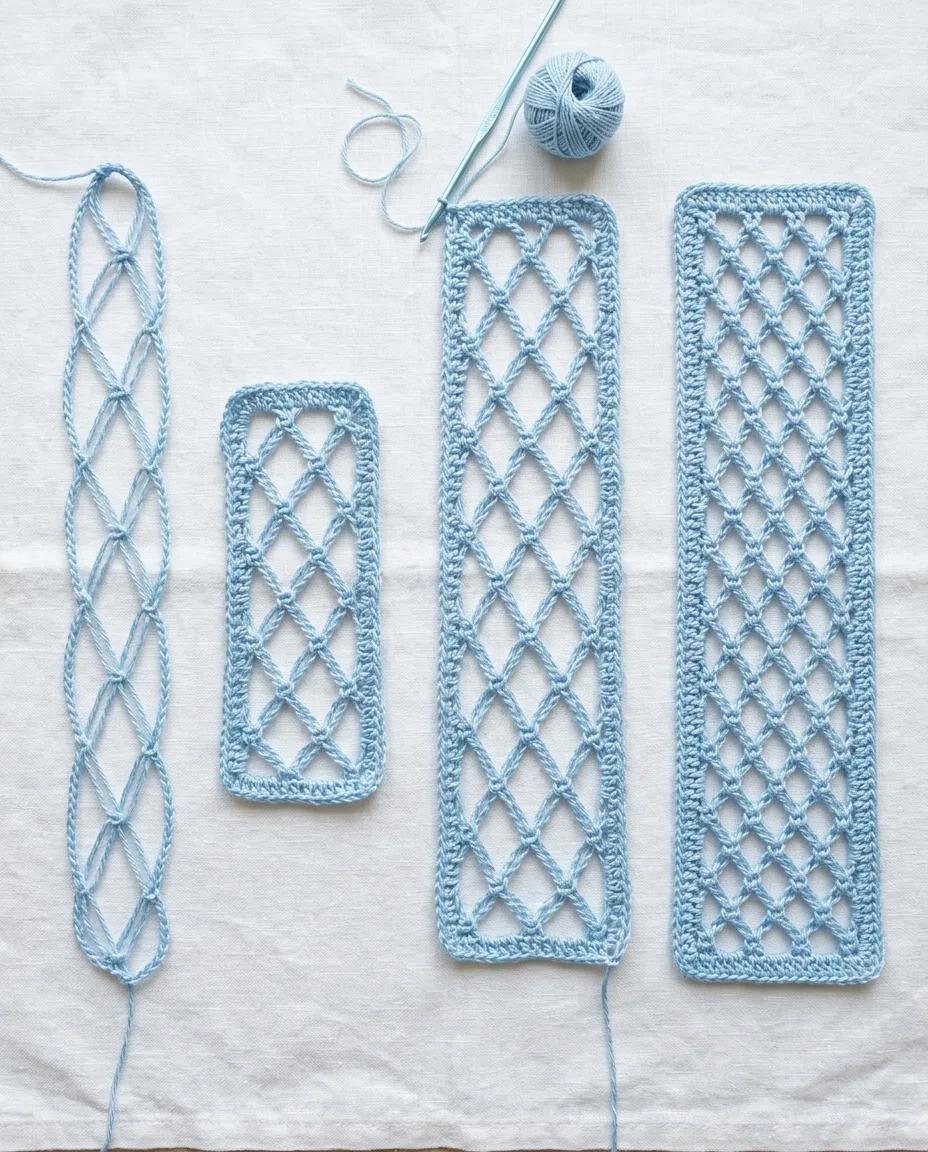
Work 15 more for a swatch, so the strip has 16 knots. The count has to be even or the diamonds won’t close at the far end.
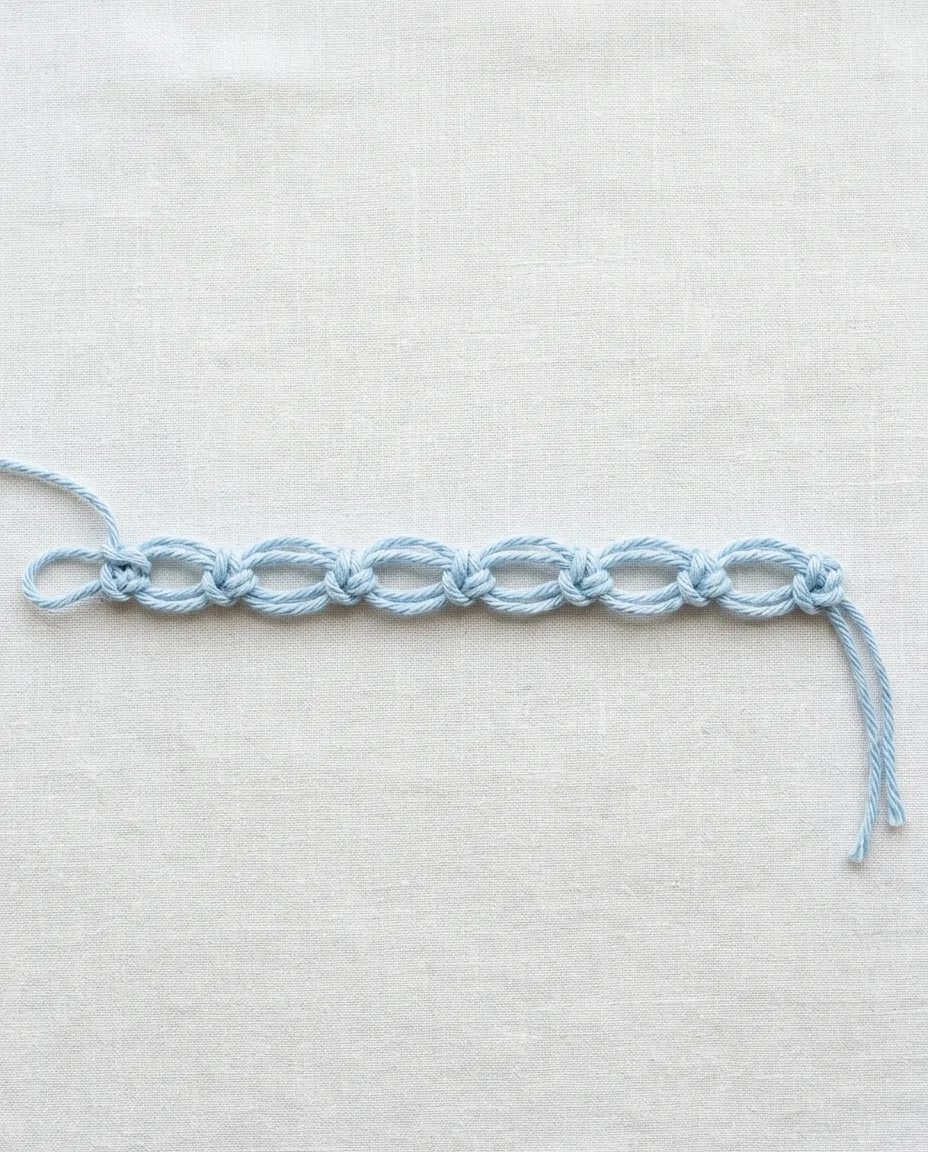 Save
Your thumb does most of the work in Step 1. If the loop shrinks while you wrap the yarn, the wrap is pulling yarn back out of it. Keep the thumb on the knot at the base of the loop until the single crochet is finished.
Turn a strip of knots into diamond mesh
A foundation strip is just a wobbly string. The rows below hook it back on itself, and that’s when the diamonds appear. You’ll count knots instead of stitches. Each knot is the small hard bump between two loops.
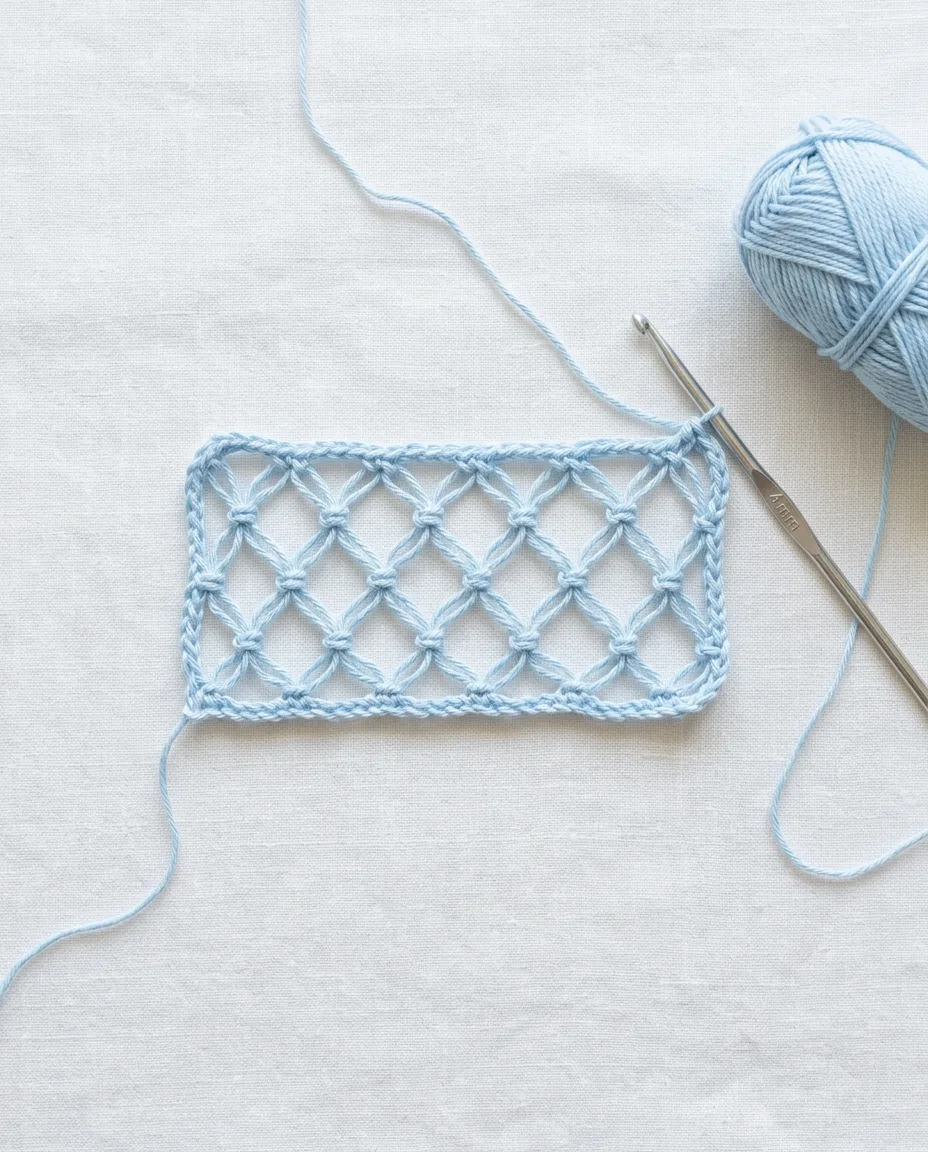
- Make 2 Solomon’s knots for the turn. Skip the first knot of the strip below the hook. Single crochet into the next knot. *Make 2 knots, skip 1 knot, single crochet into the next knot. Repeat from * to the end. The last single crochet goes into the slip knot.
- Make 3 knots for the turn. Single crochet into the first free center knot of the row below. *Make 2 knots, single crochet into the next center knot. Repeat from * to the end. Single crochet into the top knot of the turning loops.
- Repeat Row 2 until the piece is as long as you want.
 Save
Lost in Row 2? Look for the knot halfway along each pair of loops from Row 1. It sticks up like the peak of a little tent. Those peaks are the center knots, and every single crochet in Row 2 goes into one of them. Count them before starting the row. Eight peaks on a 16-knot strip. The shell stitch guide covers it round by round.
And the turning loops at the start of each row look too tall at first. Leave them. They fill the space where a half diamond would sit at the edge, and the side stays straight that way.
Keep every loop the same length
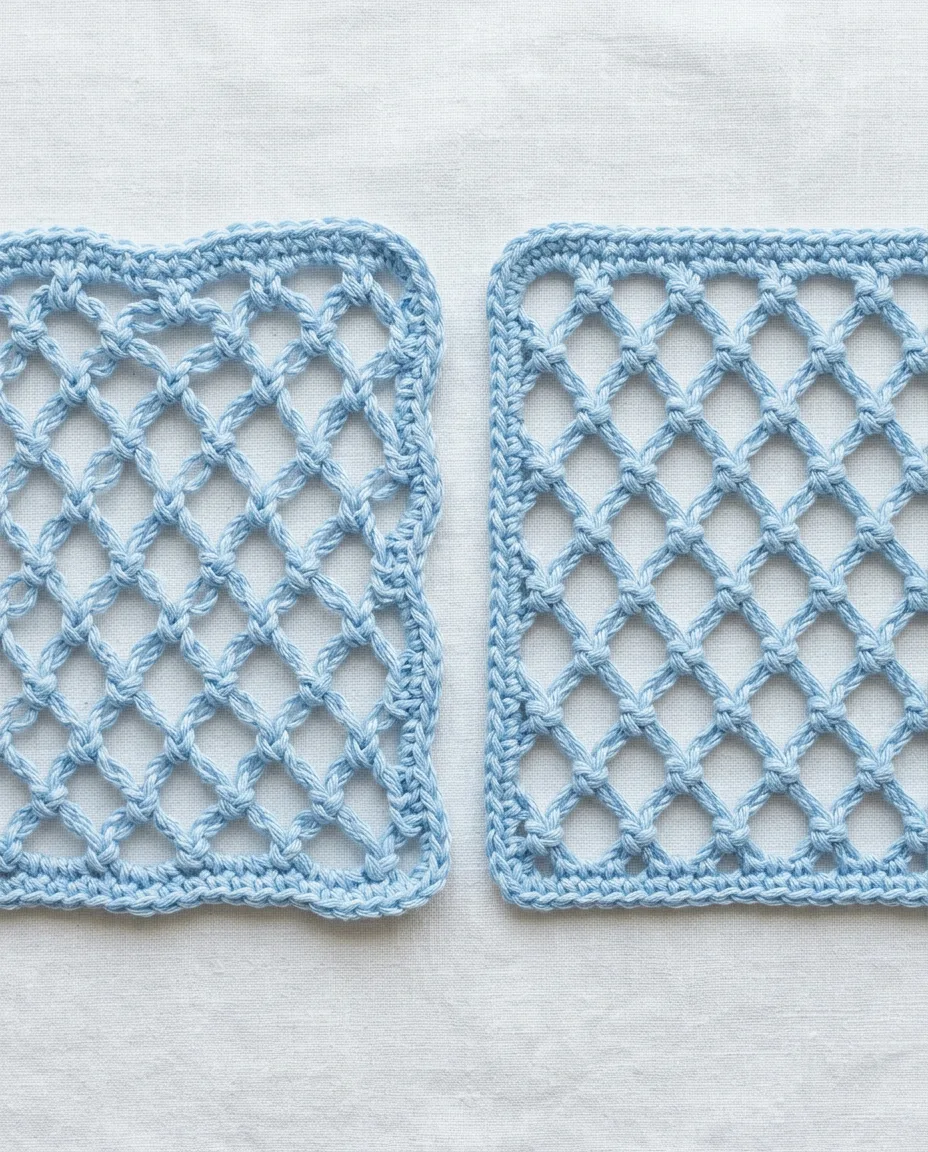
None of the hook moves matter as much as this. Uneven loops make lopsided diamonds, and lopsided diamonds pull the edge into waves. Blocking, which means wetting a piece and pinning it flat to dry, can only partly fix them.
 Save
Pick one reference point and use it every time. Some people line the top of the loop up with the tip of the thumb. Others hold the hook flat against a finger and pull to the second knuckle. Either works. What doesn’t work is judging each loop by eye.
Half an inch (about 1.3 cm) is plenty with a thin fingering weight yarn. A worsted yarn, the medium weight most acrylic skeins come in, can take a full inch. Longer loops make bigger, floppier diamonds. That’s fine for a beach cover-up. For a scarf it gets snaggy fast. There is a fuller walkthrough in the guide to half double crochet for warm fabric.
Where the mesh works best
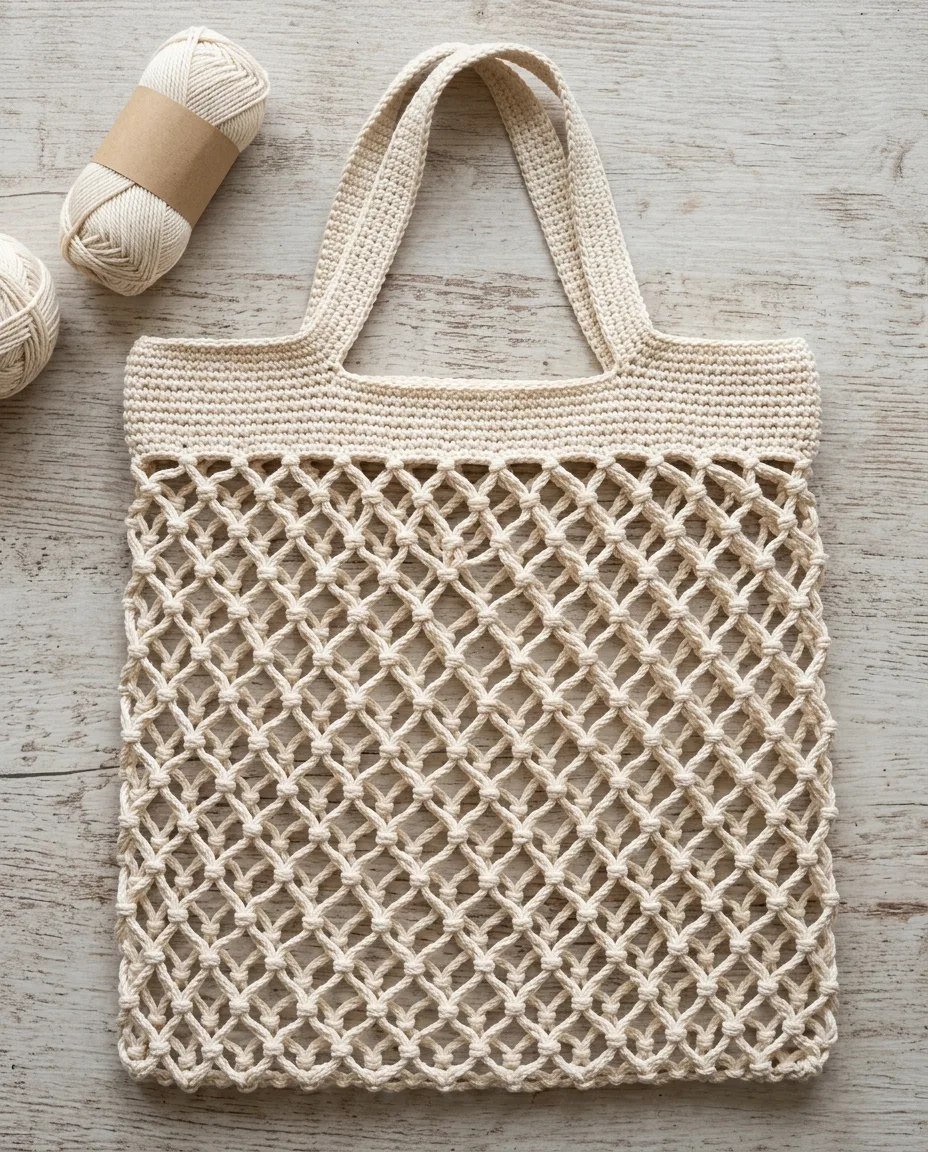
Lace like this eats very little yarn. A scarf in Solomon’s knot uses far less than the same scarf in single crochet, and it dries quickly. Light layers are its best use. Think shawls and summer scarves, or the sides of a market bag.
 Save
But mesh stretches. Pull on it and every diamond turns into a long thin slot. So anything that carries weight needs solid stitches where the strain lands. On a bag, crochet the base and the handles in plain single crochet and keep the mesh for the sides. Groceries then sit on the solid part.
Garments are trickier. A mesh sweater sags at the shoulders within a few wears, since every loop is free to slide. Save the stitch for pieces that hang loose.
When it goes wrong
Knots that slip are the most common problem. If you can pull a loop and watch it grow, the single crochet went under two strands of the long loop, or under none. Go back to Step 4. Only the single back strand holds tight.
Row counts drift too. You finish Row 2 with seven diamonds instead of eight, usually because a center knot got skipped near the middle where everything looks alike. Pull back to the start of the row and recount the peaks first. Ripping out goes fast with this stitch, which is a mercy.
Then there’s twisting. A strip that spirals like a phone cord means some loops got twisted as you pulled them up. Hold the loop straight up from the hook every time. The twist won’t block out later.
Try it in mohair for a soft halo
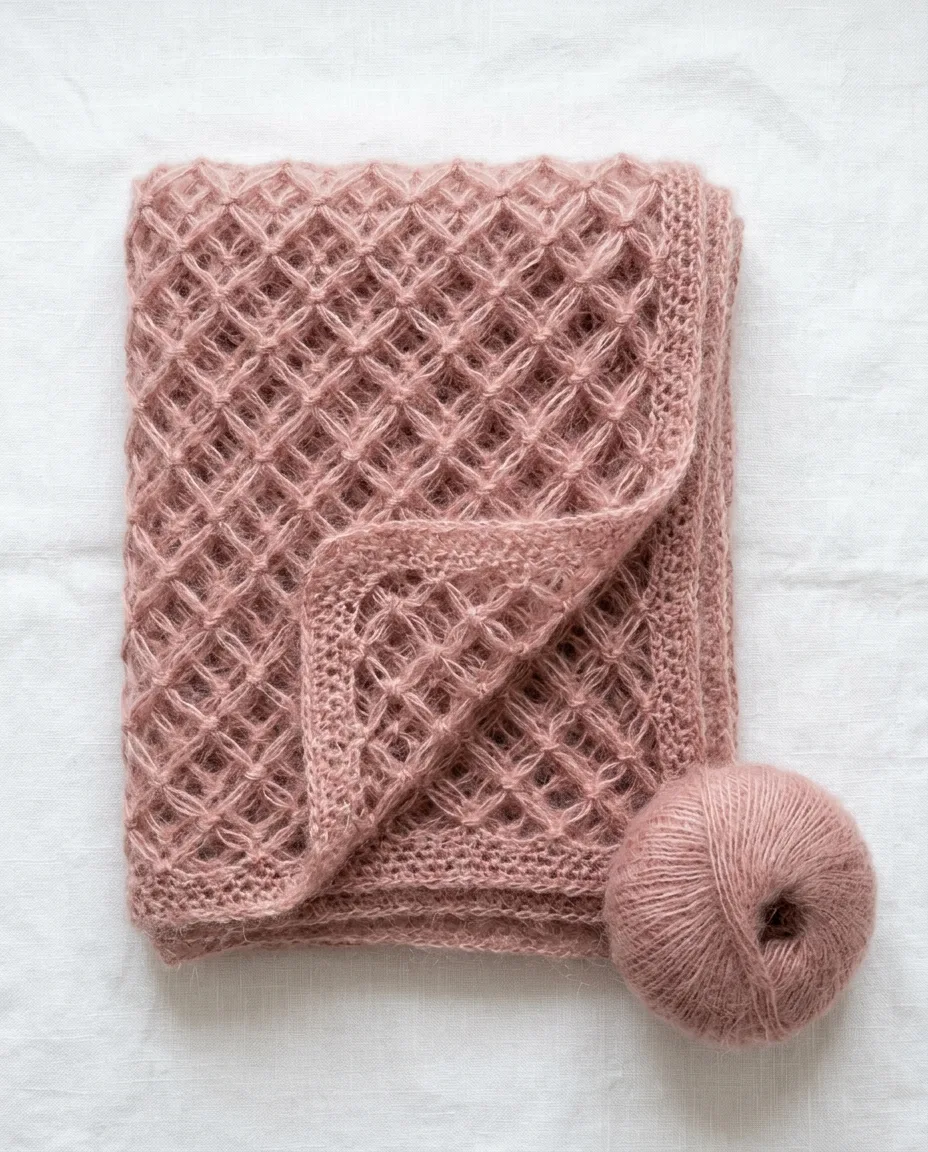
Mohair blended with silk changes the look completely. The fuzz fills the diamonds with a faint mist. Small differences in loop length disappear under the halo, so this is a forgiving yarn for a first real project.
 Save
The catch is ripping out. Mohair fibers lock onto each other, and pulling back even one row can felt the loops into a tangle. Work slowly and check each row before starting the next. Use a slightly bigger hook too, a 4.5 mm (7) with a lace weight mohair, so the knots don’t disappear into fluff.
Blocking is what opens the lace
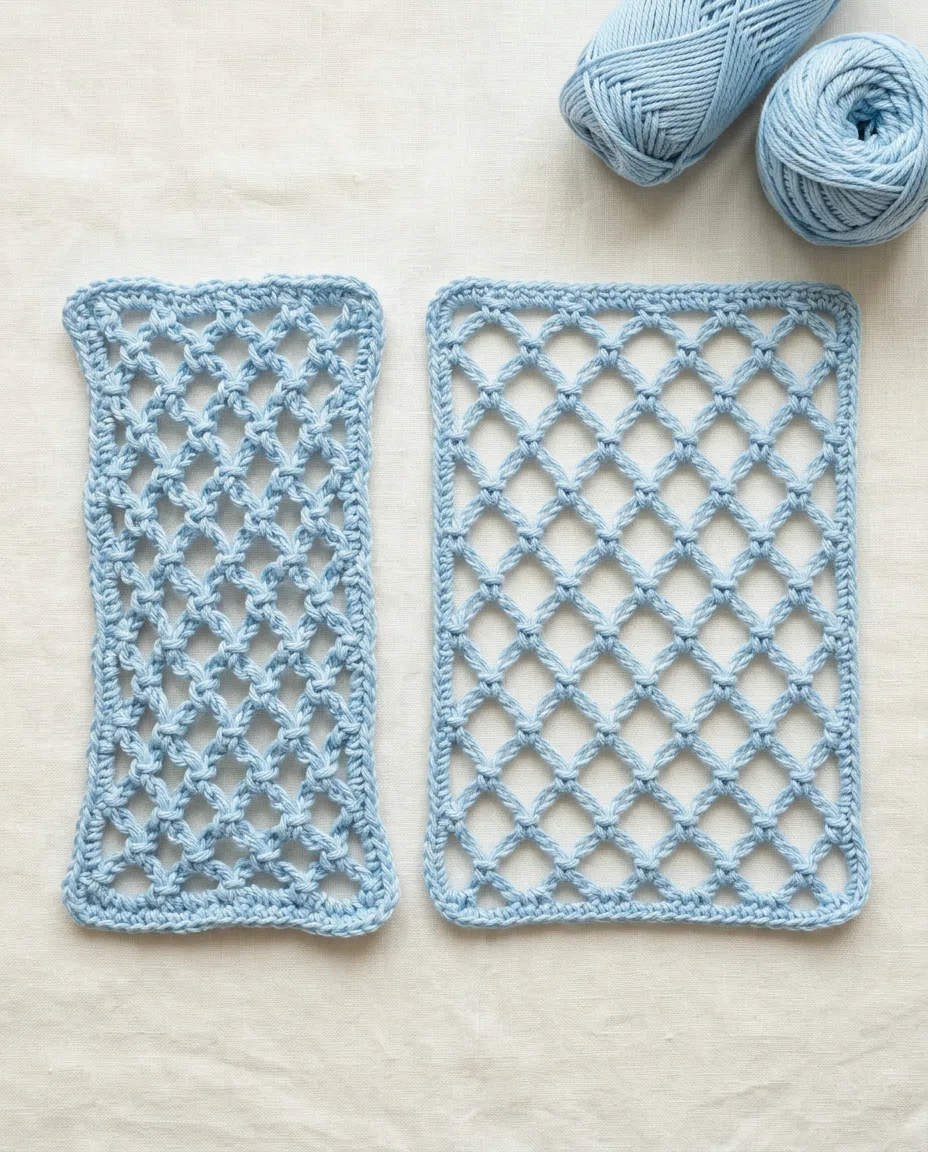
Off the hook, Solomon’s knot mesh looks like a crumpled net. That’s normal. Blocking is what pulls the diamonds open.
 Save
Soak the piece in cool water for ten minutes, then squeeze it in a towel. Never wring it. Lay it on the mat and pin one point of every edge diamond, working outward from the center. Cotton holds its blocked shape well. Acrylic barely blocks at all, which is a good reason to stay with cotton or wool for lace.
Leave the pins in until the piece is completely dry. Pull them early and the diamonds shrink back by morning.
 Save
Start with 16 knots in a pale cotton. A pale color shows every knot, which makes counting peaks much easier on Row 2.