A heart chart, copied square by square, comes off the hook as a lumpy rectangle with no heart anywhere in it. Frustrating. And the cause is almost always tiny. One space picked up an extra chain. Or one block lost a stitch, and every row after that sits a square off. Filet crochet is just a grid of open windows and filled squares. The filled ones draw the picture. Keep the count honest and the heart turns up on its own.
Two stitches. That’s all filet asks for, the chain and the double crochet. If you can already make a double crochet without stopping to think, you’re ready. Counting is the real work here (not the hook), so every row below comes with a quick check.
- Chain 30. That’s your start for a swatch, a small test piece, 9 squares wide.
- Wrap the yarn over the hook, back to front. That’s a yarn over. Now into the 4th chain from the hook.
- Yarn over again. Pull a loop back through. You’ll have three loops on the hook.
- Yarn over, through two. Two loops left.
- One more yarn over, through the last two. That’s one double crochet.
- Keep going into every chain to the end. Count 28 stitches. The 3 skipped chains count as the first one.
- Turn the work. Chain 3, the turning chain, which counts as the first post of the new row.
- Open space next. Chain 2, skip 2 stitches, then double crochet into the next post.
- Block? Double crochet into each of the next 3 stitches.
- Block on top of a space is a little different. Put 2 double crochets into the gap, then 1 into the post after it.
- Last stitch of every row goes into the top of the turning chain. Every row, no exceptions.
Reading the chart before you start
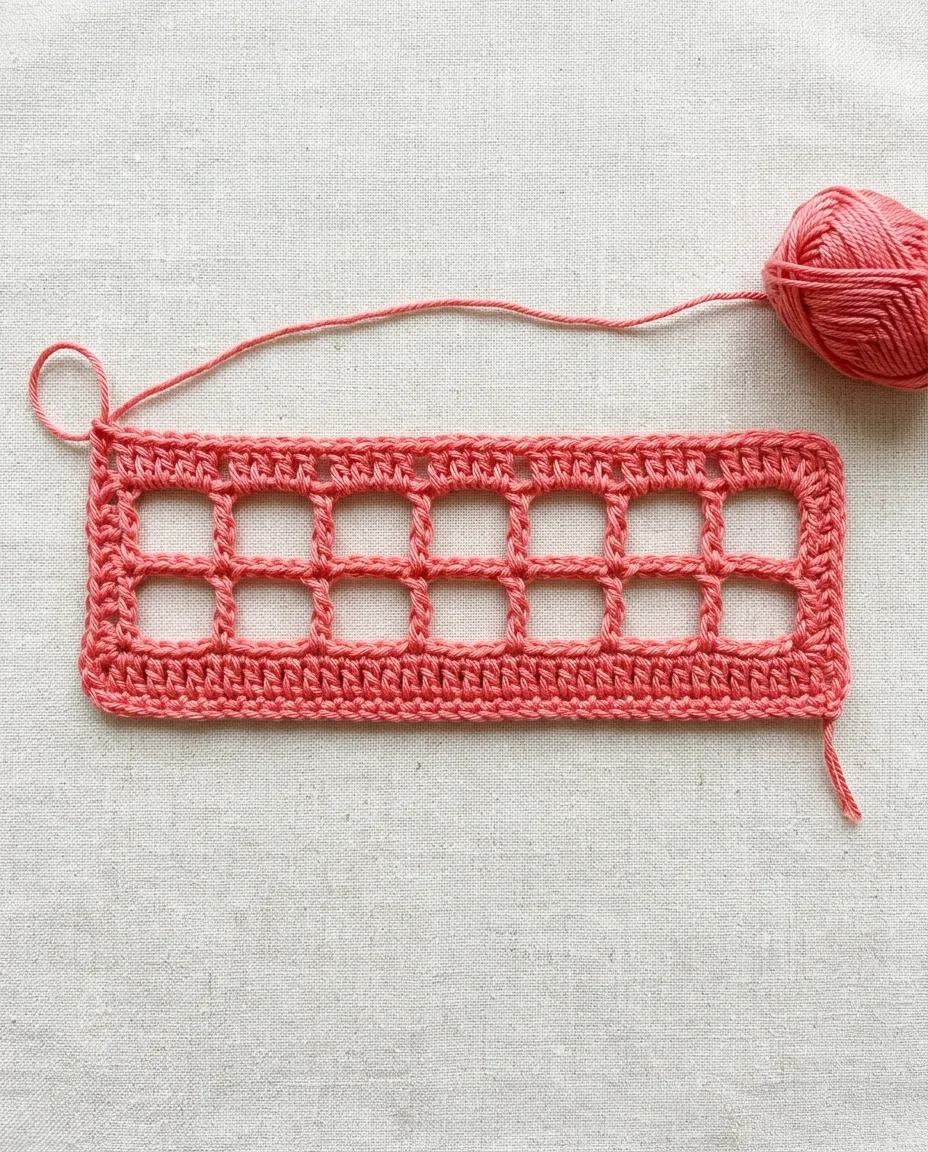
Only two kinds of square exist on a filet chart. Empty means a space, filled means a block. Neighbors share the upright post between them, so a row of 9 squares has 10 posts. Check a row by counting posts. Chains lie.
Start at the bottom of the chart. You turn at the end of every row, so odd rows run right to left and even rows run back left to right. The heart doesn’t care either way. A lopsided picture would, and that’s where most first charts go sideways.
 Save
Two short words show up in the rows below. “sp” is one open space, “blk” is one block. Each row opens with the turning chain of 3, then the squares in order. The granny stitch guide breaks the whole project into steps.
The heart swatch, row by row
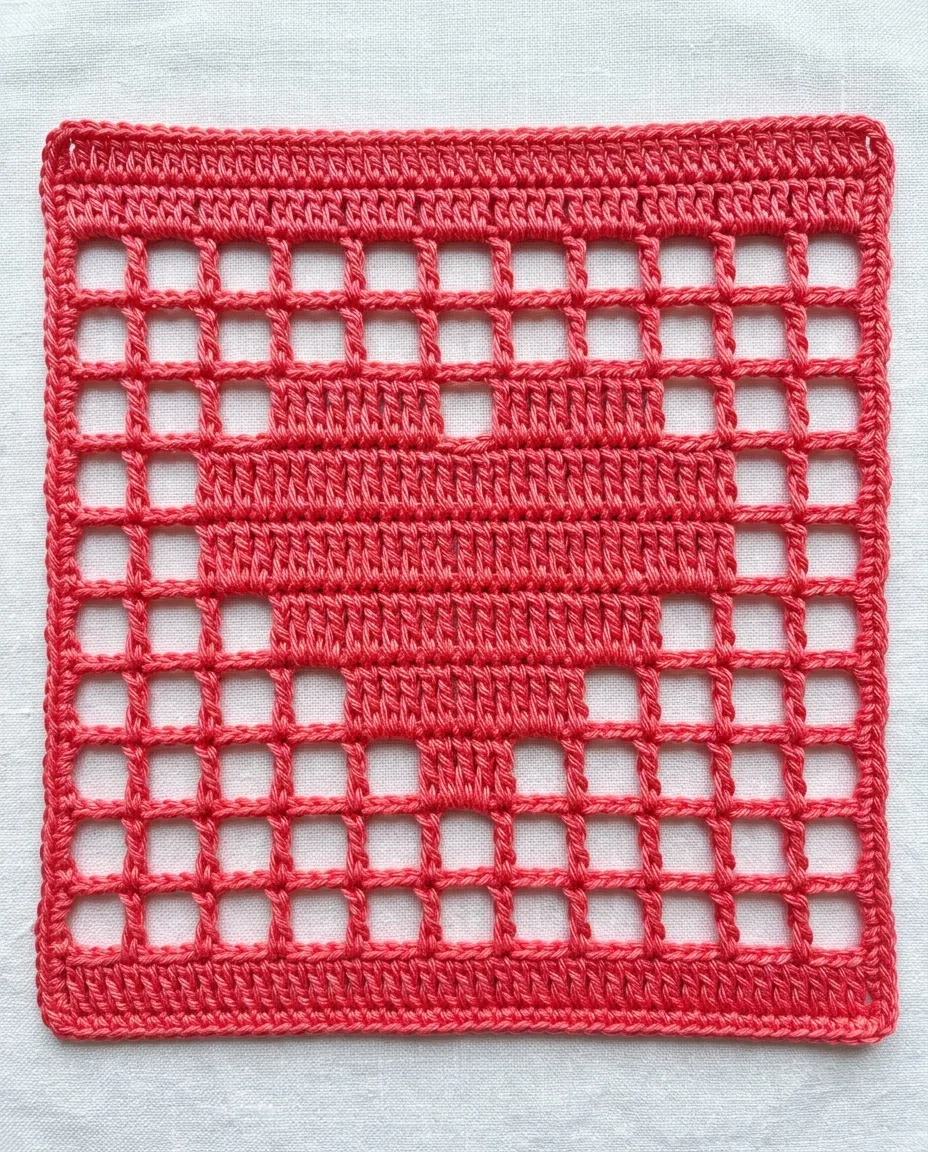
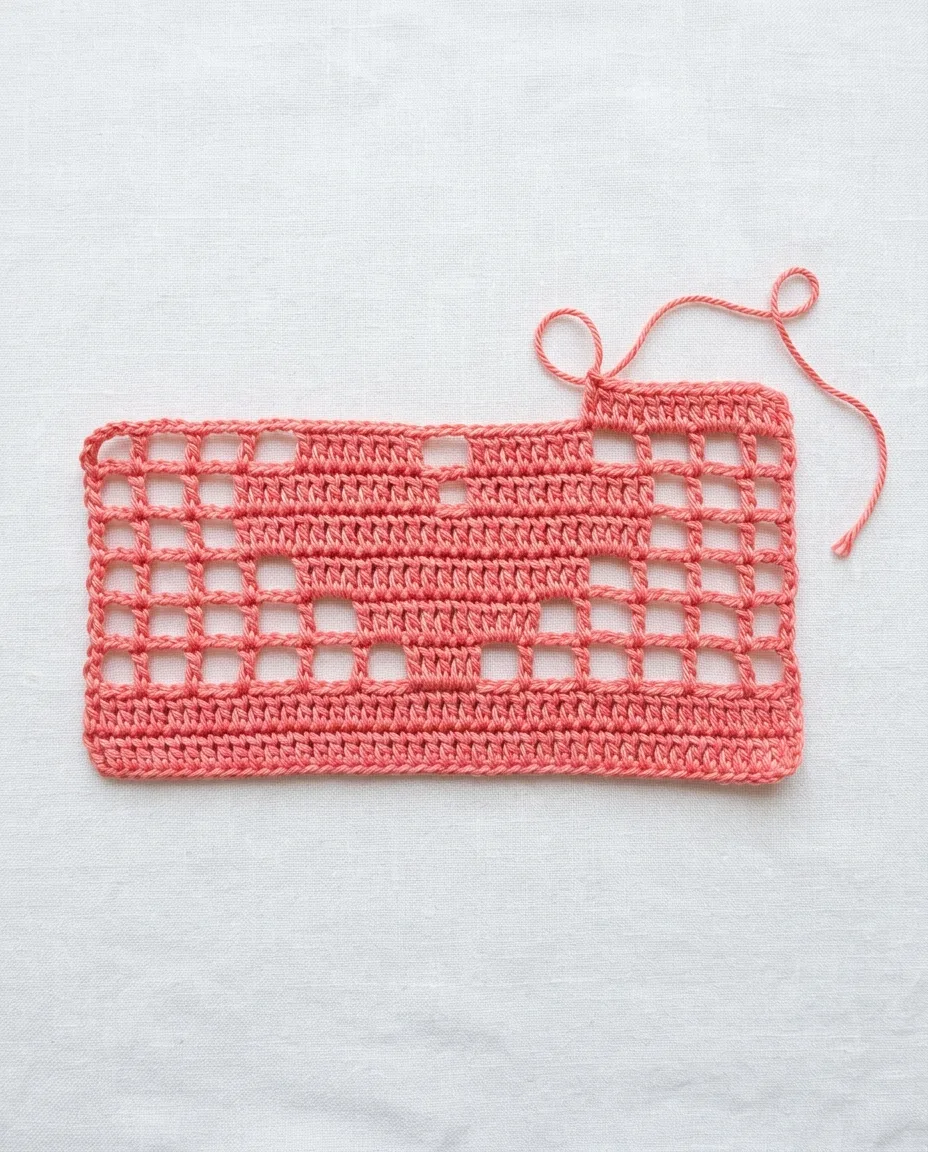
Ten rows make the whole square. Row 1 is a solid band. So is Row 10, and between them they frame the heart top and bottom while the open rows give it breathing room.
- ch 30, dc in 4th ch from hook and in each ch across (28 sts)
- ch 3, turn, 9 sp (28 sts)
- ch 3, turn, 4 sp, 1 blk, 4 sp (28 sts)
- ch 3, turn, 3 sp, 3 blk, 3 sp (28 sts)
- ch 3, turn, 2 sp, 5 blk, 2 sp (28 sts)
- ch 3, turn, 1 sp, 7 blk, 1 sp (28 sts)
- ch 3, turn, 1 sp, 7 blk, 1 sp (28 sts)
- ch 3, turn, 2 sp, 2 blk, 1 sp, 2 blk, 2 sp (28 sts)
- ch 3, turn, 9 sp (28 sts)
- ch 3, turn, 9 blk (28 sts)
After Row 10, fasten off and weave both tails in.
Don’t rush past Row 2. You want 9 windows in a line. Count 8? Then the last double crochet missed the turning chain, and it’s worth pulling the row back to catch it now rather than six rows later.
 Save
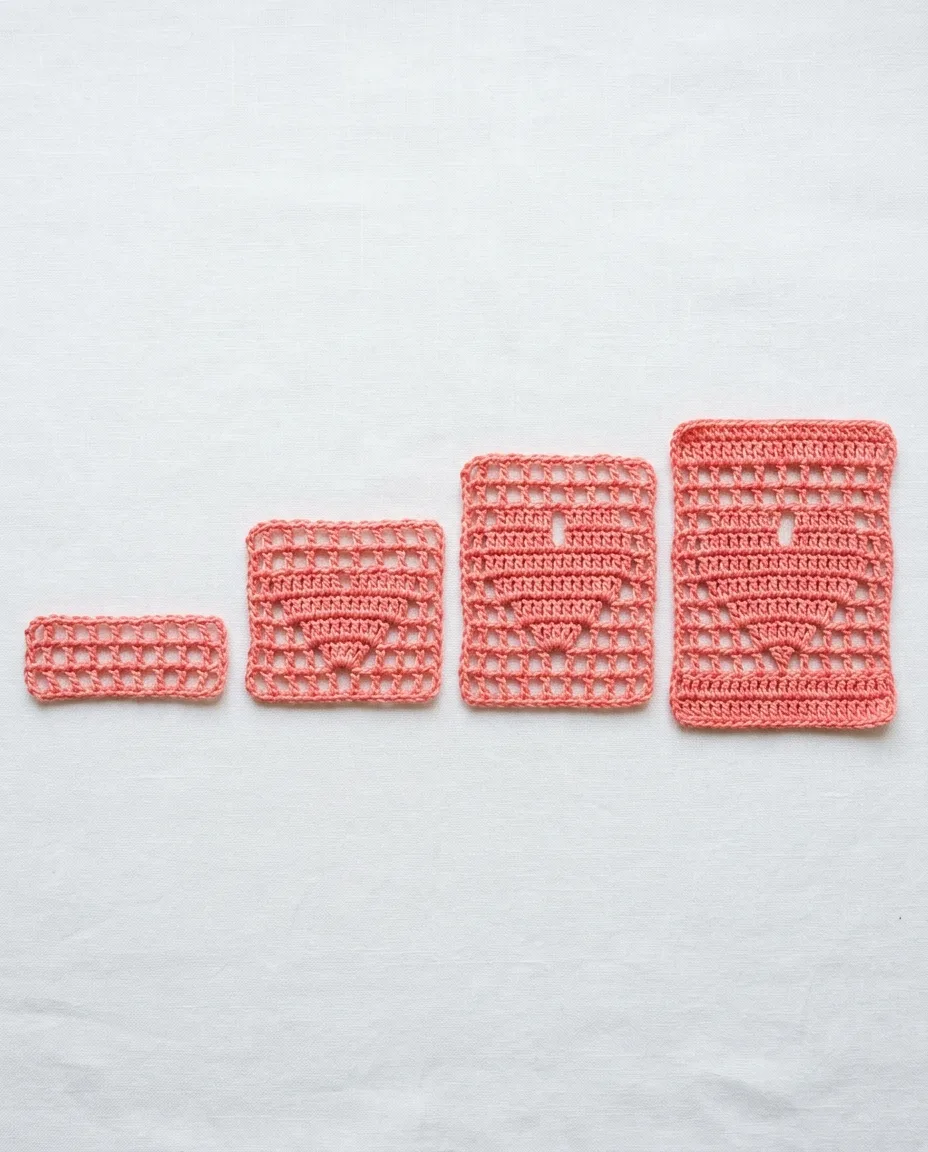
Row 3 drops one filled square dead center, 4 windows either side. Rows 4 and 5 spread it into a point, and by Row 5 the bottom of the heart is obvious. Rows 6 and 7 are the fat middle. Then Row 8 splits the top into two bumps with a single window between.
Lost your place? Happens to everyone. Lay the work flat with Row 1 at the bottom, count the windows in the last row and match it to the chart.
 Save
Where filet looks its best
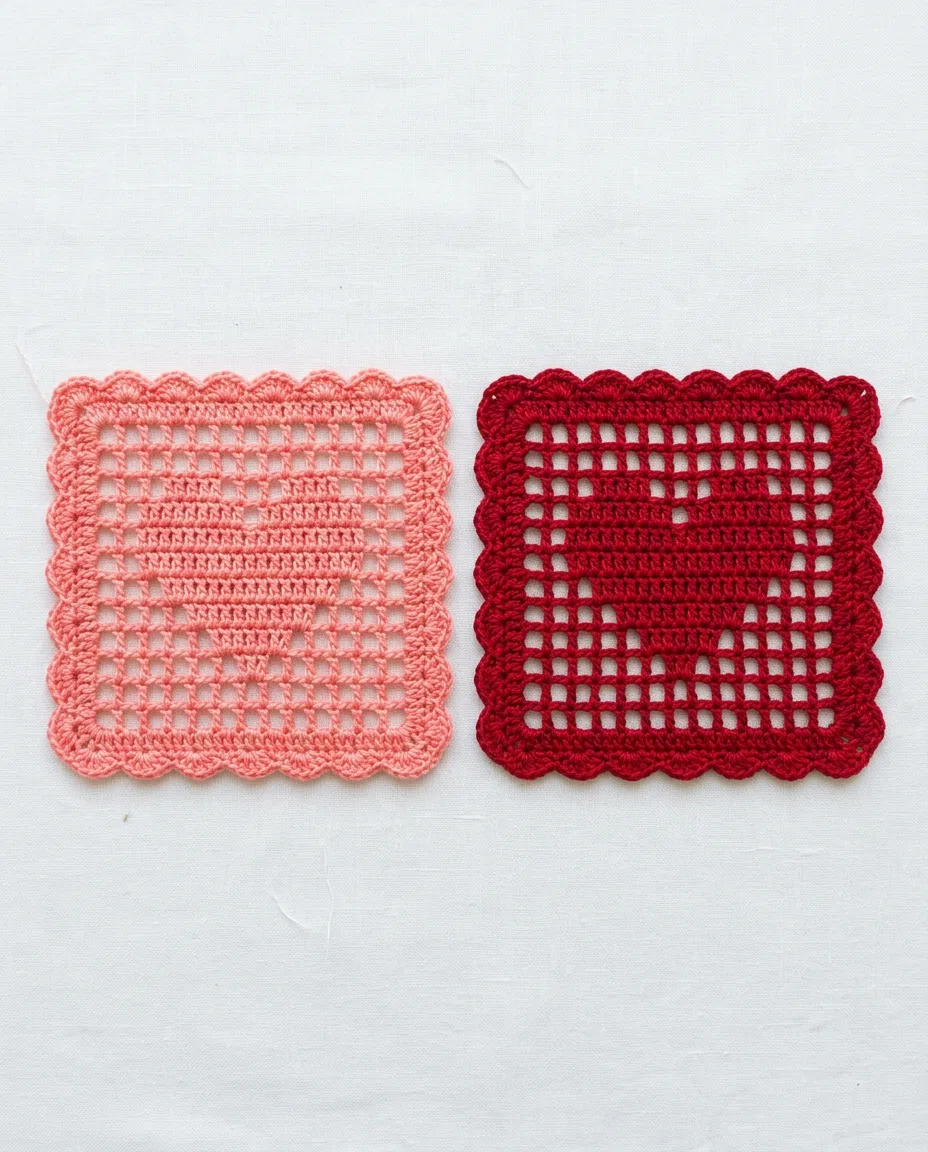
Anything that fills the holes hides the picture, since the whole thing is holes against solid. Fuzzy yarn does it. Dark yarn does it too. Variegated yarn is worse, because the color changes fight the shape. Smooth cotton in a light color keeps it sharp. Mercerized cotton, the slightly shiny kind, gives each square a crisp edge. Plain white or cream is the classic look for a reason.
But traditional filet isn’t worked in yarn at all. It’s fine thread on a steel hook around 1.5 mm, which makes tiny squares and very detailed pictures. Gorgeous. Slow, though, and hard on the eyes. Learn the counting in DK cotton on a 4 mm hook first.
 Save
The finished pieces go wherever a bit of lace fits. A heart square turns into a coaster or the front of a little sachet. Longer strips trim curtains and shelves. Hang a panel against a window and the picture reads from across the room, the light doing half the work.
When the squares lean or the picture slips
Sideways shift means a square went missing. Count the posts in the last row. Wrong number? Rip back to the row where the windows stop lining up.
No turning chain, no edge. Edges that creep inward almost always trace back to it: either the chain of 3 got skipped, or the last double crochet missed its top. Each slip costs one post per row. Same fix both times. Chain 3 to start, finish in its top.
Tall, skinny spaces come from tight chains. Make the chain 2 loose, about as wide as two double crochets side by side. Saggy spaces? The opposite problem. Snug the chains a touch.
Blocks over spaces sometimes bulge. Work the 2 double crochets into the gap itself, not into the chains, and they lie flatter. Blocking, which means wetting the finished piece and pinning it flat to dry, squares the grid up nicely. It won’t put back a missing post, though.
Try a diamond strip next
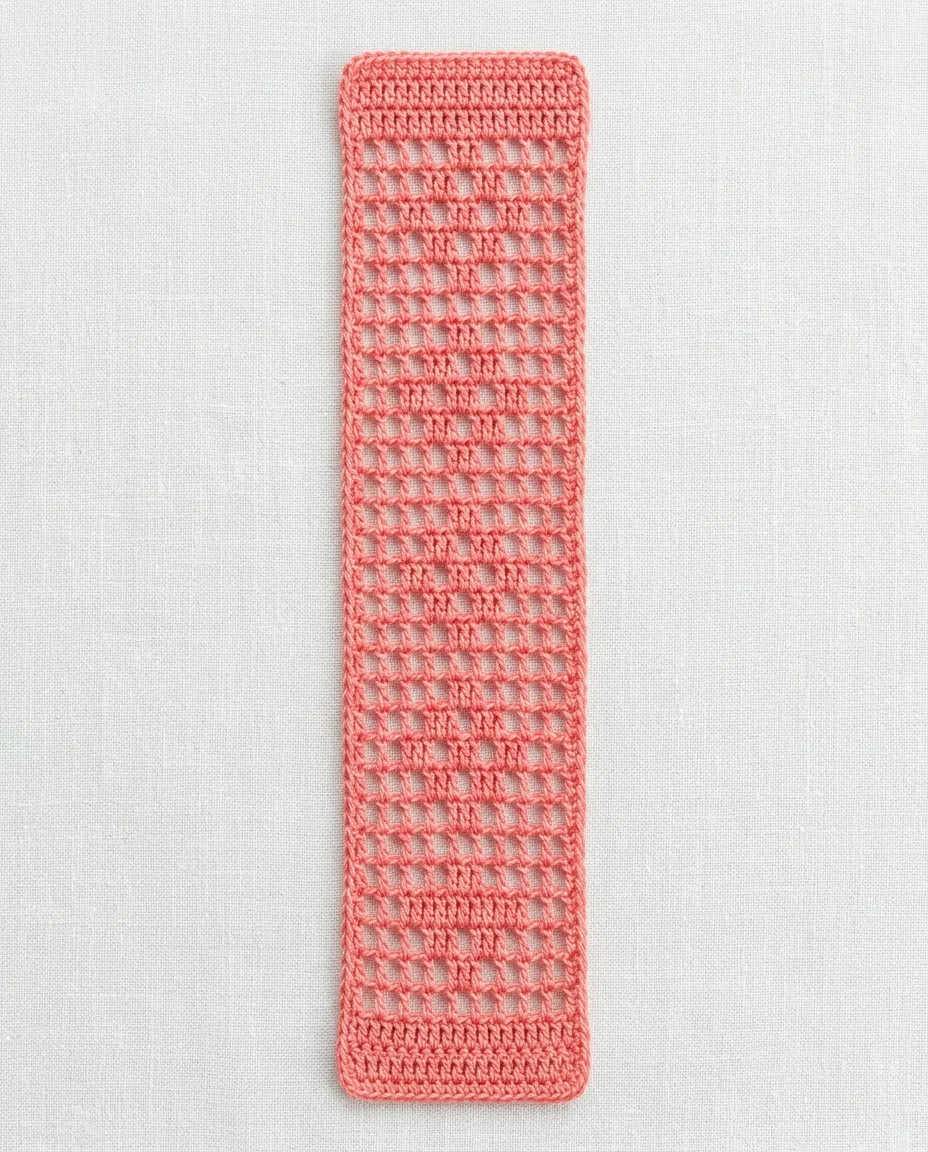
Once the heart behaves, try something narrow. This strip is 5 squares wide, good for a bookmark or a bit of trim. Same chain 3, same two squares. Nothing new to learn.
- ch 18, dc in 4th ch from hook and in each ch across 16 sts
- ch 3, turn, 5 sp 16 sts
- ch 3, turn, 2 sp, 1 blk, 2 sp 16 sts
- ch 3, turn, 1 sp, 3 blk, 1 sp 16 sts
- ch 3, turn, 2 sp, 1 blk, 2 sp 16 sts
Repeat Rows 2 to 5 until the strip is as long as you want it. Then one more Row 2, and a row of 5 blocks to close it off. You get diamonds three rows tall, each with a window row underneath.
 Save
Narrow strips curl when the chains are tight. Pin flat while damp, overnight.