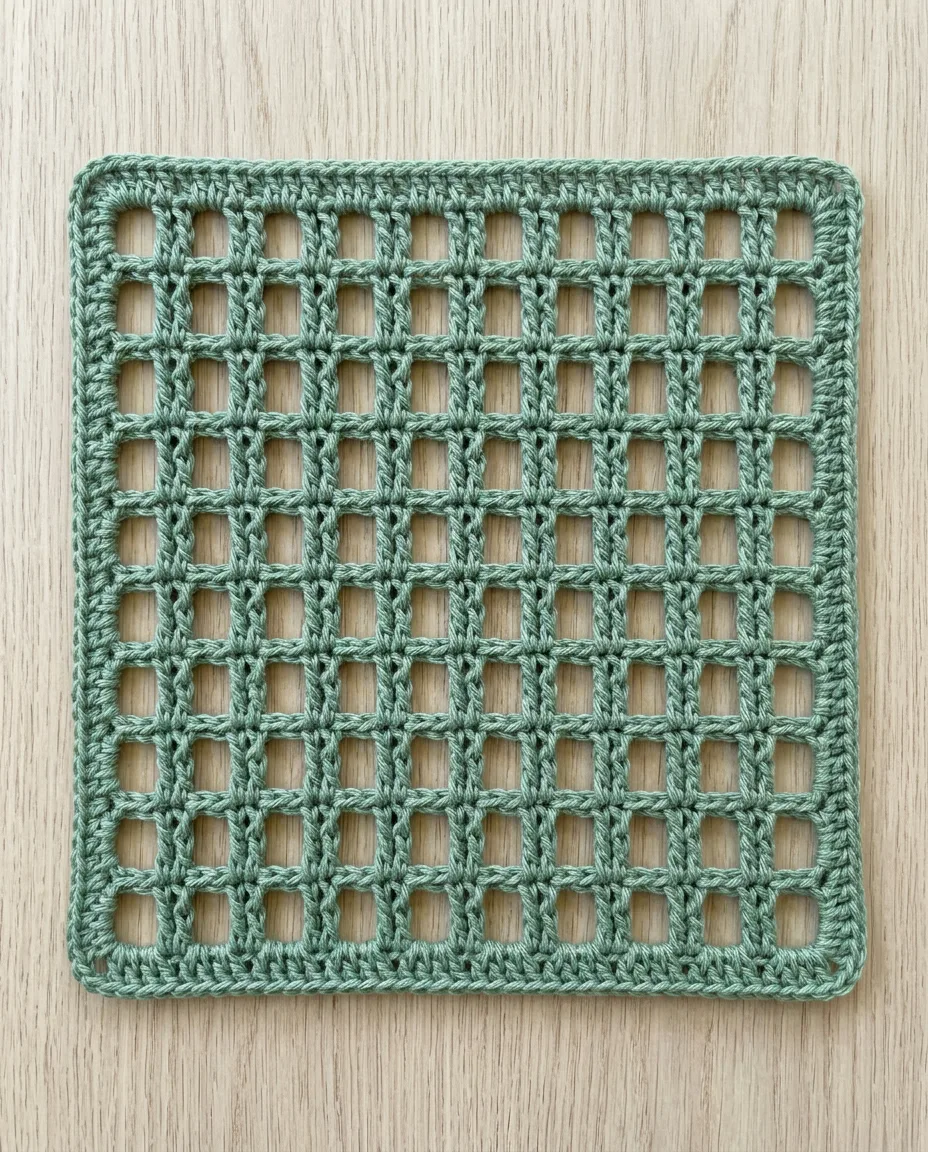
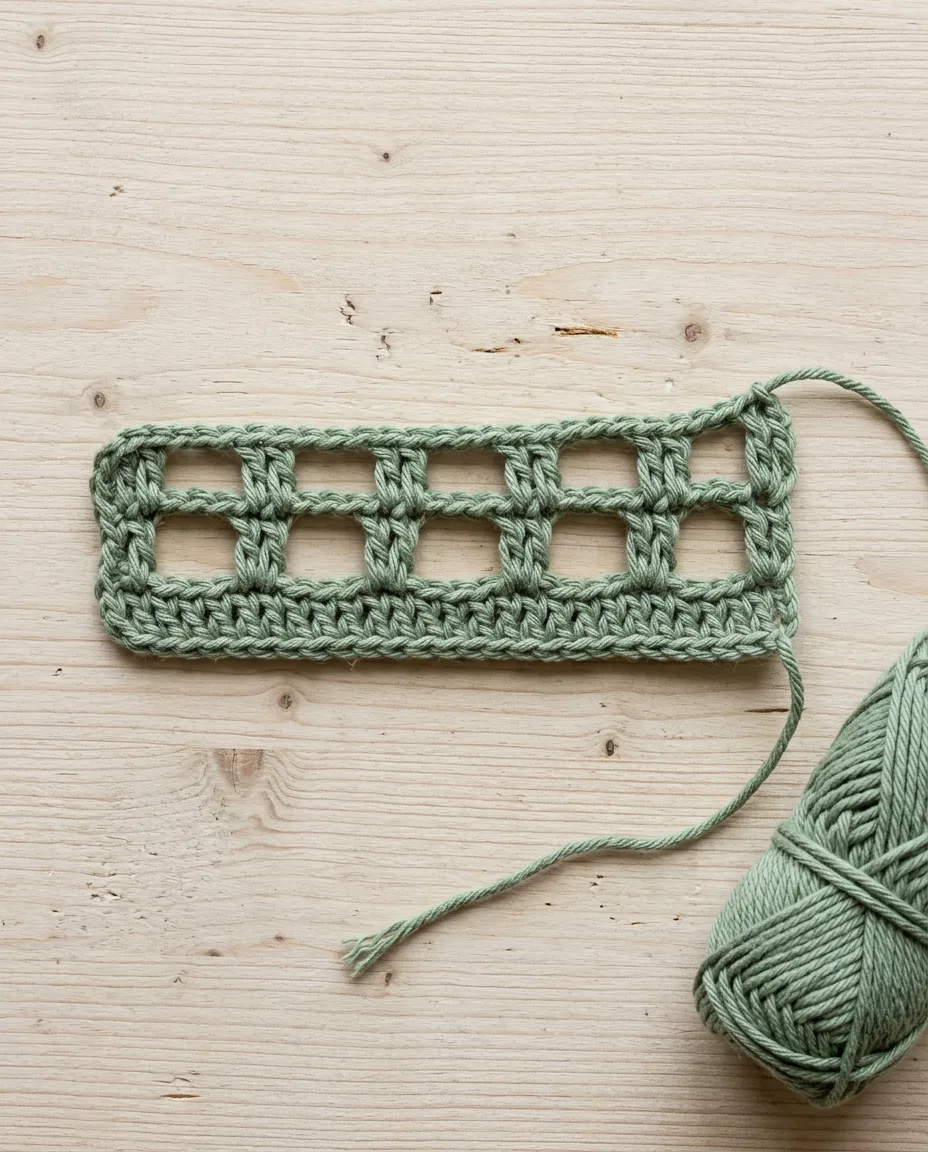
You want a fabric with holes in it on purpose. Light enough for a hot afternoon, and tough enough to haul six oranges home from the market. That’s mesh stitch. It looks like a grid of little square windows, and each window gets two double crochet posts for sides and one chain across the top.
Learning it is easy once the basics are in your hands. Can you chain and make a double crochet? Then you can make mesh. Keeping the squares square is the real work, and that’s mostly counting.
Start with worsted weight, the middle thickness on most yarn bands. It’s the friendliest size to practice with. Cotton helps too (every square shows up clearly in it). This little practice square is called a swatch. It tells you how big your windows come out before a real project eats a week of evenings.
Working the first two rows
- Chain 20. Loosely. A tight chain puckers the bottom edge.
- Count back 5 chains from the hook. Skip all of them.
- Wrap the yarn over the hook once. That wrap’s called a yarn over.
- Hook goes into the 6th chain from the hook.
- Yarn over, pull a loop through. Three loops on the hook now.
- Yarn over again. Through two loops. Two left.
- One more yarn over, through the last two. That’s one double crochet.
- Chain 1. There’s the top of your first window.
- Skip a chain. Double crochet into the next one.
- Same again: chain 1, skip 1, double crochet. All the way to the last chain.
- Now count posts. Nine, if the skipped chains at the start count as one. Got five or eleven? A skip went wrong somewhere.
- Turn. Chain 4. This turning chain, the short stack that lifts you up to the new row, counts as a double crochet plus its chain 1.
- Skip the first gap. Double crochet into the next post.
- Chain 1, skip the gap, double crochet in the next post. Across the row.
- Last double crochet goes into the edge chain. On Row 2 that’s the 4th of the 5 skipped chains. After that, the 3rd chain of each turning chain.
 Save
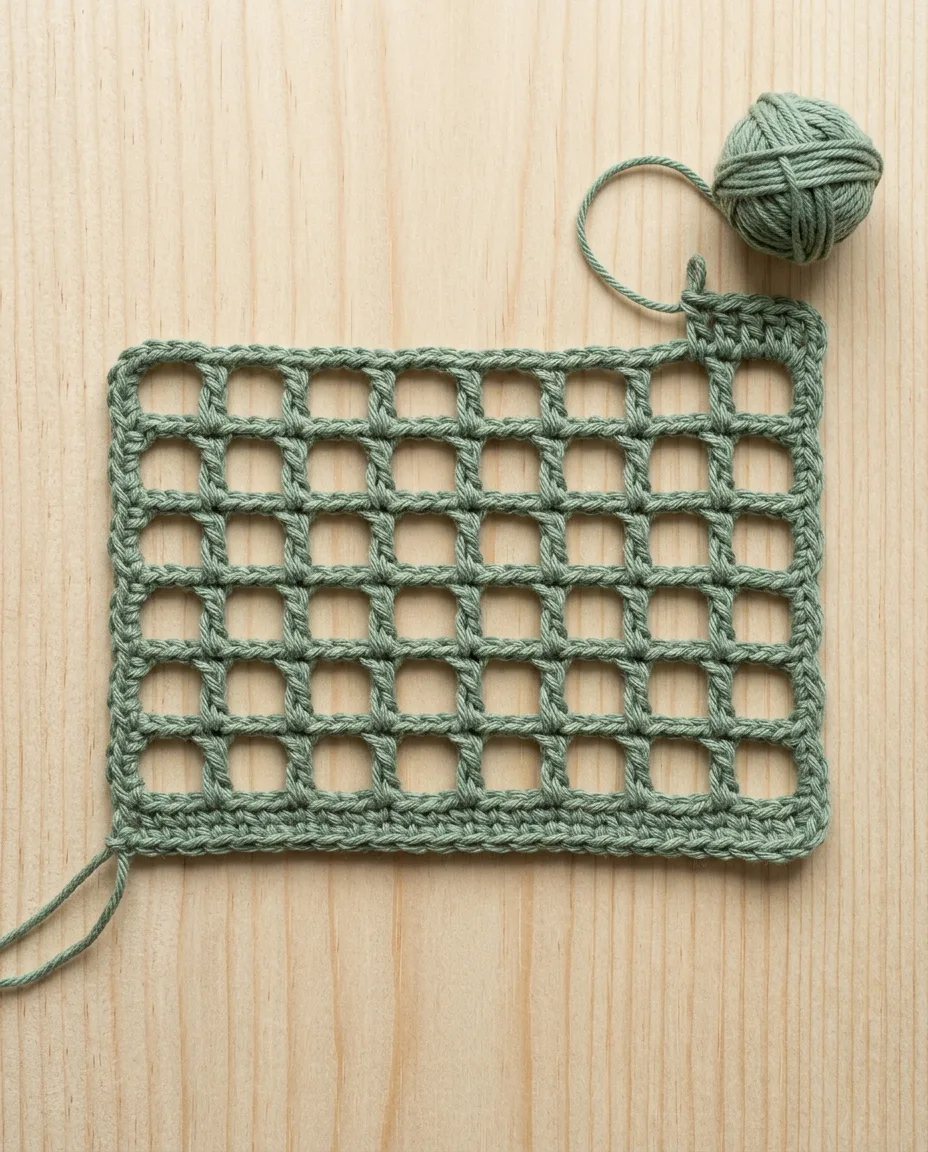
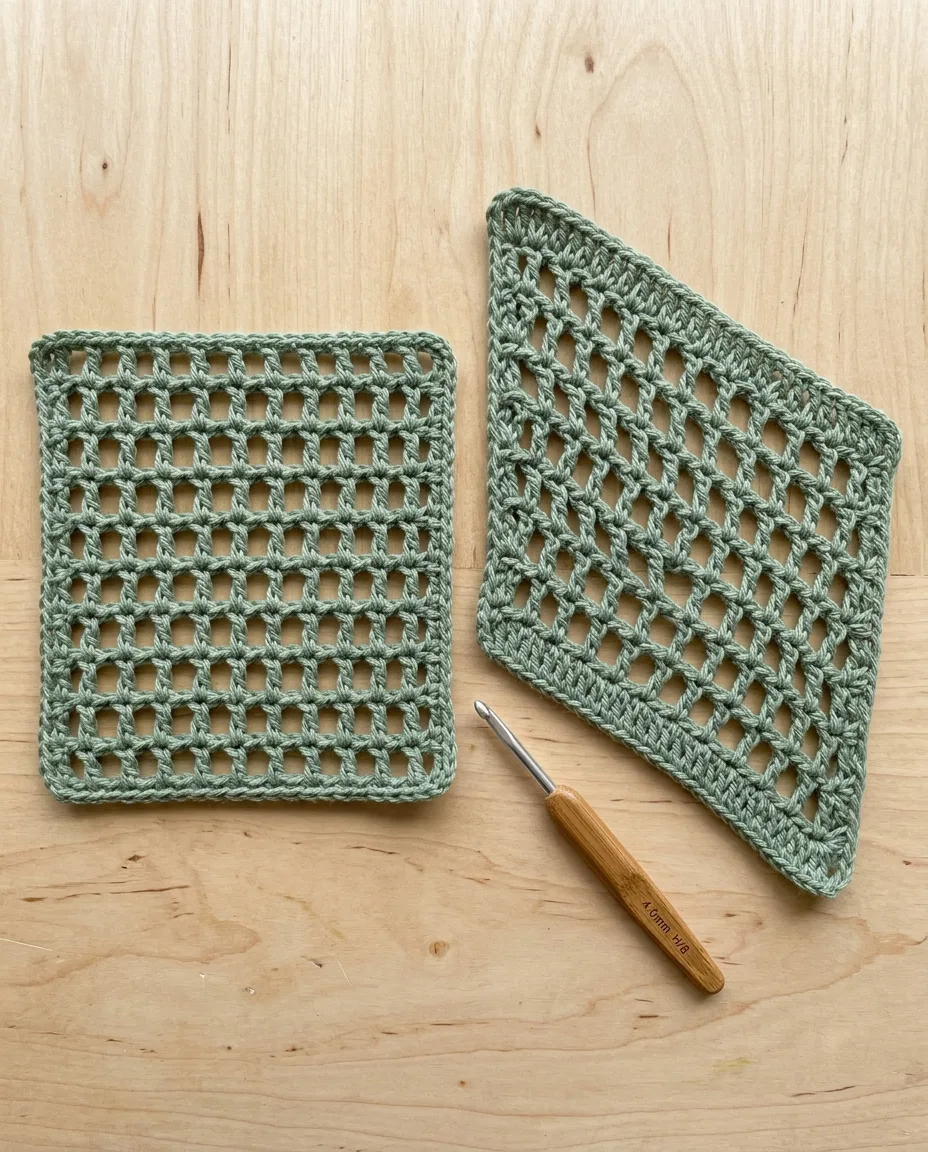
Every row after Row 2 is just Row 2 again. Posts on posts. Gaps on gaps. By Row 4 it should look like graph paper, and if it doesn’t, look for a post that landed in a gap. That one throws the next row sideways, and suddenly the windows are diamonds. Pull back to the last good row and count it again.
Eight windows across. That’s what this chain gives you, and the one people lose is the last one, at the edge. Why? The turning chain looks like a loose bit of chain, not a stitch, so the hook skips right past it.
 Save
Why bags and summer tops suit an open grid
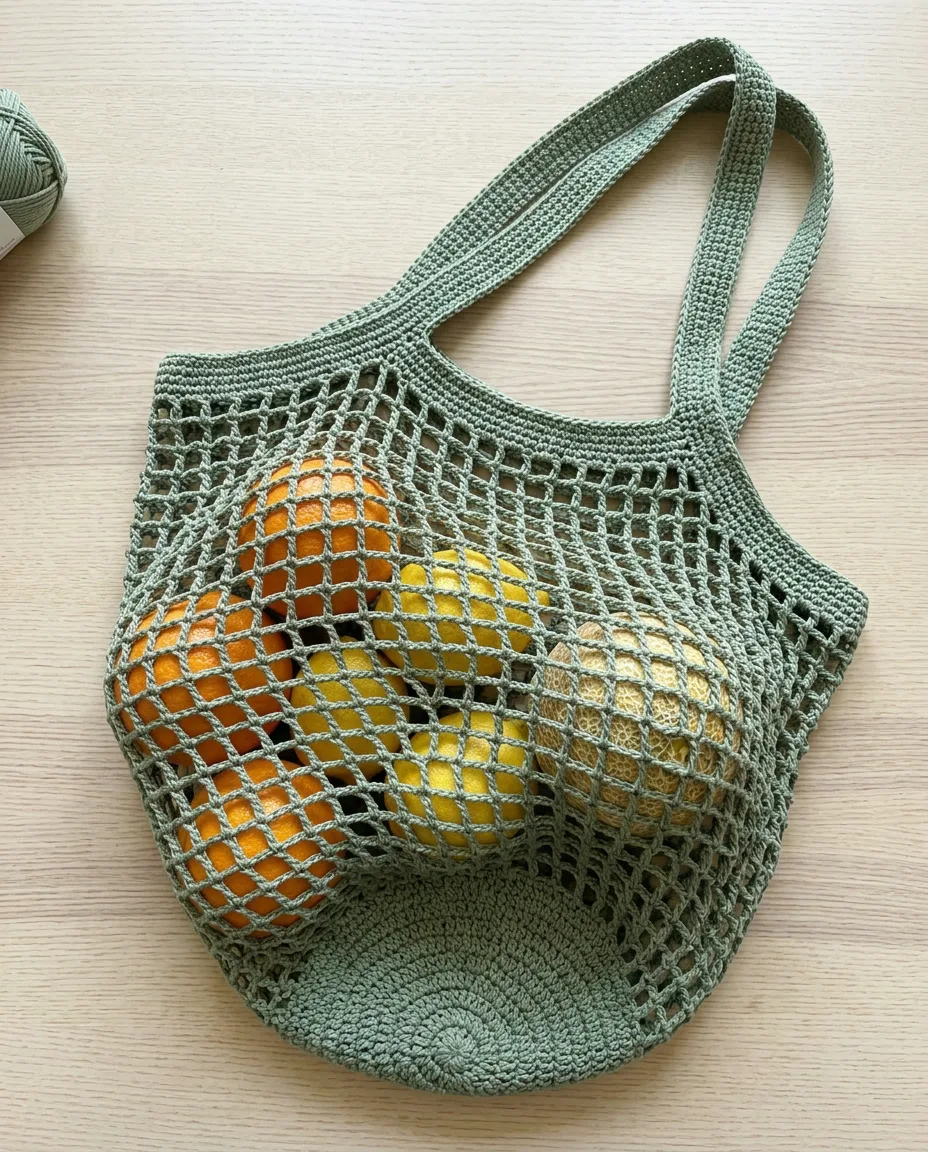
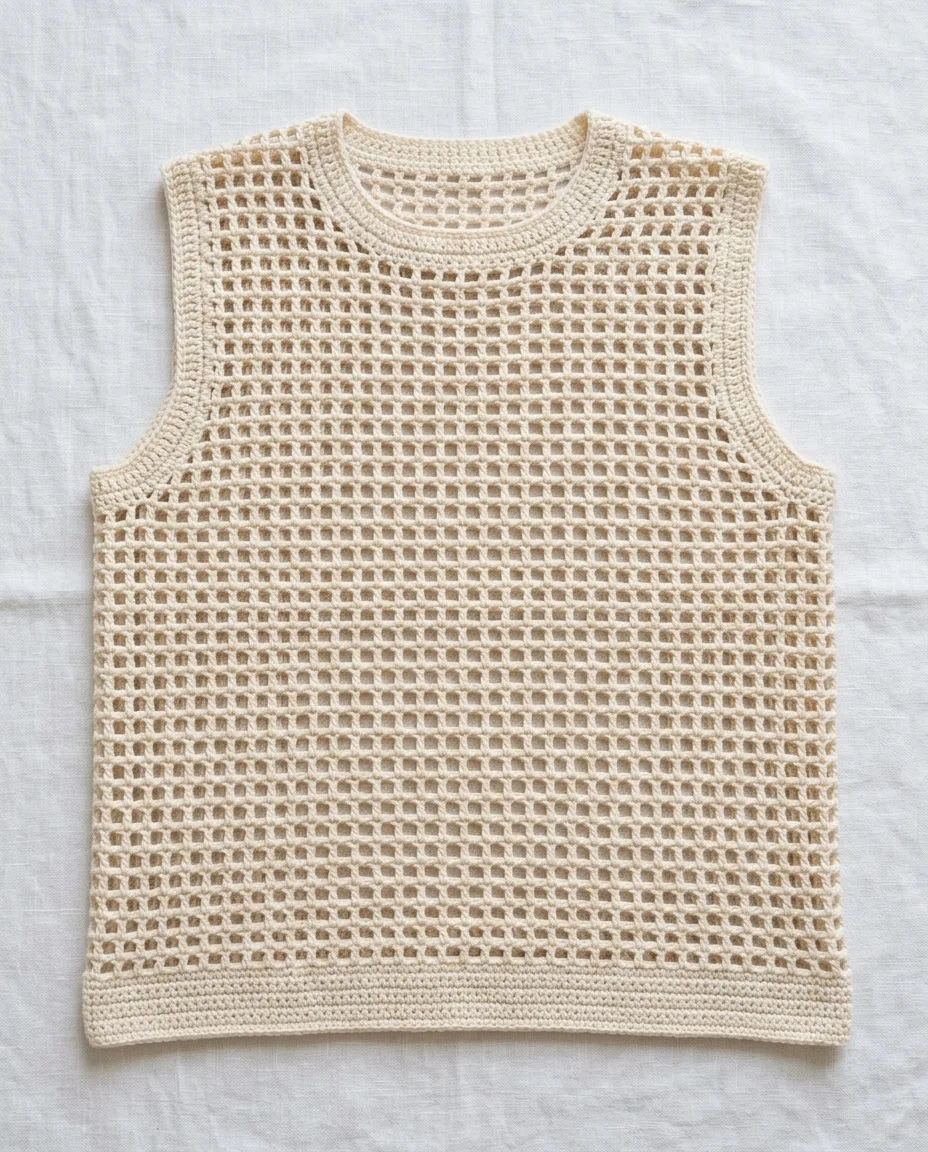
Holes let a fabric stretch. So a mesh bag starts flat and small, then opens up around whatever you drop in: melons, a towel, a water bottle. Over a tank or a swimsuit, that same openness lets air through. It stays cool.
And it’s fast. Each window takes one double crochet and one chain, so a row grows about twice as quickly as a solid row of double crochet. A bag body over a weekend is realistic.
 Save
Not every project wants holes, though. Keys fall through. Coins too. A fabric pouch inside the bag fixes that, and it’s worth sewing one. On a top the holes show whatever’s underneath (great for a beach cover-up, less great at the office).
 Save
Choose cotton and a bigger hook
Cotton holds the square shape. It shrugs off hot washes and doesn’t stretch out like acrylic does once a bag is full of shopping. That’s why it’s the classic pick for both projects. The catch is weight. A long top in worsted cotton can drop an inch or more after a few wears.
Making a top? Go lighter. Sport weight or DK yarn, a little thinner than worsted, drapes better against the body. Pair it with a hook one size up from what the band suggests, since mesh looks best a touch open.
For a bag, stick with worsted cotton and the 5 mm hook. Your tension, meaning how tightly you hold the yarn, matters more than hook size here. Hold it loose and the bag goes floppy. Then it sags to the floor every time you carry it.
Square windows or slanted ones
Slanting is the big one. The windows lean, and the whole piece turns into a parallelogram. Nearly always it’s the edge. Either the turning chain got skipped, or the last double crochet went into the wrong chain.
 Save
Count posts at the end of every row for the first ten rows. Slow? Yes. But a wrong count caught on Row 3 is one row to rip out. Caught on Row 15, it’s the whole piece.
Tall, skinny gaps mean the double crochets are getting yanked up too high. Pull that first loop up only as tall as the chain beside it. Short, squashed gaps are the opposite problem, and you loosen up a little. Blocking, which means wetting a piece and pinning it flat to dry, evens out small wobbles. It won’t rescue a grid that slants.
Taller mesh with treble crochet
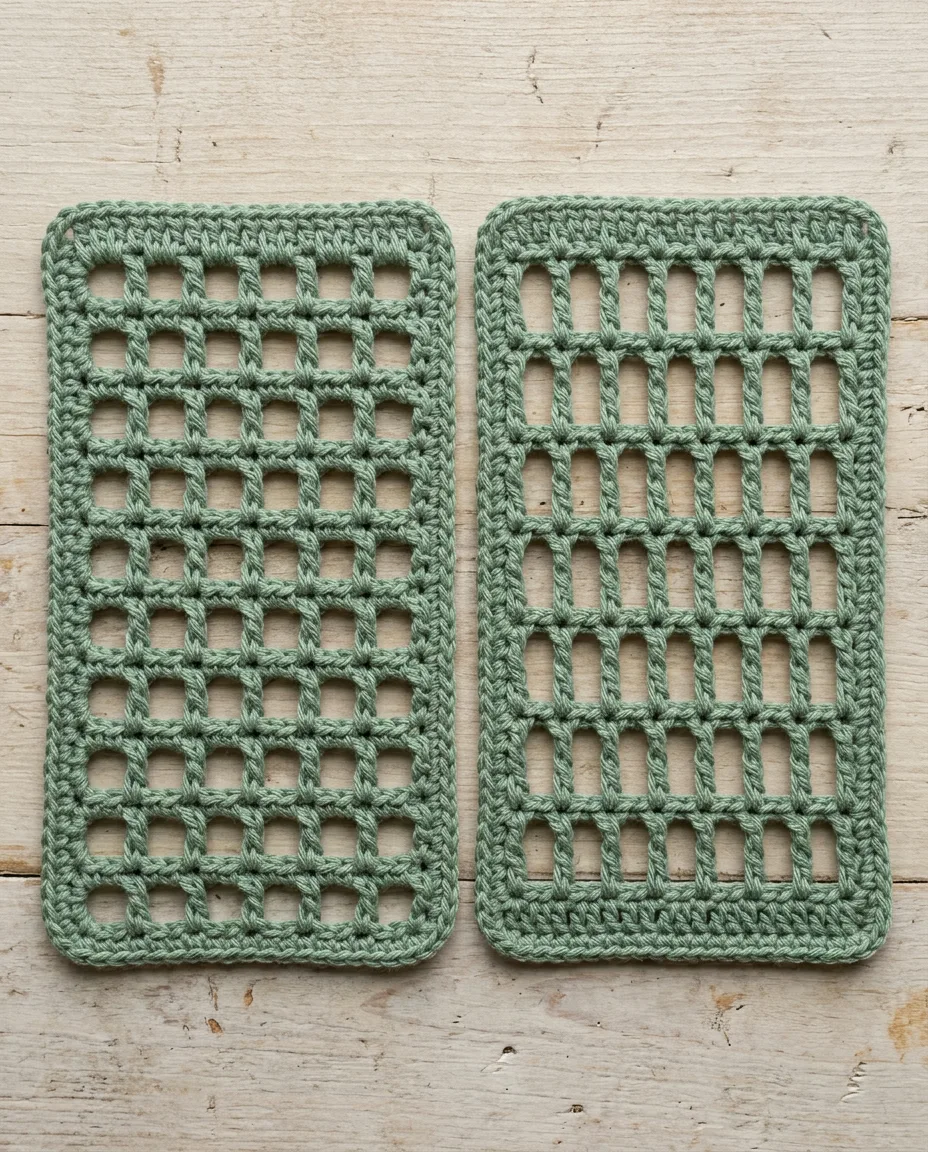
Swap every double crochet for a treble crochet and the windows stretch upward into slim rectangles. Those give even more. Good for a big tote that has to swallow bulky shopping.
A treble crochet starts with two yarn overs before the hook goes in. Push the hook into the stitch and pull a loop through. Four loops on the hook. Then yarn over and pull through two loops, three times running. The turning chain grows to chain 5, which counts as a treble plus its chain 1. Everything else stays put: chain 1, skip 1, between every pair of posts.
 Save
Strength is what you give up. Taller posts bend more, so a treble mesh bag slumps when it’s half empty. A band of solid rows at the top and bottom keeps it standing.
From swatch to market bag or top
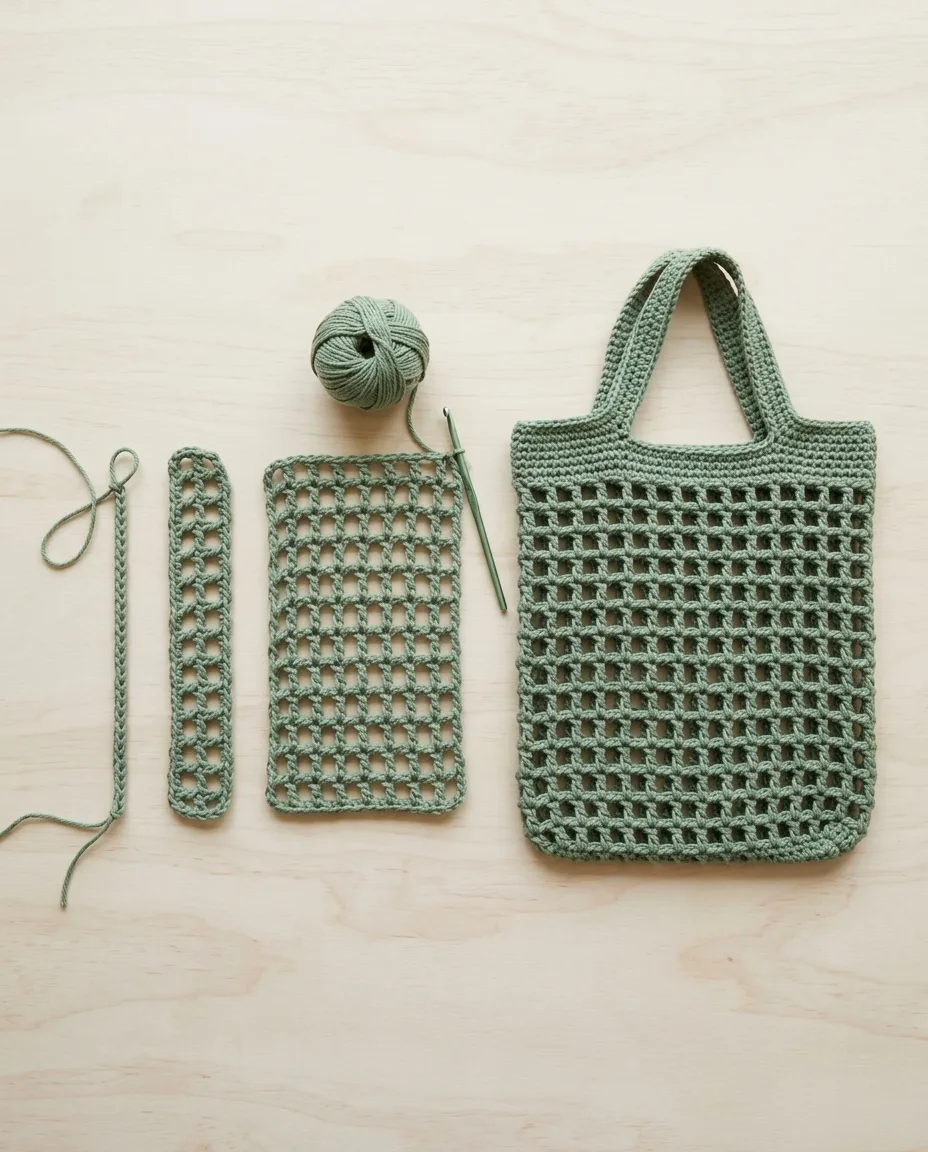
Wash your swatch once, then measure it flat. Cotton can shrink a little. Count how many windows fit across 4 inches and write it down. Now figure the windows you need for the width you want, double that, and add 4. That’s your starting chain.
Most market bags start with a solid base worked in rounds. Mesh rounds climb the sides, and a few rounds of single crochet make the handles. Single crochet is the short stitch: hook into the stitch, yarn over, pull up a loop, then yarn over and pull through both loops. The solid base matters more than it looks. Without it, round fruit rolls straight out the bottom. Tops can be simpler still. Two flat mesh rectangles, sewn at the shoulders and sides. Add a few solid rows at the hem so the edge won’t curl.
 Save
Weave your ends into a post. Chains in mesh are single strands, and a tail tucked into one works itself loose within a few washes. Posts are thicker, so they hide it. Gentle machine washing is fine for cotton. Dry a bag or top flat, though, or the weight of the water pulls the grid long.