Cotton on the couch, a dishcloth half planned, and single crochet crawling along. Then the crocheter switches to the suzette stitch. By the time the kettle boils, the cloth is way taller than expected. That’s the appeal in one evening.
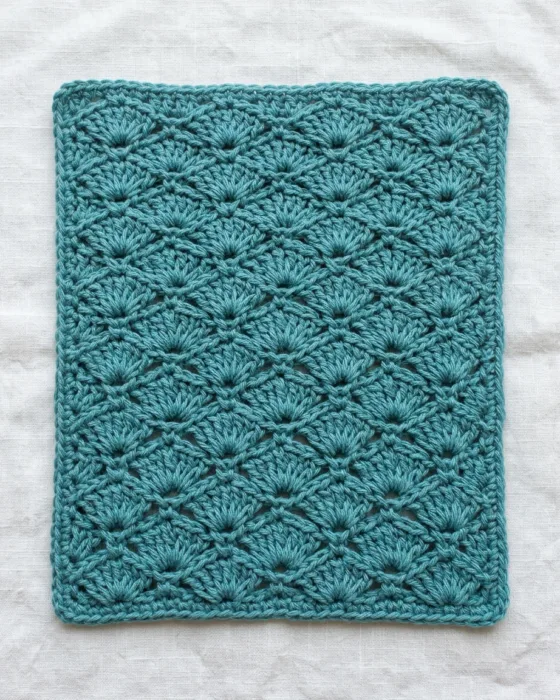
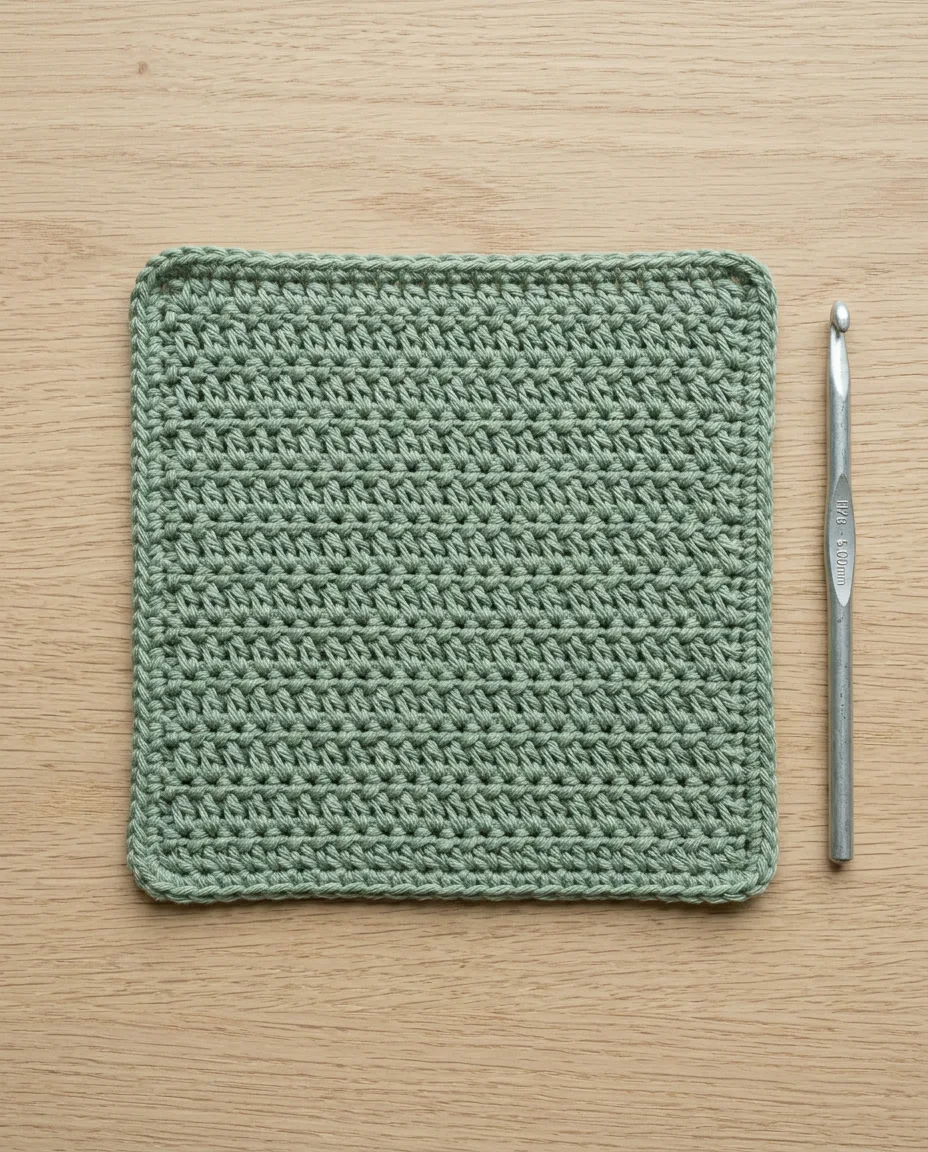
You get a dense, pebbly fabric covered in little tilted bumps, a bit like grains of rice. Each pair is one single crochet and one double crochet sharing a stitch, with a skip after it. The short stitch and the tall one lean into each other. And because every row is taller than plain single crochet, the piece climbs fast. Only two basic stitches go into it. If you can chain, you can do this (honestly, it’s a gentler first texture than most).
Worsted weight yarn is the medium thickness most shops treat as their default. Pick a light shade. It matters more than it sounds. Dark yarn blurs the pairs together and you won’t be able to tell which bump is the single crochet. The V-stitch guide breaks the whole project into steps.
How to work the suzette stitch
One pair per stitch, one skip after each pair. Keep to that and the count never changes. Skim the steps once first, then work along.
- Slip knot, then chain 18.
- Hook into the second chain from the hook.
- Yarn over, pull up a loop. Two loops on the hook.
- Yarn over again and pull through both. One single crochet.
- Now the tall one. Yarn over first.
- Back into that same chain.
- Yarn over, pull up a loop. You’ll have three loops now.
- Yarn over, through two. Two left.
- Yarn over, through the last two. That’s a double crochet, snug beside the single.
- Skip the next chain.
- Same pair again in the chain after it.
- Skip, pair, skip, pair, all the way across. The last pair lands in the very last chain.
- Chain 1. Turn.
- Skip the first stitch. It’s a double crochet.
- Pair into the next single crochet.
- Skip every double, pair into every single, right to the end.
Your slip knot is just the adjustable loop every piece starts from. And when the steps say yarn over, that means wrapping the yarn over the hook from back to front. Here are the same rows in short form.
- (sc, dc) in 2nd ch from hook, *sk 1 ch, (sc, dc) in next ch; rep from * across 18 sts
- ch 1, turn, sk first dc, *(sc, dc) in next sc, sk next dc; rep from * ending (sc, dc) in last sc 18 sts
- repeat Row 2 for every row after this 18 sts
Count at the end of each row. Nine pairs, 18 stitches. Got 8? Then a pair went into a double crochet by mistake, or the last pair got skipped. That final single crochet at the edge hides under its own double crochet, so dig for it before you turn. Tug the double gently aside. The single is the shorter bump tucked behind it. Found it? Good. Pair into it, and the row is done. There is a fuller walkthrough in the guide to the granny stitch in rows.
 Save
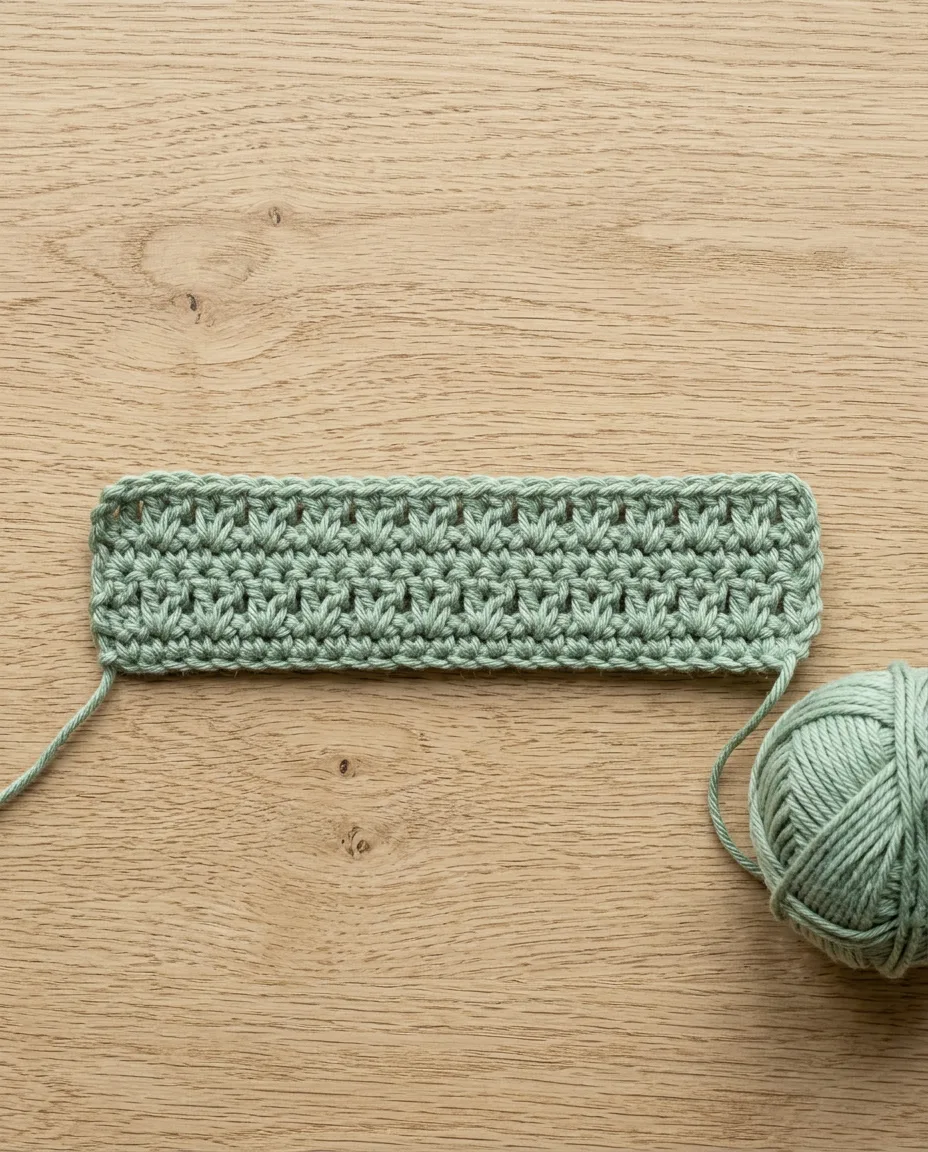
What the first rows look like
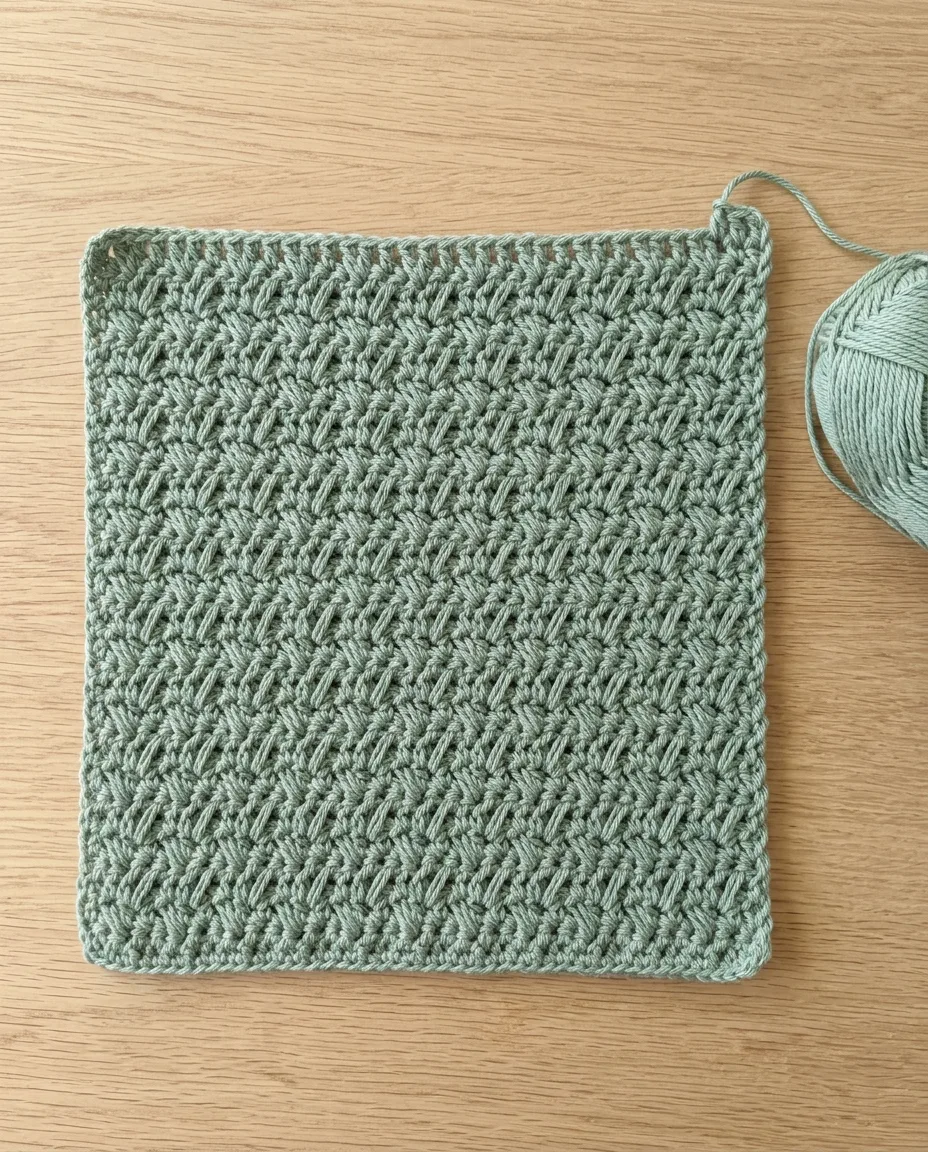
Row 1 looks lumpy. Don’t worry. The texture only shows up on Row 2, once each new pair drops into the gap beside a double crochet below it. Give it 4 rows and the slanted pairs settle into tidy columns.
Watch the bottom edge, though. If the foundation chain (the row of chains everything hangs from) is tight, the swatch (your small test piece) fans out like a dustpan. Loosen your grip while chaining. Or chain with a hook one size up and switch back for Row 1.
 Save
Where the suzette stitch shines
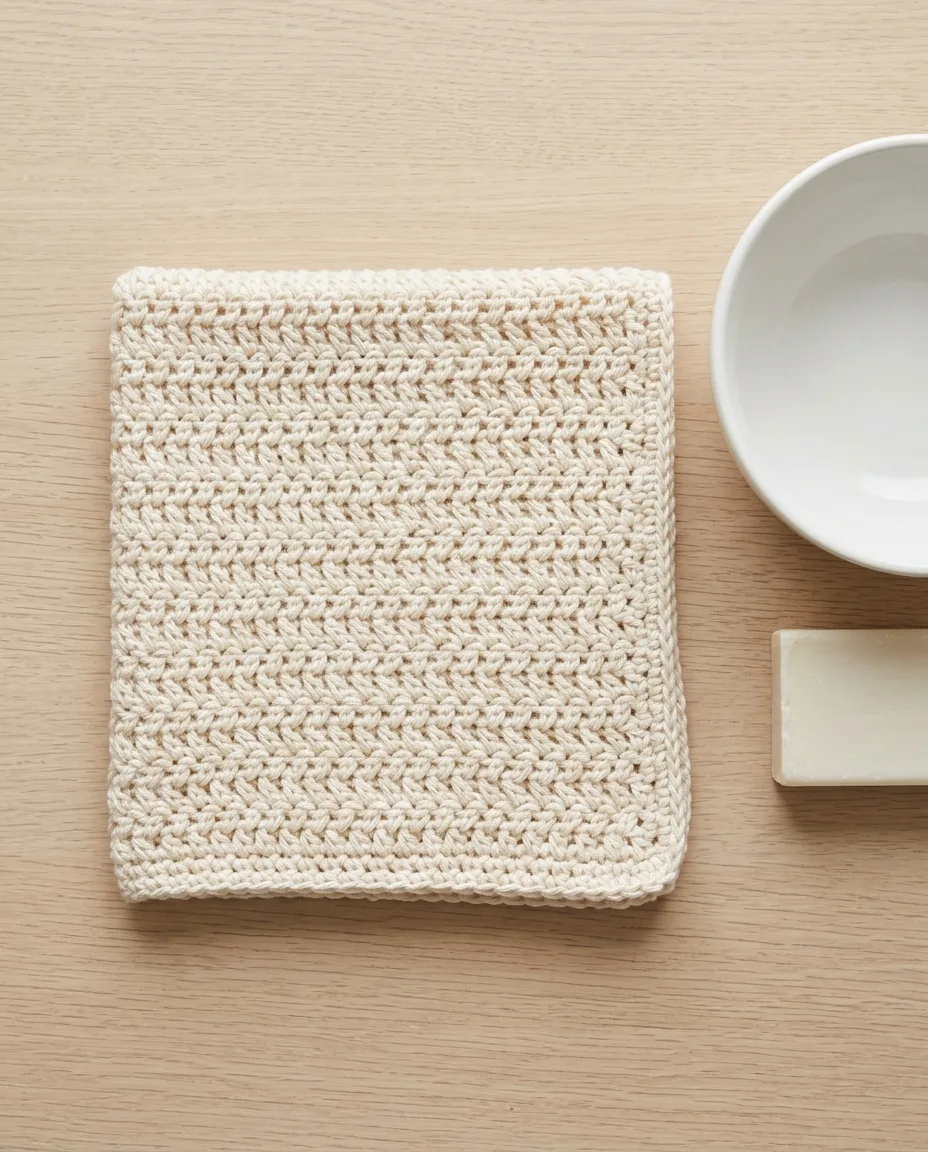
Nothing beats it for dishcloths. There are no big holes and the fabric is thick enough to scrub with. Use cotton for them. Acrylic just pushes water around.
Blankets are the other big win. A baby blanket grows faster than one in plain single crochet, since each row stands taller. It’s warm, too. But it’s heavy, and a big throw will eat a lot more yarn than a lacy pattern of the same size.
 Save
Scarves? Fine choice.
Bags and baskets hold up well because the fabric barely stretches. Want a stiff basket? Go one hook size smaller than the yarn band suggests. For a scarf the selling point is different. Both sides of the fabric look nearly the same, which suits something that flips around your neck all day. Just keep it narrow, since the stitch is dense and a wide scarf in heavy cotton hangs like a towel.
If your edges start to drift
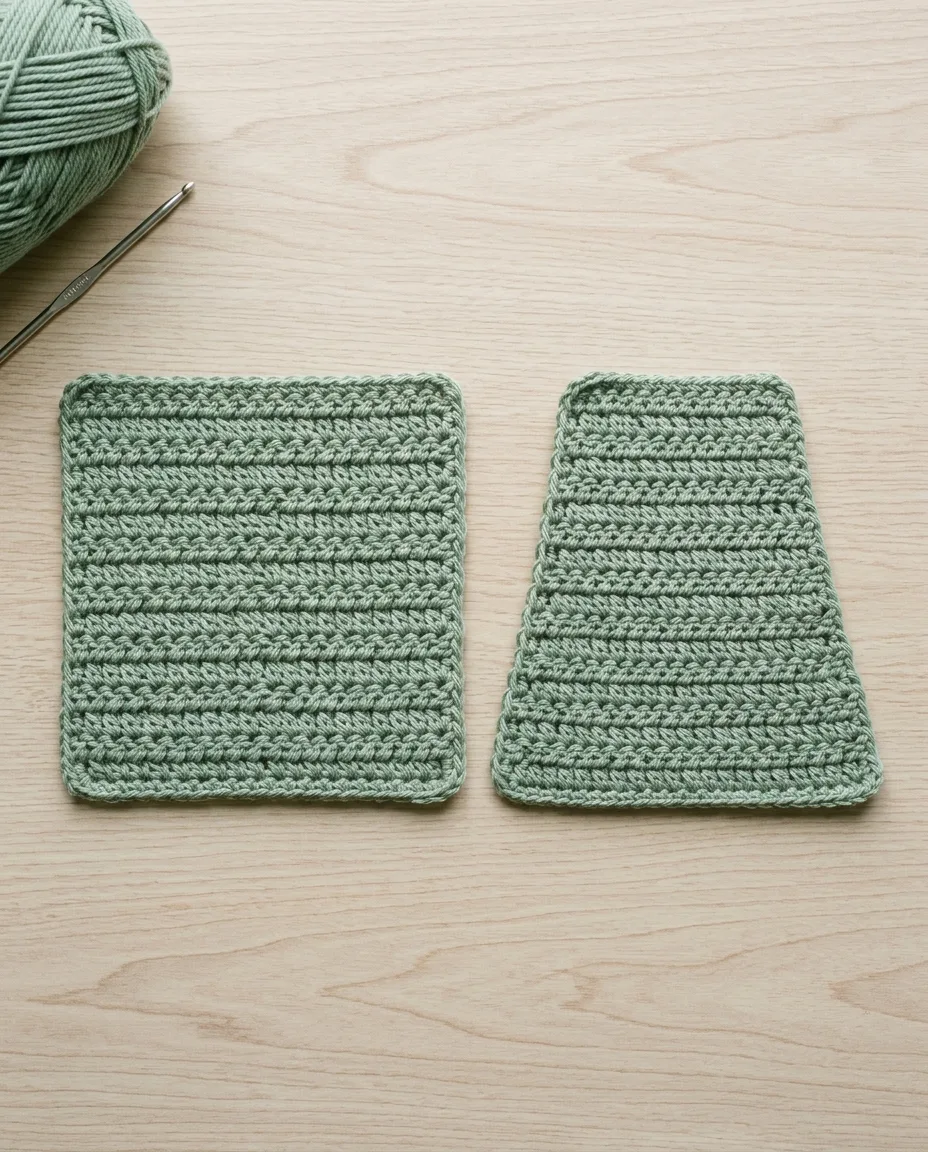
Slow narrowing (or slow widening) is the classic suzette problem. Nearly always it’s the edges. Each row starts on a double crochet that gets skipped. Each row ends in a single crochet that’s very easy to miss.
So count your pairs at the end of every row for the first 6 rows. After that your hands learn where the edge stitches sit. Narrower? You skipped that last single crochet. Wider means you worked into the first double crochet when you should’ve skipped it. The guide to treble crochet for drapey rows covers the whole method.
 Save
Uneven tension shows up here as well. Tension is simply how tightly you hold the yarn as it feeds onto the hook, and when it wanders some pairs come out taller than others. Blocking, which means wetting the finished piece and pinning it flat to dry, smooths out the small bumps. Not the big ones.
Stripes in two colors
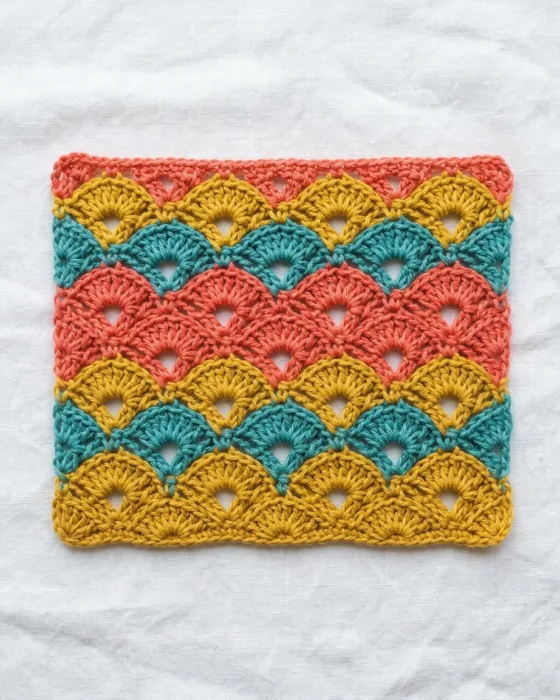
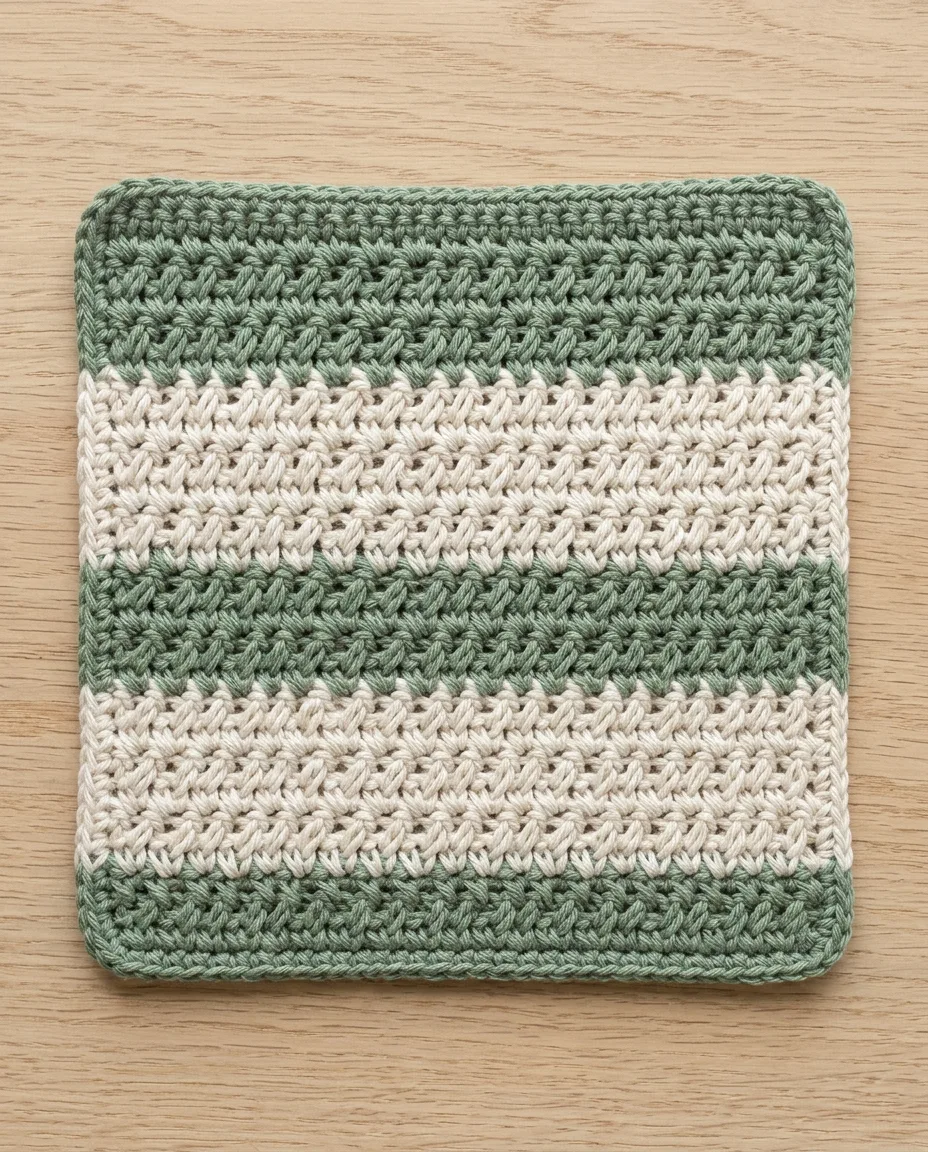
Here’s where the stitch gets fun. Each row is one color, and the new pairs tuck into the gaps of the old row. So the color line comes out zigzagged rather than ruler-straight.
The swap happens inside the last double crochet of a row. Work it until the final yarn over. Then pull the new color through those last two loops. Cut the old color with a tail of about 4 inches, 10 cm, for weaving in later. Two rows of each color give the boldest zigzag. They read best from across a room.
 Save
From chain to finished swatch
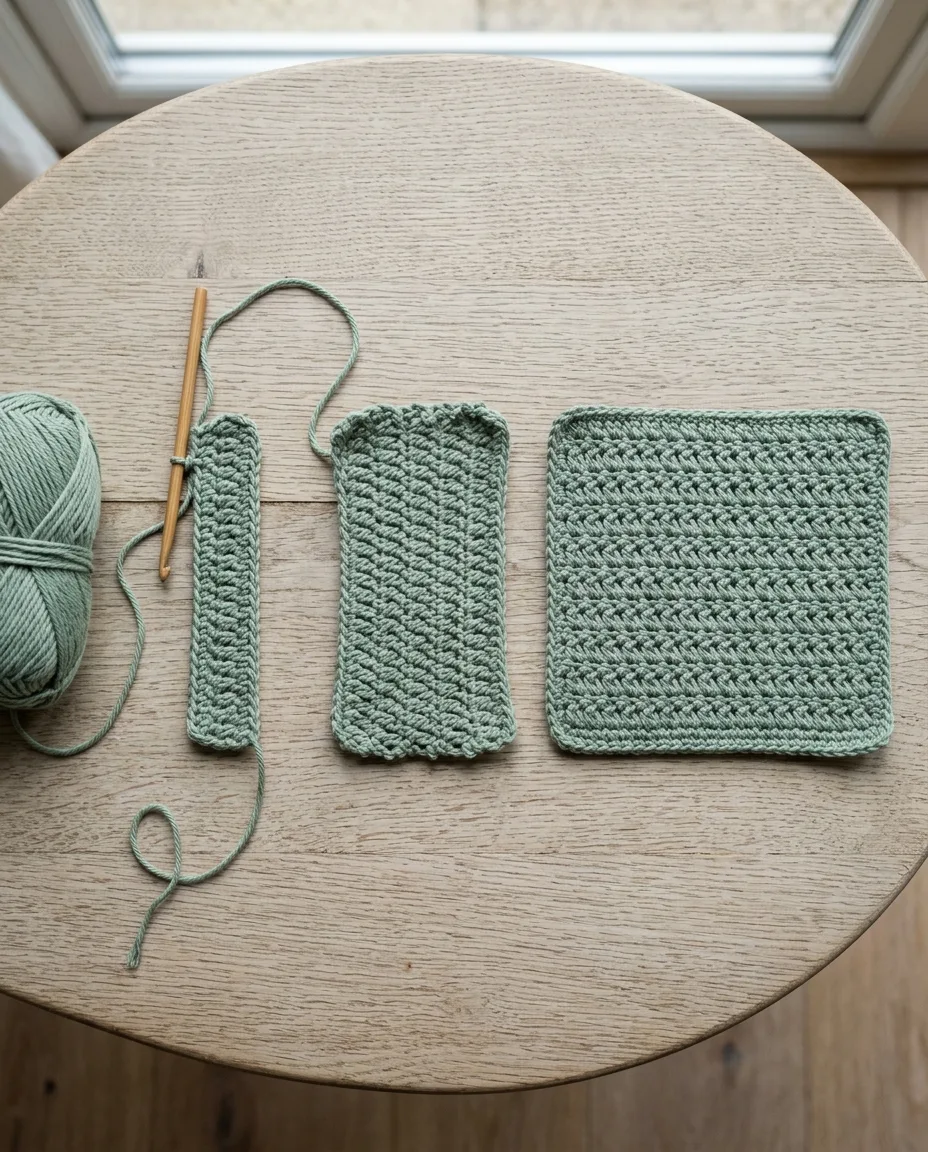
Make a small test square before anything bigger. Keep adding rows until it’s as tall as it is wide. Then measure it. Your hands may work tighter or looser than the next person’s, and that changes how many chains a real project needs. Weave in the ends with the yarn needle when you’re done.
Yarn changes the look a lot. Cotton shows every pair crisply and holds a firm shape. Acrylic comes out softer, with rounder bumps. Fuzzy or dark yarn hides the stitch completely, so save those until you can work it without looking.
 Save
Ready for a dishcloth? Chain 36 instead of 18. That doubles you to 18 pairs. Keep going until it’s square.