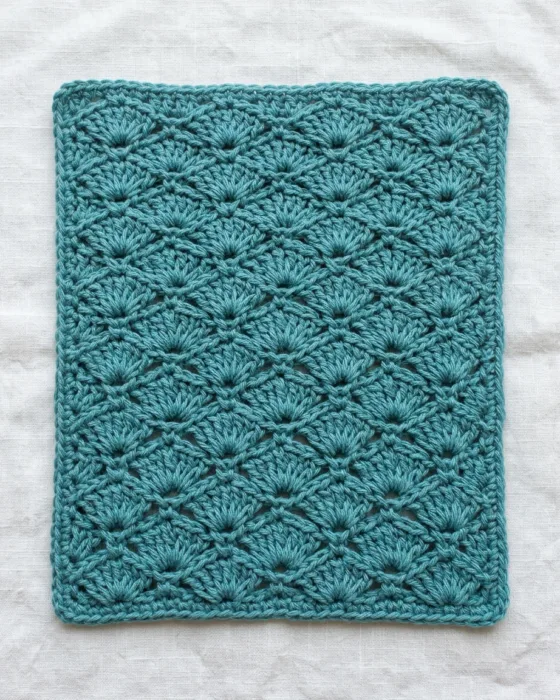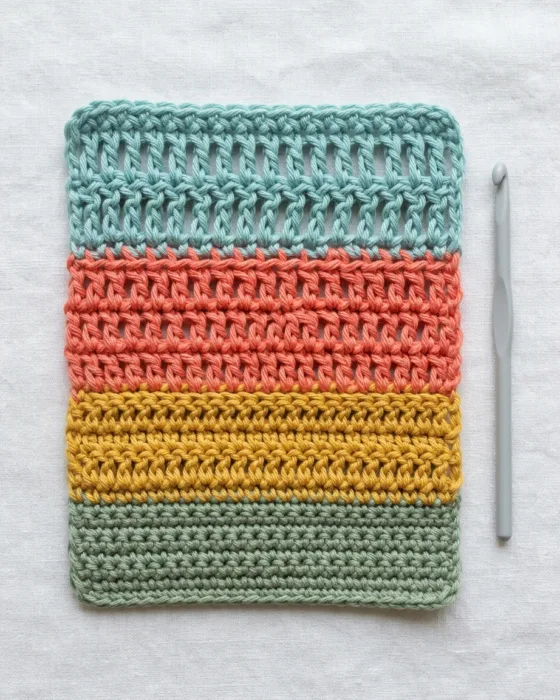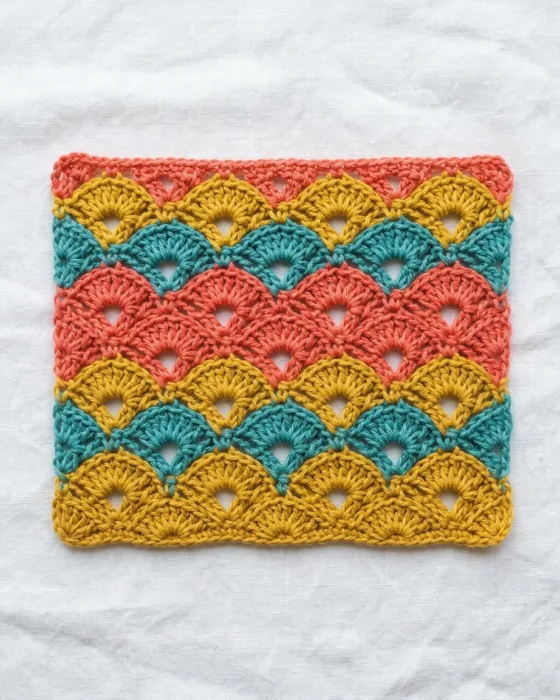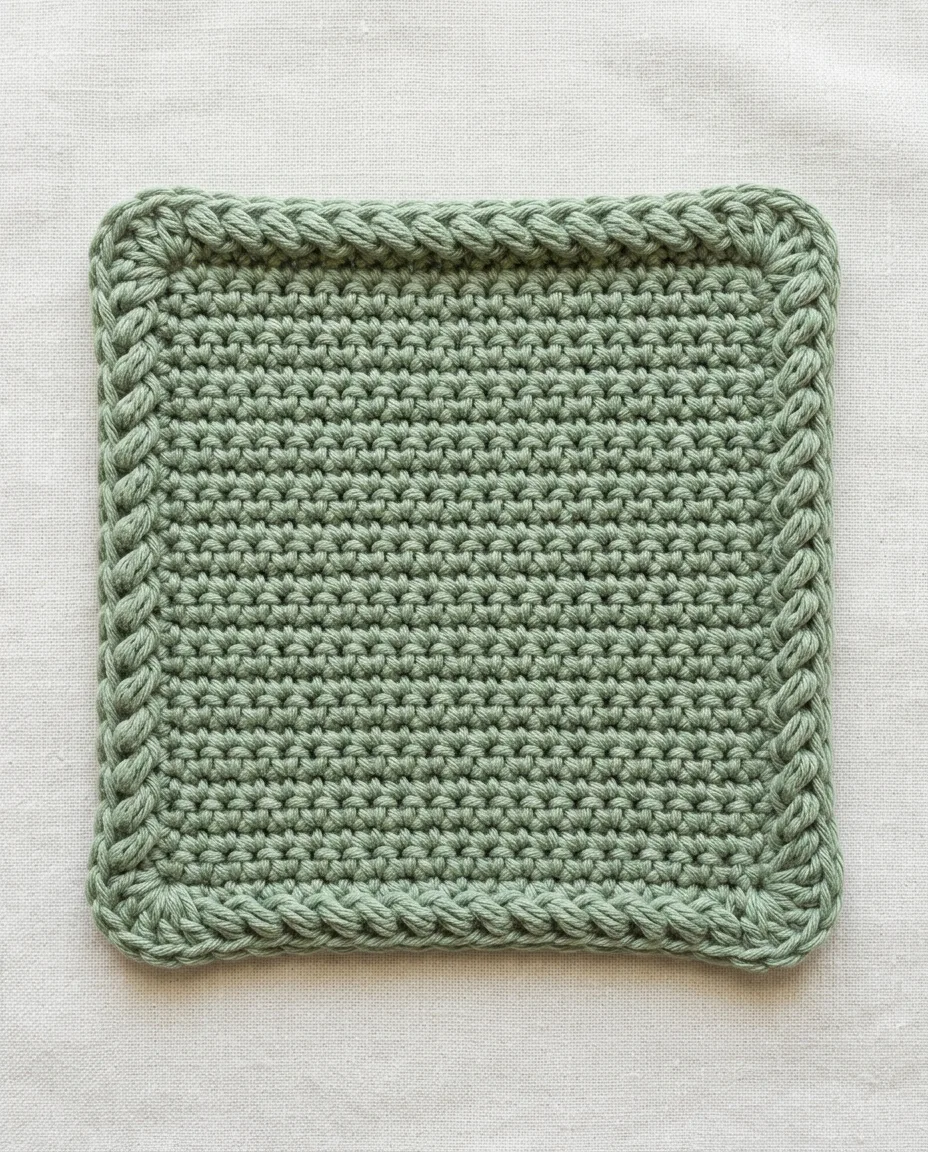
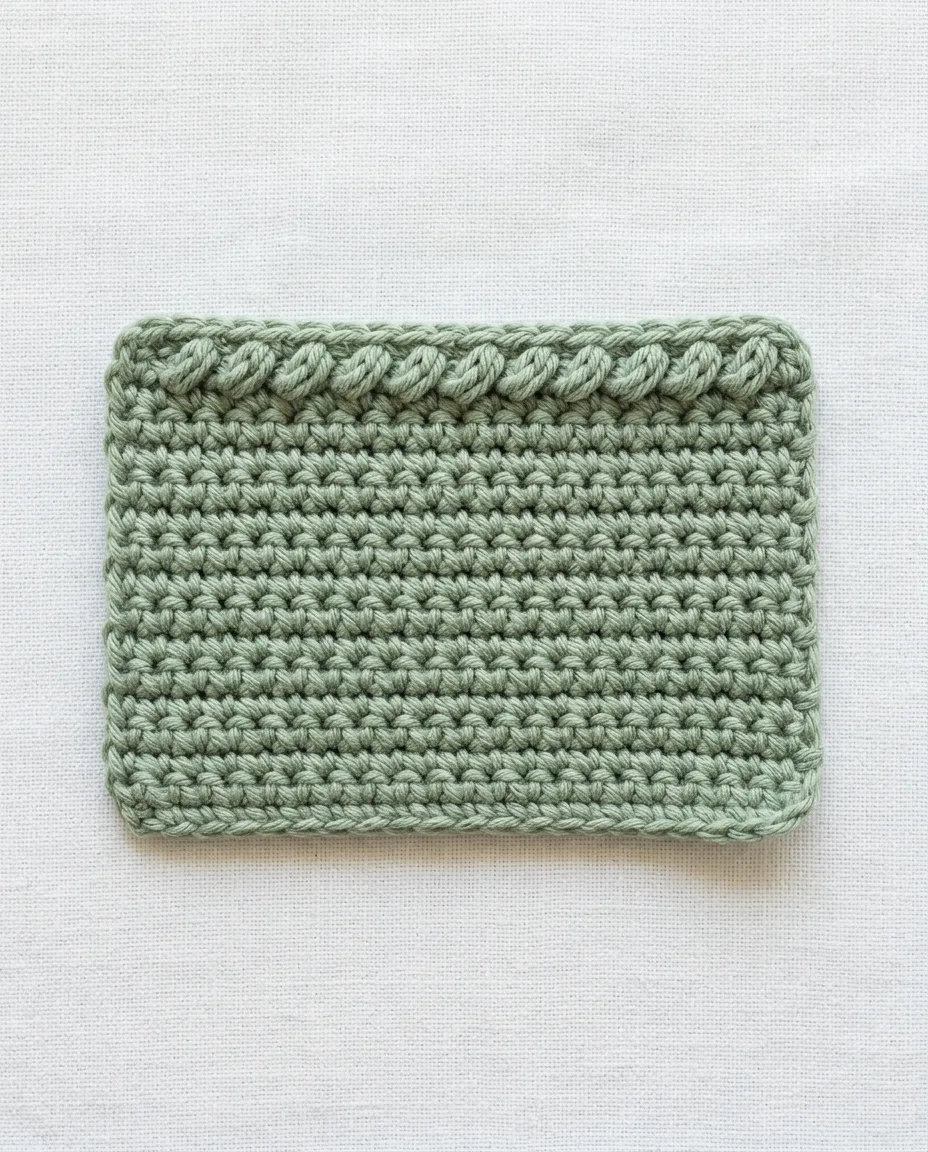
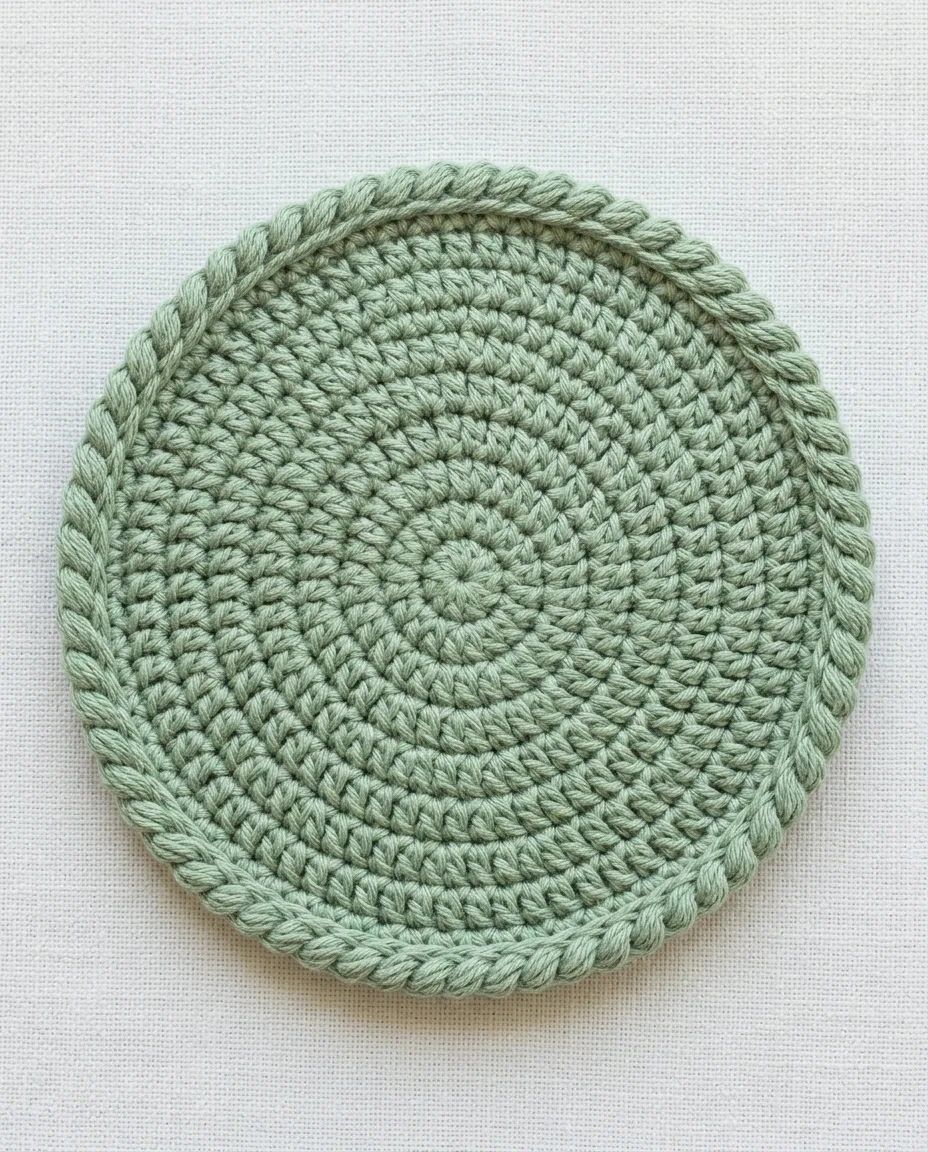
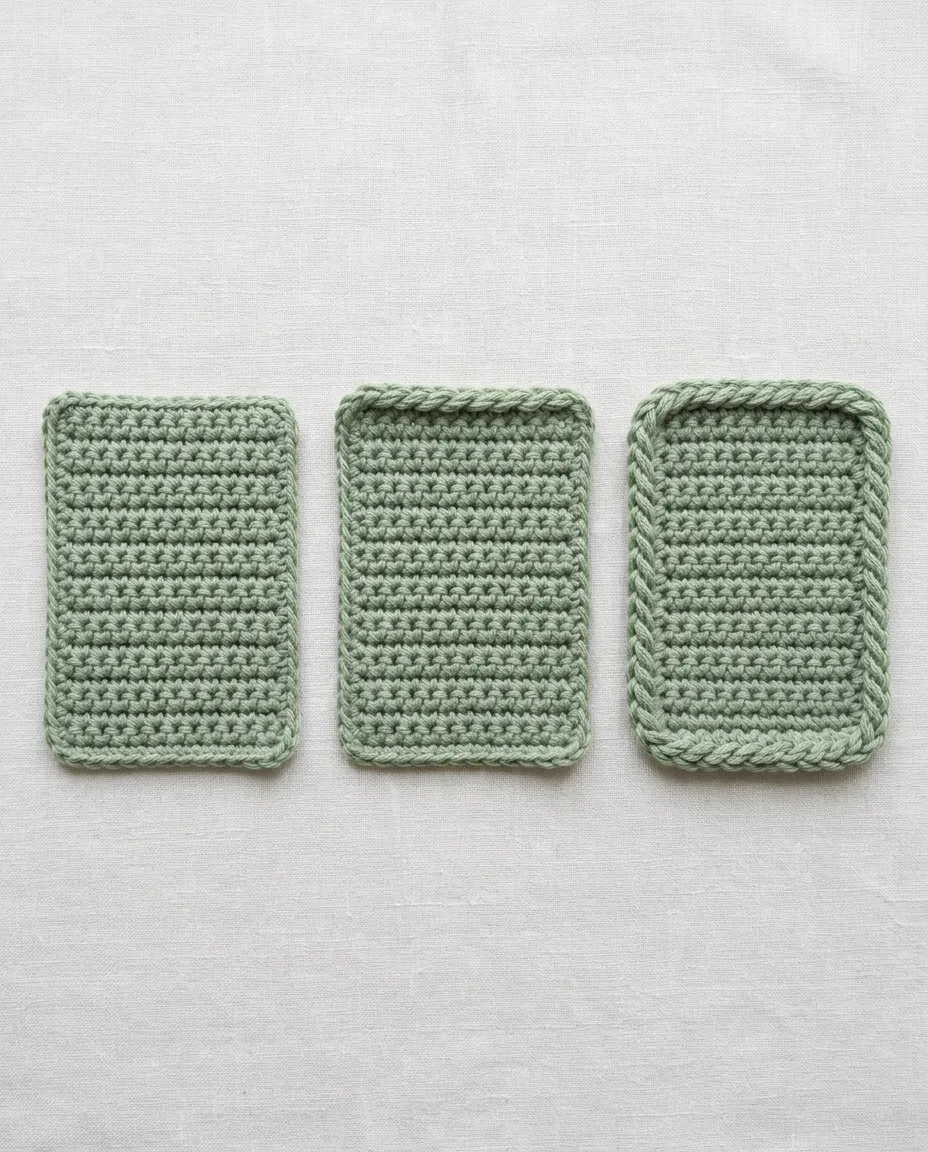
You finish a blanket with a neat row of single crochet. Then it goes through the wash, and the edge comes out curled, with the corners flipped up like dry toast. Crab stitch stops that. It’s single crochet worked backward along the edge, and every stitch gets a small twist as it forms. What you end up with is a firm, beaded rope that sits on top of the edge and pins it down.
Use it on blankets and hat brims. Cuffs and dishcloths too. Fair warning, though: for the first ten tries it feels wrong in your hand. Right-handed? You’ll work it left to right, against every habit you have (left-handers go the other way). That backward motion is the only hard part. Once your hand stops arguing, each stitch is short and quick.
A practice piece takes very little.
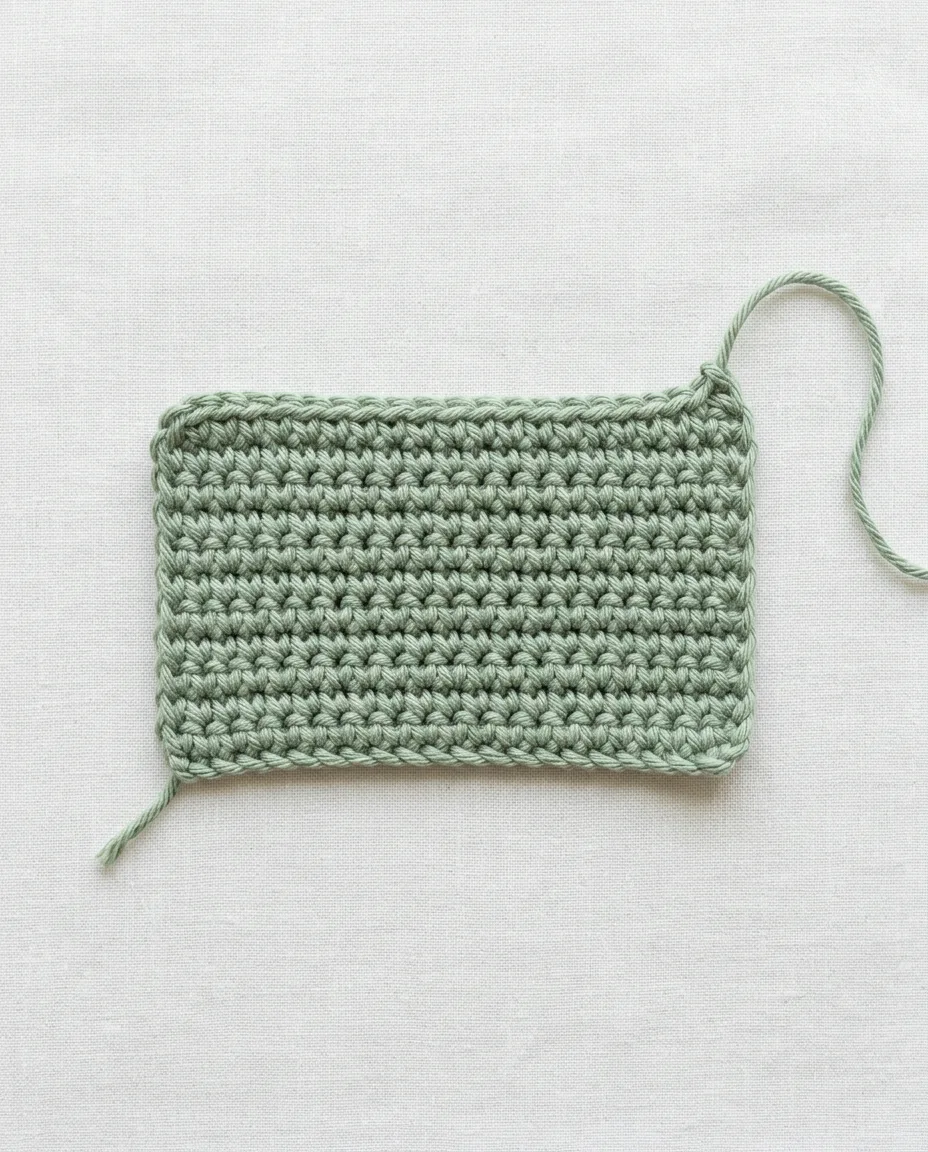
Light cotton in worsted, the medium weight you’ll find in any craft store, shows each twist clearly. That helps a lot while you’re learning. Chain 17. Then single crochet into the second chain from the hook. Insert the hook and wrap the yarn around it, then pull up a loop. Wrap again, and pull through both loops on the hook. Keep going to the end. 16 stitches. Work 6 rows like that, and stop with the right side facing you. Don’t fasten off. The crab stitch row goes right on top. There is a fuller walkthrough in the guide to straight, even single crochet rows.
 Save
Working crab stitch along the edge
- Chain 1. Don’t turn.
- Hook pointing down and to the right. In it goes, into the next stitch to the right, front to back, under both top loops.
- Yarn over, which means wrapping the yarn over the hook from back to front. Pull a loop through toward you. Two loops on the hook now.
- Yarn over again.
- Through both loops. That’s one crab stitch.
- Shift one stitch to the right. Back to the second step.
- Row done? Cut the yarn and pull the tail through the last loop.
Step two is where almost everyone stalls. Your hook wants to go in from the back, because that’s how every other row went. Aim it down, nearly at the floor, as it goes in. At that angle the new loop slides out toward you and doesn’t catch.
Count after five stitches. Five small bumps should be sitting on top of the edge, each one tilted a little. Do they lie flat and look like ordinary single crochet? Then the hook has been going in from the back. Pull those out. Try again, hook pointed down.
Left-handed, it runs right to left. Everything else is a mirror image.
 Save
Where a rope edge earns its place
Anything that gets handled a lot. Cuffs, brims and bag openings rub against stuff all day, and a plain single crochet row slowly stretches out. Crab stitch doesn’t. It’s thick and firm. And it hides a sloppy last row (small differences in stitch height just vanish under the cord).
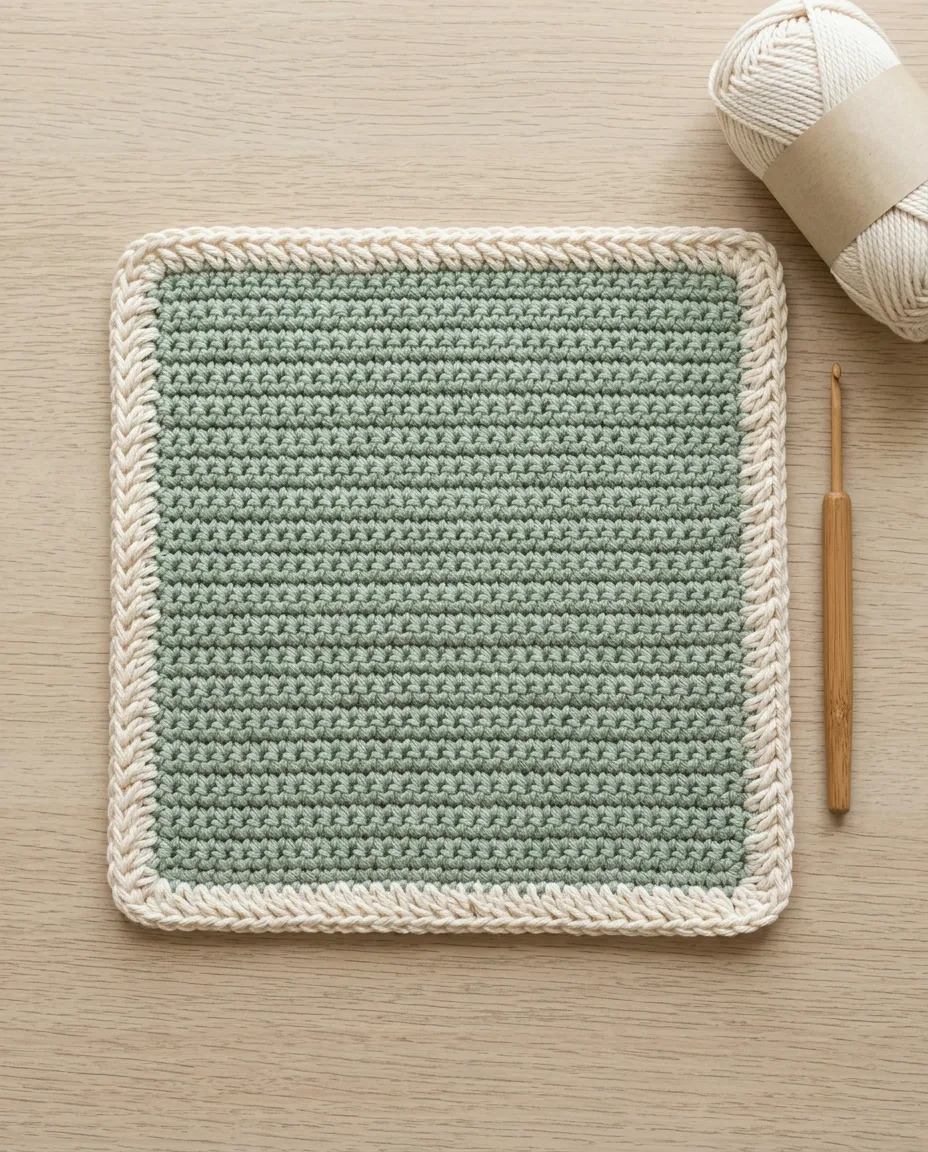
On a blanket it frames the piece like piping on a cushion. Pick a contrast color if you want a crisp outline. In the main color it reads as texture instead.
No stretch, though. That’s the catch. This edge has almost no give, so on a neckline or a sock cuff that has to get over a head or a heel, it can fight you. Test it on a swatch first, the small practice square from above, and tug it gently. Still too stiff? Go up 1 mm in hook size for the edge row and nothing else.
 Save
When the edge ruffles or puckers
Two problems turn up again and again. Both come down to stitch count against how tightly you hold the yarn.
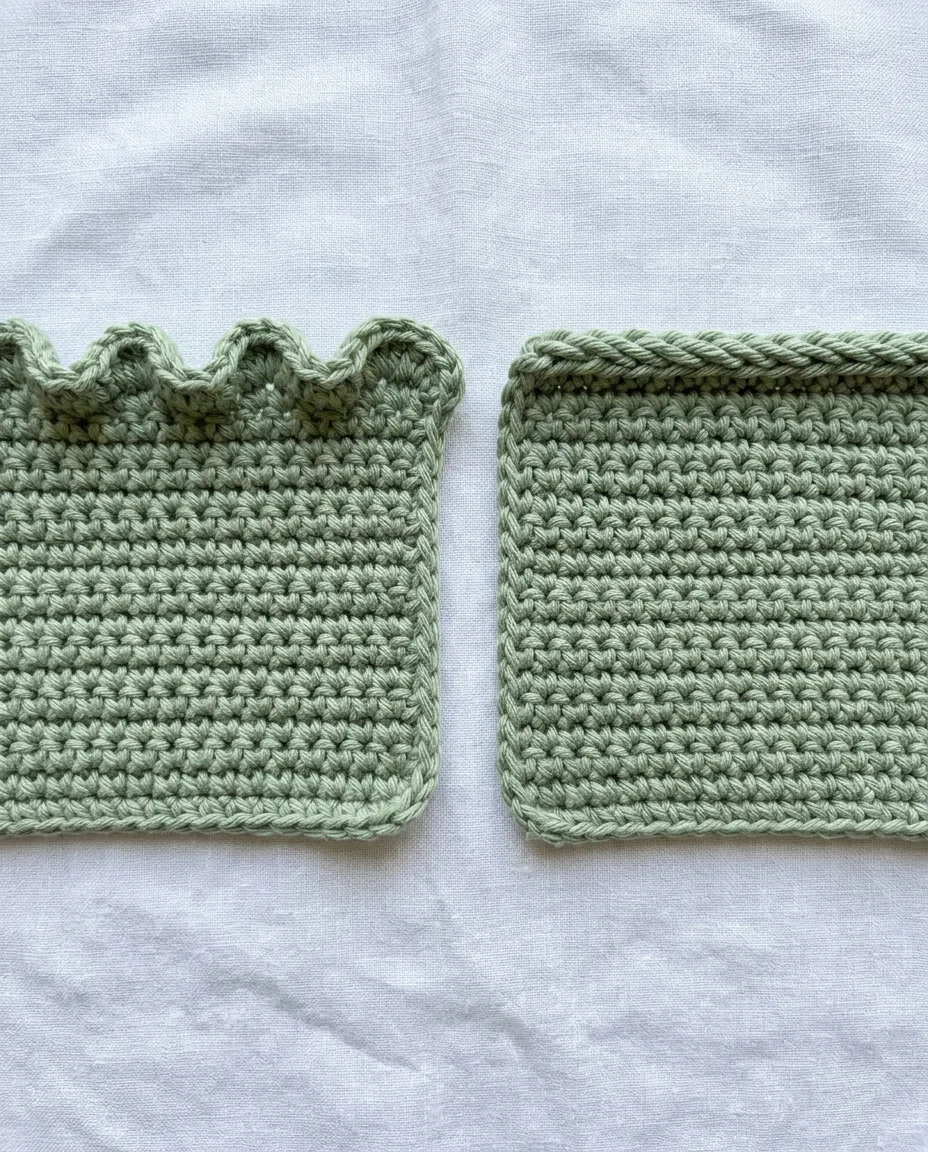
Wavy, like a pie crust? Too many stitches. Crab stitch takes up more room than single crochet does, and one in every stitch can crowd the edge. Work into every other stitch along part of it and see whether it settles. Some yarns need that all the way around.
But a tight edge that puckers and pulls the fabric in is the opposite problem. The stitches are too short. It usually happens when you hold the yarn tight on that backward motion. Go up one hook size. Or loosen the loop you pull through in step three until it’s about as tall as a normal single crochet.
Corners want extra. Put 3 crab stitches into the corner stitch, same as you’d add stitches to a single crochet border. Skip them and the corner pulls in and goes round.
Never leave a round piece, a hat brim say, with a gap between the last and first stitch. Join them with a slip stitch. Insert the hook into the first crab stitch and yarn over. Then pull straight through the stitch and the loop on your hook in one go.
 Save
Fastening off so the cord stays neat
Most tutorials rush this bit. When you cut the yarn, leave a tail about 6 inches, 15 cm, long, and thread it on the yarn needle. Flat piece? Run the tail down into the side of the fabric and weave it back and forth through 3 or 4 stitches. Done.
Rounds get a neater trick. Skip the slip stitch join entirely. Pass the needle under both top loops of the first crab stitch, then back down into the center of the last one. It’s a fake stitch, and it fills the gap so well the rope looks unbroken.
One more thing before the first wash. Weave the starting tail in the same way. Cotton ends tucked in only once tend to wiggle free in hot water.
 Save
A slimmer variation with gaps
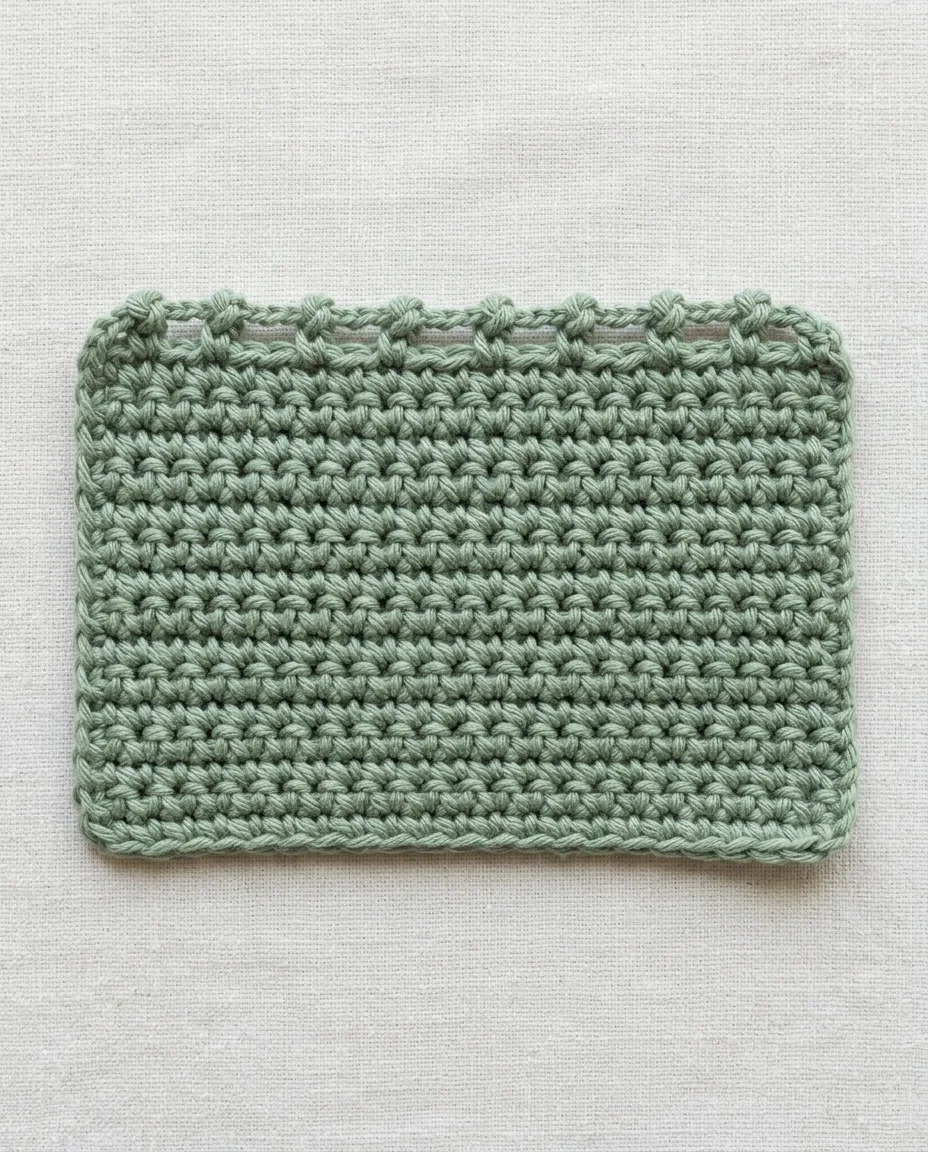
Plain crab stitch makes a dense cord. Want something lighter and more beaded? Add a chain between stitches: 1 crab stitch, chain 1, skip the next stitch, repeat. The bumps spread out, and the edge starts to look like a string of little knots.
It has a bit more give, so it sits nicely on lighter fabric and baby blankets. Uses less yarn too. The downside is snagging. Those gaps catch on things, small fingers included, so anything a toddler will grab gets the solid version.
Either way, pick a smooth yarn. Fuzzy or heavily textured yarn swallows the twist, and the rope is gone.
 Save
 Save