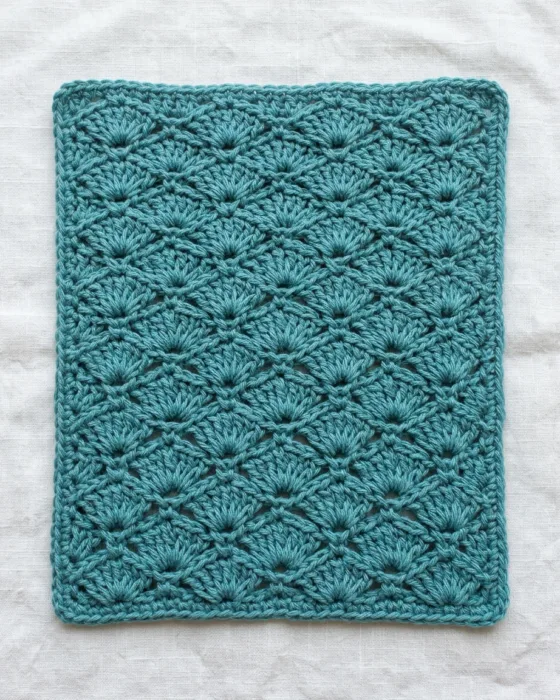
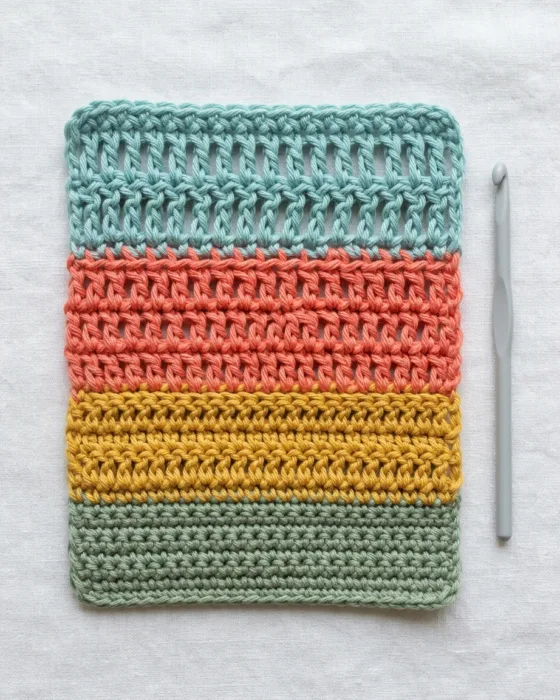
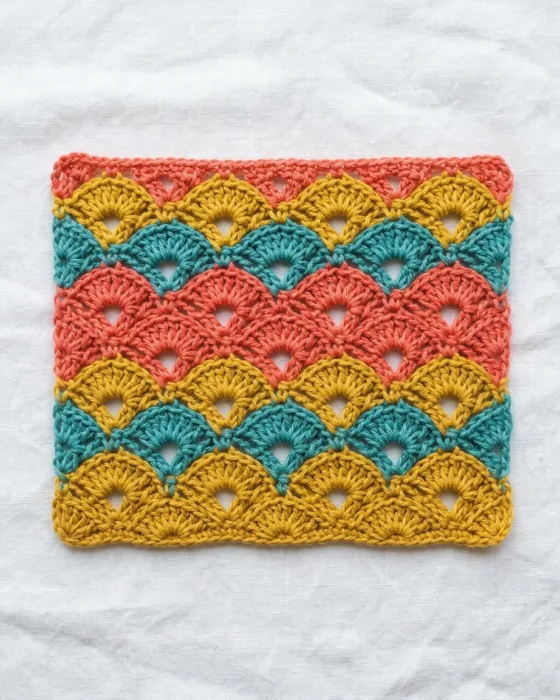
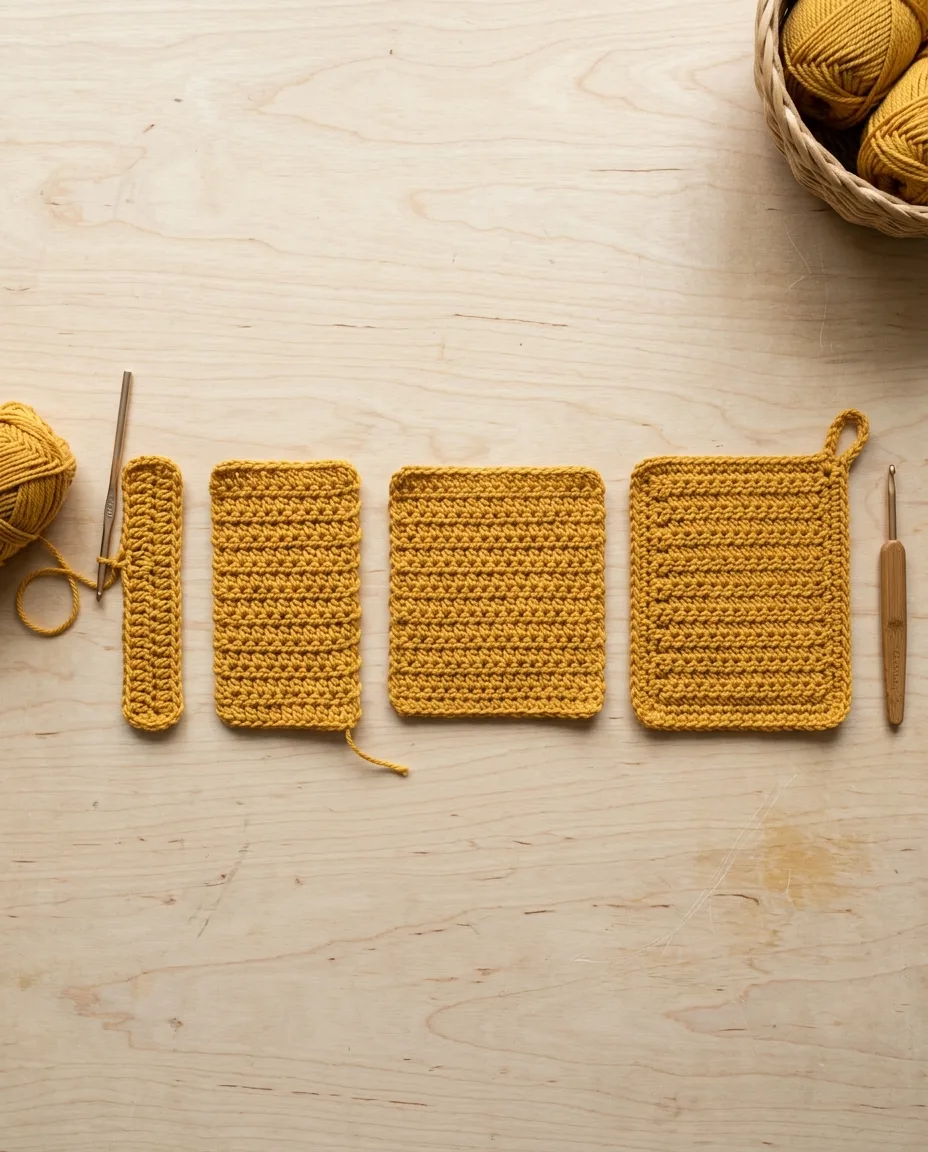
Griddle stitch runs on two stitches, single crochet and double crochet, and they trade places every row. Short lands on tall. Tall lands on short. That swap plugs the gaps a plain row of double crochet leaves behind, and you get a dense, flat fabric with hardly a hole in it. Dishcloths love it. So do bags and placemats.
It makes a good second project once a row of single crochet feels normal in your hands. Two stitches, one rule. Honestly, the only tricky bit is counting at the ends of the rows (that’s where it slips, and this guide points at the exact spot).
Worsted is the medium weight most yarn bands mark with a 4. Cotton holds each stitch’s shape and lets you see it clearly while you learn. Acrylic works too. It’s softer, though the stitches blur a bit.
How to work the first row
Put a slip knot on the hook, which is just a loose knot you can tighten, and chain 17. Each chain is one loop pulled through the loop already sitting on the hook. Why 17? Griddle stitch wants an even number of stitches, and the foundation chain, your base row of chains, always runs one longer than that.
- Skip the first chain. Hook goes into the second one.
- Yarn over, meaning wrap the yarn over the hook from back to front. Pull up a loop. Two loops on the hook.
- Yarn over again and pull through both. That’s one single crochet.
- Now the tall one. Yarn over first, before the hook goes in.
- Insert the hook into the next chain, yarn over, pull up a loop. Three loops now.
- Yarn over, pull through 2. You’re left with two.
- Yarn over, pull through the last 2. That’s one double crochet.
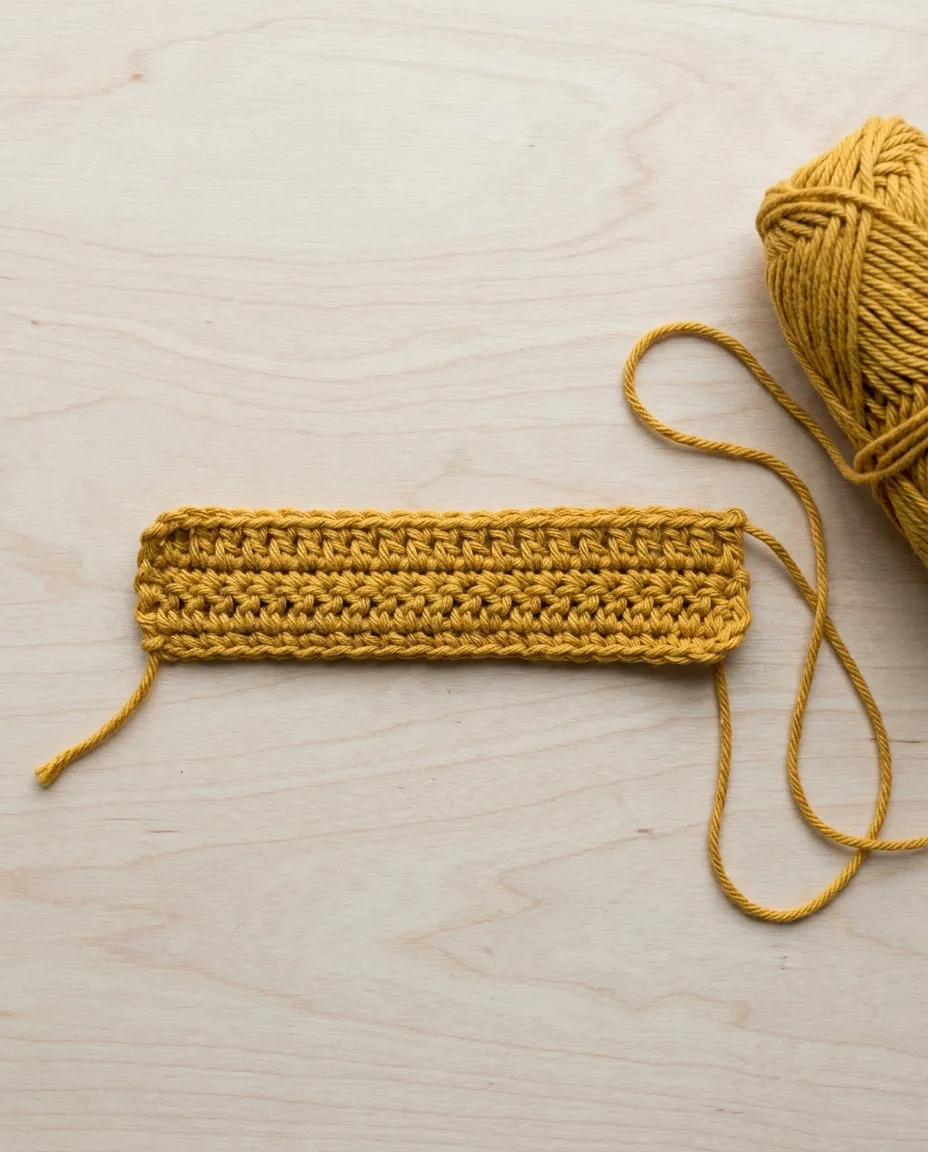
- Keep pairing them, short then tall, into each pair of chains to the end.
- The row should finish on a double crochet in the last chain. Sixteen stitches.
Count before you turn. Eight short stitches, 8 tall ones, rising and dipping in a steady line. Got 15? The missing one is almost always the last chain. It’s tiny and hides right at the tail. There is a fuller walkthrough in the guide to the crochet star stitch.
 Save
Row 2 and every row after it
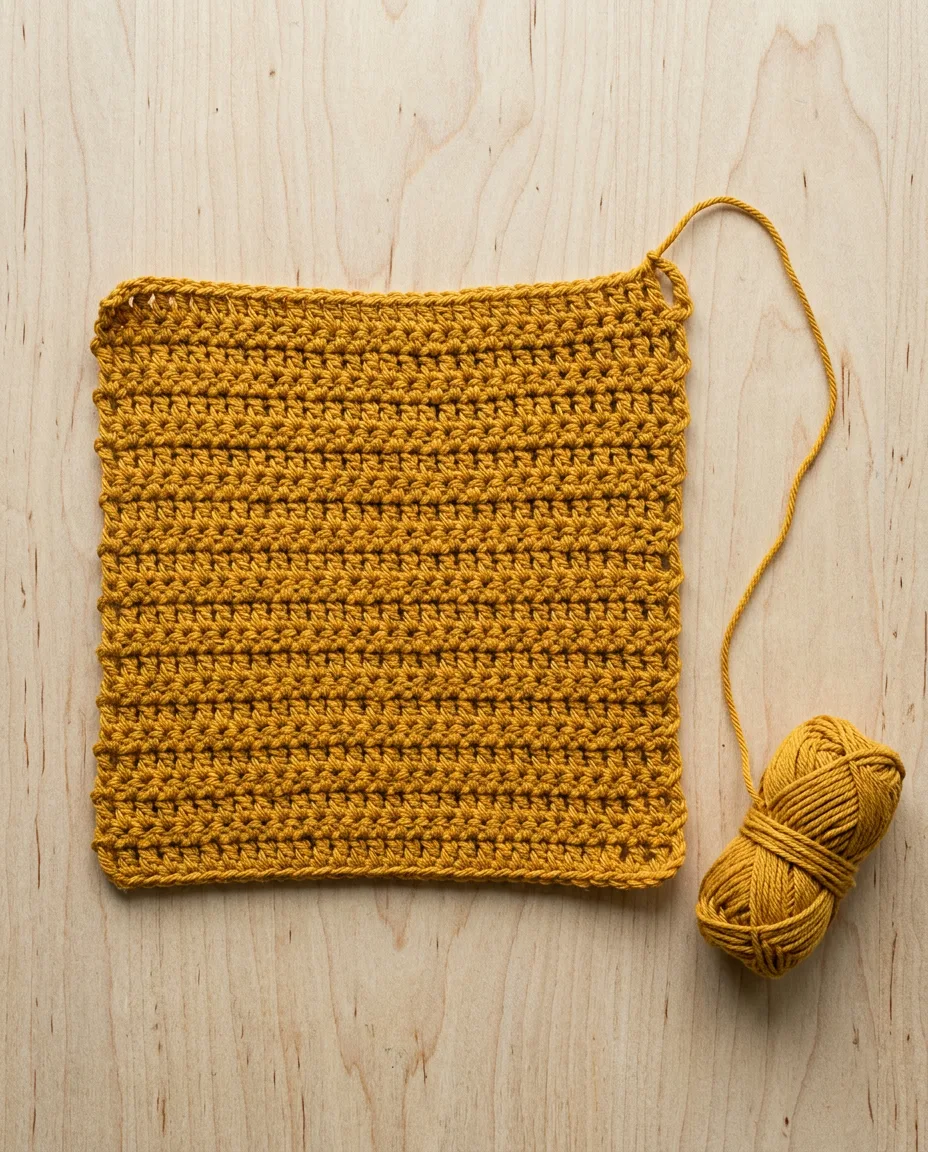
One rule covers every row from here on. A single crochet goes into the top of each double crochet, and a double crochet goes into the top of each single crochet. Here it is in short form.
- sc in 2nd ch from hook, dc in next ch, (sc in next ch, dc in next ch) x7 16 sts
- ch 1, turn, (sc in next dc, dc in next sc) x8 16 sts
- repeat Row 2 until the piece is as long as you want 16 sts
Chain 1 and flip the work at the start of each row. That chain is called the turning chain, and it doesn’t count as a stitch. Skip past it. Your first single crochet lands right in the first real stitch, the double crochet you just made. And at the far end? The last double crochet belongs in the single crochet sitting at the edge of the row below.
Telling the two apart is easier than it sounds. Look for height. A double crochet stands tall with a slanted bar across its waist. A single crochet is short and squat. Glance at the stitch under your hook before deciding what to make on it. The thermal stitch guide covers it round by round.
 Save
Where griddle stitch works best
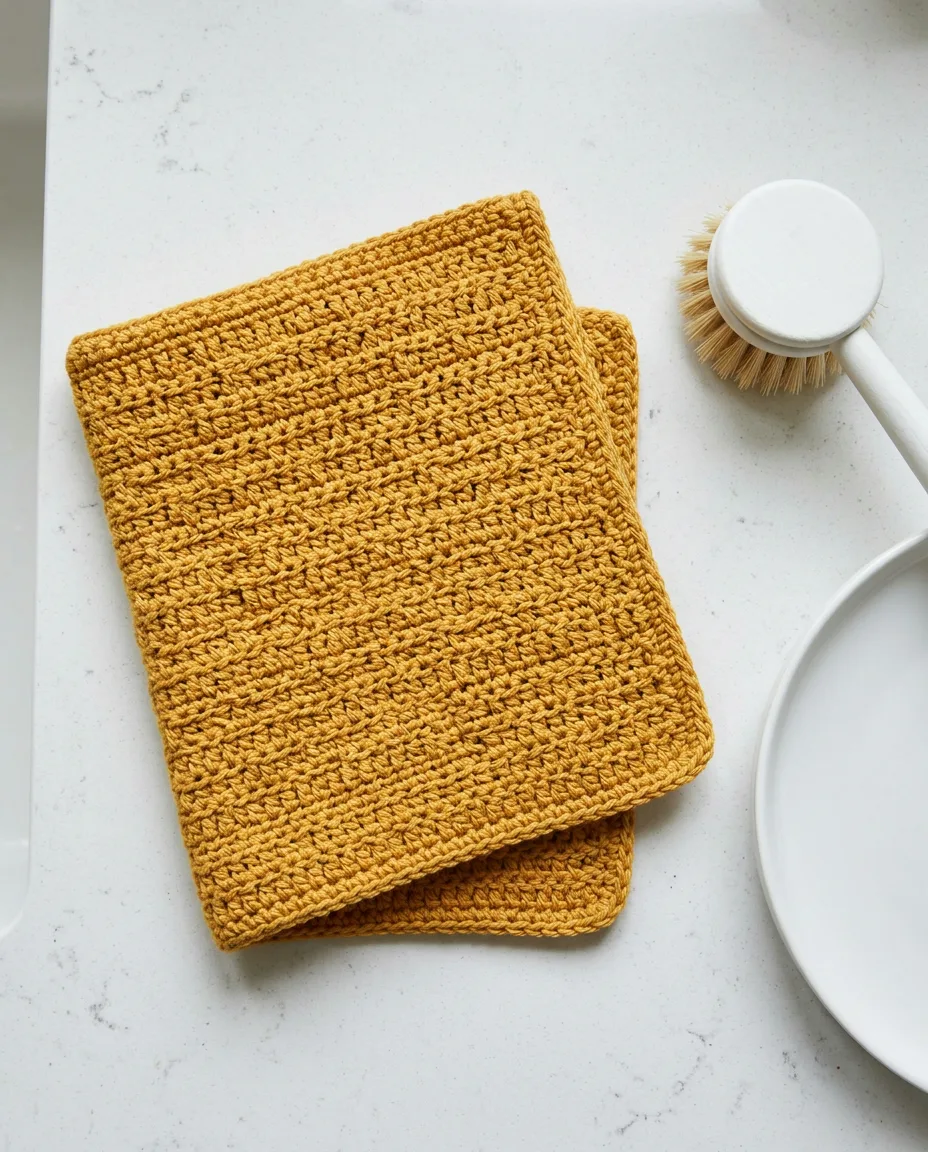
Dishcloths come first. The packed fabric scrubs well, and in cotton it shrugs off hot water. For a cloth, chain 33 and work 32 stitches a row. Keep going until it’s square. That takes around 30 rows, give or take, depending on your tension. That’s how tightly you hold the working yarn, which is the strand running from the ball to your hook.
Small things don’t fall through it, so bags and baskets suit it nicely. Coasters too. Placemats for the same reason. But skip it for a drapey shawl or a light baby blanket. It swallows more yarn than plain double crochet and the fabric comes out stiff.
 Save
If you see holes or wavy edges
Blame the hook first. Light showing through your fabric? Drop to a 4.5 mm or a 4 mm hook. Then make a new swatch, a little test square worked before the real piece. The stitches pack in closer. Usually that’s the whole fix.
A wavy, loose edge? Probably a skipped stitch at the end of a row. That last stitch tucks up against the turning chain of the row below, and it’s easy to miss. For the first few rows, count to 16 every time. Keep losing it? Clip a stitch marker, a small clip that marks one stitch, into the last stitch.
No griddle pattern should show stripes of tall stitches stacked on tall ones. If yours does, the swap slipped, usually because a row started with the wrong stitch. Pull that row out. Check that the first single crochet lands on a double crochet. The guide to crochet slip stitch without tight fabric covers the fix step by step.
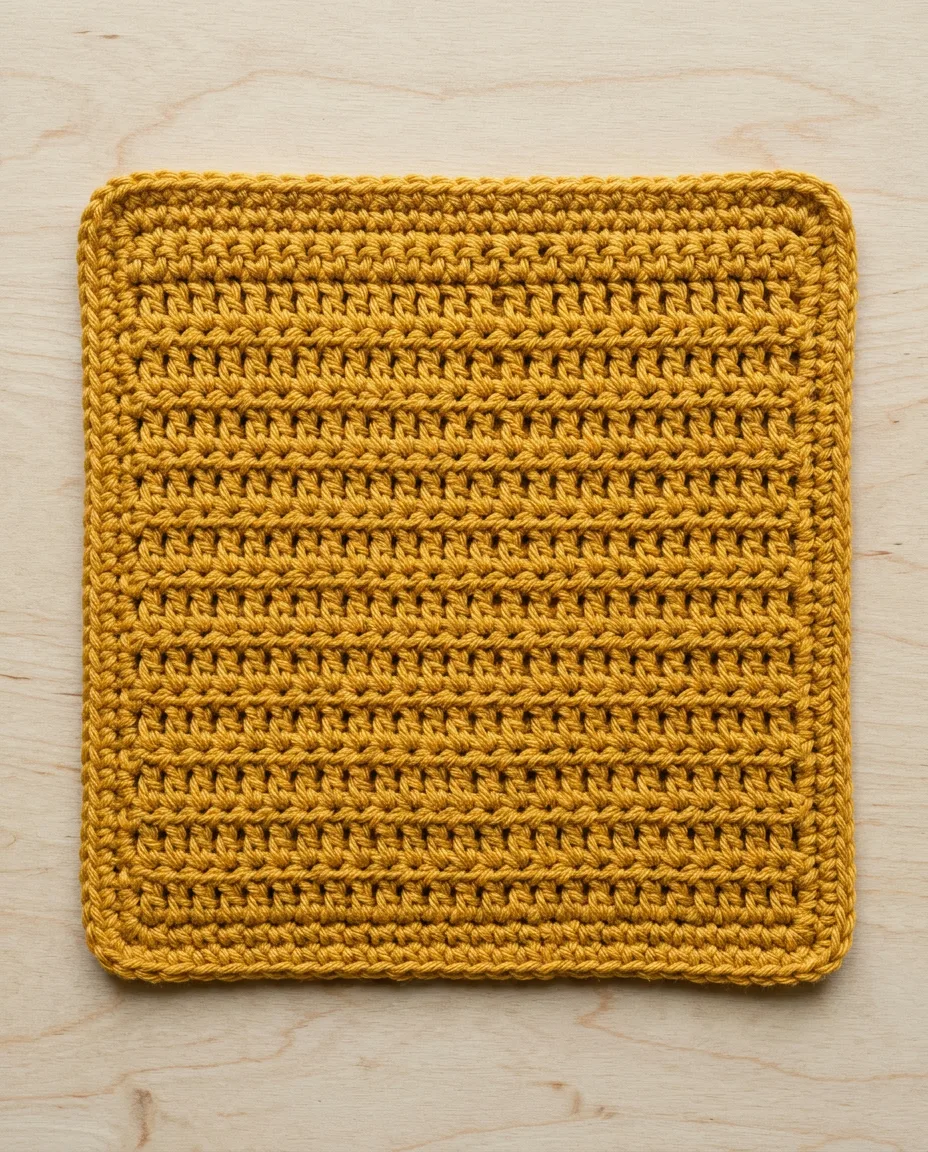
But even a perfect piece has slightly bumpy edges, since every row ends tall on one side and short on the other. A border fixes that. Work 1 single crochet into each stitch along the top and bottom, then 1 into the end of each row up the sides. Corners get 3 single crochet each. They’ll lie flat.
 Save
Add a second color in stripes
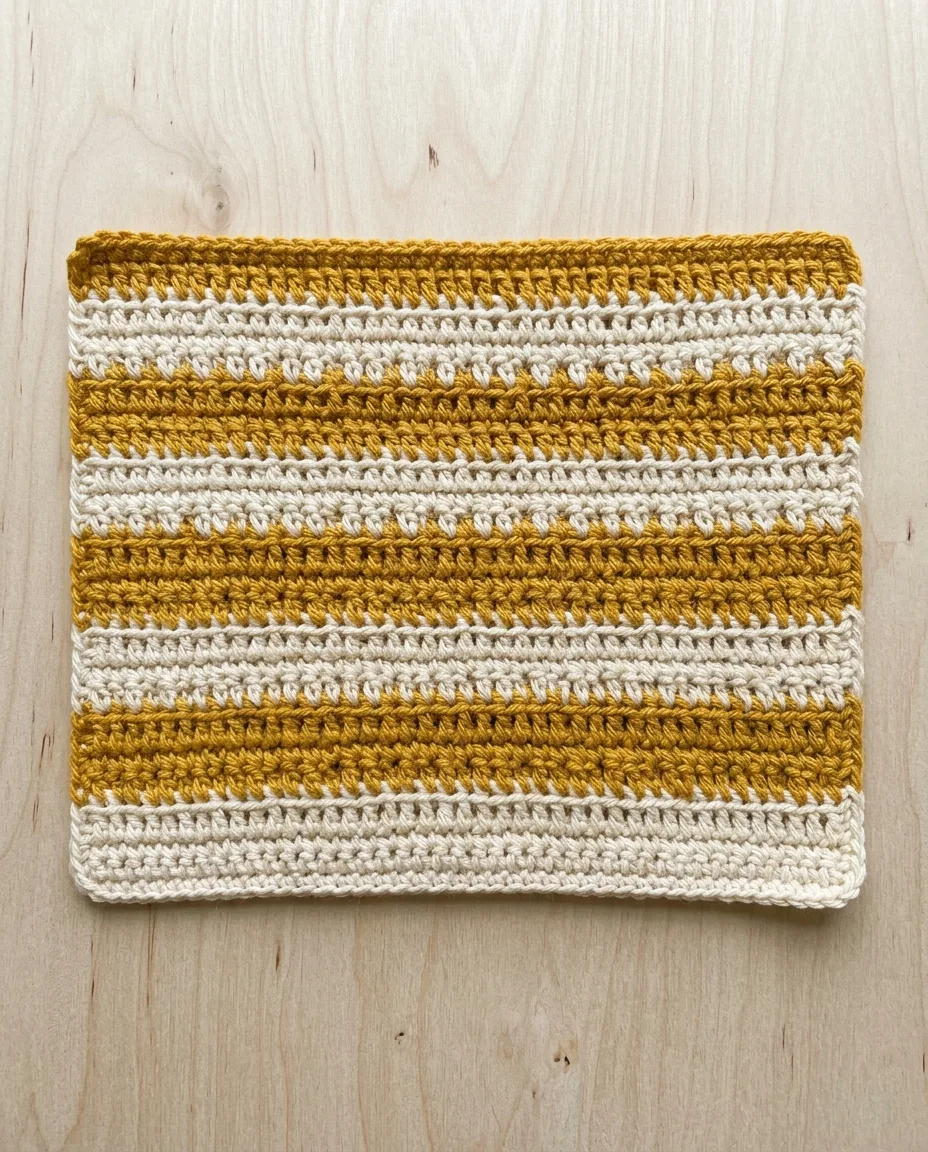
Switch color every 2 rows. The stripes come out with a broken, speckled edge where the tall stitches of one color poke up between the short stitches of the next. It looks fussier than it is (and it eats leftover cotton happily).
Work the last stitch of the row until 2 loops are left on the hook. Drop the old color. Pull the new one through both loops, then chain 1 and turn like always. Carry the spare color up the side, loosely, and tuck it under the border at the end.
 Save
From swatch to finished cloth
Weave the ends in with the yarn needle. Go through the backs of several stitches one way, then come back the other way, and trim close. A cotton cloth can go straight in the wash. It’ll shrink a little the first time.
Blocking, which means wetting the piece and pinning it flat to dry, helps a square that’s pulling slightly crooked. A stitch count that wandered won’t block out, though. Once the 16 stitch swatch feels easy, you’re set. Those same 2 rows build anything you can measure in an even number of stitches, from a coaster up to a market bag.
 Save