A hot pan handle doesn’t care how pretty your potholder is. It cares how thick it is. Thermal stitch gives you that thickness, and it’ll stop a cold wind too. Each stitch is a single crochet worked through two rows at once. So every new row gets pinned to the row below the one you just made. Off the hook comes something dense and double-layered (almost no holes, and very little stretch).
Don’t let the name scare you off. If you can work single crochet and find two loops, you’ve got the skills already. The catch? One of those loops sits two rows down, and you have to hunt for it. Find it once, though, and the rows start moving along at a decent clip.
How the stitch locks two rows together
Every crochet stitch has two loops sitting on top. The front loop is the one closer to you. The back loop is the one farther away. When you work in the back loop only, that front loop gets skipped and just lies there, flat across the fabric. It isn’t wasted, though. One row later, thermal stitch grabs that leftover loop and ties it to the stitch above.
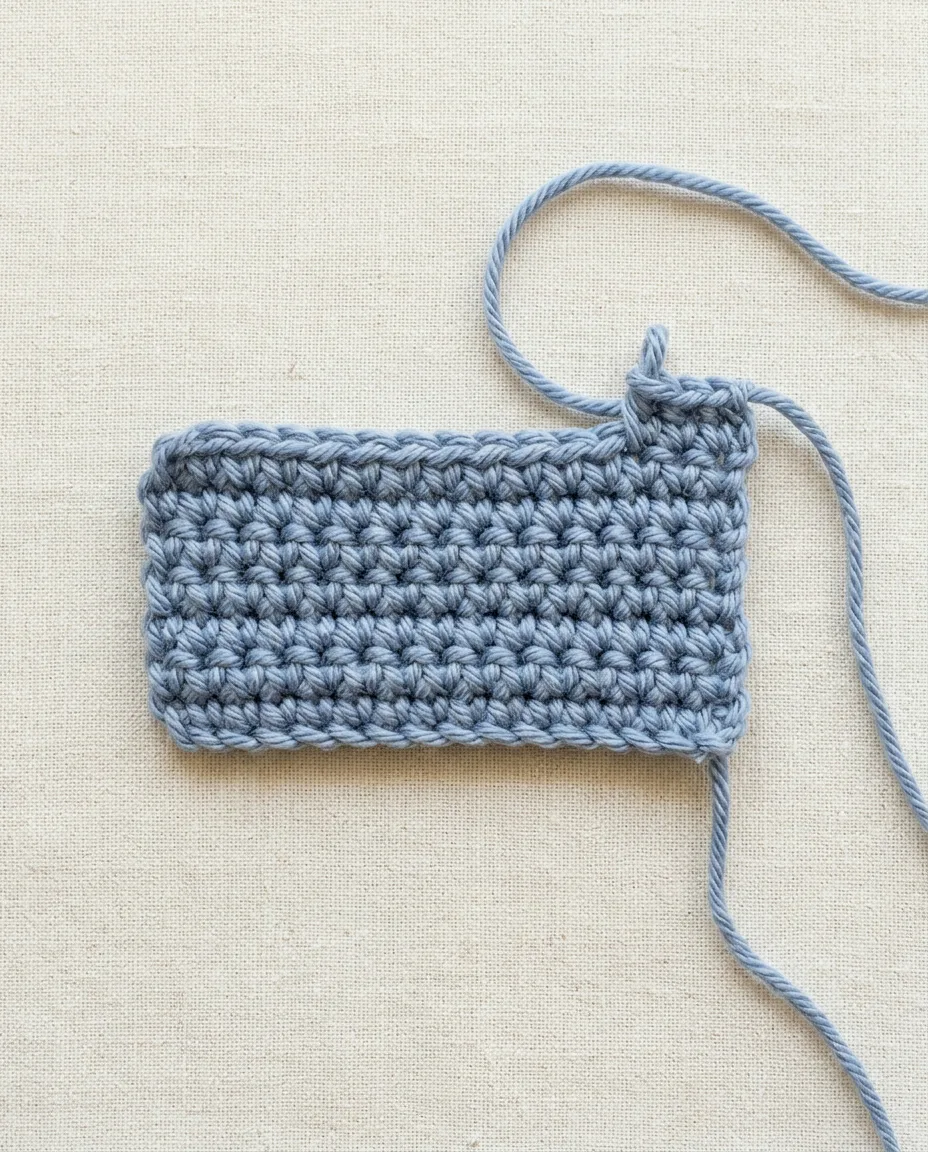
Row 1? Plain single crochet. Row 2 goes into back loops only. But from Row 3 onward, each stitch passes through two loops from two different rows, and that’s where the thickness comes from. These are US crochet terms throughout.
- Chain 21. Starting in the second chain from the hook, single crochet across. That’s 20 stitches.
- Chain 1, then turn. Now single crochet into just the back loop of each stitch.
- Chain 1 and turn again. Your hook goes under the back loop of the first stitch, front to back.
- Don’t stop there. Keep pushing until the hook also catches the unused front loop from the row below, tucked just underneath at the back.
- Yarn over (wrap the yarn over the hook from back to front) and pull a loop through both of those loops. You’ll have two loops on the hook now.
- One more yarn over, and pull through both. That’s one thermal stitch.
- Work the rest of the row the same way. Count at the end. Still 20? Good.
- From here it’s just the last five steps, row after row, until the piece is as tall as you want it.
 Save
Can’t find that loop at the start of a row? Most people can’t, at first. Turn your work and tip the top edge toward you. The unused front loop shows up as a little sideways bar hiding under the back loop. Still nothing there? Then the back-loop row probably got skipped, or Row 2 went through both loops by mistake. Fiddly. But fixable.
Hook size and yarn decide how stiff it gets
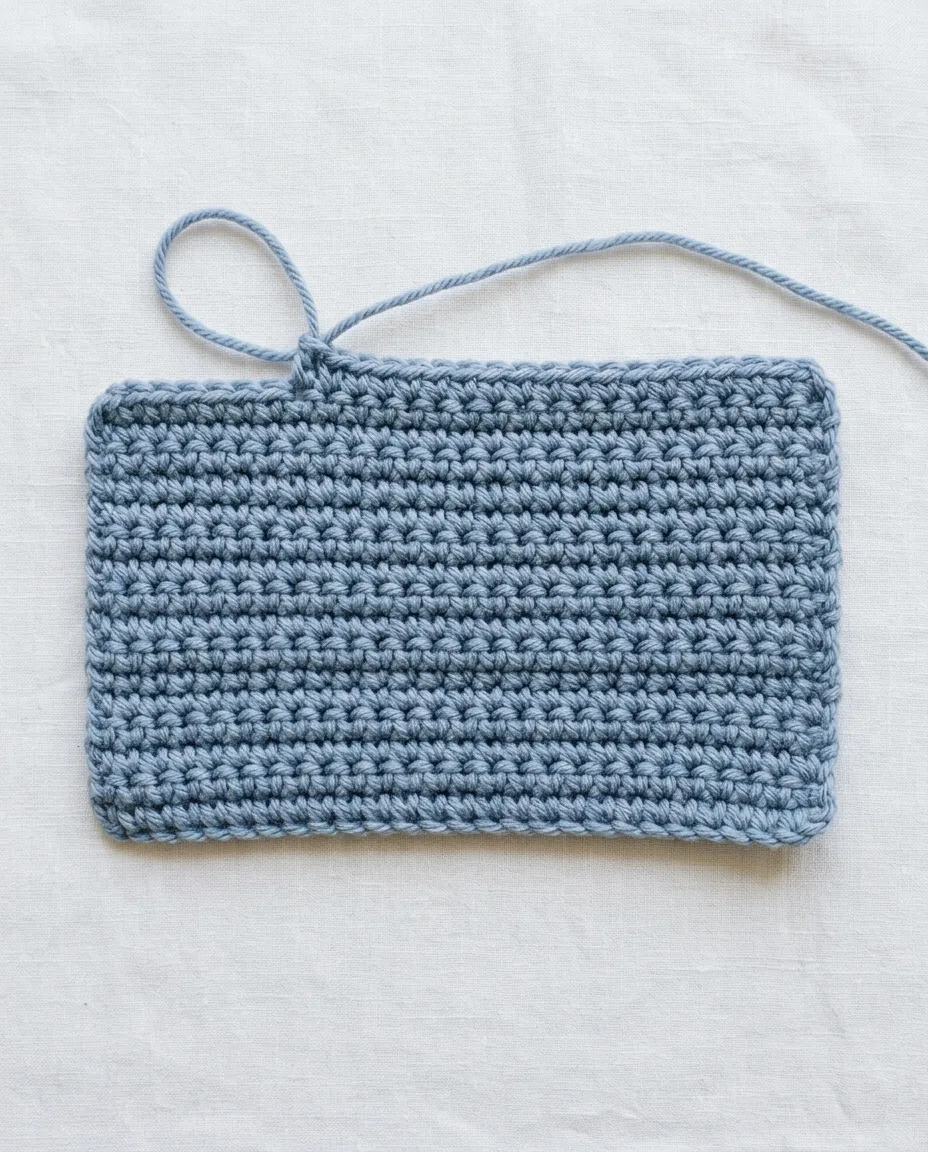
Go up a hook size or two. Seriously. This fabric comes out about twice as thick as plain single crochet, and it stiffens fast, so the hook printed on the yarn band can leave a worsted swatch feeling like cardboard. A 5.5 mm or 6 mm hook with worsted weight yarn still bends around your hand. There is a fuller walkthrough in the guide to V-stitch crochet.
 Save
Worsted weight is the medium, middle-of-the-road thickness you’ll spot on plenty of yarn bands. Smooth wool or acrylic shows the texture best. Cotton? Fine for kitchen stuff, though it gives you the stiffest fabric of any of them. Skip fuzzy yarn for now. It swallows the very loops you’re trying to find, and that’s the last thing you need on a first try.
Gauge matters more here than with most stitches. (Gauge is just how many stitches and rows fit in a measured square.) Because each row is tied down to the one under it, thermal rows come out shorter than plain single crochet rows. So make the 20-stitch swatch first. Keep going until it’s square. Then count your rows before you start anything you care about.
And yes, it eats yarn. You’re making two layers for every inch, so a thermal piece takes more than a plain single crochet piece of the same size. Buy it all from one dye lot. Matching later is a gamble.
Where thermal fabric earns its yarn
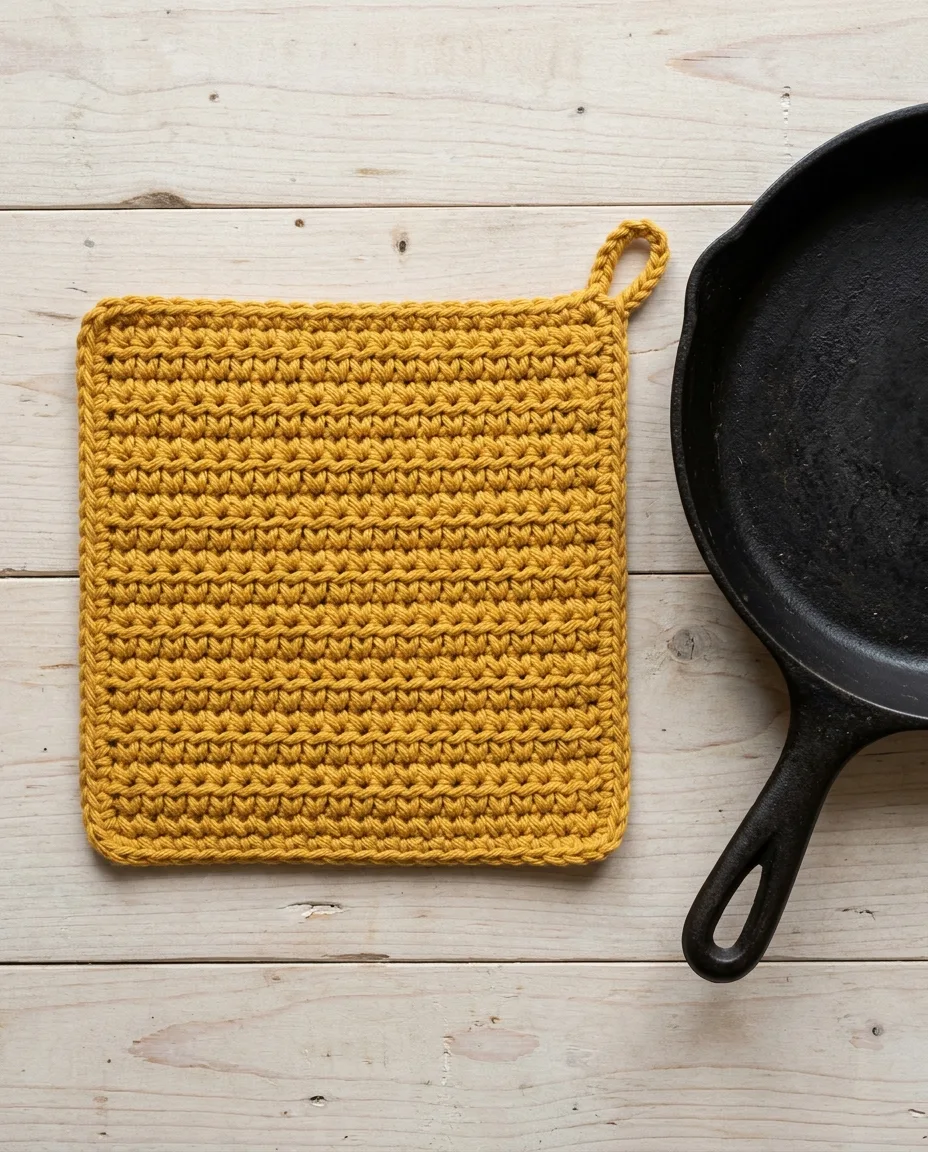
Start with potholders. A cotton thermal square is thick enough to grab a hot pan handle without a second layer stuck behind it. Coasters and trivets? Same logic.
 Save
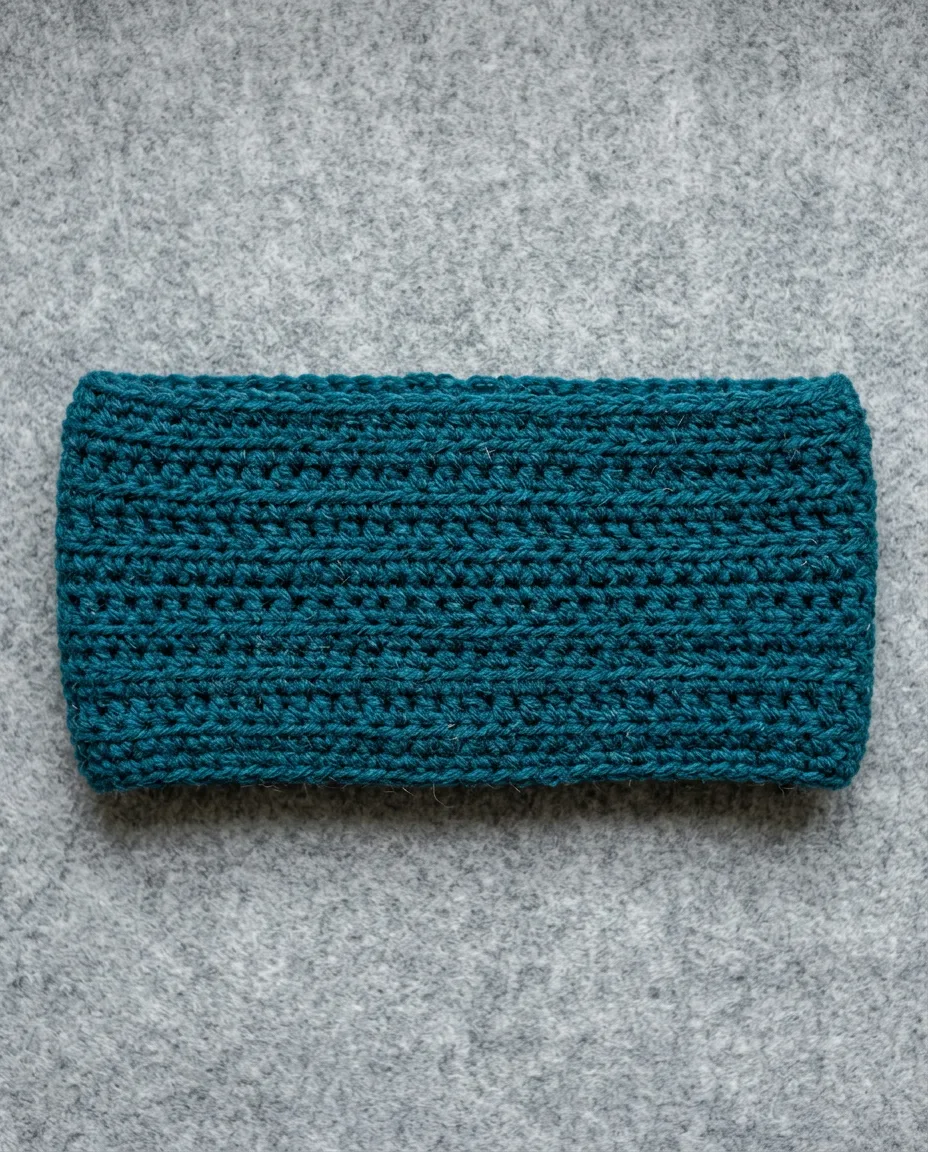
It’s great for cold weather, too. With almost no holes in the fabric, ear warmers and hat brims shrug off wind. Headbands work the same way. A cowl is possible if you go up a hook size so it’ll actually fold.
 Save
Then there’s stuff that wants to be stiff. Bag bases and small rugs hold their shape and won’t sag when you load them up. Drape is a different story. A sweater body or a shawl in thermal stitch hangs like a board (a heavy one, too), so save those for a looser stitch. The half double crochet guide breaks the whole project into steps.
Why the edges and row count go wrong
Edges are where it usually falls apart. The chain 1 at the start of a row isn’t a stitch. Work into it by accident and you’ve gained a stitch, and the edge starts to flare. Skip the last stitch instead and you lose one, so the edge pulls in. Count to 20 at the end of every row for the first few rows. Boring? Sure. It beats ripping back.
Another slip shows up on Row 3 and after: catching only the back loop. That gives you thin, ridged fabric with a line of loose bars along one side. So check that every stitch picks up two loops. Some people overcorrect and grab both loops of the row below. The result’s lumpy, and the rows pull unevenly. You only want that one spare front loop on the hook. The full fix is in the slip stitch guide.
Tension is the sneaky one. That’s how tightly you hold the yarn while you work, and thermal fabric shows off every tight stitch, since the rows are tied together and can’t shift around to hide anything. Loosen up. Let the bigger hook do its job.
Stripe it in two colors
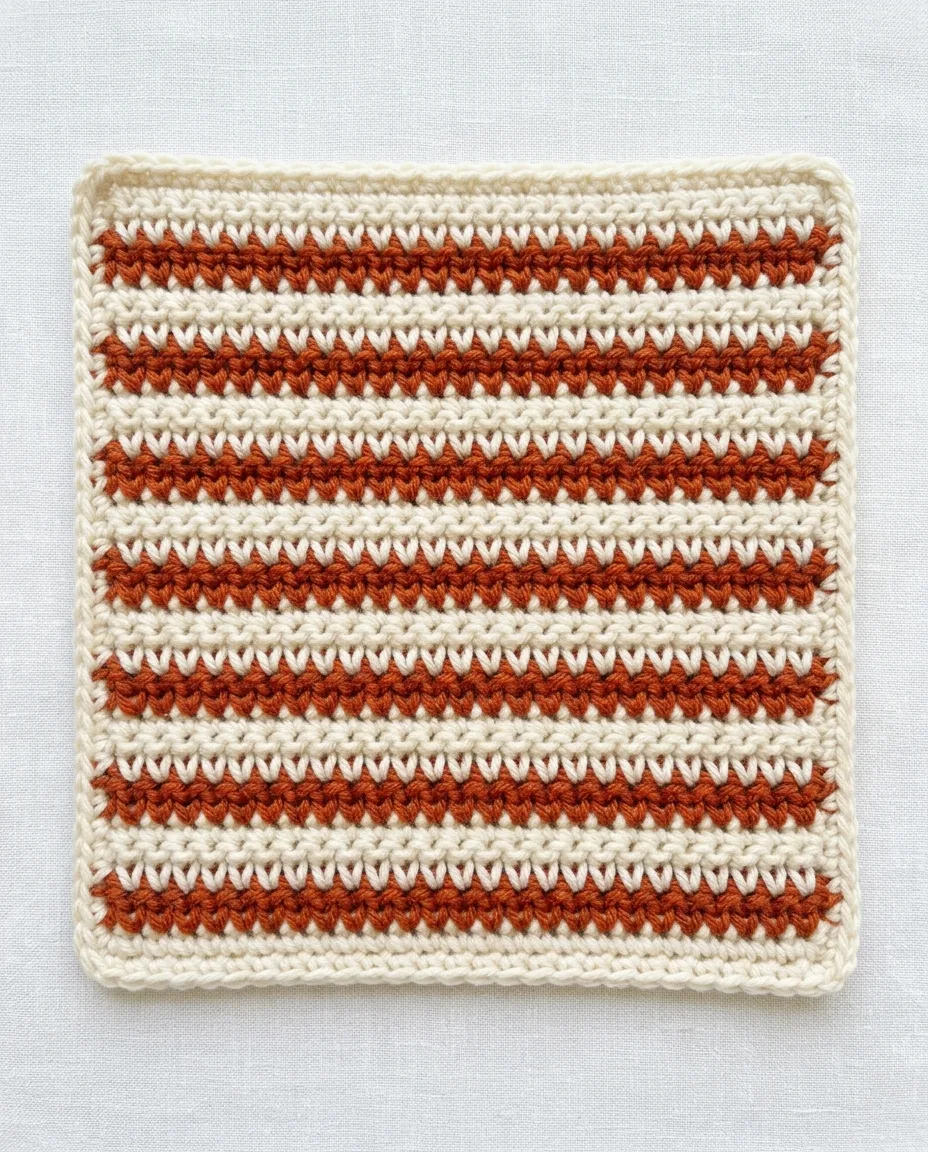
Stripes really suit this stitch. Change colors every two rows, and the front loops of one color poke through the next row as tiny dashes. The back’s different. Flip it and you get flatter horizontal lines instead, which some people like better.
 Save
Switching color isn’t hard. On the last stitch of a row, stop when two loops are left on the hook. Drop the old color. Yarn over with the new one and pull it through. Since the stripes are only two rows wide, there’s no need to cut. Just carry the spare color up the side and weave in the ends when the whole piece is done.
Finish and care for a thermal piece
Fastening off works like any other piece: cut the yarn and pull the tail through the last loop. With a tapestry needle, weave that tail into the thick fabric. The double layer hides ends really well, honestly better than most stitches.
 Save
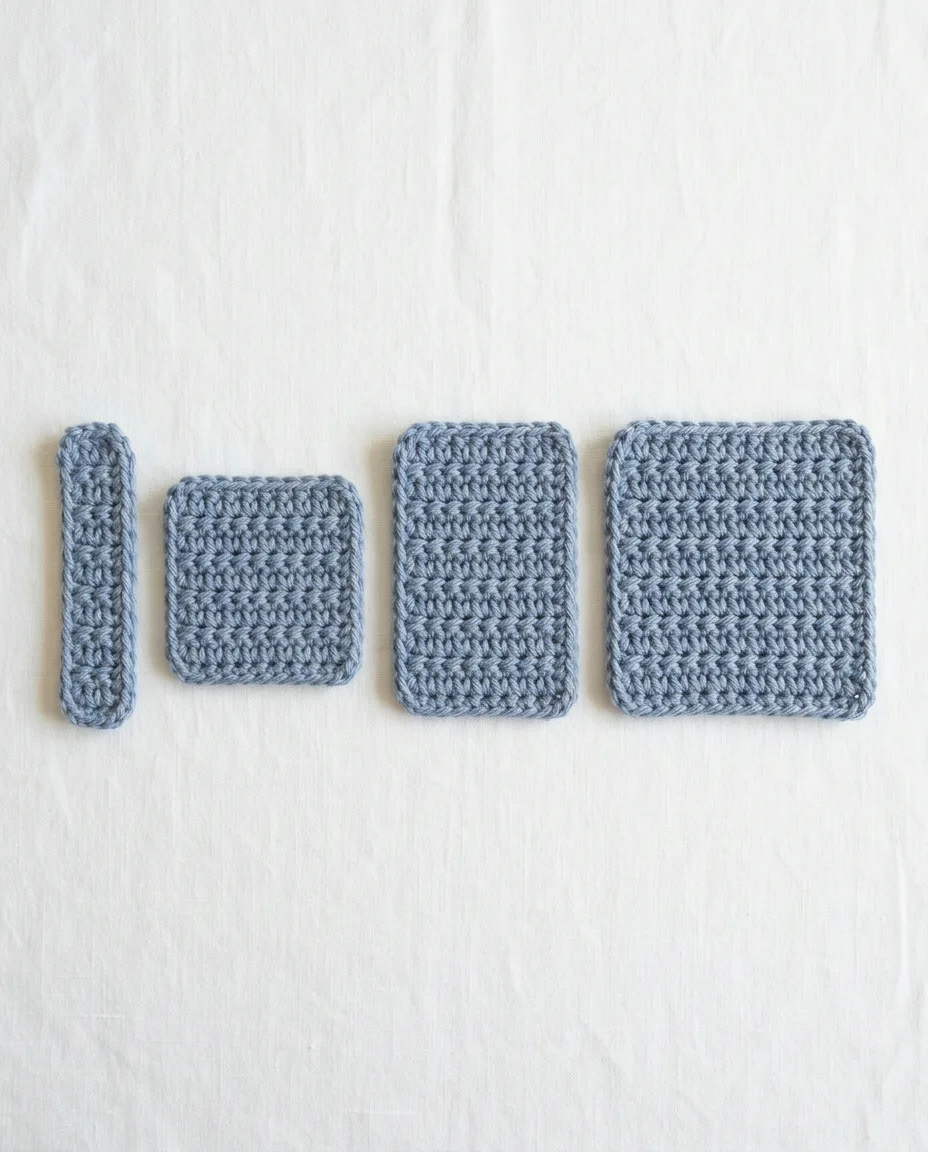
1 stitch in the end of each row, 3 in each corner. That’s your count for a single crochet border worked through both loops. It neatens the side edges and keeps the square lying flat.
Thick fabric soaks up a lot of water, so be gentle. Wash wool or acrylic thermal pieces softly, squeeze them out in a towel, then dry them flat. Cotton potholders can go in the washing machine. They’ll shrink a bit, though, and come out even stiffer.