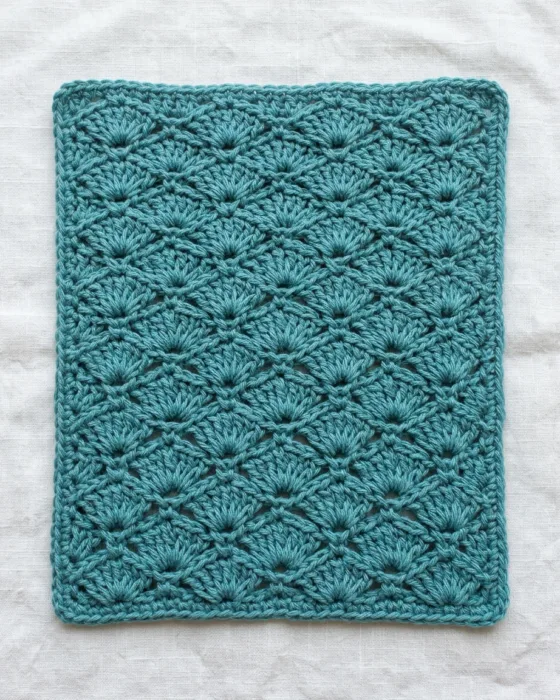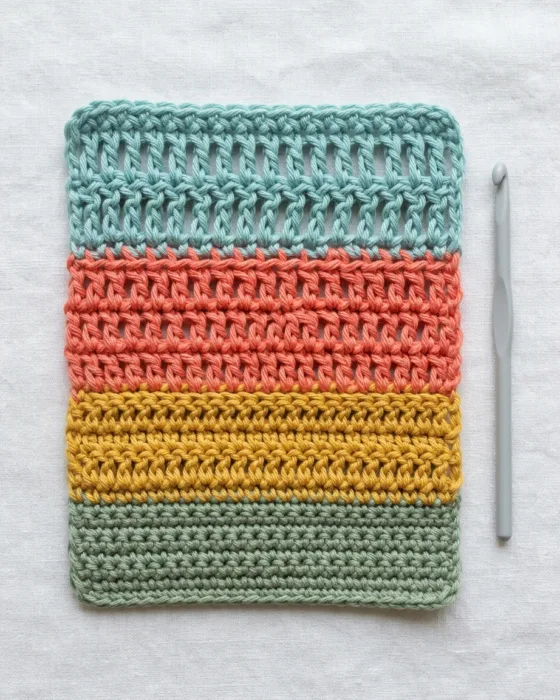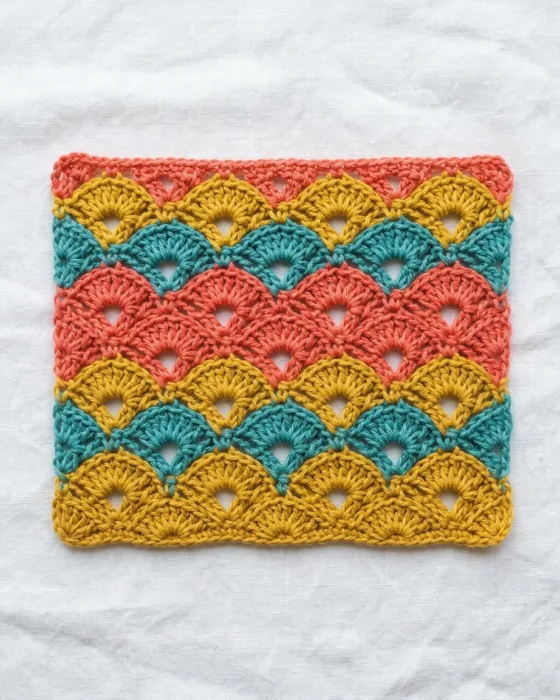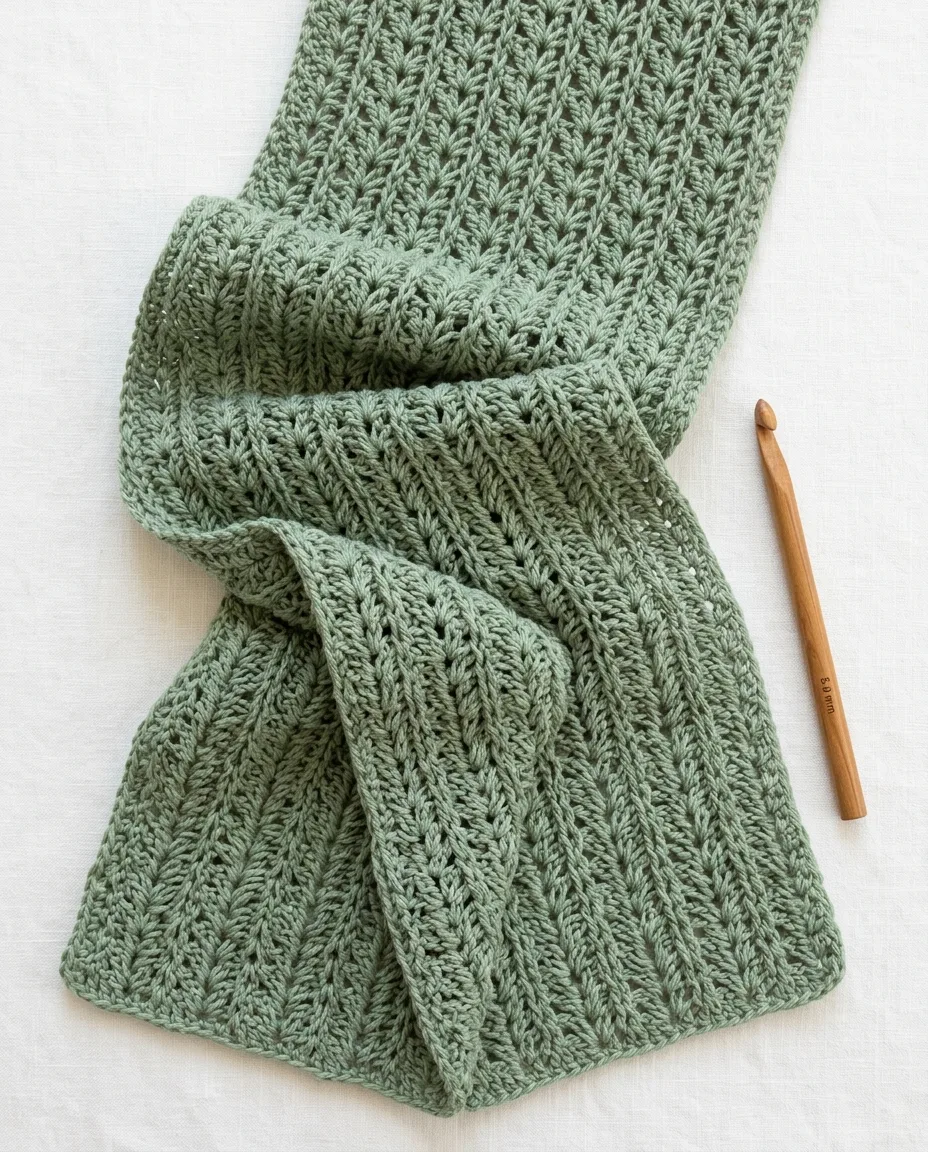
A woman on a train pulls a half-finished scarf out of her tote. Two feet long already, and she only started it on Monday. The fabric is all little open Vs stacked in tidy columns, with light coming straight through. Her neighbor asks what the stitch is. Just double crochet in pairs, she says. That’s close to the whole secret.
V-stitch is two double crochets worked into the same spot with one chain between them. At the top the pair spreads apart into a V. Each new row tucks its Vs into the gaps of the row below. And since every V covers three stitches of width using only two real stitches, the rows go fast and use less yarn. US crochet terms throughout. The treble crochet guide breaks the whole project into steps.
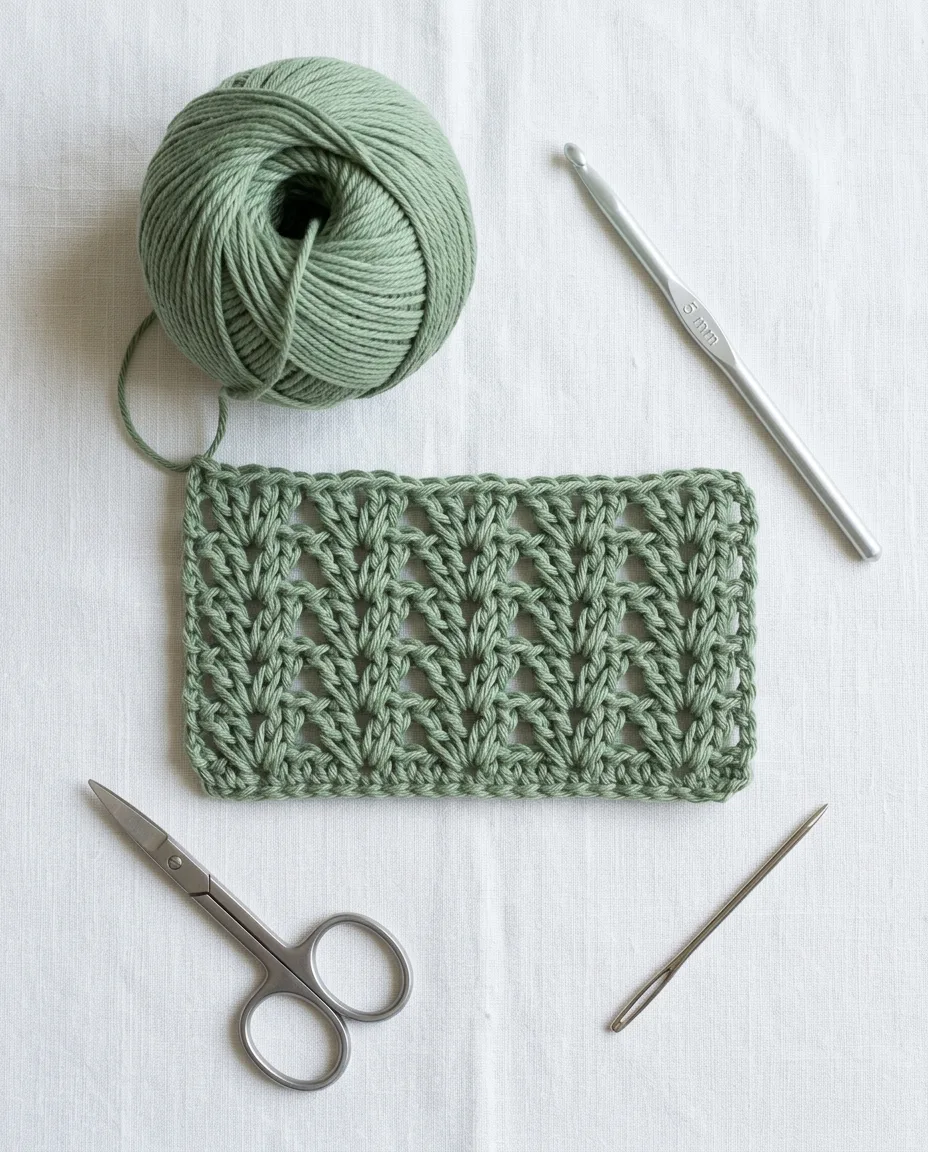
Start with a swatch, a small test square you make before the real project. This one is about 6 inches (15 cm) wide. Most people finish it in under an hour.
Work one V-stitch
Every V is made of double crochet, so the steps teach that stitch along the way. A yarn over means wrapping the yarn over the hook from back to front. Keep the working yarn behind the hook while you do it. That’s the strand running to the ball.
- Yarn over once. Two loops on the hook.
- Push the hook through the chain or space where the V goes.
- Yarn over again and draw the hook back out. Now there are three loops.
- Yarn over and pull through the first two. Two loops stay on the hook.
- Yarn over and pull through those last two. That’s one double crochet.
- Make one chain by pulling a yarn over through the single loop on the hook.
- Yarn over, then put the hook back into the very same place as the first double crochet.
- Finish a second double crochet just like the first. The pair is one V-stitch.
Short version, for later: (dc, ch 1, dc) in the same place. Don’t skip the chain in the middle. It’s tiny, but it makes the hole, and on the next row that hole is where your hook goes.
 Save
The swatch, row by row
Chain 22. Each chain stitch is a yarn over pulled through the loop on your hook. Keep them loose. A tight starting chain pulls the bottom edge into a curve. Blocking, which means wetting a piece and pinning it flat to dry, won’t fully fix it.
- V-st in 5th ch from hook (skipped 4 ch count as first dc and 1 skipped ch), *sk 2 ch, V-st in next ch; rep from * 4 more times, sk 1 ch, dc in last ch, turn (6 V-sts)
- ch 3 (counts as dc), V-st in ch-1 sp of each V-st across, dc in top of turning ch, turn (6 V-sts)
- Rep Row 2 (6 V-sts)
- Rep Row 2 (6 V-sts)
- Rep Row 2 (6 V-sts)
- Rep Row 2 (6 V-sts)
- Rep Row 2 (6 V-sts)
- Rep Row 2 (6 V-sts)
- Rep Row 2 (6 V-sts)
- Rep Row 2, fasten off (6 V-sts)
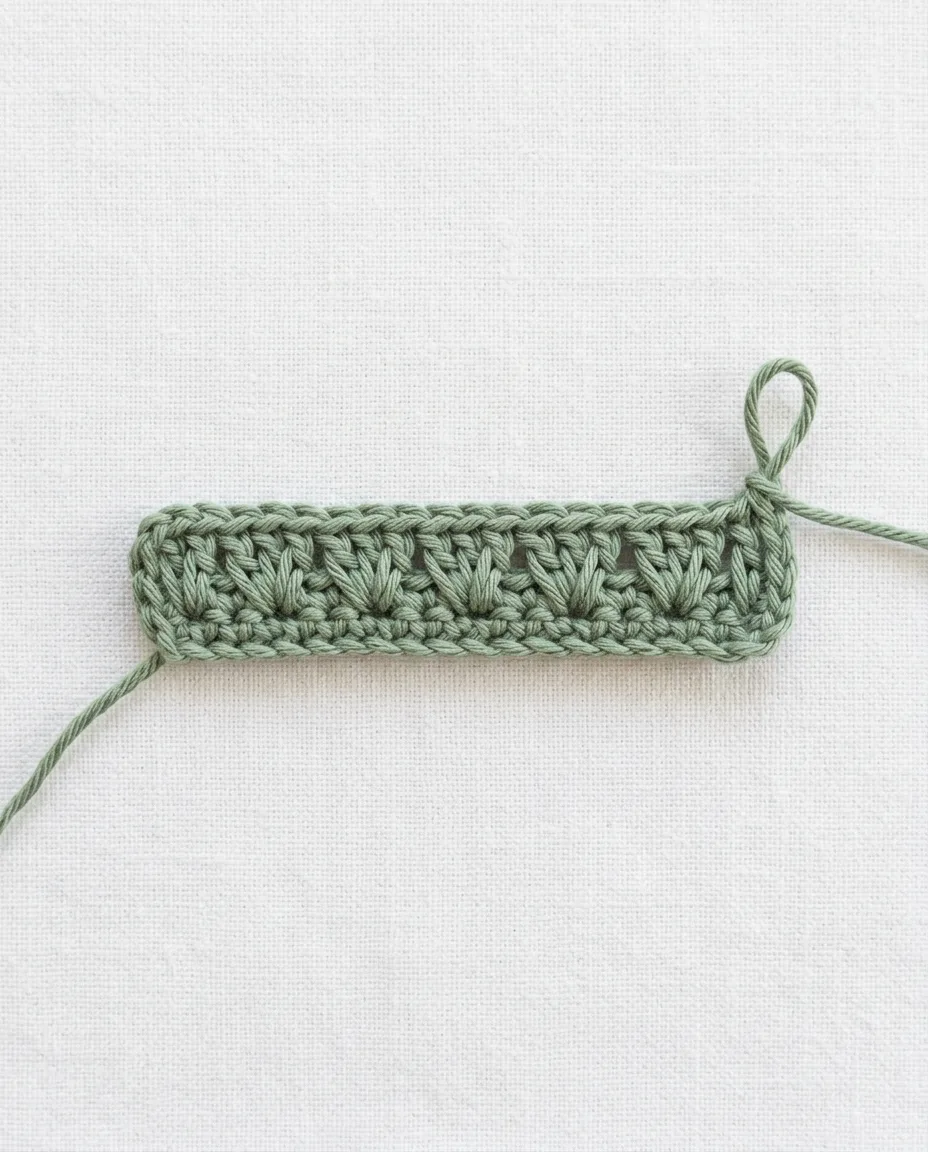
Row 1 is slow. You’re counting chains, and each V sits on a single chain that’s easy to miss. When it’s done you should see six small Vs in a line, with a plain double crochet standing at each end. There is a fuller walkthrough in the guide to herringbone double crochet.
 Save
But from Row 2 on, the pattern practically reads itself. The chain-1 space in the middle of each V is an obvious hole. Your hook goes straight in. Go under the chain and into the hole. Don’t stab through the chain itself. You never work into the tops of the double crochets at all, which is exactly why the rows fly. The only exceptions are at the edges. At the start of each row, a turning chain of 3 is your first double crochet. It lifts the yarn to row height. The last double crochet of each row goes into the top of the turning chain below.
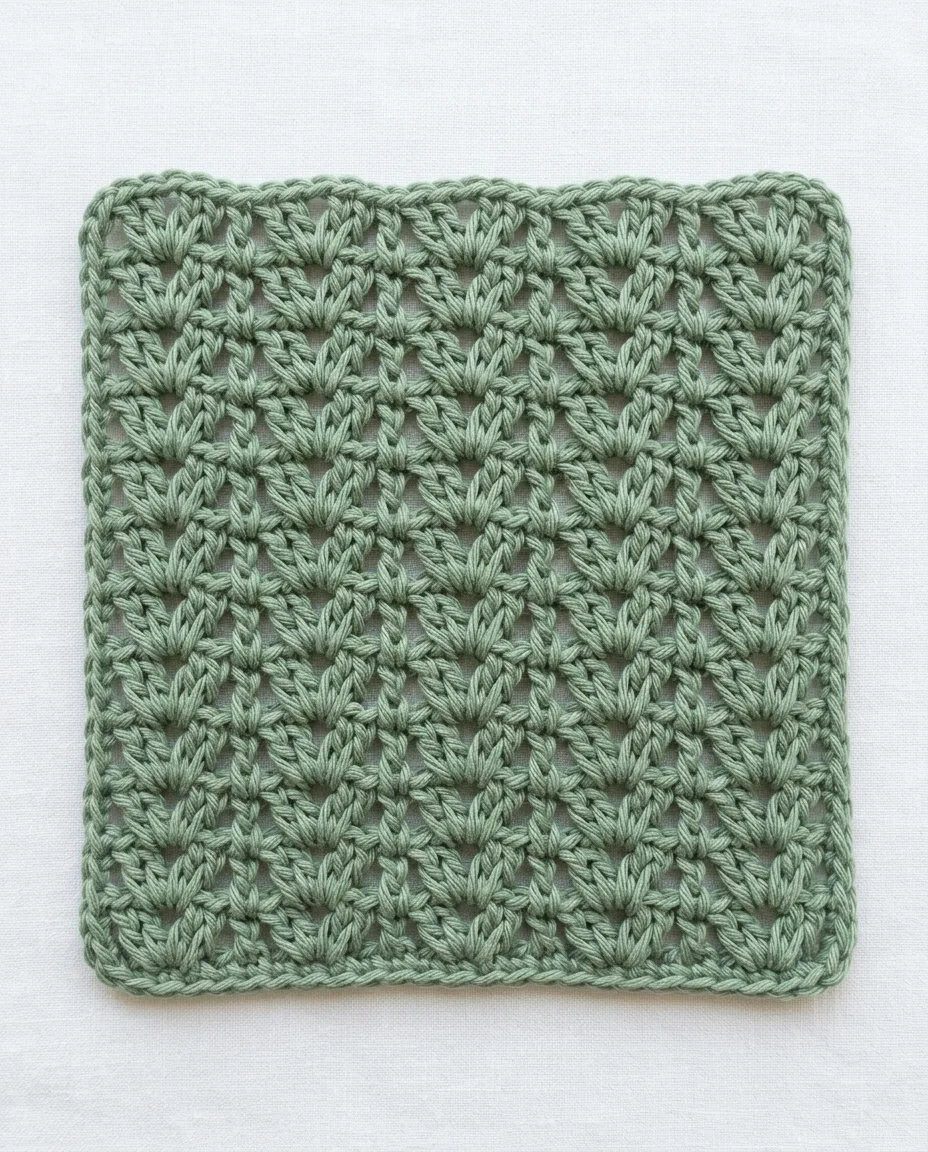
By Row 10 you have a roughly square swatch. With worsted and a 5 mm hook, expect about 4.5 V-stitches and 8 rows to 4 inches (10 cm). That’s your gauge: how many stitches and rows fit in a set width. If size matters for the project, check it first.
 Save
Fewer stitches, more inches
Look at three stitches of width. Solid double crochet fills it with three full stitches. A V fills it with two double crochets and a chain, and a chain takes about two seconds. So each row carries a third fewer double crochets than a solid row the same width.
Height helps too. A double crochet row stands about twice as tall as a row of single crochet, the short stitch with one less yarn over. Those open spaces also mean less yarn per square inch. A V-stitch scarf can use noticeably fewer yards than the same scarf in solid double crochet.
Nothing is free, though. The holes let the wind through, so V-stitch is a poor pick for a winter hat. It drapes and breathes. It doesn’t hold warmth.
Scarves and summer tops suit it best
Pick this stitch for drape, meaning how loosely the fabric hangs and folds. In cotton or a cotton blend, V-stitch falls softly over a shoulder. That makes it good for light layers and spring scarves. Baby blankets are fine too, as long as the holes stay small. Tiny fingers can catch in a big gap, so use a hook no more than one size up from the yarn label. Shawls go the other way. Two hook sizes up gives a fabric that floats.
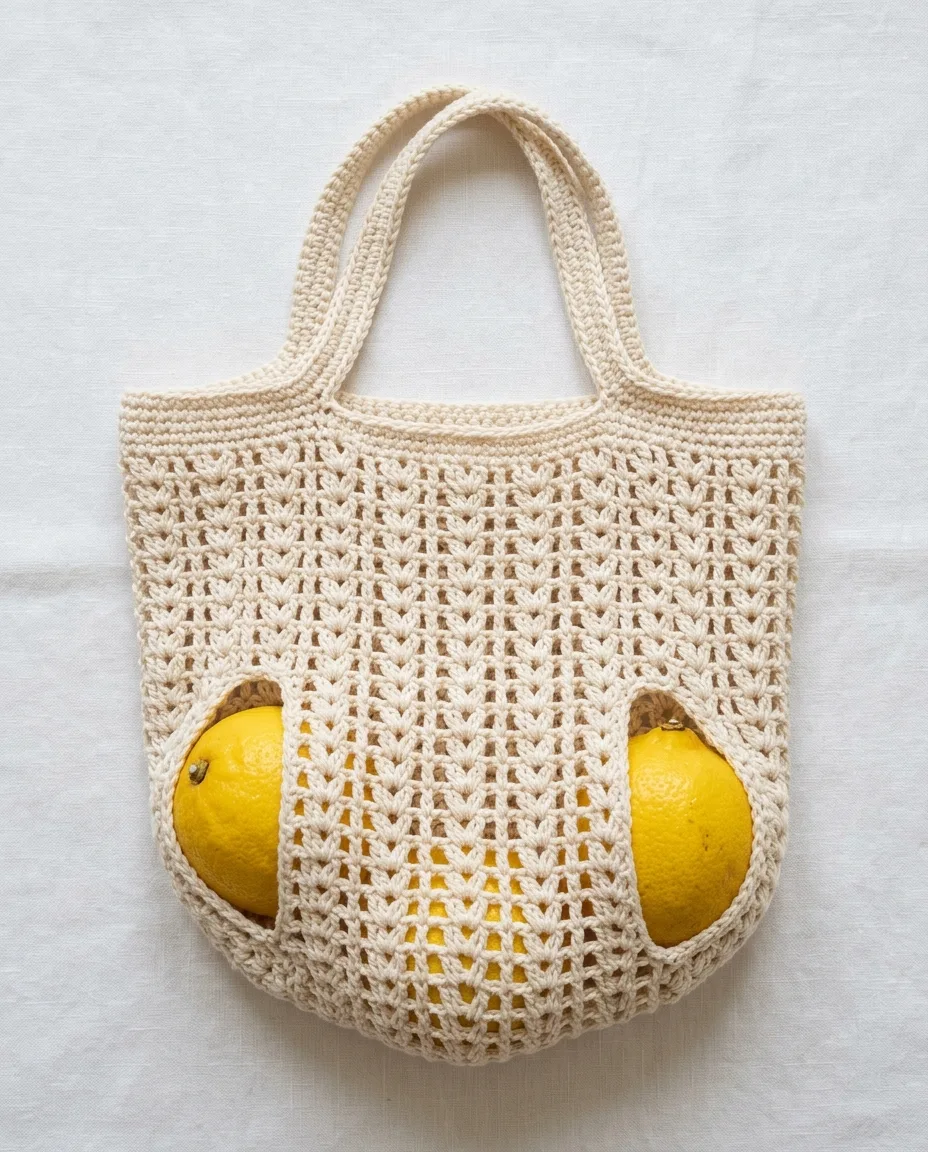
It’s also a natural for market bags. The fabric stretches around whatever you put in. Planning to carry anything small? Line the bottom with a few rows of solid stitches.
 Save
Why the edges drift and the Vs lean
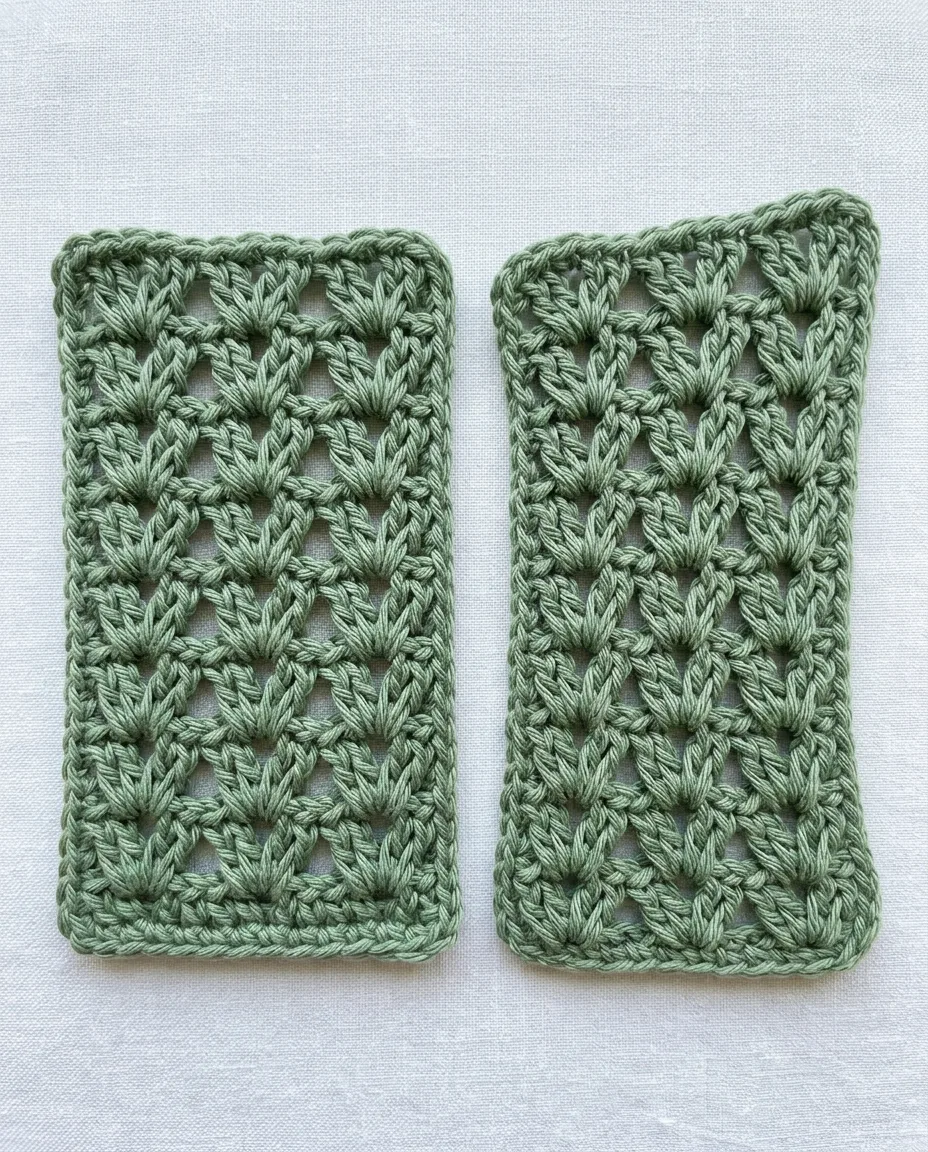
Most problems come down to the wrong hole. Between two Vs sits a second, smaller gap. It looks like a target, and after a long day the hook slips right into it. The V lands off center. Then the columns start to lean. Aim for the single chain in the middle of each V and nowhere else. On the first few rows a stitch marker helps, which is a small clip that hooks onto one stitch. Clip it into the first V of every row until your eye knows the right hole.
No other mistake changes the width as much as a lost edge stitch. Forget the double crochet in the top of the turning chain and that side loses a stitch. Over ten rows the swatch narrows into a slight wedge. So count at the end of every row. Six Vs, plus one stitch at each edge.
Tension comes third. Squashed, closed-up Vs mean your yarn overs are too tight. Go up half a hook size. Or pull each loop up to the height of the hook shaft before finishing the stitch. The guide to crochet slip stitch without tight fabric covers the fix step by step.
 Save
Stretch the V wider for even more air
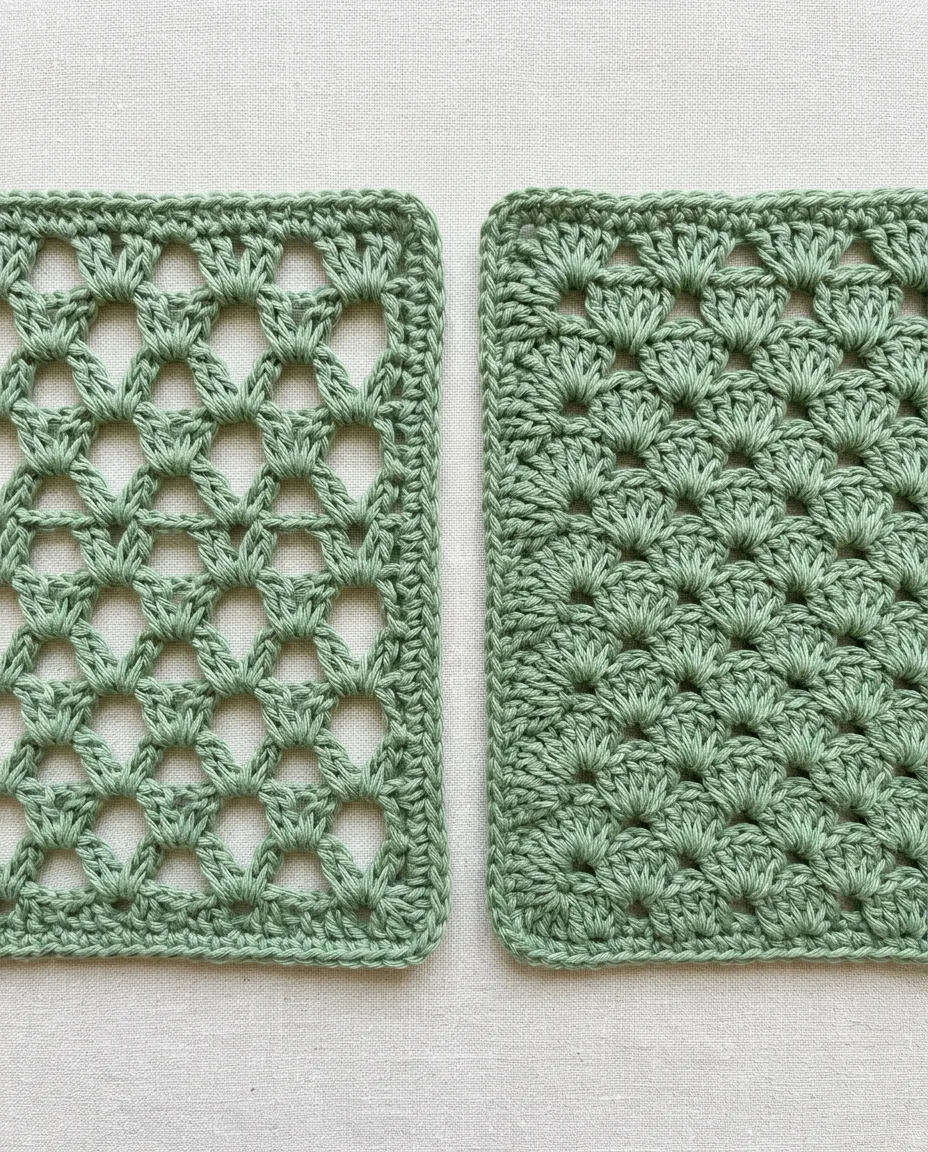
Two small tweaks give you a whole different fabric. The first swaps the single chain for two: (dc, ch 2, dc) in the same place. Bigger holes, and the fabric turns into a light mesh. Leave the starting chain alone, since the spacing between Vs stays the same.
The second doubles the posts. Work (2 dc, ch 1, 2 dc) into each space, skipping 3 between groups on the first row. It fills the fabric in and looks closer to a shell. It also eats yarn much faster. Swatch it before buying yarn for a whole blanket.
 Save
Blocking opens the holes
Straight off the hook, V-stitch often looks bunched up. Blocking sorts out most of that. You wet or steam the finished piece and pin it flat to dry at the size you want.
For cotton, soak the swatch in cool water for ten minutes. Press the water out in a towel. Pin it out on a towel or a foam mat, pulling gently both ways until the Vs open and the columns run straight. Then leave it alone until it’s completely dry. Usually that means overnight.
Acrylic does better with steam. Hold the iron an inch above the fabric and never press down, because heat can flatten acrylic permanently. Weave in your ends after blocking. That way they settle in the same direction as the stitches.
 Save
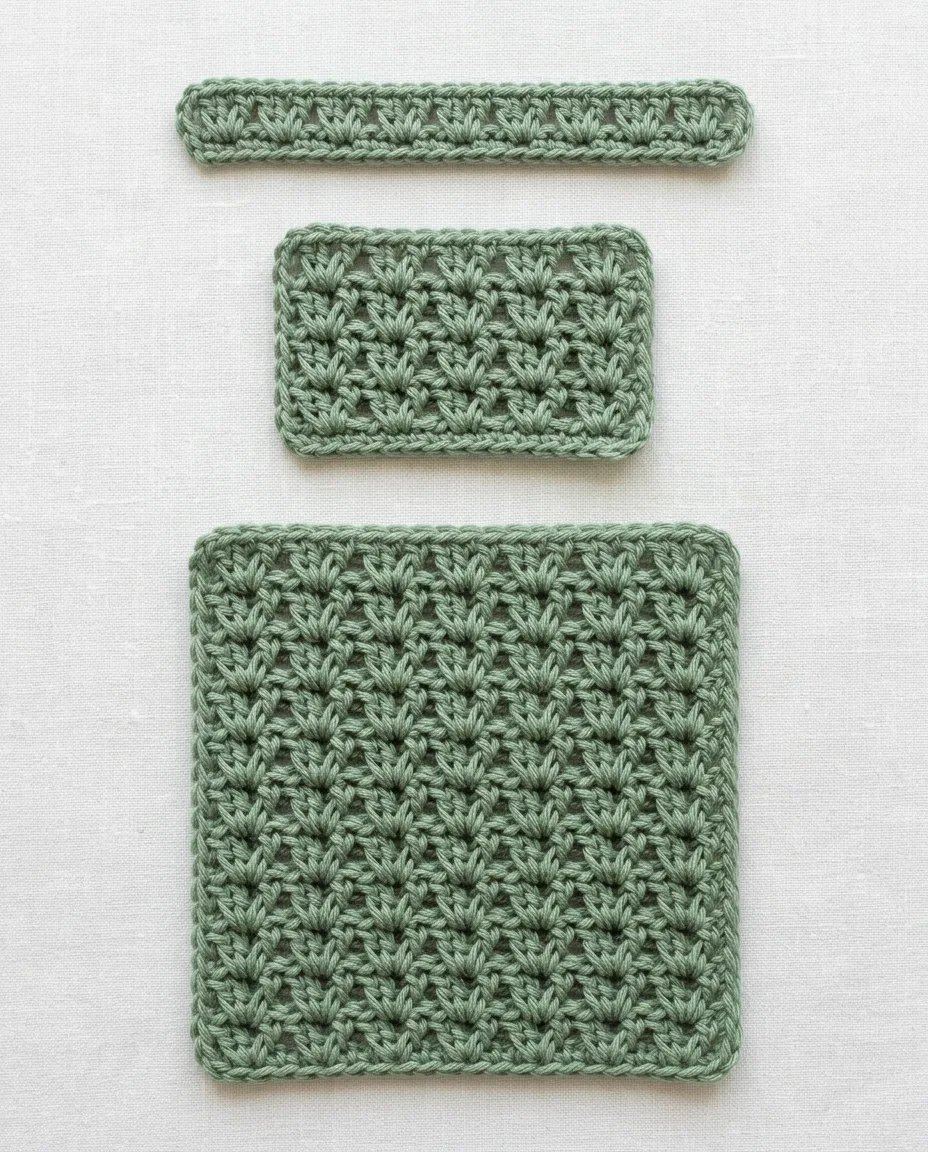
Once the swatch measures right, scale up. For every extra V you want, add 3 chains to the starting chain. Keep the plus 4 at the end and the edges still come out straight.