Short answer
Most beginner patterns lean on about two dozen abbreviations, mainly the six stitch names plus inc, dec and the repeat signs. Learn those, check the count in parentheses after each round, and make sure the pattern is in US terms before you start.
Crochet patterns are written in a shorthand that nobody stops to explain, and that’s unfair to anyone starting out. Most of it is easier than it looks. A couple of dozen abbreviations carry nearly every beginner pattern. Once they click, a line like “(sc, inc) x6 (18)” reads like a plain sentence. Expect a few swatches, small practice squares, before it feels automatic.
All of the terms here are US crochet terms. UK patterns use some of the same words for different stitches, and that mix-up gets its own section further down.
The stitches every pattern names
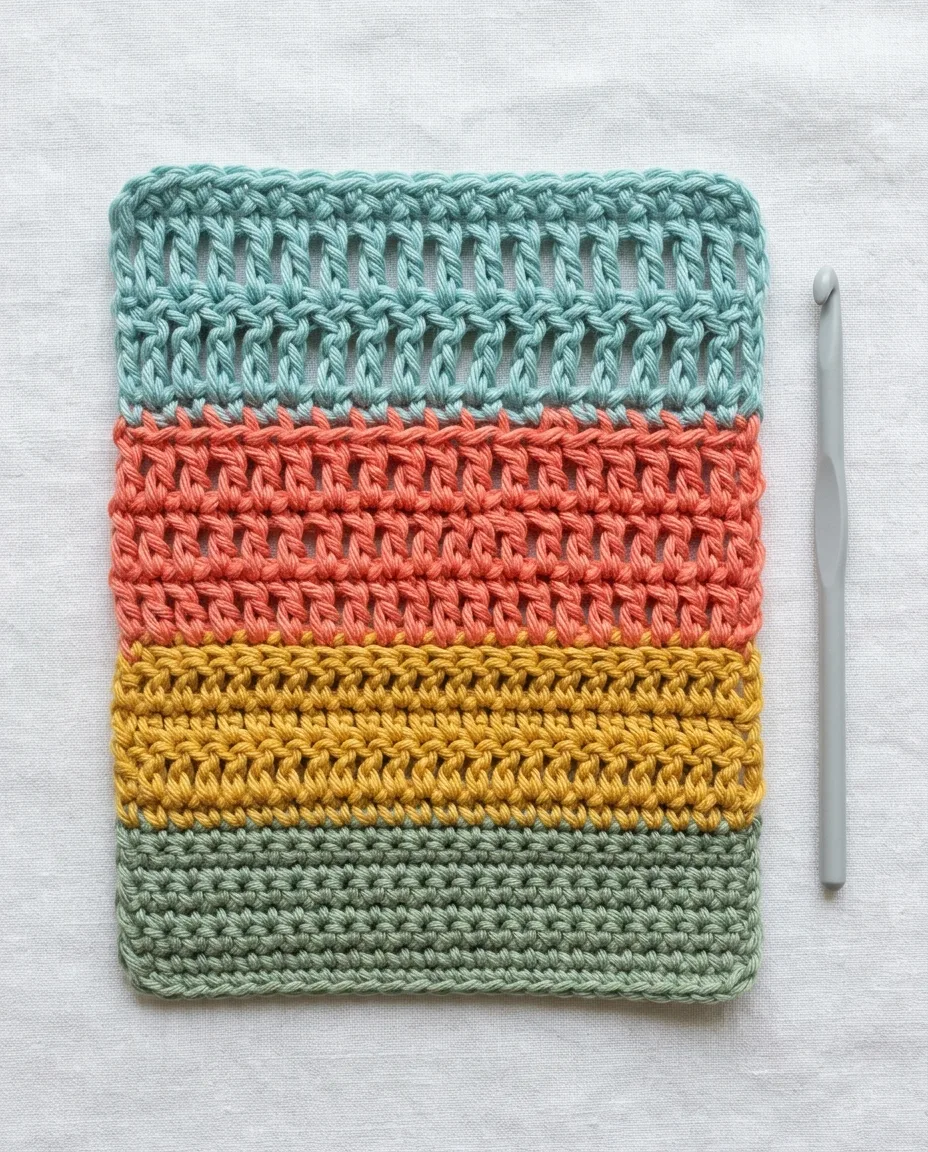
Six stitches do most of the work. Each one stands taller than the one before it, and that height is really the whole difference between them. Every one of them uses a yarn over (yo): wrap the yarn over the hook from back to front.
| Abbreviation | Stitch | What your hand does |
|---|---|---|
| ch | Chain | Yarn over, pull through the loop on the hook |
| sl st | Slip stitch | Hook into the stitch, yarn over, pull through both loops at once |
| sc | Single crochet | Hook in, loop through, yarn over, through 2 loops |
| hdc | Half double crochet | Yarn over, hook in, loop through, then through all 3 |
| dc | Double crochet | Yarn over, hook in, loop through, then 2 loops at a time, twice |
| tr | Treble crochet | Yarn over twice, hook in, loop through, then 2 loops at a time, three times |
Almost every pattern starts with a chain (ch). Wrap the yarn over the hook and pull it through the loop that’s already there. That’s one chain. A slip stitch (sl st) is barely taller. Push the hook into a stitch and wrap. Pull the new loop through everything on the hook in one go. Patterns use it to join a round, or to travel along an edge without adding height.
Single crochet (sc) is the stitch toys are made of. Push the hook into the stitch and pull up a loop. Two loops on the hook now. Wrap again and pull through both. You get a short, dense stitch with a little V on top, and stuffing can’t squeeze through it.
Then come the taller ones. For a half double crochet (hdc), wrap the yarn once before the hook goes in. Bring a loop back through and you’ll have three on the hook. Pull through all three together. A double crochet (dc) starts the same way, though the finish changes: pull through two loops, then through the last two. Treble (tr) wraps twice before going in and pulls through two loops three times over. More wraps, longer post.
 Save
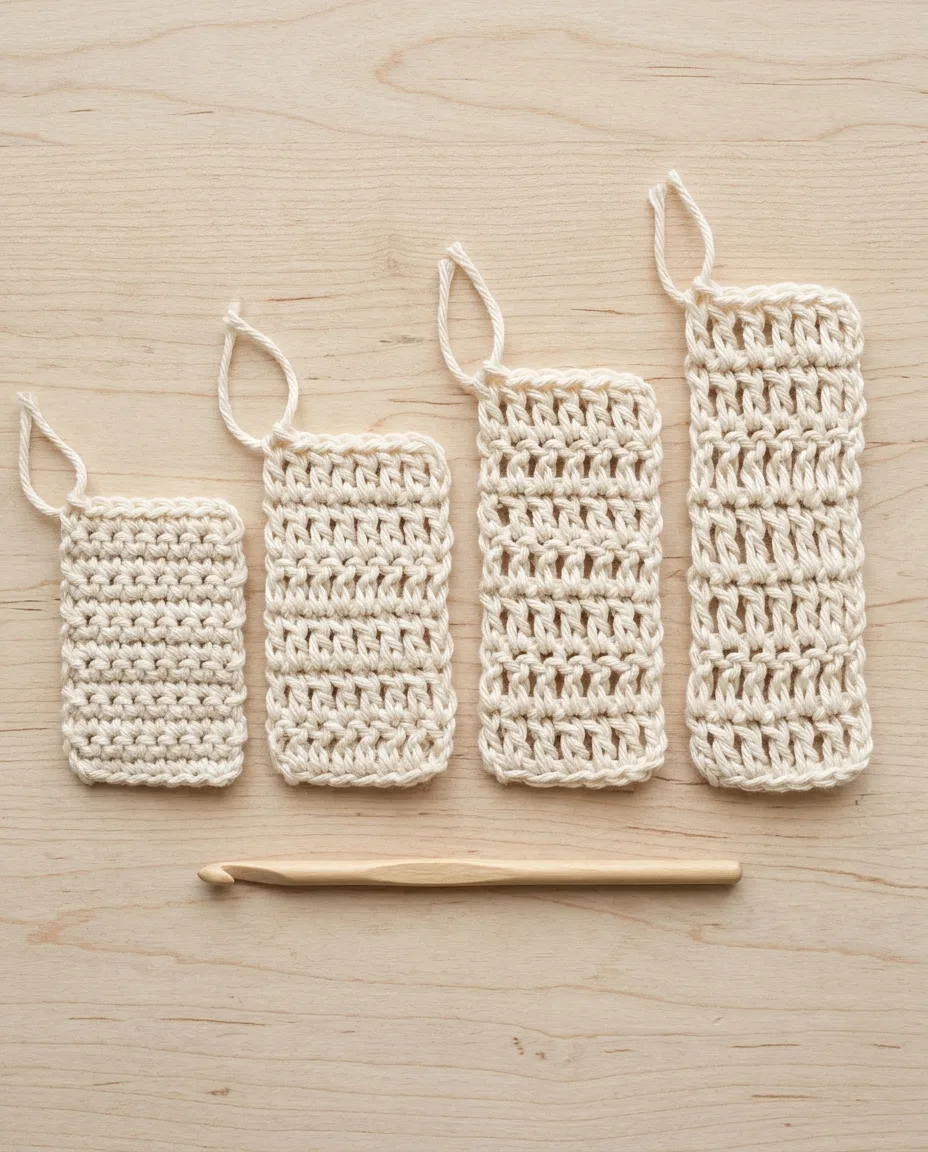
Don’t try to memorize the table in one sitting. Work four rows of single crochet, then four rows of double crochet on top. The height difference sticks better than any chart. Your edges will wander at first (most first swatches lean a bit), and that settles down with practice.
Read increases and decreases as a pair
An increase (inc) is two single crochets worked into the same stitch. One stitch below, two on top. A decrease (dec) does the opposite job. Draw a loop through the next stitch, then another through the one after it. Three loops now. Wrap and pull through all three, and two stitches have become one. Some patterns write it as sc2tog, short for “single crochet two together”, which is a more honest name for it.
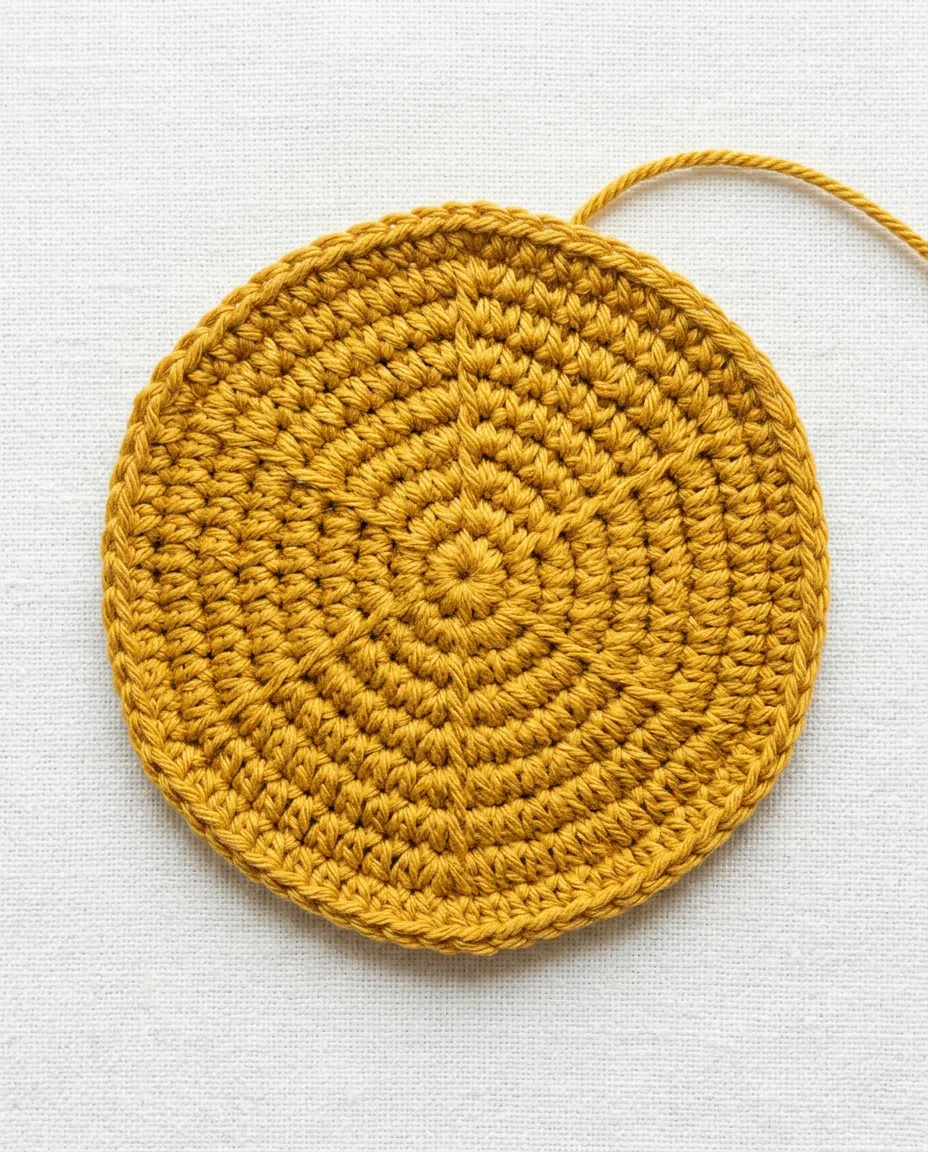
Six increases, spread evenly around each round, keep a circle lying flat. Put them all in one spot and the edge ruffles. Too few and the circle cups up into a bowl. That cupping is exactly what a toy’s head wants once the increases stop.
 Save
Stuffed toys usually call for an invisible decrease, a neater version of the same move. Slide the hook under the front loop, the strand nearest you, of the next stitch. Do the same with the front loop of the one after. Yarn over and pull through those two strands, then finish it like a single crochet. It leaves no gap for stuffing to peek out. If a toy pattern just says “dec”, check its notes, because most of them mean this version.
Loops, and the ring that starts a toy
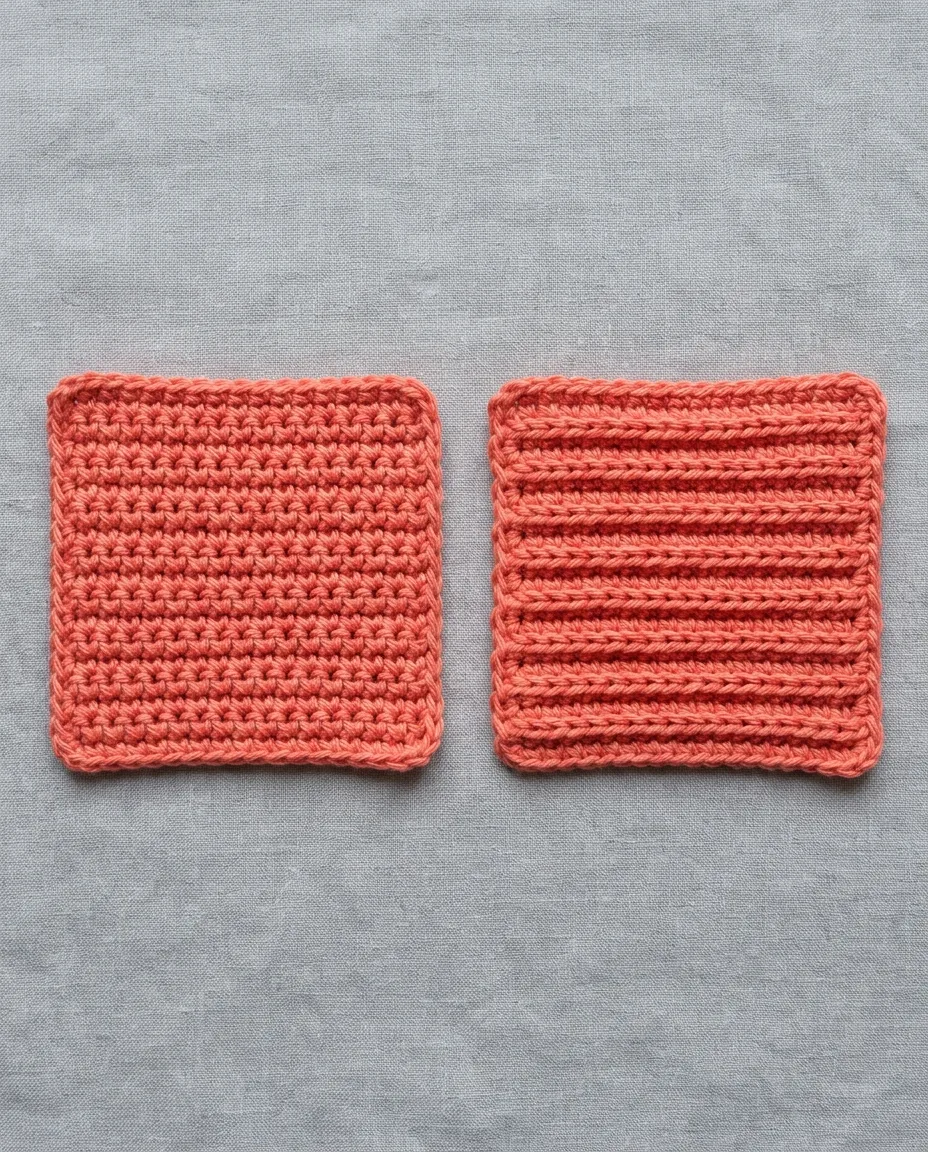
Tip your work toward you and look along the top edge. You’ll see a row of sideways Vs. Normally the hook goes under both strands of each V. Slide it under just the near strand and you’re working in the front loop only (FLO). Under just the far strand? That’s back loop only (BLO).
Why would a pattern ask for that? The strand you skip stays on the surface as a ridge. A round worked in back loops makes a crisp fold line. That’s how a toy foot gets its flat sole. Baskets get their upright walls the same way.
 Save
MR means magic ring, a loose loop that pulls shut. Wrap the yarn twice around two fingers to make a loose loop. Work the first round of single crochets into that loop and then pull the tail hard. The center closes to almost nothing. A chain-2 start does a similar job but leaves a small hole in the middle, which is fine on a coaster. On a toy’s head it isn’t, because the stuffing shows through.
What brackets and asterisks are telling you
Repeats are where patterns squeeze the most into the least space. Anything inside brackets is a group. The “x6” after it is how many times you work that group. So (sc, inc) x6 means one plain single crochet, then one increase, and you keep alternating until you’ve done the pair six times.
Asterisks do the same thing with different punctuation. “*2 sc, inc; rep from * around” says to work two single crochets and an increase. Jump back to the asterisk and carry on until the round runs out. Rep is short for repeat. You’ll see both styles, sometimes inside the same book.
And there are the little words around the stitches. Sk tells you to skip a stitch and let the hook pass over it. When a pattern says “3 dc in ch-sp”, it wants all three double crochets worked into the gap a chain left behind. A few more turn up often enough to learn:
- st and sts: one stitch, several stitches
- beg and rem: beginning and remaining
- tog: together, as in sc2tog
- RS and WS: right side and wrong side of the work
- tch: the turning chain, extra chains at the start of a row that lift the hook to the right height
- FO: fasten off, meaning cut the yarn and pull the tail through
 Save
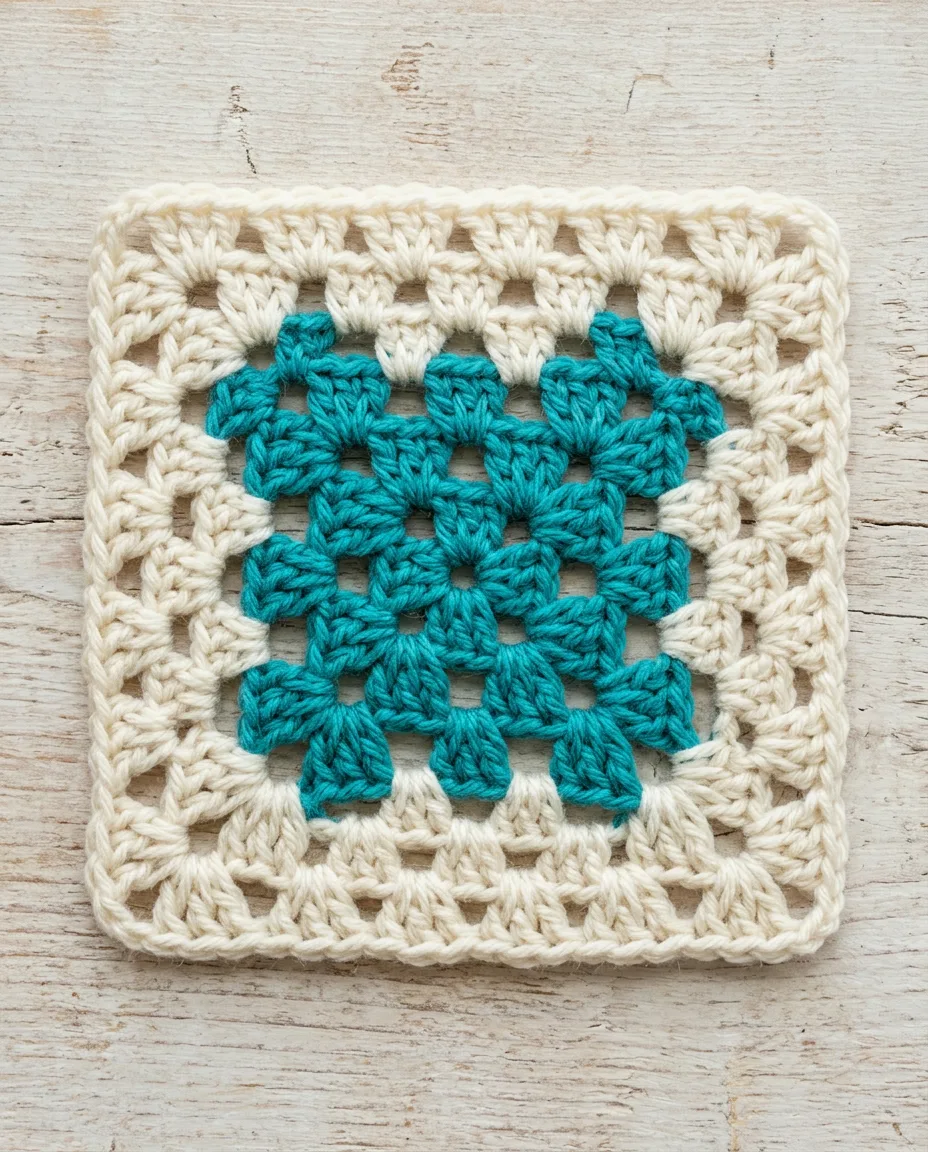
Granny squares run on exactly this kind of repeat. Each round is one bracketed group of three double crochets and a chain, worked along each side, with a bigger group at every corner.
The number at the end of each round
That number in parentheses is the stitch count. It’s how many stitches you should have once the round is done. Count them. Every round, at least until the pattern feels familiar.
But a count only helps if you know where the round started. Clip a stitch marker (a small plastic clip) or a scrap of contrast yarn into the first stitch of each round, then move it up as you go. Toys are worked in a spiral without joining, and without a marker the start of the round vanishes into the fabric.
Rnd means round, worked in a circle. Row means you’re working back and forth and turning at each end. Off by one? It’s usually a missed increase, or a stitch worked into the marker’s loop by accident. Pull back to the marker and redo that round. Ripping out one round is far quicker than living with a lopsided head.
 Save
Why UK patterns read one stitch taller
Not every pattern speaks the same dialect. UK patterns shift each stitch name down by one. A UK double crochet is worked exactly like a US single crochet, and a UK treble is a US double.
| US term | UK term |
|---|---|
| Single crochet (sc) | Double crochet (dc) |
| Half double crochet (hdc) | Half treble (htr) |
| Double crochet (dc) | Treble (tr) |
| Treble (tr) | Double treble (dtr) |
| Skip (sk) | Miss |
Scan the pattern for “sc” first. Current UK patterns don’t use a single crochet, so if it shows up, you’re reading US terms. Look for “htr” too, which only UK patterns use. Get it wrong and every stitch comes out one size taller. On a toy that means a floppy, open fabric with stuffing poking out between the posts.
One round, read out loud
Here’s the start of a small ball, the same opening most toy heads use. Read each line before you look at the plain version under it.
- MR, 6 sc in ring 6 sts
- inc x6 12 sts
- (sc, inc) x6 18 sts
- (2 sc, inc) x6 24 sts
- sc in each st around 24 sts
Round 1 is a magic ring with six single crochets in it. Round 2 puts two stitches into every stitch. Round 3 alternates a plain stitch with an increase all the way around. Round 4 is the same idea with two plain stitches between increases. Then round 5 adds nothing at all, and that’s where the flat circle starts to curve up into a cup.
Every toy pattern is built from these same pieces in a different order. Read the line, work it, then check the count in parentheses before you move on.