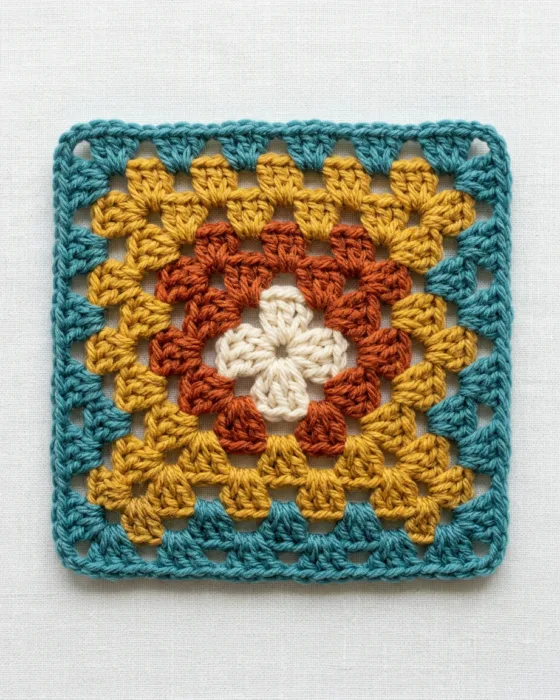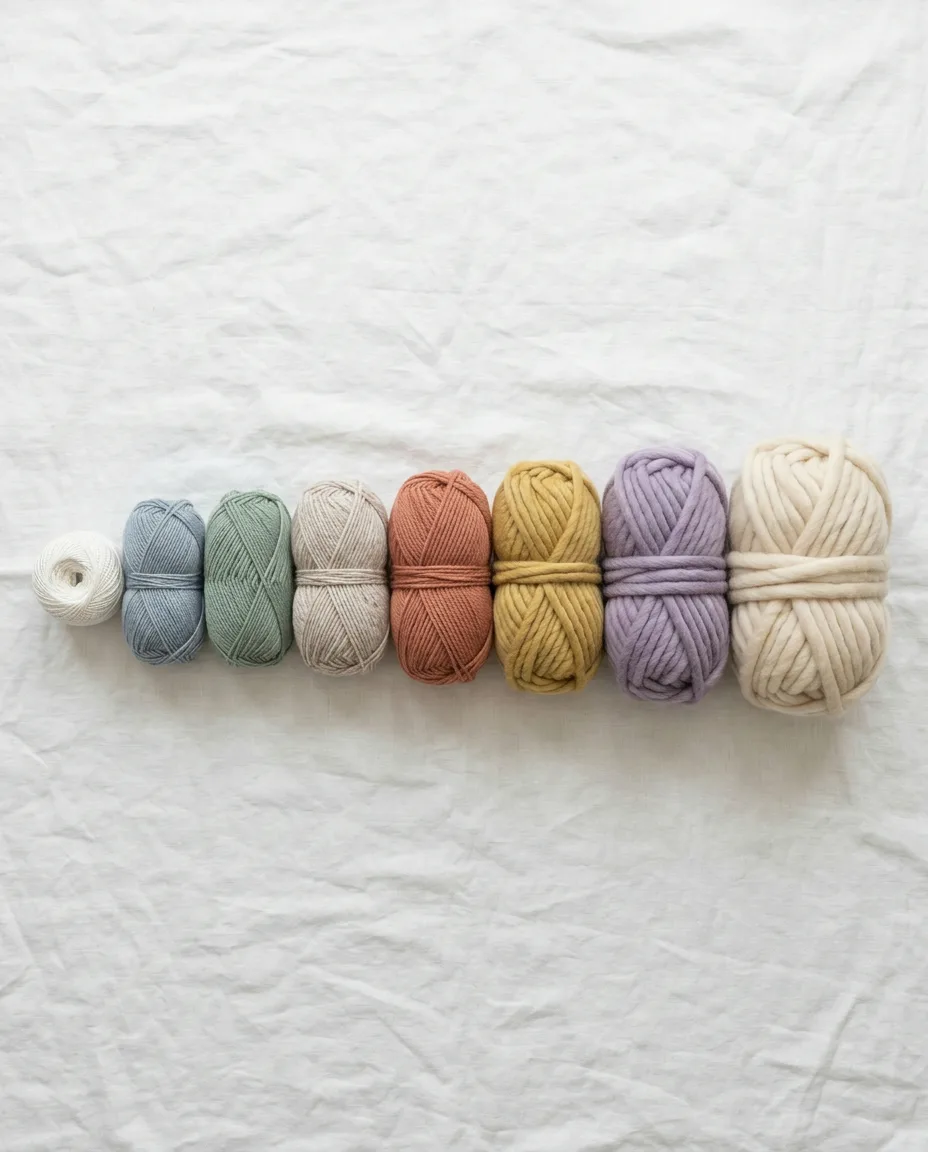
Short answer
Yarn weight means thickness, graded 0 (lace) to 7 (jumbo) by the Craft Yarn Council. Worsted, category 4, works with a 5.5 mm hook for fabric and a 3.5 to 4 mm hook for toys.
Every yarn sold in the United States falls into one of eight weight categories, numbered 0 to 7, set by the Craft Yarn Council. The number sits inside a small skein symbol, a drawing of a yarn bundle, on the paper band around the ball. Weight here means thickness, and has nothing to do with how heavy the ball is. A 50 g ball of lace weight holds about 400 yards. The same 50 g of jumbo holds about 15.
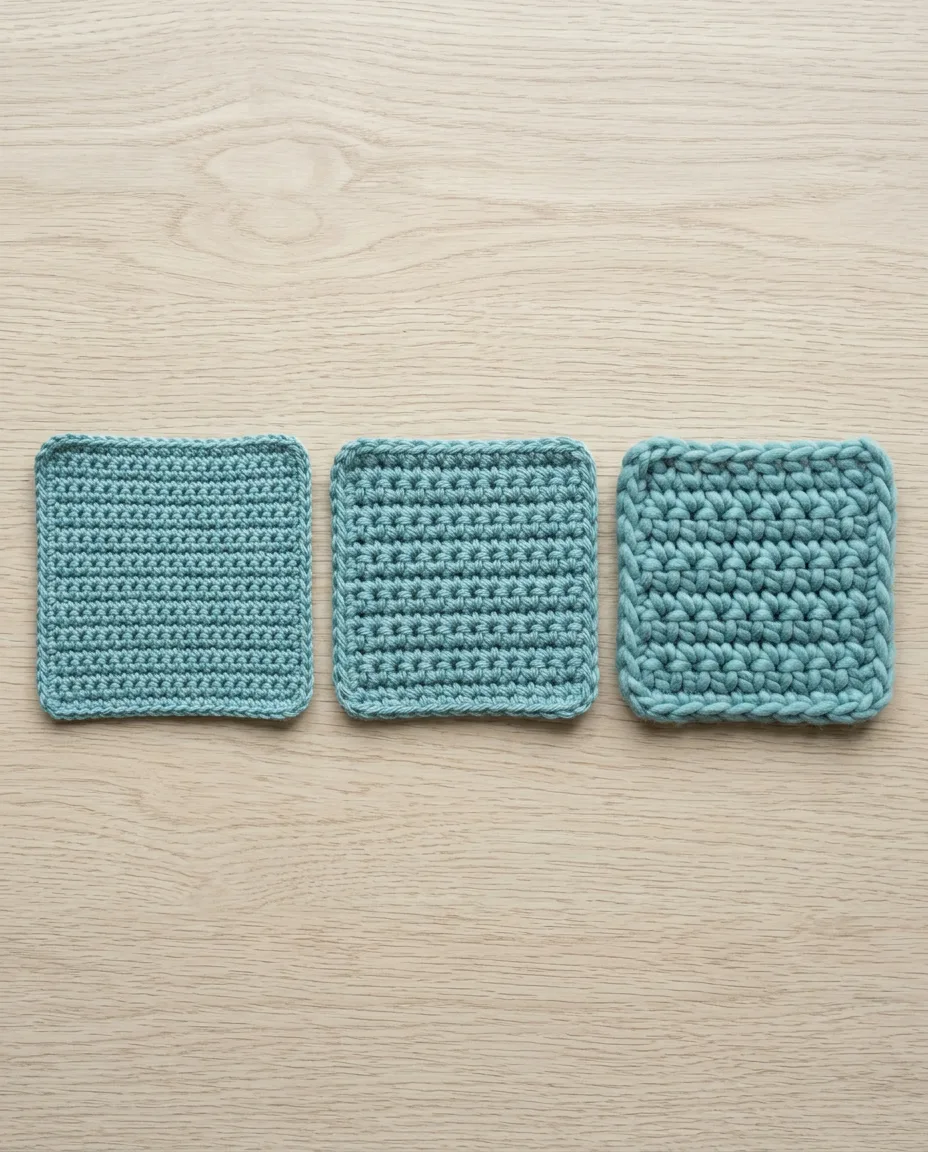
That one number decides the hook you need and how many stitches fill 4 inches. It also decides how the finished piece feels. The same hat pattern worked in category 3 and category 5 yarn comes out in two different sizes, and the only thing that changed was the thickness of the strand. Below is the full table, then how to read a yarn that has lost its band and how to swap one weight for another.
The eight categories in one table
Hook sizes here are the Craft Yarn Council’s suggested range for ordinary fabric. Toys go smaller, which the next section covers. Stitches per 4 inches is for single crochet, the basic stitch. Work it by inserting the hook under both top loops of the stitch below and pulling up a loop. Then yarn over, which means wrapping the yarn over the hook, and pull through the two loops on the hook. Category 0 is the exception, measured in double crochet because single crochet in thread is rarely used for anything.
| Category | Name | Also called | Hook range | Single crochets per 4 in | Typical uses |
|---|---|---|---|---|---|
| 0 | Lace | Thread, 10-count crochet cotton, cobweb | 1.6 to 2.25 mm (steel hooks) | 32 to 42 (double crochet) | Doilies, lace edgings, thread snowflakes |
| 1 | Super Fine | Fingering, sock, baby | 2.25 to 3.5 mm (B to E) | 21 to 32 | Socks, shawls, tiny toys |
| 2 | Fine | Sport, baby | 3.5 to 4.5 mm (E to 7) | 16 to 20 | Baby clothes, light summer tops |
| 3 | Light | DK, light worsted | 4.5 to 5.5 mm (7 to US 9) | 12 to 17 | Sweaters, detailed amigurumi, lightweight blankets |
| 4 | Medium | Worsted, aran, afghan | 5.5 to 6.5 mm (US 9 to K) | 11 to 14 | Hats, scarves, blankets, most toys |
| 5 | Bulky | Chunky, craft, rug | 6.5 to 9 mm (K to M) | 8 to 11 | Quick hats, cowls, bags, pet beds |
| 6 | Super Bulky | Super chunky, roving | 9 to 15 mm (M to Q) | 7 to 9 | Chunky blankets, baskets, oversized scarves |
| 7 | Jumbo | Jumbo, giant roving | 15 mm and up (Q and larger) | 6 and fewer | Arm-crochet blankets, floor poufs, big baskets |
Two of those rows cover most of what people make. Category 4, worsted, is the weight sold in the widest range of colors and the one nearly every beginner pattern assumes. Category 3, DK yarn, which is short for double knitting, is the next most common and the better choice for anything worn next to skin. The names in the third column are the old trade names, and they are still printed on bands and used in patterns from the UK. Sport and DK are different weights despite looking alike in the ball. Hold the two side by side and DK is visibly fatter.
 Save
SaveHook size follows the yarn, with one exception
The band’s hook suggestion gives a soft, drapey fabric with small gaps between stitches. That is right for a scarf or a sweater. For a stuffed toy it is wrong, because stuffing shows through the gaps. Amigurumi, the Japanese word for small crocheted stuffed toys, is worked 1 to 2 mm below the band. Worsted toys use a 3.5 mm (E) or 4 mm (G) hook, well below the 5.5 mm the band suggests. DK toys use 3 mm (D). The fabric comes out dense enough to hold its shape with no stuffing visible.
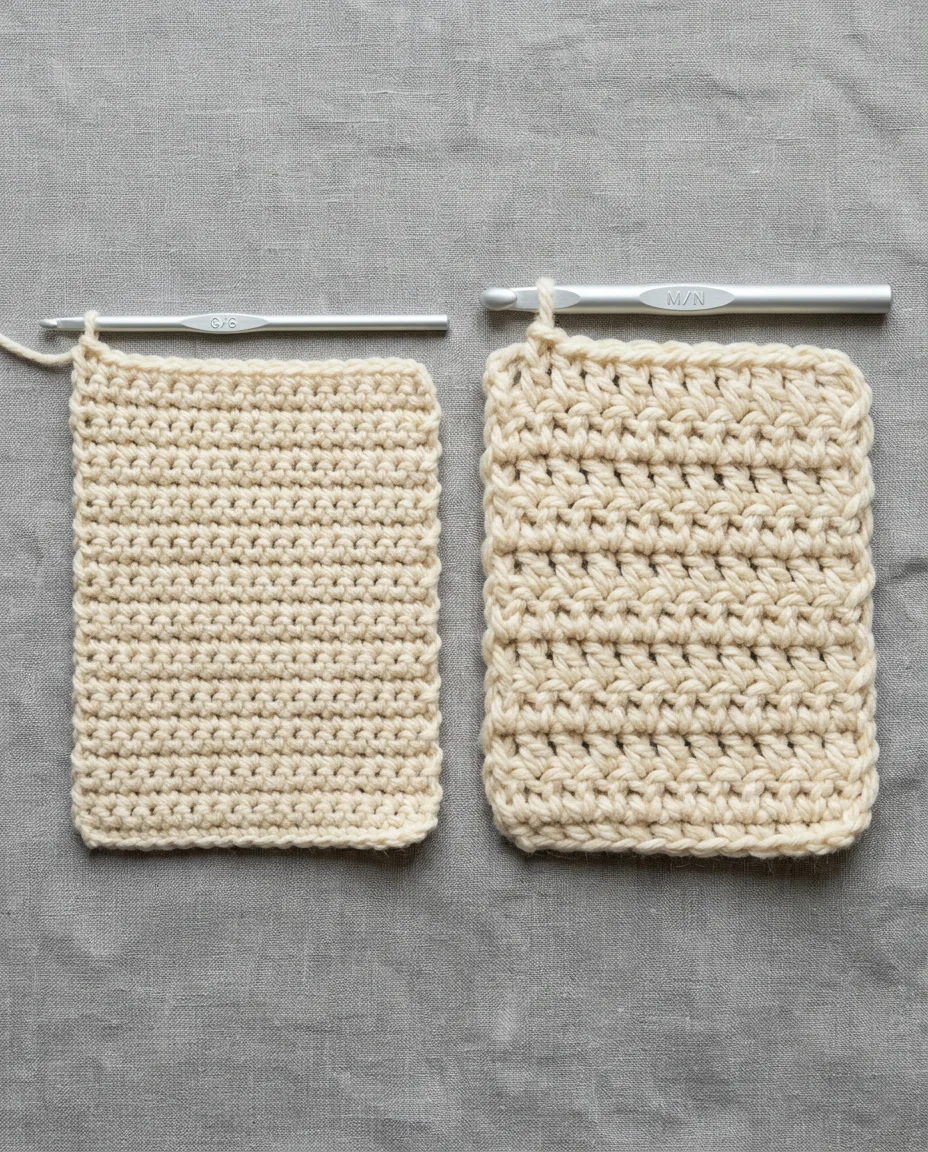
But the number on the band is a midpoint, and your own hands move it. Gauge, the number of stitches you fit into 4 inches, is what a pattern actually depends on. Different hands with the same yarn and hook can land two stitches apart because one pulls each loop tighter. Work a swatch, a test square of about 20 stitches by 12 rows, before any project where size matters, measure it, and change the hook until the count matches. Half a millimeter of hook changes the count by about one stitch per 4 inches in worsted. Hats and garments need this check. Dishcloths and toys can skip it, since a toy that comes out 10 percent bigger is still a toy.
Steel hooks under 2 mm have their own numbering, and it runs backwards: a steel size 10 is 1.3 mm and a steel size 4 is 2 mm. Aluminum and plastic hooks from 2.25 mm up use letters plus numbers, and the letters do not line up neatly between brands. The millimeter size is the only number that means the same thing everywhere, so patterns on this site give it first.
Reading a yarn with no band
 Save
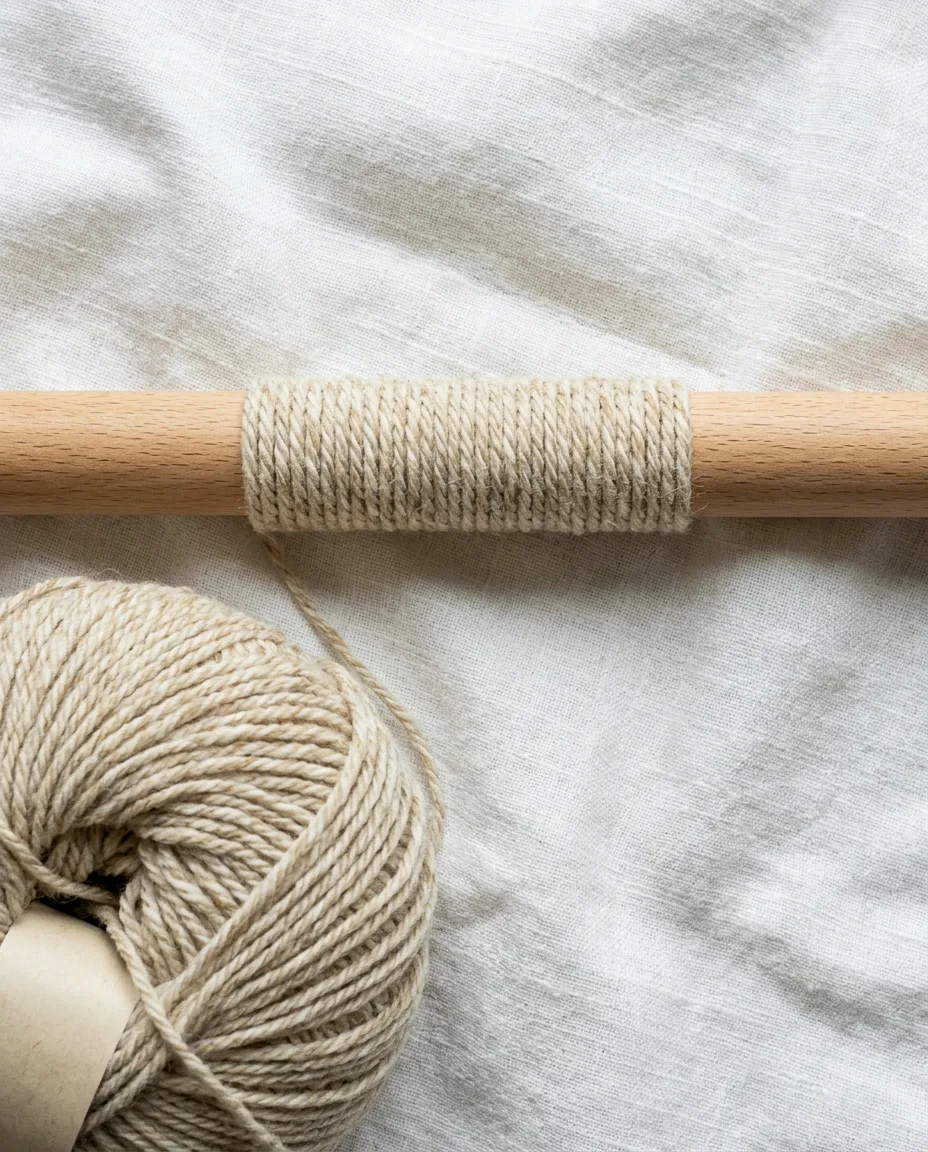
SaveWrap the yarn around a smooth pencil-width dowel, snug and side by side with no gaps, and count how many wraps fill 1 inch, 2.5 cm. This is wraps per inch (WPI), and it maps onto the categories closely enough to pick a hook. Lace is 35 or more. Super fine is 19 to 22. Sport is 15 to 18. DK is 12 to 14 and worsted is 9 to 11. Bulky lands at 7 to 8 wraps. Super bulky sits at 5 to 6, and jumbo is 4 or fewer. Take the count in two different spots, because hand-spun and roving yarns thicken and thin along their length.
Fluffy yarn defeats the wrap test. Mohair and brushed acrylic measure fat and crochet thin, since the halo squashes flat under a stitch. For those, go by the core strand, or crochet a 10-stitch test and compare the stitch size to a known worsted swatch. Chenille, the velvety yarn used for plush toys, is the other trap. It is sold as category 5 or 6 but has no stretch at all, so it wants a hook at the small end of its range or the stitches slide open.
Ply, the number of thin strands twisted together to make the yarn, tells you almost nothing about weight in the United States. A 4-ply from one mill is fingering and a 4-ply from another is bulky, because the strands themselves differ. The UK still uses ply as a weight name, where 4-ply means fingering and 8-ply means DK. Read a British pattern that way and the US table above lines up.
Swapping one weight for another
Yardage is the first thing that changes. A 100 g ball of worsted holds about 200 yards; 100 g of bulky holds about 130. A blanket pattern calling for 1,200 yards of worsted needs the same 1,200 yards of any other weight, so you buy by yards and never by ball count. Sizes change too. A hat written for worsted on a 5 mm hook comes out about 20 percent wider in bulky on a 6.5 mm hook, which only helps when you wanted a bigger hat.
Holding two strands together makes a heavier weight from a lighter one, and the arithmetic is reliable. Two strands of fingering crochet like one strand of DK. Doubled DK behaves like a light bulky. Two strands of worsted make a super bulky, and this is the usual way to get a thick blanket out of a yarn that comes in better colors. The doubled yarn uses the hook of the weight it imitates, so two worsted strands go on a 9 or 10 mm hook.
Going down a weight, from the pattern’s worsted to your DK, shrinks the piece by about 15 percent and drops a hook size. A toy survives this with no changes. A sweater needs either a size up in the pattern or the gauge math: finished width in the pattern times the pattern’s stitches per inch, then divided by your own.
 Save
SaveWhich weight to buy first
Buy worsted. One 100 g ball in a smooth, light-colored acrylic or cotton, with a 5 mm (H) hook for flat practice and a 4 mm (G) hook for the first toy. The stitches are big enough to see and count, which matters more than anything in the first week, and the yarn costs under five dollars a ball. Dark colors hide the stitches. Fuzzy yarn hides them completely and frays when you pull work out, and pulling work out is most of the first week.
Move to DK for the first wearable, since worsted sweaters are heavy and warm to the point of being uncomfortable indoors. Save bulky and super bulky for blankets and baskets. Speed matters there and drape does not. Lace and super fine wait until your hands have a settled tension, the even pull on each loop that only comes with practice. A 2.25 mm hook in thread shows every uneven loop, and the stitches are too small to pull out comfortably.
No single yarn weight does everything. A worsted toy and a DK cardigan are two different fabrics, and each is the right one for its job. The table above is the whole system, and the hook range next to each row is the starting point for every pattern you will ever read.