Start with the pumpkin. One rectangle, sewn into a tube and gathered at both ends. About two hours. It also teaches you the ribbed stitch that two more projects on this list use, so everything after it goes faster. The eight projects below are ranked by what you get back for your time. Only have one weekend? Make the first three.
None of them needs shaping beyond a flat circle or a ball. Nothing here is harder than half double crochet. Terms are US crochet terms, and hook sizes are in millimeters with the US letter. Every finished size is a real measurement at the stated gauge, meaning the number of stitches and rows that fit in 4 inches. Match the yarn weight named and your piece will come out close.
Yarn and hook notes for the whole list
Six of the eight call for worsted weight yarn (the medium weight marked 4 on the ball band) and a 5 mm (H) hook. Acrylic is fine for anything decorative. The mug cozy and the coasters are different. Use cotton there, because it won’t melt against a hot mug and it washes without pilling. The ear warmer and the cowl take thicker yarn. And the acorn drops to a 3.5 mm (E) hook so the stuffing stays hidden.
Three projects get stuffed. Polyester fiberfill is the loose white stuffing sold in bags at any craft store, and you pack it until the piece holds its shape when squeezed. Keep in mind that stuffed pumpkins and acorns are decor. They are not toys. If a child under 3 can reach them, sew every piece on firmly and leave off the loose stem.
A pumpkin from one stuffed rectangle
Start with a chain of 24 in worsted weight yarn on the 5 mm hook, then make a row of 23 half double crochets (hdc). Here is one. Yarn over, which means wrapping the yarn over the hook from back to front. Put the hook into the next stitch, yarn over again and pull up a loop. Now yarn over and pull through all three loops at once. From row 2 on, every half double crochet goes into the back loop only, the loop on the far side of the V on top of each stitch. The front loop is left lying on the surface. After a few rows those free loops line up into ridges. Turn with a chain 1 each time, hold the count at 23, and work 54 rows.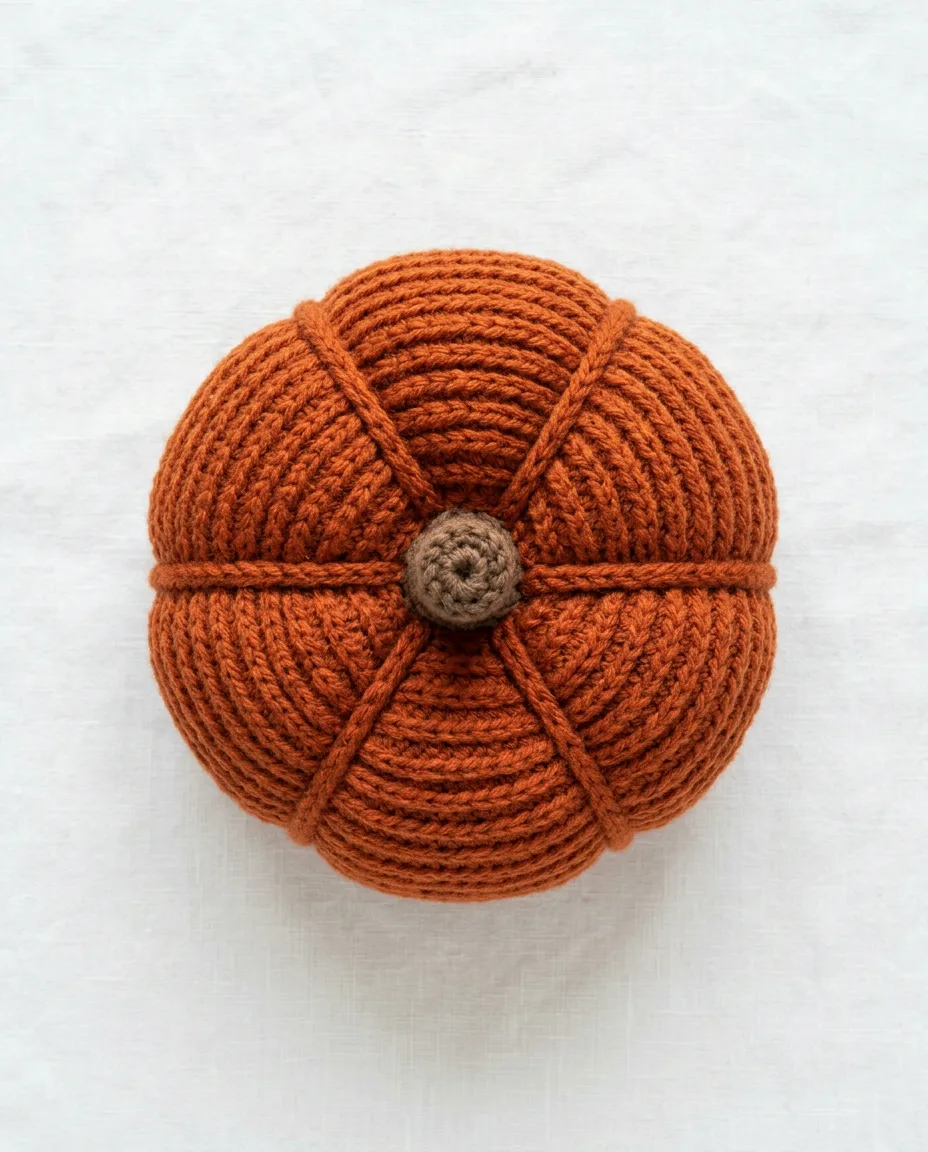 Save
At 13 stitches and 12 rows to 4 inches (10 cm), the rectangle comes to about 7 by 18 inches (18 by 46 cm). Fold it so the short ends meet. Sew them together with a yarn needle, a blunt needle with a big eye. Next, thread a long strand through every row end around one open end of the tube. Pull it tight to close the hole, then knot it. Stuff the tube hard. Really hard. Close the second end the same way.
Shaping is done entirely with yarn. Put 2 yards of the same color on the needle and push it up through the center, bottom to top. Wrap it down the outside and come back up through the center again. Six wraps, evenly spaced, split the pumpkin into segments. Pull each one hard enough to sink into the stuffing, or the segments look faint. Finished, the pumpkin sits about 6 inches (15 cm) wide and 4 inches (10 cm) high. For the stem you need single crochet, the shortest stitch. Put the hook in and yarn over, then draw a loop up. Yarn over once more and bring the hook through both loops. Begin with chain 2, work 6 single crochets into the second chain from the hook, and go around for 5 rounds of 6 without joining. Stitch it over the top hole. Plan on about 120 yards (110 m) of yarn and 2 hours.
Chunky ear warmer in super bulky yarn
One hour. That’s all this takes with super bulky yarn (marked 6 on the band) and a 10 mm (N) hook. Chain 9 and make 8 half double crochets across. Turn with a chain 1 and repeat until the strip reaches 19 inches (48 cm), about 28 rows at 6 rows to 4 inches. It is 4 inches (10 cm) wide. Yes, 19 inches is short for a head. On purpose. The fabric stretches to 22 inches, and that stretch is what keeps it in place.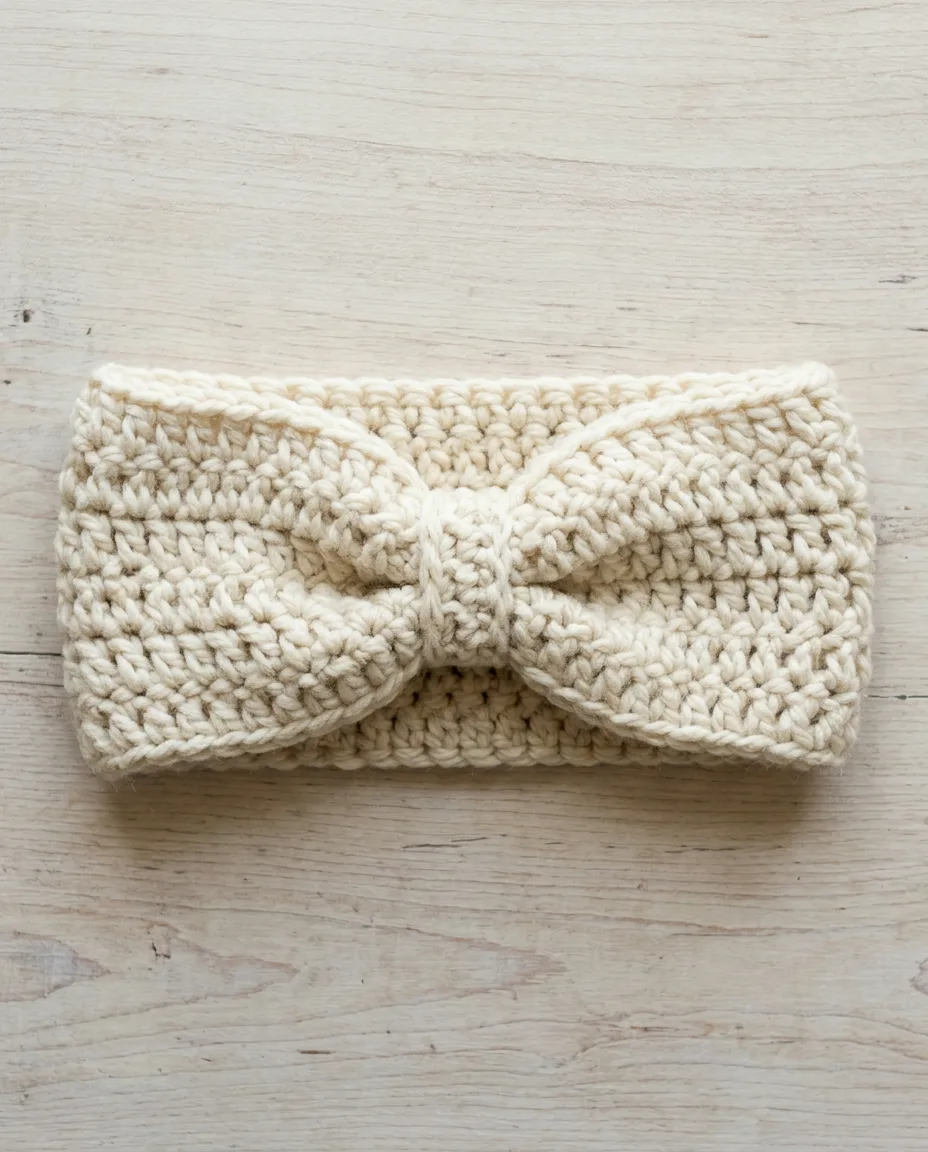 Save
Sew the two short ends together. A small band hides the seam and gives the twisted look. To make it, chain 6 and work 5 single crochets, and repeat for 10 rows. Pinch the headband at the seam to gather it. Wrap the small band around the pinch and join its ends at the back. You’ll use about 70 yards (64 m) of super bulky yarn in total, and most 100 g balls hold 80 to 90 yards, so one ball does it.
Ribbed beanie worked sideways
Remember the pumpkin rectangle? This hat is the same thing with different numbers. Chain 36 in worsted weight yarn. Work 35 half double crochets through the back loops for 60 rows. The rectangle lands close to 10.5 by 20 inches (27 by 51 cm). Once it’s sewn, the ridges run up and down the hat, and that’s where the ribbed look comes from. Unstretched, 20 inches fits a 22 inch adult head with the ribs opened out a little.
Sew the short ends into a tube. Run a strand of yarn through every row end around the top edge. Draw it tight to close the crown and knot it inside. Fold up 2 inches (5 cm) of the bottom edge for the brim. Expect 3 hours and about 200 yards (183 m). Making one for a child with a 20 inch head? That takes a chain of 32 and 54 rows.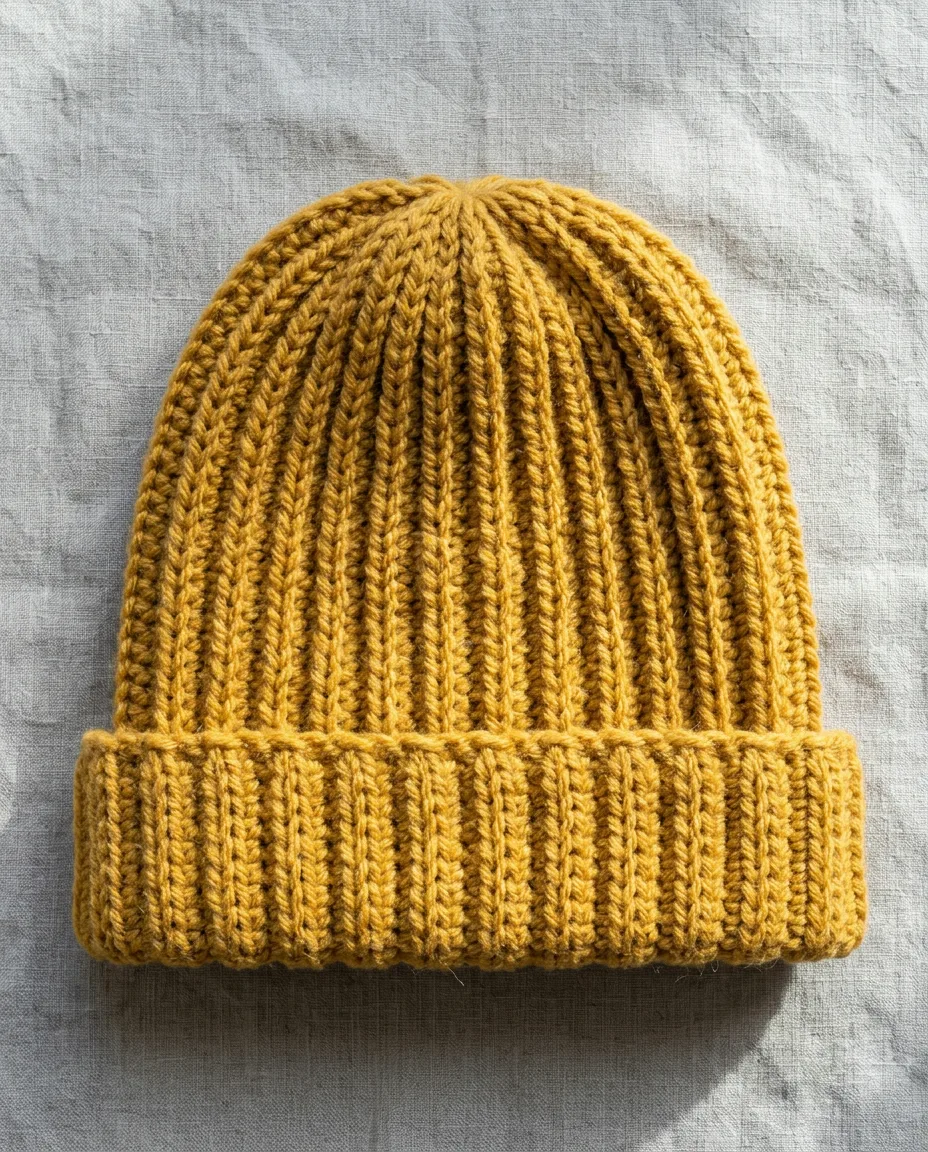 Save
Two mistakes come up again and again. First, losing a stitch at the start of each row. The back loop of the first stitch hides under the turning chain, which is the chain 1 you made to turn. Count every tenth row and you’ll catch it. Second, a crown that bunches into a knot because the rows got pulled too tight. Pull the gathering strand firmly and then stop. A dime-sized hole at the center is normal, and the bunching covers it anyway.
Leaf garland for a doorway or mantel
Each leaf is worked around a starting chain, all in one go. Use a 4 mm (G) hook with worsted or DK yarn (a little thinner than worsted). Chain 9. Skip the first chain and put one stitch into each of the next seven: 1 single crochet, 1 half double crochet, 3 double crochets, 1 half double crochet, 1 single crochet. For a double crochet, yarn over before the hook goes in. Draw up a loop so three loops sit on the hook. Then yarn over and draw through two loops, twice. Into the very last chain go 3 single crochets, which turns the point. Mirror the same seven stitches back up the other side of the chain. Finish by slip stitching into the first stitch. To work it, put the hook in and pull the yarn through both the stitch and the loop on your hook in one motion. A leaf comes out about 2.75 inches (7 cm) long and 1.25 inches (3 cm) wide.
You need 15 leaves. Rust and mustard do most of the work. Add a few in deep olive, though, or the garland reads as one flat color. Each leaf takes about 8 yards (7 m) and 10 minutes. For the cord, chain until it measures 60 inches (150 cm), roughly 240 chains at this hook size. Attach a leaf every 4 inches and leave 2 inches bare at each end for hanging loops. Expect the leaves to curl a bit as you work them. Pressing each one under a damp towel for 10 seconds flattens the points.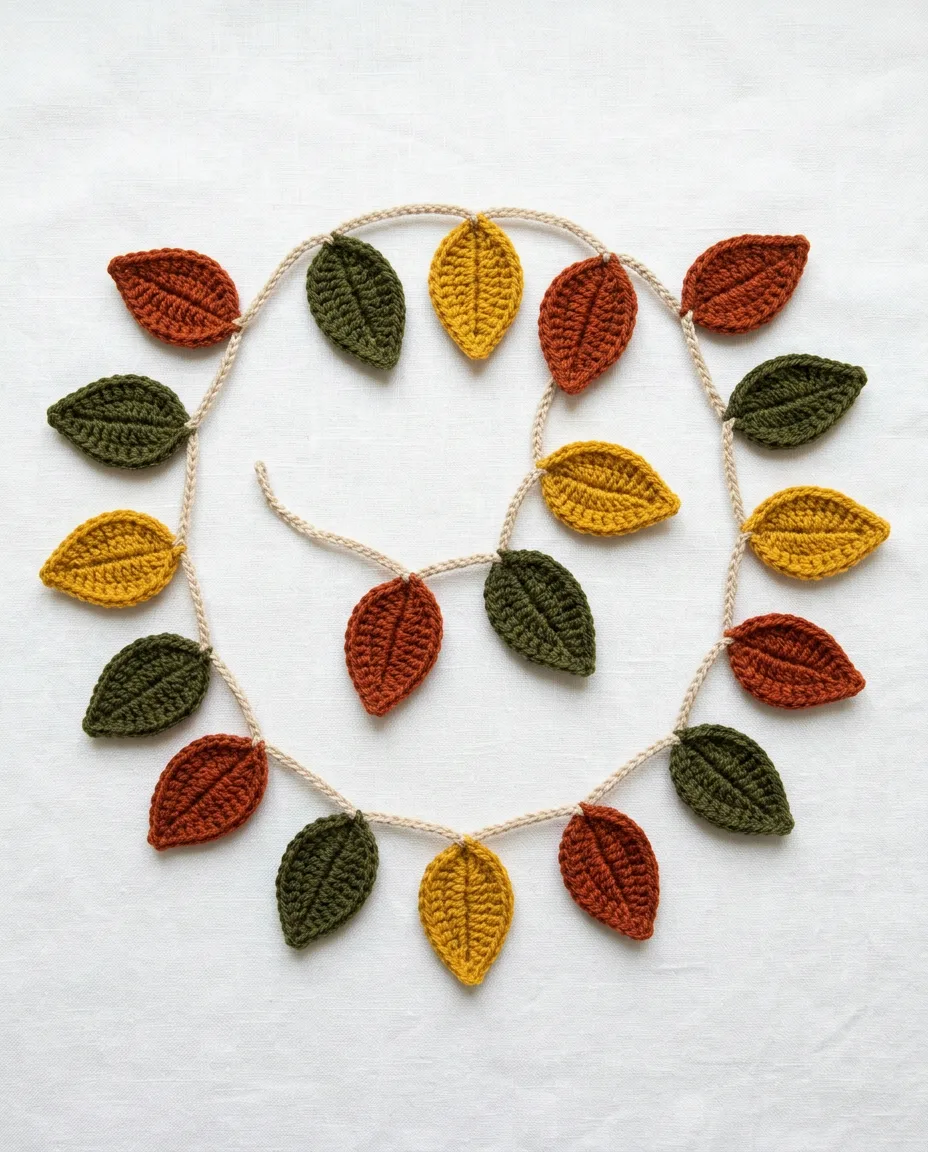 Save
The cowl that takes two balls of bulky yarn
Bulky yarn, marked 5, on an 8 mm (L) hook. Chain 60. Before you join, check the chain isn’t twisted, because a twist here can’t be fixed later. Close it into a ring with one slip stitch into the first chain. Work 15 rounds of half double crochet, one stitch in each stitch of the round below. Slip stitch into the first stitch to close every round, and chain 1 before the next. At 9 stitches and 6 rounds to 4 inches, the cowl measures 27 inches (69 cm) around and 10 inches (25 cm) high. It goes once around the neck with room to pull it up over the chin.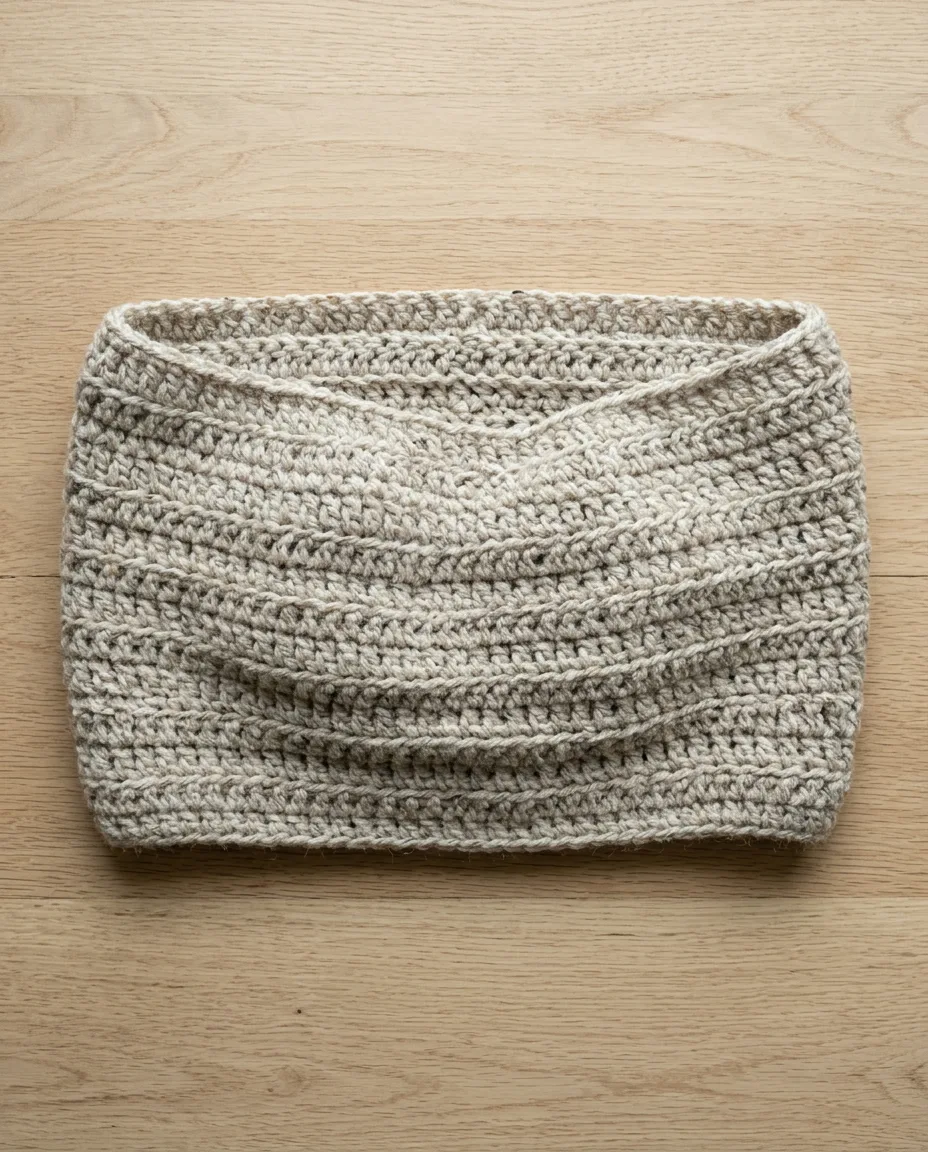 Save
Expect the join line to drift a little. In half double crochet it shows as a faint diagonal seam, so wear that side at the back. Two 100 g balls of bulky yarn, about 240 yards (220 m) in all, cover a cowl this size in around 3 hours. Want one that loops twice? That needs a chain of 120 and 10 rounds. Same amount of yarn, and it hangs lower.
Stuffed acorns, worked in two colors
Acorns are worked in the round in single crochet on a 3.5 mm (E) hook. That small hook packs worsted tight enough that the stuffing never shows through. Start the body in tan with 6 single crochets in a chain-2 ring, the same start as the pumpkin stem. Round 2 puts two stitches in every stitch (12). In round 3, work one stitch, then two in the next, around (18). Round 4 goes two stitches, then two in the next, around (24). Rounds 5 through 8 are plain at 24. Round 9 is two stitches and a decrease, around (18). To decrease, pull up a loop in each of the next two stitches. Then yarn over and pull through all three loops. Stuff the acorn now. After that, work one stitch and a decrease around (12), then six decreases (6), and sew the hole shut.
Brown yarn for the cap, with the same first four rounds, 6 up to 24. After that come 2 rounds of 24 in the back loops. That turns the cap down at a sharp edge so it sits like a lid. The stem is a chain of 4 with 3 single crochets worked back along it. Stitch the stem to the top of the cap, and the cap over the top of the body. Finished acorns stand about 2.5 inches (6 cm) tall. Count on 45 minutes and 25 yards (23 m) of yarn across both colors. Five in a wooden bowl look right. Twelve, each with a loop of thread, make a garland.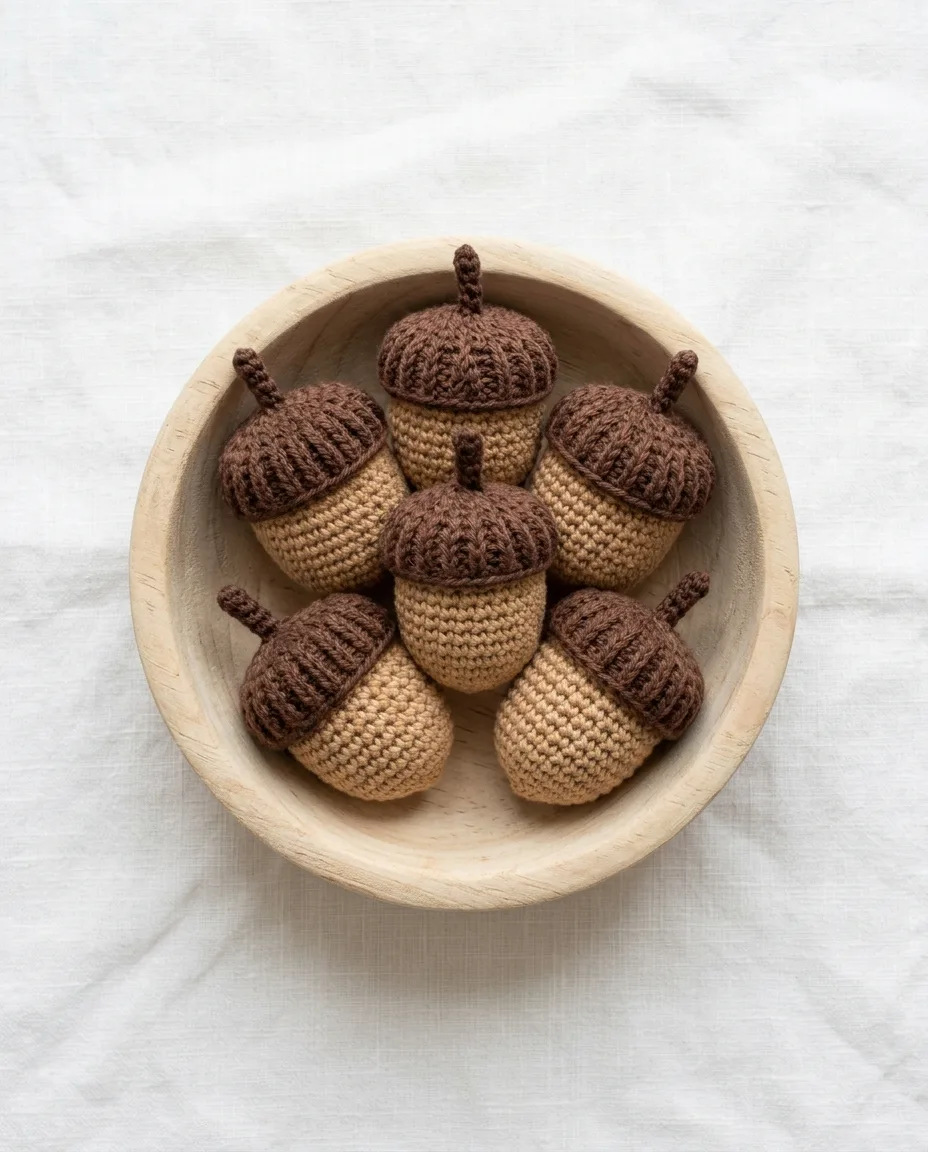 Save
Mug cozy with a button
Worsted cotton, 5 mm hook, a chain of 12. Make a row of 11 half double crochets on it and keep going for 23 rows. At the pumpkin’s gauge you get a strip 3 inches (7.5 cm) high and 9 inches (23 cm) long. A standard 12 ounce mug is about 10 inches around. So 9 inches wraps it and leaves a 1 inch gap for the handle. On the last row, chain 8 at one corner and slip stitch back into that same corner for a button loop. A 1 inch (25 mm) button goes on the opposite end.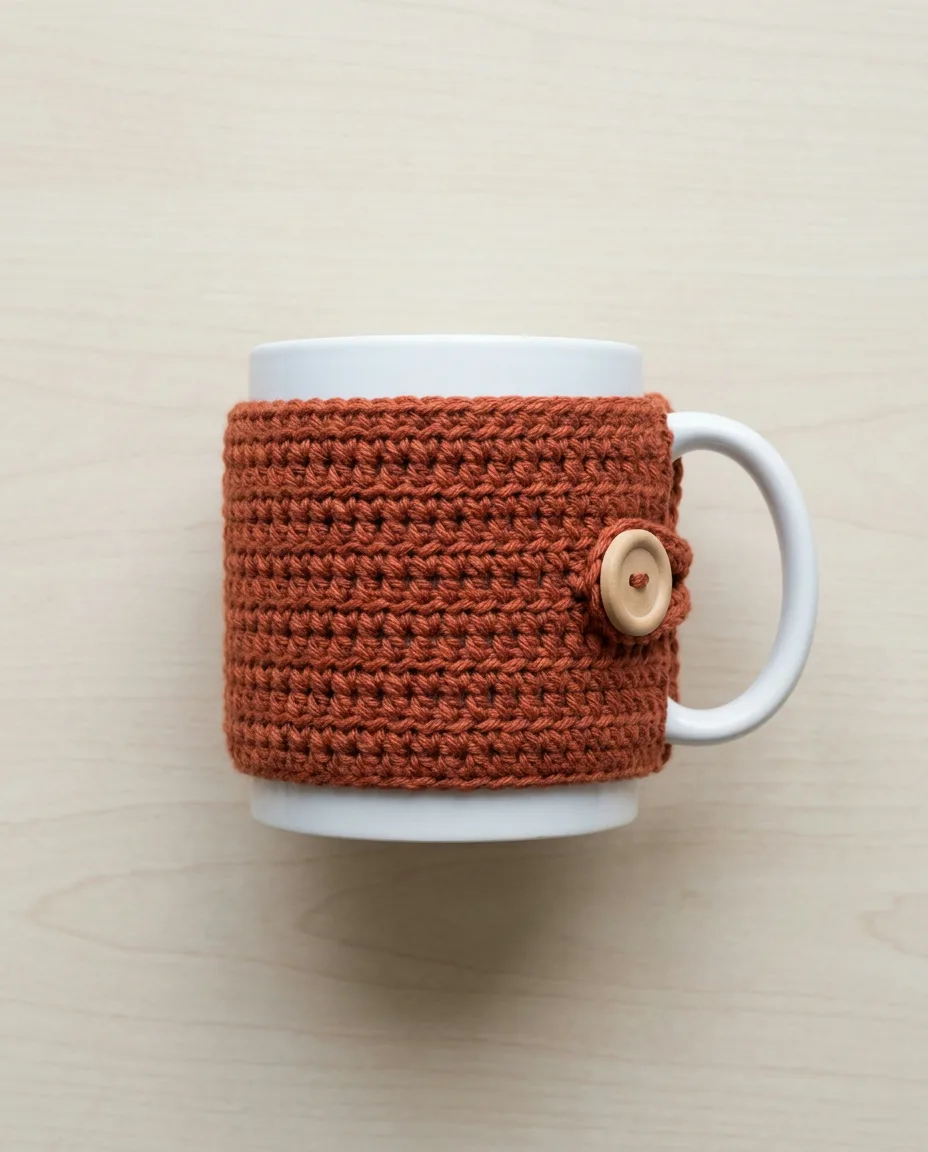 Save
Nowhere on this list does cotton matter more. Acrylic softens against a mug straight out of the microwave and goes shiny where it touches. Cotton handles the heat and goes in the wash. One cozy takes about 40 yards (37 m) and 45 minutes, so a set of four with four different buttons fits in an evening. You can drop the button loop and sew the ends together for a cozy that slides on from the bottom. Measure the mug first, though. Plenty of mugs flare at the top.
Coaster set from flat circles
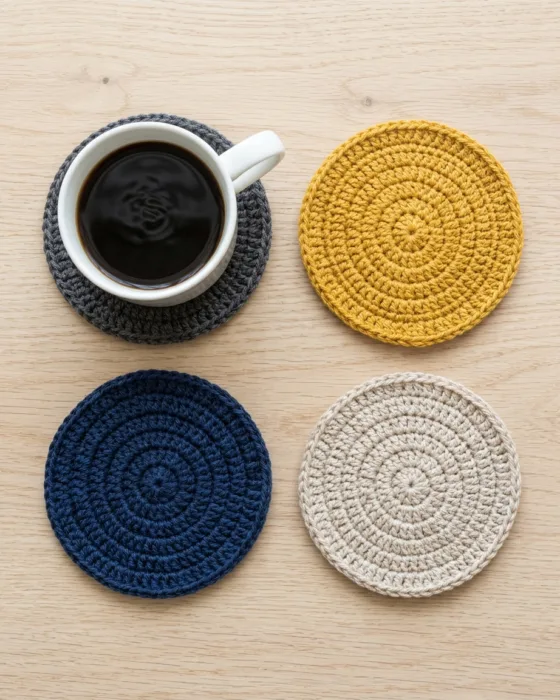
A flat circle is the acorn body’s arithmetic without the decreases. Grab worsted cotton and a 4.5 mm (7) hook. Start like the acorn, with 6 single crochets in a chain-2 ring. Add 6 stitches every round, so round 2 has 12 and round 7 ends at 42. Don’t stack the increases on top of each other. If you do, the circle turns into a hexagon with visible corners. At 42 stitches, round 7 measures about 4 inches (10 cm) across. Slip stitch to close, cut the yarn and weave the tail in.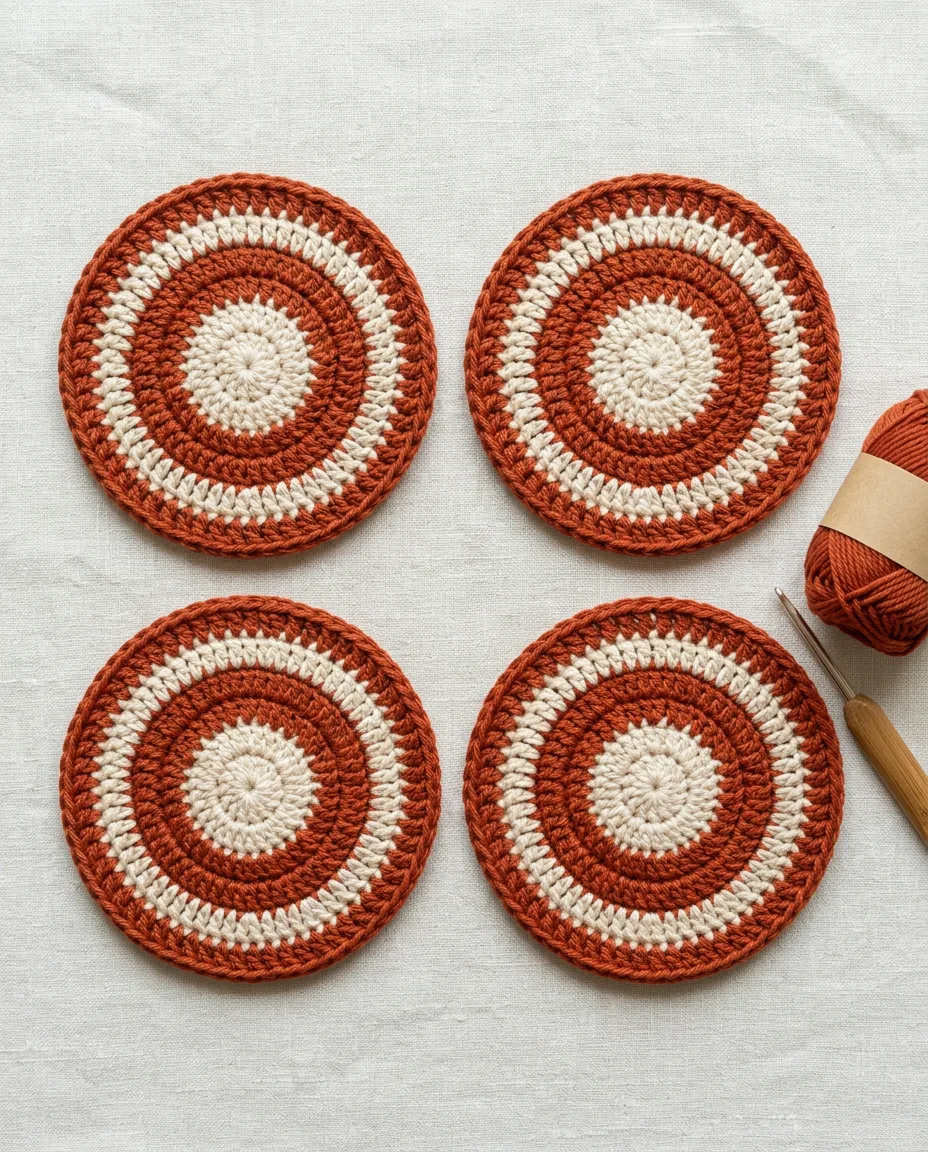 Save
But a flat circle only stays flat if your stitches are the right tightness. Cupping like a bowl? Your stitches are tight, so go up to a 5 mm hook. A ruffled edge means go down to 4 mm. Each coaster takes fifteen minutes and 20 yards (18 m), so a set of four in rust and cream uses one 100 g ball with yarn left over. Machine wash on cool and lay them flat. Cotton coasters that go in the dryer come out a size smaller, and they stay that way.